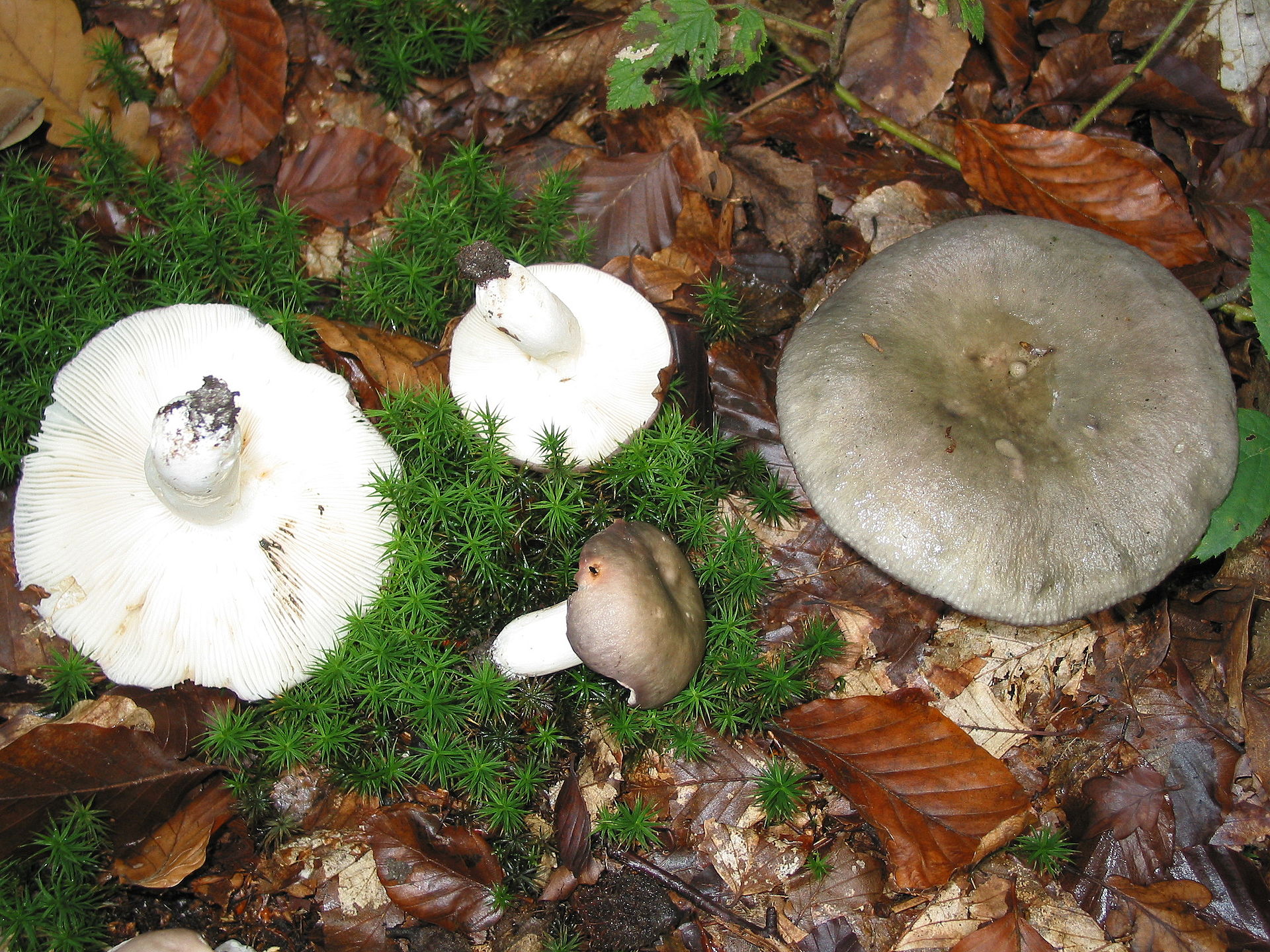
Photo by Jean-Pol GRANDMONT · Wikimedia Commons · CC BY 3.0
The best edible Russula and one of the easiest to identify, thanks to a single remarkable feature: its gills are flexible and greasy to the touch, while virtually every other Russula has brittle, crumbly gills.
The genus Russula is enormous, confusing, and full of species that look almost identical. Most foragers treat the whole group with a mixture of respect and resignation, knowing that sorting one Russula from another often requires a microscope and a chemistry set. Russula cyanoxantha is the glorious exception. It has one field-testable feature that sets it apart from nearly every other Russula on the planet: flexible, greasy-feeling gills.
Pick up any typical Russula and run your finger across the gills. They crumble and break like chalk. Now do the same with Russula cyanoxantha. The gills bend and flex under your finger, feeling almost oily or lard-like. This single characteristic, combined with the variable purple-green-gray cap color, makes the charcoal burner one of the most identifiable mushrooms in its notoriously difficult genus.
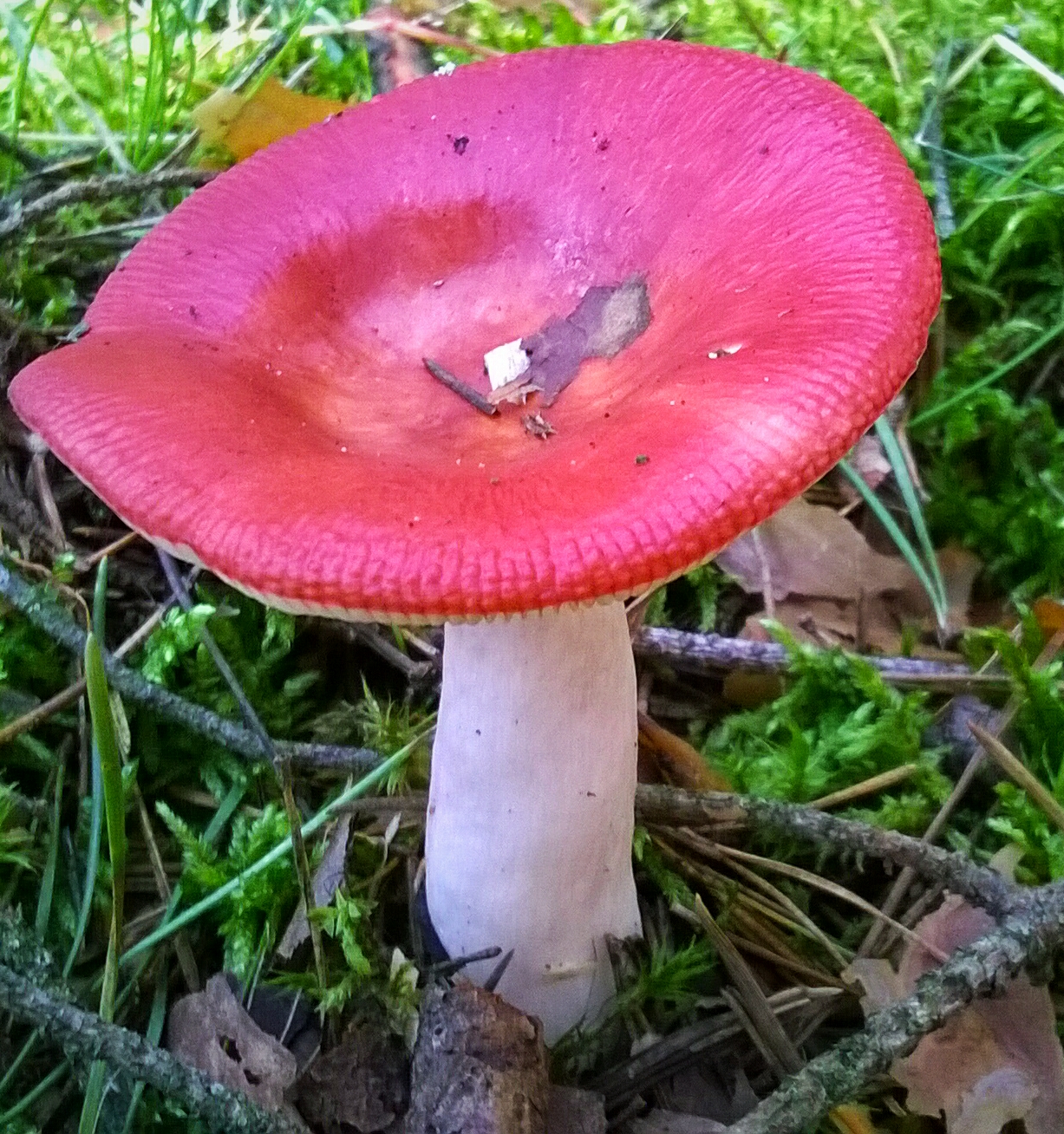
The cap color is wildly variable, which can initially confuse beginners. It ranges from violet and purple to green, gray, and olive, sometimes with all of these colors blended on a single cap. This variability is actually another diagnostic feature: very few Russulas show such a wide color range. The flesh is white, firm, and does not change color when cut.
Culinarily, the charcoal burner is considered the finest edible Russula, with firm, mild-flavored flesh that holds up well to cooking. It is popular across Europe, particularly in France and Italy, where it appears in markets during summer and autumn.
Charcoal Burner Facts
- ●Russula cyanoxantha is the only common Russula with flexible, greasy-feeling gills. This single feature makes it identifiable even by beginners in a genus that stumps experts.
- ●The cap color of a single charcoal burner can include violet, green, gray, and olive all at once, making it one of the most chromatically variable mushrooms in existence.
- ●In France, the charcoal burner is so well known and trusted that it appears in mainstream supermarkets during summer and fall, alongside golden chanterelles and porcini.
- ●The name 'charcoal burner' likely comes from the dark, smoky tones that can appear in the cap color, evoking the soot-covered workers who once produced charcoal in European forests.
Stories From the Field
The Gill Flexibility Test in Normandy
A French mycologist teaching a foraging workshop in Normandy demonstrated the charcoal burner's flexible gills by running his thumb across them while participants watched. Then he did the same to a Russula emetica, and the gills crumbled into white fragments. 'That,' he said, 'is the difference between dinner and the toilet.' The demonstration has been repeated at every workshop since.
Market Day Russulas in Tuscany
At a Saturday morning market in Siena, a vendor was selling charcoal burners alongside porcini. When asked how he identified them, he picked one up, ran his finger across the gills, and showed the intact, flexible blades. 'No other Russula does this,' he said simply. His basket of charcoal burners was the same price per kilo as porcini.
Color Confusion in the Beech Woods
A foraging group in southern England found charcoal burners in a single patch that ranged from deep violet to bright green to steel gray. A beginner asked if they were three different species. The guide had her touch the gills on each one. All flexible. All greasy. 'Same species,' the guide confirmed. 'This mushroom just cannot decide what color it wants to be.'
Where It's Been Found

Based on reported sightings worldwide
How to Identify Charcoal Burner
Cap
5-15 cm across. Convex becoming flat, sometimes slightly depressed in the center. Color is extremely variable: violet, purple, green, olive, gray, or a mixture of several colors on the same cap. Surface is smooth, slightly sticky when wet, and the cuticle peels about halfway to the center.
Gills
The defining feature. White to cream, crowded, and FLEXIBLE. Unlike nearly all other Russulas, whose gills are brittle and crumbly, the gills of R. cyanoxantha bend without breaking and feel greasy or oily when rubbed with a finger. This is the single most reliable field test.
Stem
5-10 cm tall, 1.5-3 cm thick. White, solid, firm. Smooth or slightly wrinkled. Does not change color when bruised or handled. No ring or volva.
Spore Print
White.
Odor
Mild, not distinctive. Faintly mushroomy.
Mushrooms That Look Like Charcoal Burner
Russula virescens (Green-Cracked Russula)
Green cap that cracks into a distinctive mosaic pattern of patches. Gills are BRITTLE (the standard Russula texture), not flexible. Also an excellent edible. The cracked cap surface and brittle gills separate it from the charcoal burner.
Read more on MushroomExpert →Russula emetica (The Sickener)
Bright red cap (not the variable purple-green-gray of charcoal burner). Gills are brittle, not flexible. Taste is extremely peppery and hot (charcoal burner is mild). Causes vomiting if eaten. The taste test alone separates them instantly.
Read more on Wikipedia →Russula ionochlora
Similar violet-green coloring but smaller overall. Gills are brittle, not flexible. Less variable in cap color. The flexible-gill test is the definitive separator.
Read more on iNaturalist →Is Charcoal Burner Edible?
Considered the best edible Russula worldwide. Mild, nutty flavor with firm, pleasant texture that holds up well to sauteing, grilling, and stewing. The flexible gills make it uniquely identifiable among Russulas. Always confirm with the gill flexibility test before eating any Russula as a charcoal burner. Taste a tiny bit of cap flesh: it should be mild, not peppery.
Always verify with local experts before consuming wild mushrooms.
Found something that looks like this in the wild? Don't guess — identify it from a photo with Orangutany and check it against look-alikes before you touch it.