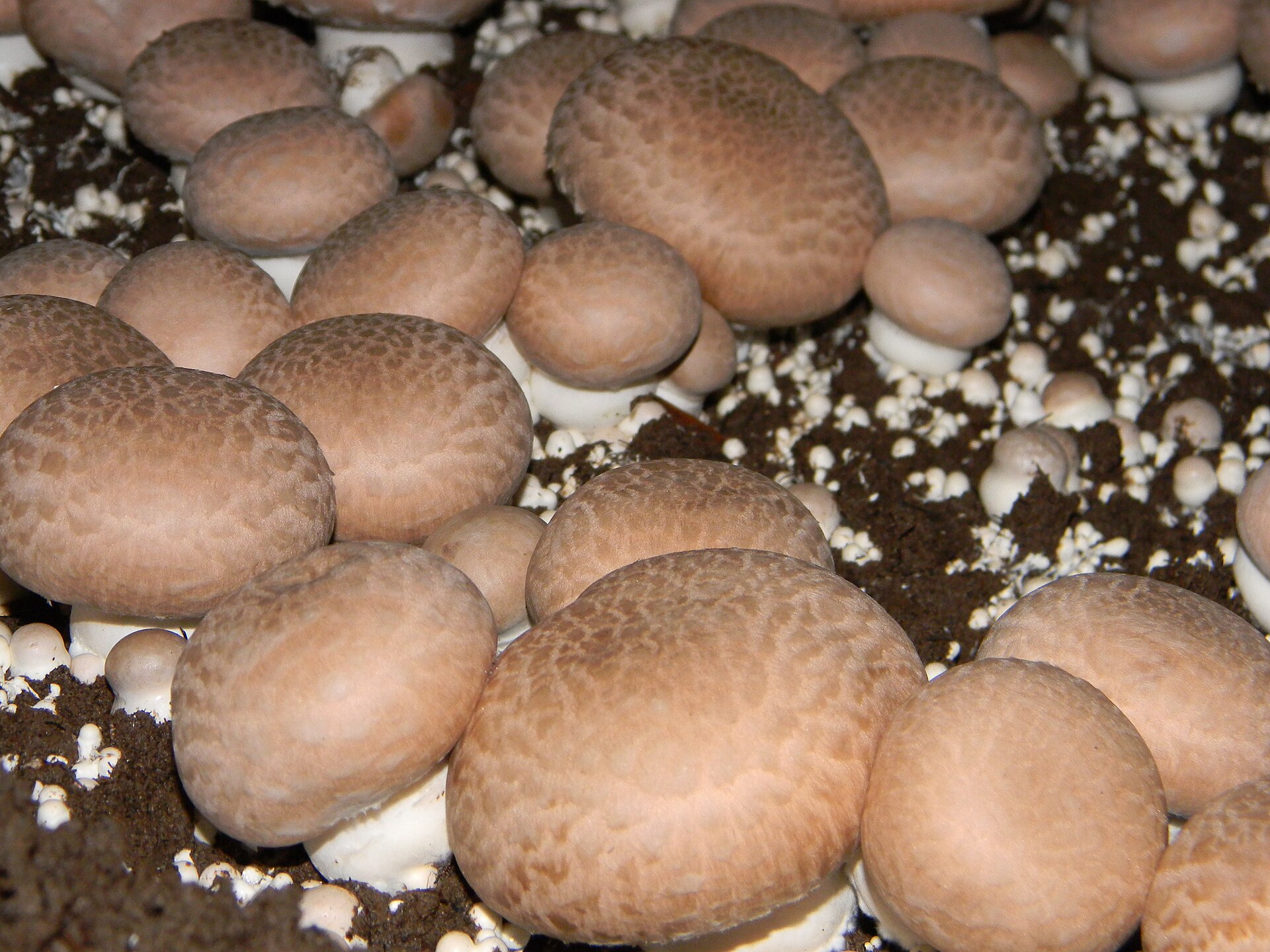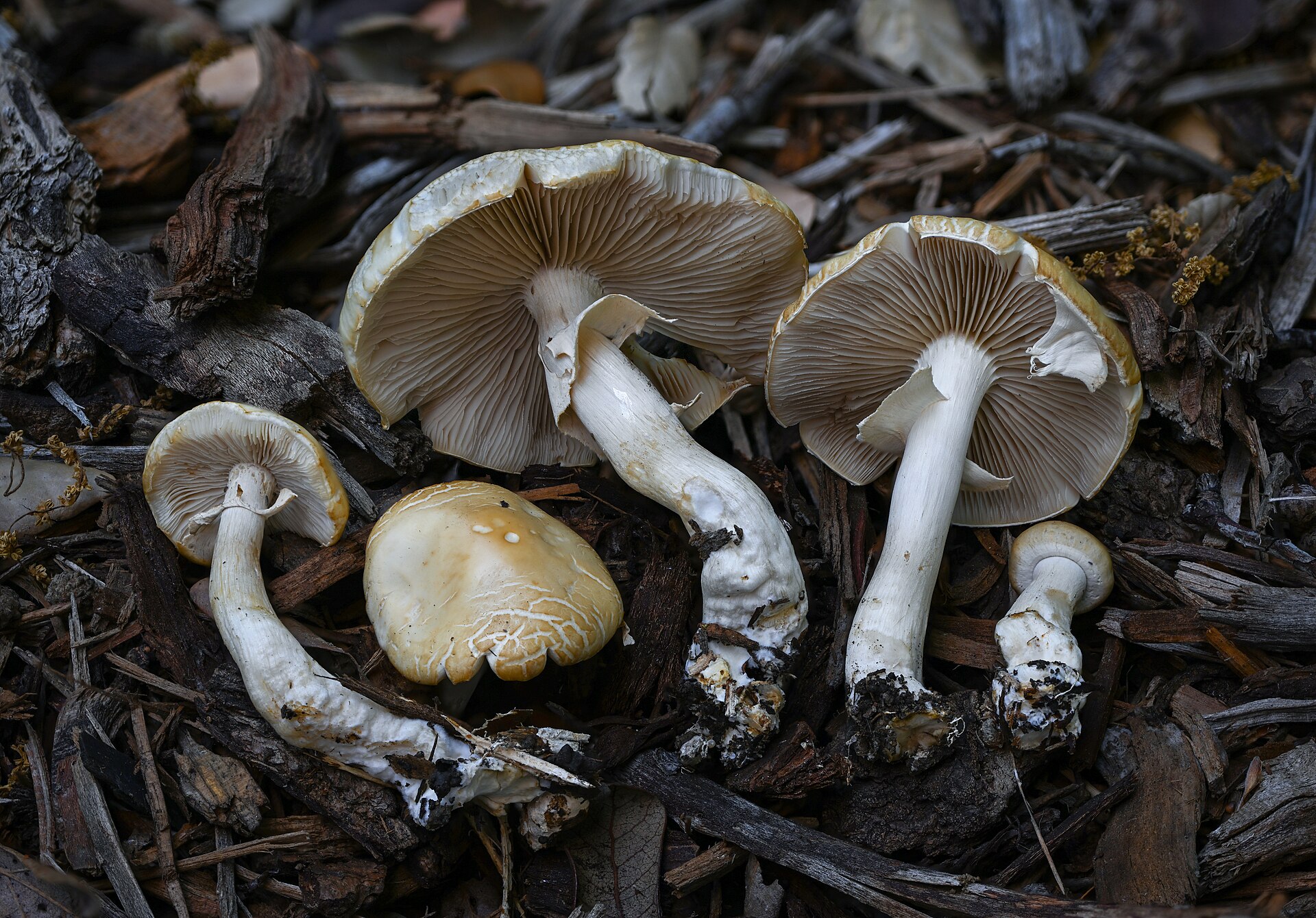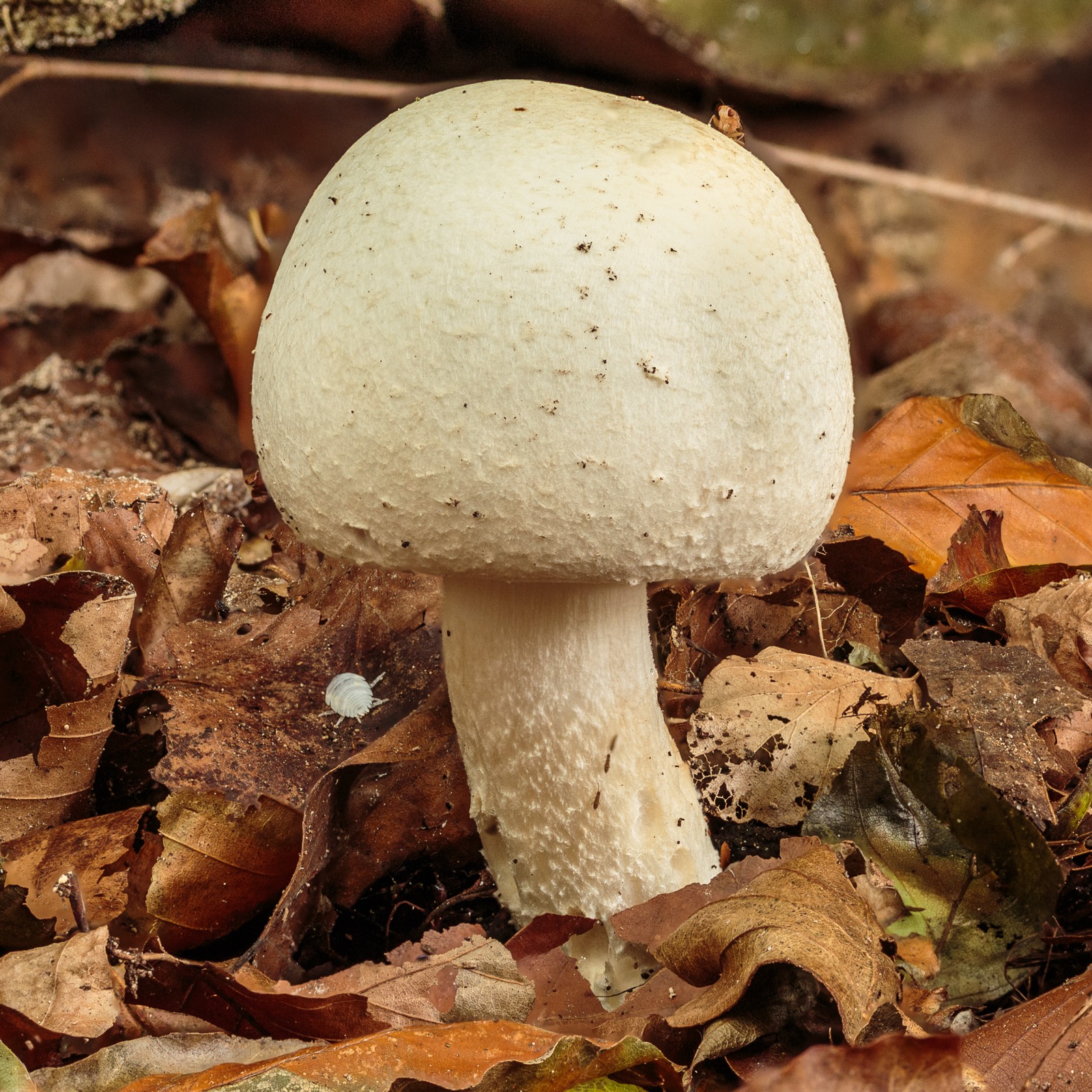
Photo by Famberhorst · Wikimedia Commons · CC BY-SA 4.0
A big, handsome meadow mushroom with one standout feature: a sweet anise-almond smell that hits you the moment you pick it up. Agaricus arvensis is one of the finest wild Agaricus species — larger than the common field mushroom, more flavorful, and reliably identifiable by its distinctive scent. Just make sure you know the difference between this and the toxic Yellow Stainer.
The Horse Mushroom is the kind of find that makes a forager's morning. You're walking across a horse pasture or old meadow in early autumn, and there they are — big white caps pushing up through the grass, sometimes in fairy rings that can stretch for meters. They're substantial mushrooms, with caps that can reach 20 cm across, and they have a heft and meatiness that makes them genuinely useful in the kitchen.
The name 'Horse Mushroom' doesn't come from horses eating them (though they grow in horse pastures). It's an old English term meaning simply 'large' — a horse mushroom is a big mushroom, the way a horse chestnut is a big chestnut. And big they are. A single mature specimen can weigh several hundred grams, and when you find a ring of them, you can fill a basket in minutes.
The critical identification feature is the smell. Crack a Horse Mushroom open and hold it to your nose: you'll get a clear, sweet scent of anise or almonds. It's unmistakable once you've experienced it. This matters enormously because the Horse Mushroom's most dangerous look-alike — the Yellow Stainer (Agaricus xanthodermus) — smells completely different: an unpleasant chemical or ink-like odor, especially when the flesh is crushed. The smell test isn't just helpful; it's the single most reliable way to tell these two apart in the field.
Horse Mushroom Facts
- ●The name 'Horse Mushroom' has nothing to do with horses eating them — 'horse' is an old English intensifier meaning 'large,' the same way a horse chestnut is simply a big chestnut.
- ●Horse Mushroom fairy rings can persist for decades, expanding outward by about 30 cm per year as the underground mycelium consumes organic matter and moves on to fresh soil.
- ●The sweet anise-almond smell of Agaricus arvensis comes from benzaldehyde and anisaldehyde — the same compounds used in artificial almond and anise flavorings.
- ●A single large Horse Mushroom can produce a spore print so prolific that it leaves a visible dark brown deposit on the grass beneath it overnight — nature's own identification aid.
- ●Horse Mushrooms are one of the few wild Agaricus species that can rival commercially cultivated button mushrooms (Agaricus bisporus) in size — but they have significantly more flavor because they grow slowly in wild soil rather than on optimized compost.
Stories From the Field
The Fairy Ring of Avebury
Near the ancient stone circle at Avebury in Wiltshire, a fairy ring of Horse Mushrooms has been documented returning to the same meadow every autumn for over 40 years. Local naturalists have measured its diameter expanding by roughly 30 cm per year, and by 2020 it had reached nearly 15 meters across — a living circle older than many of the trees around it.
Victorian Breakfast Staple
In 19th-century England, Horse Mushrooms were so commonly gathered from pastures that they appeared on breakfast tables almost as regularly as eggs and bacon. Mrs Beeton's 1861 'Book of Household Management' specifically recommended them for broiling on toast, noting their 'superior flavour' to the smaller field mushroom.
The Smell Test That Saved a Family
A 2017 case report from a UK poison center described a family of four who collected white mushrooms from a park lawn. The mother, an experienced forager, noticed that some specimens smelled 'wrong' — chemical rather than sweet. She separated them, and the family ate only the anise-scented ones. Lab analysis confirmed the rejected mushrooms were Agaricus xanthodermus. Her nose may have prevented a very unpleasant evening.
Cavalry Fields to Cricket Grounds
Horse Mushrooms have a strong association with historic sites where horses were kept for centuries. Former cavalry grounds, old racecourses, and even cricket pitches with a long history of horse-drawn roller maintenance are known hotspots. Mycologists attribute this to centuries of accumulated organic matter from horse manure enriching the soil.
The Amsterdam Park Forager
In 2021, a Dutch forager documented an entire season of Horse Mushroom harvesting from Vondelpark in central Amsterdam. Over eight weeks, she collected over 12 kg from fairy rings growing in the park's meadows — all within cycling distance of her apartment. The photo series went viral on Dutch social media and sparked a debate about urban foraging regulations.
Where It's Been Found

Based on reported sightings worldwide
How to Identify Horse Mushroom
Cap
8–20 cm across, convex becoming broadly flattened. Smooth, white, turning creamy-yellow with age. Surface may crack slightly in dry weather. Stains yellow when rubbed, but a gentle, warm yellow — not the harsh chrome-yellow of the Yellow Stainer.
Gills
Free (not attached to stem). White when very young, turning pale pink, then dark chocolate-brown, and finally black as spores mature. Covered by a thick partial veil when young that leaves a substantial double ring on the stem.
Stem
8–15 cm tall, 2–3 cm wide, sturdy and cylindrical, slightly wider at the base. White, smooth above the ring, slightly scaly below. Features a large, floppy double ring (the lower layer has a distinctive cogwheel or star pattern on its underside).
Spore Print
Dark chocolate-brown to purplish-brown.
Odor
Sweet anise or almond — this is the key diagnostic feature. The smell is immediately noticeable when the mushroom is fresh, and becomes even more pronounced when the flesh is crushed or cut. This is what separates it from the toxic Yellow Stainer.
Mushrooms That Look Like Horse Mushroom
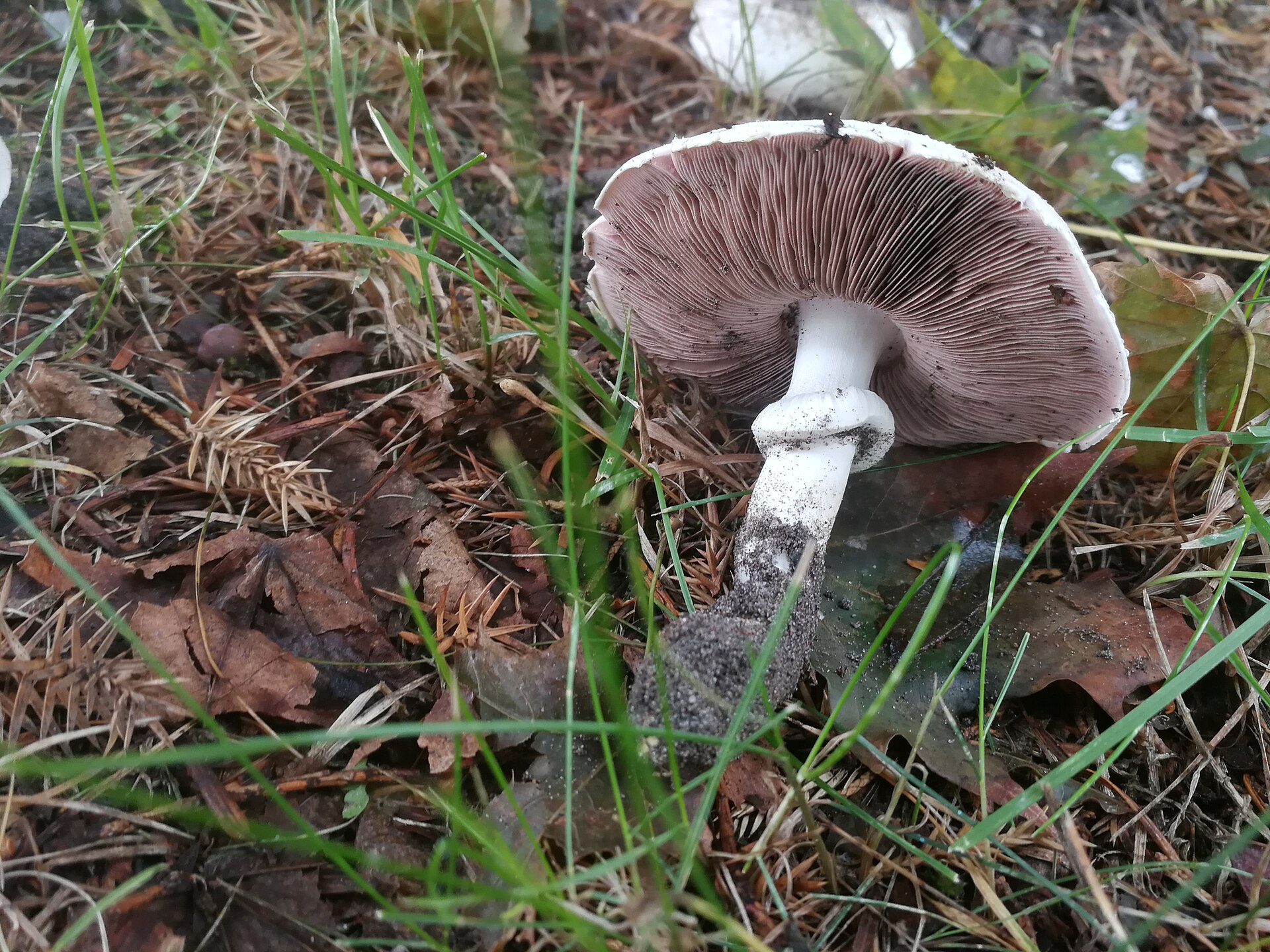
The critical look-alike to learn. Similar size and white appearance, but stains a harsh chrome-yellow at the cap edge and especially at the stem base when cut or rubbed. The definitive test is the smell: Yellow Stainer has an unpleasant chemical, ink, or phenol odor — completely different from the sweet anise of Horse Mushroom. Causes significant gastrointestinal distress in most people.
Side-by-side comparison →Read more on iNaturalist →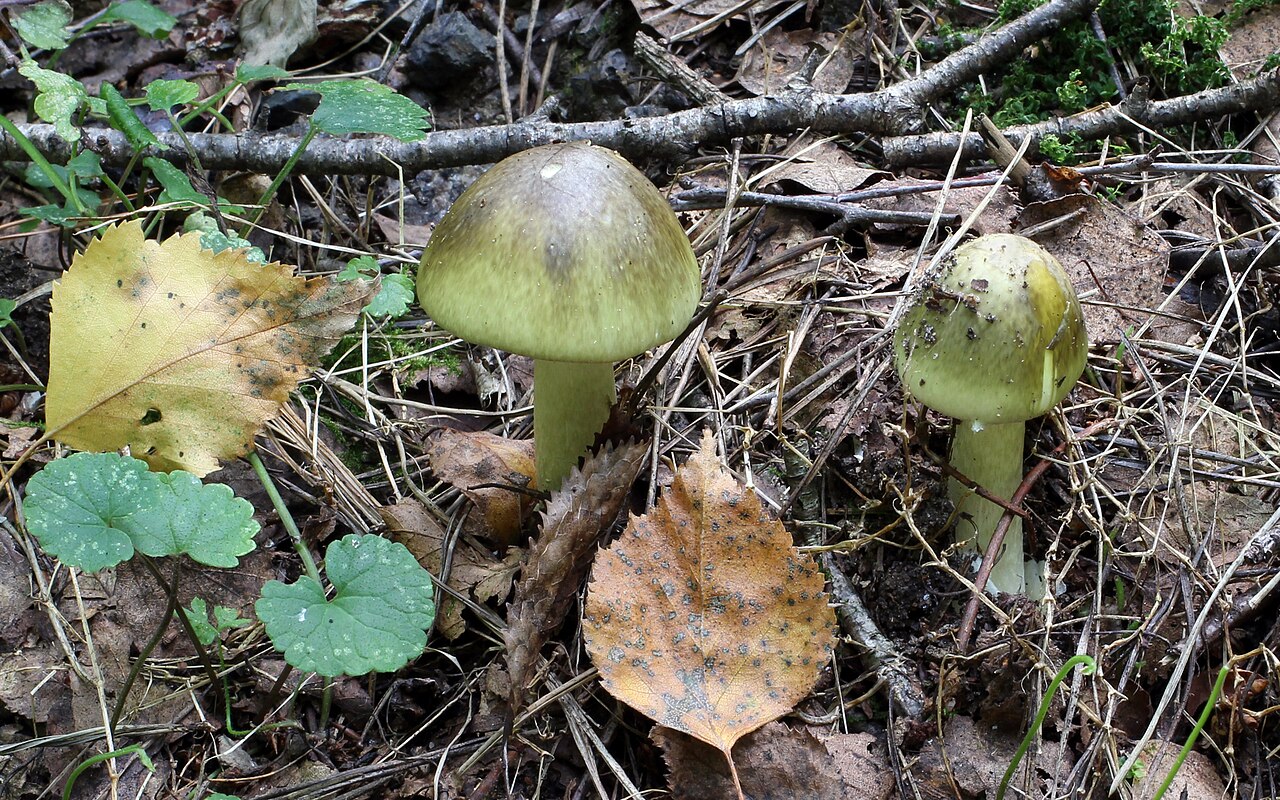
The most dangerous possible confusion. Young Amanita phalloides can look superficially like a white Agaricus, but critical differences include: a volval sac (cup) at the stem base, a white spore print (not brown), white gills that stay white, and no anise smell. Always dig up the entire stem base to check for a volva. Deadly — one cap can kill.
Side-by-side comparison →Read more on iNaturalist →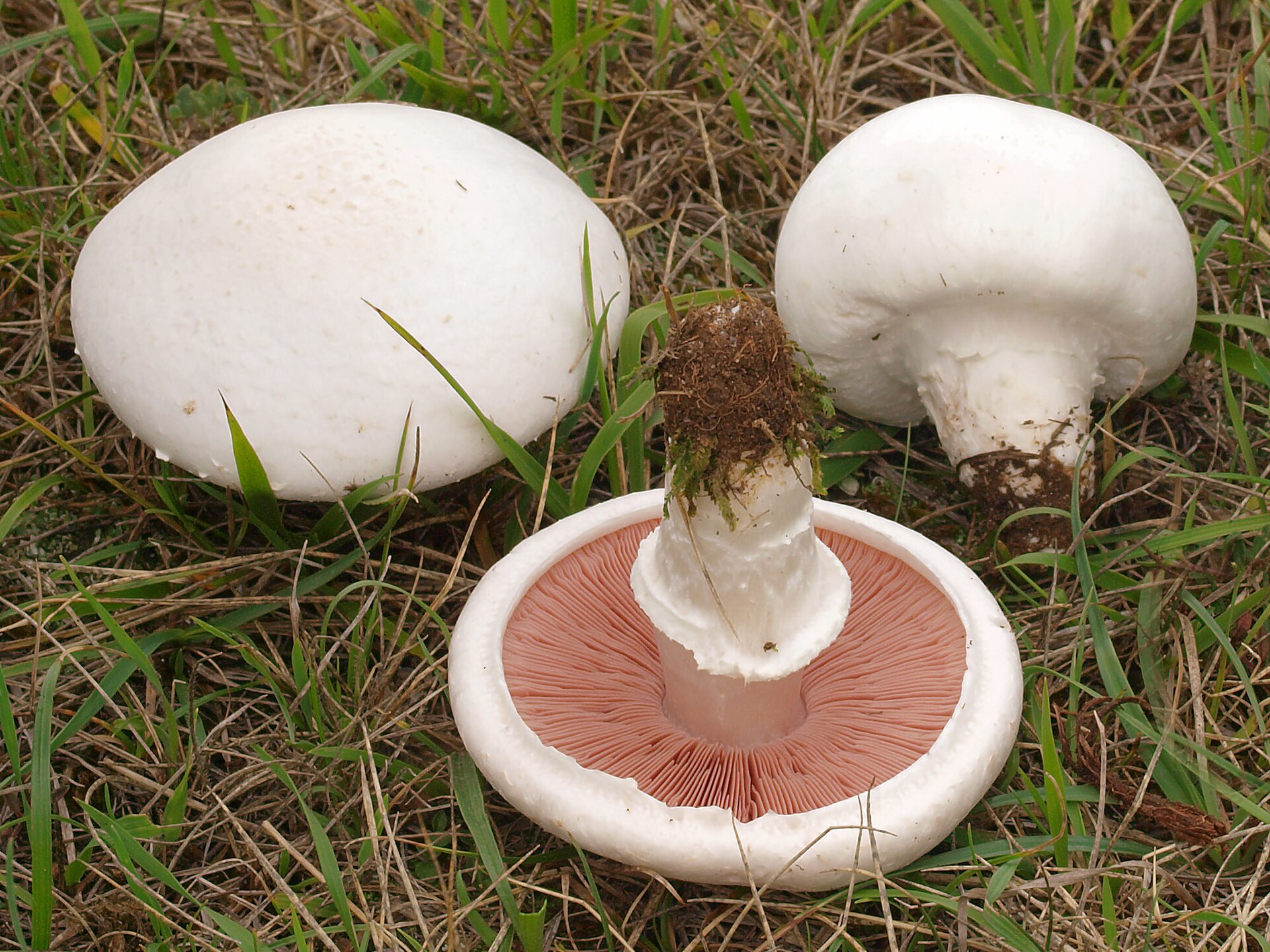
The classic 'button mushroom' of fields and pastures. Smaller than Horse Mushroom (cap 5–10 cm), with a thinner single ring and no anise smell. Gills start bright pink rather than pale pink. Both are excellent edibles — the main reason to tell them apart is that positive identification of either species rules out Yellow Stainer.
Side-by-side comparison →Read more on iNaturalist →Is Horse Mushroom Edible?
An excellent edible mushroom with a rich, slightly sweet flavor. Works well in any recipe that calls for button mushrooms but with considerably more depth. Must be carefully distinguished from the Yellow Stainer (Agaricus xanthodermus) — the anise/almond smell versus chemical/ink smell is the critical test. When in doubt, cut the stem base: if it turns bright chrome-yellow and smells like ink, discard it. Also always check for a volval sac at the base to rule out Amanita species.
Always verify with local experts before consuming wild mushrooms.
Found something that looks like this in the wild? Don't guess — identify it from a photo with Orangutany and check it against look-alikes before you touch it.