Photo by Dan Molter · Wikimedia Commons · CC BY-SA 3.0
A large, chalky-white mushroom with an absurdly short stem and a peppery bite that'll make you regret tasting it raw. On its own, Russula brevipes is basically inedible — but let the parasitic fungus Hypomyces lactifluorum colonize it, and it transforms into one of the most sought-after wild mushrooms in North America: the Lobster Mushroom.
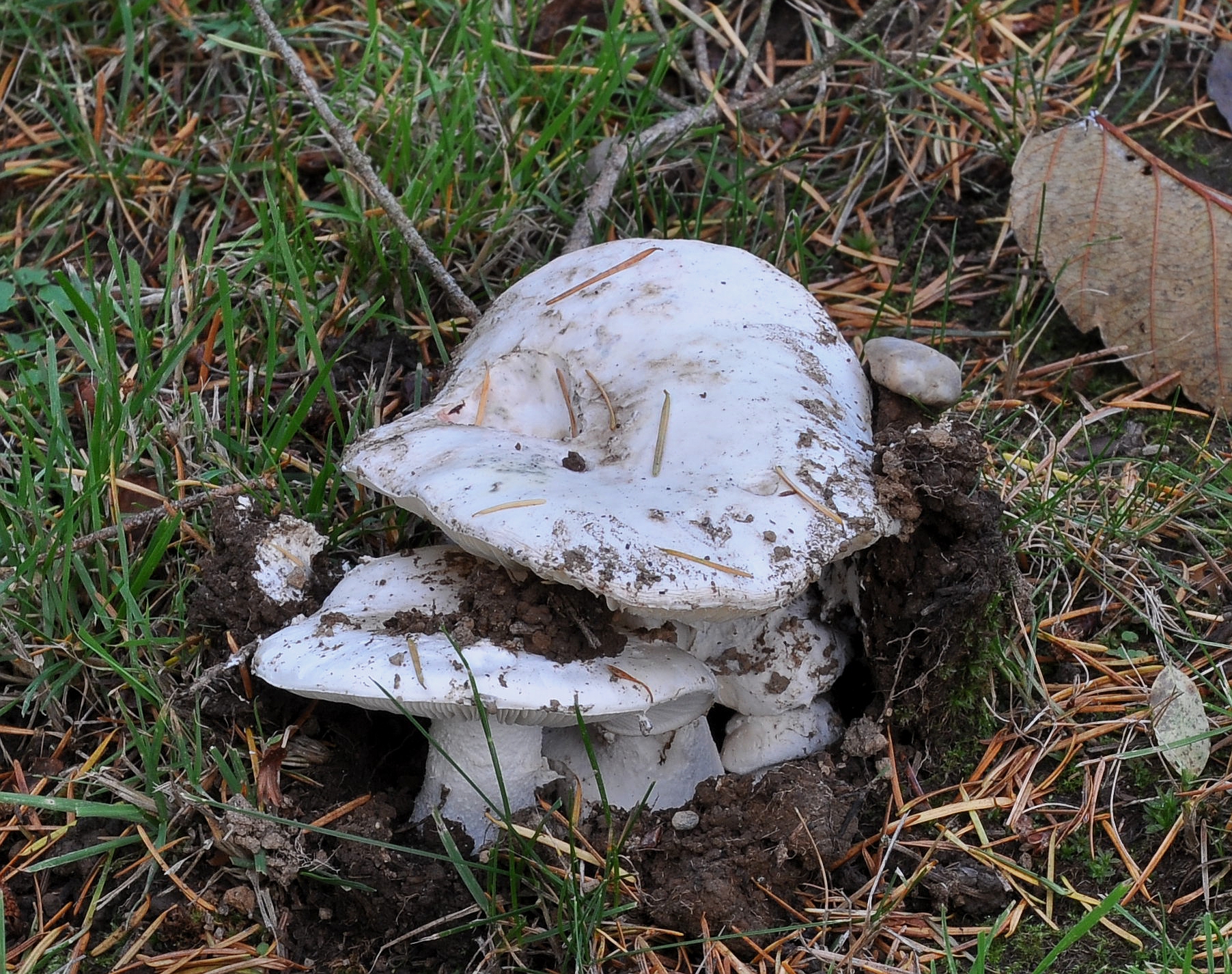
Russula brevipes is one of those mushrooms that's far more famous for what happens to it than for what it actually is. On its own merits, it's a big, clunky, white mushroom with the charisma of a dinner plate and a taste that hits your tongue like black pepper mixed with disappointment. It fruits abundantly across North American forests — under conifers, oaks, and mixed hardwoods — often half-buried in duff and leaf litter so that all you see is a dirty white dome barely poking above the ground.
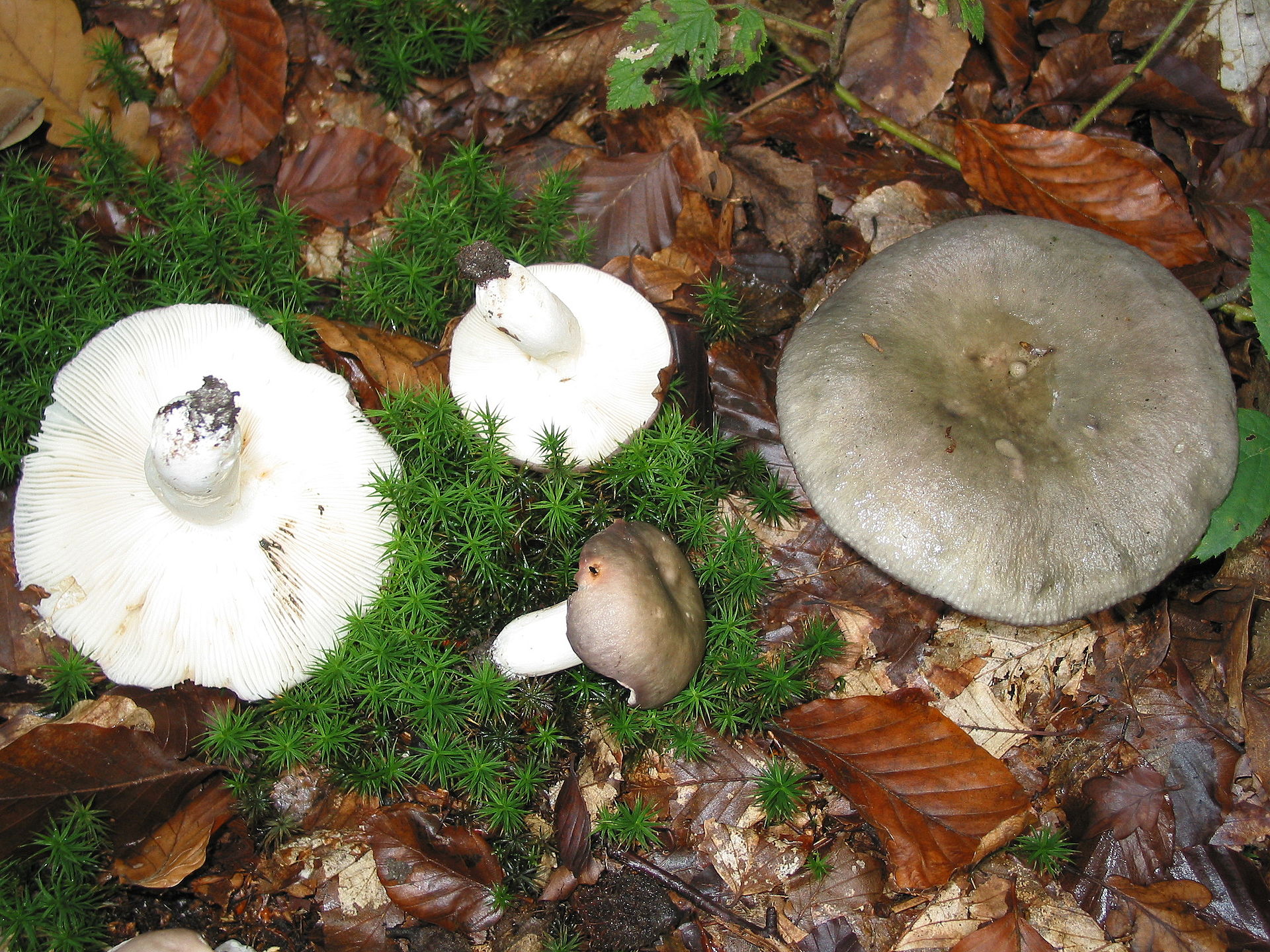
The cap starts convex, then flattens, then develops a central depression that deepens with age until the whole thing looks like a crude funnel. The gills are white to cream, closely spaced, and run slightly down the extremely short stem (brevipes literally means 'short foot' in Latin). The flesh is firm, dense, and white throughout, with no color change when cut. The spore print is white to pale cream.
But here's where it gets interesting. Russula brevipes is the primary host for Hypomyces lactifluorum, a parasitic ascomycete that completely engulfs the mushroom in a bright orange-red coating, distorts its shape, eliminates the gills, and — crucially — transforms the flavor from acrid and unpleasant to something nutty, mild, and genuinely delicious. The resulting 'Lobster Mushroom' is a staple of Pacific Northwest cuisine and commands premium prices at farmers' markets. So while nobody goes out looking for Russula brevipes to eat, plenty of people go out looking for it because they're hoping Hypomyces got there first.
Short-stemmed Russula Facts
- ●Russula brevipes is essentially famous for being someone else's lunch. The parasitic fungus Hypomyces lactifluorum transforms this acrid, inedible mushroom into the beloved Lobster Mushroom — meaning R. brevipes is arguably more valuable sick than healthy.
- ●The name 'brevipes' comes from Latin brevis (short) + pes (foot), referring to the comically stubby stem. On large specimens, the cap can be 30 cm wide while the stem is only 3 cm tall — giving it the proportions of a frisbee on a toilet paper roll.
- ●Russula brevipes often fruits almost entirely buried in forest duff, with only a slight bump in the leaf litter betraying its presence. Experienced foragers learn to spot these bumps and brush away the debris to reveal mushrooms the size of dinner plates hiding just below the surface.
- ●Unlike most mushrooms, Russula species have a unique cellular structure — their flesh is made of clusters of round cells (sphaerocysts) rather than elongated fibers. This is why Russula gills snap cleanly like chalk rather than tearing like string. It's also why the flesh is so crumbly.
- ●A single Russula brevipes mycelial network can partner with multiple tree species simultaneously, forming mycorrhizal connections with both conifers and hardwoods in the same forest. This flexibility is part of why it's one of the most common large mushrooms across North America.
Stories From the Field
The Mushroom That Becomes a Lobster
The Lobster Mushroom — Hypomyces lactifluorum parasitizing Russula brevipes — has become one of the Pacific Northwest's most iconic wild foods. Chefs like Jack Czarnecki at the Joel Palmer House in Dayton, Oregon, helped popularize it in fine dining during the 1990s, treating the orange-red transformed mushroom as a seafood substitute in bisques and risottos. The irony that one of the region's most prized mushrooms is technically a parasitized, otherwise-inedible Russula delights mycologists to no end.
Hidden in Plain Sight
Experienced foragers know that Russula brevipes often fruits almost entirely underground, with only a slight bump or crack in the duff revealing its location. In 2018, a foraging guide in British Columbia posted a viral Instagram video showing how to spot the telltale 'mushroom bumps' — slight rises in the forest floor that, when brushed aside, revealed massive white caps. The post spawned a mini-trend of 'bump hunting' among Pacific Northwest mushroom enthusiasts.
The Aztec Connection
Ethnomycological research has documented that indigenous communities in central Mexico have long recognized and consumed Lobster Mushrooms (Russula brevipes parasitized by Hypomyces). In Oaxacan markets, they're sold as 'trompa de puerco' (pig's snout) and have been part of local cuisine for centuries, long before the Pacific Northwest food scene discovered them.
A Parasitic Takeover, Frame by Frame
In 2020, time-lapse photographer Stephen Axford captured a Hypomyces lactifluorum slowly engulfing a Russula brevipes over the course of two weeks in a controlled setup. The resulting video — showing the white mushroom gradually being overtaken by bright orange — went viral on YouTube with over 2 million views and was featured in a BBC documentary on fungal parasitism.
The Great Lobster Mushroom Shortage of 2021
A hot, dry summer in 2021 dramatically reduced Russula brevipes fruiting across the Pacific Northwest, which in turn meant almost no Lobster Mushrooms at farmers' markets. Prices at Seattle's Pike Place Market reportedly hit $45/pound for the few that appeared. Foragers joked that climate change was 'taking the lobster off the menu.'
Where It's Been Found

Based on reported sightings worldwide
How to Identify Short-stemmed Russula
Cap
8–30 cm across, sometimes even larger. Convex when young, soon flattening and developing a central depression that deepens into a broad funnel shape with age. Surface dry, dull white to pale buff, often stained brown or yellowish from soil and debris. The margin is typically inrolled when young.
Gills
White to pale cream, closely spaced (crowded), slightly decurrent (running down the stem). Brittle — they snap cleanly when pressed, a hallmark of the Russula genus. No milk produced when broken (distinguishing it from Lactarius species).
Stem
2–6 cm tall and 2–5 cm thick — notably short and stout relative to the cap size ('brevipes' = short foot). White, solid, firm, sometimes tapering slightly toward the base. Surface dry and smooth.
Spore Print
White to pale cream.
Odor
Mild to slightly fishy when old. Not distinctive in fresh specimens.
Mushrooms That Look Like Short-stemmed Russula
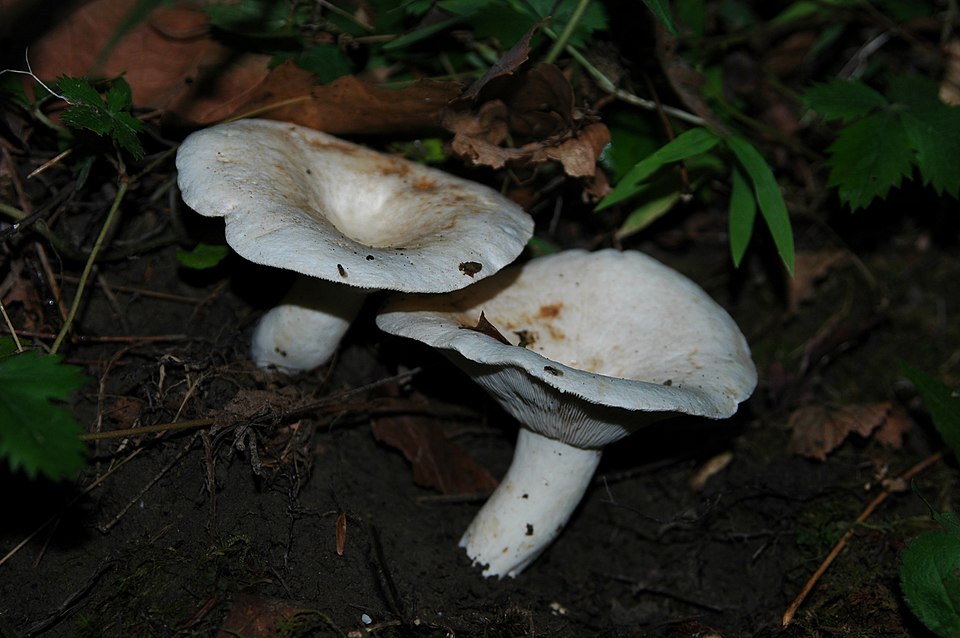
Peppery Milkcap (Lactarius piperatus)
Very similar in size, shape, and white coloration, and also has an acrid/peppery taste. The critical difference: break a gill or cut the flesh of Lactarius piperatus and it will exude copious white latex (milk). Russula brevipes produces no milk whatsoever. This is the single most reliable way to tell them apart in the field.
Read more on iNaturalist →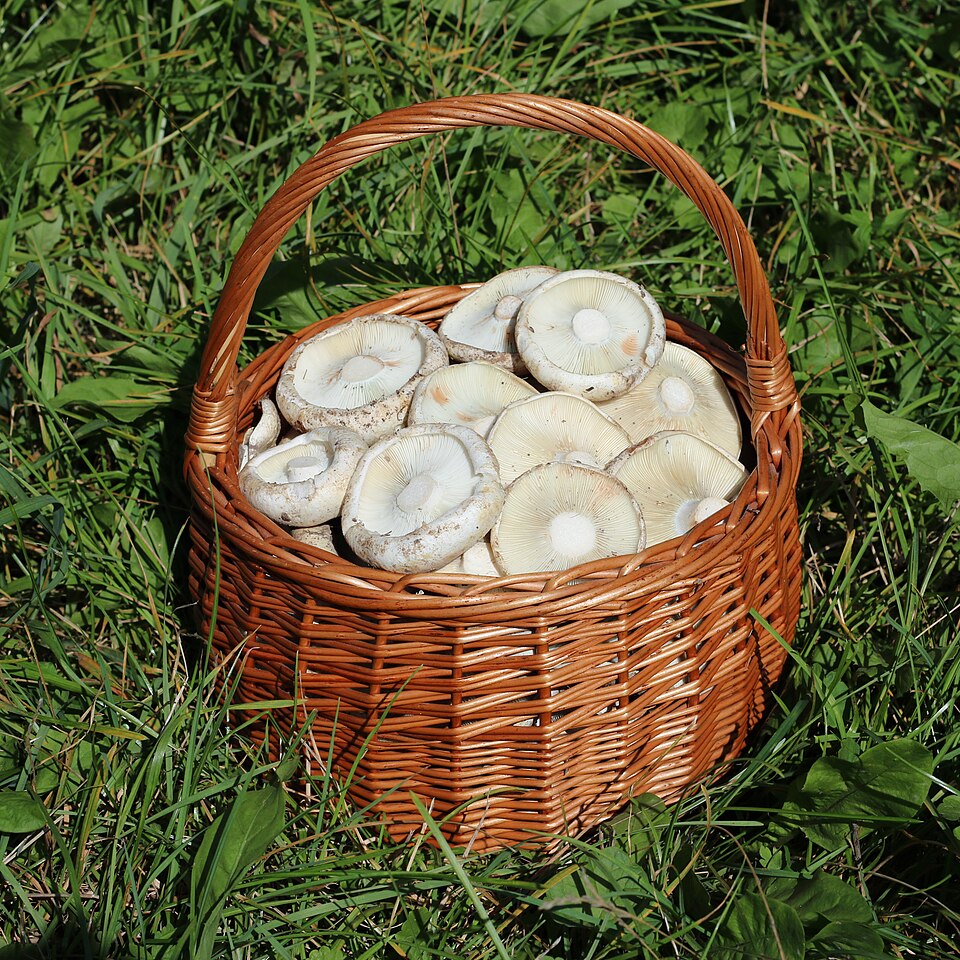
Russula delica
Extremely similar white Russula, essentially the European counterpart to R. brevipes. Distinguished primarily by geographic range (R. delica is European, R. brevipes is North American) and subtle microscopic spore differences. If you're in Europe finding a large white funnel-shaped Russula, it's more likely R. delica.
Read more on Wikipedia →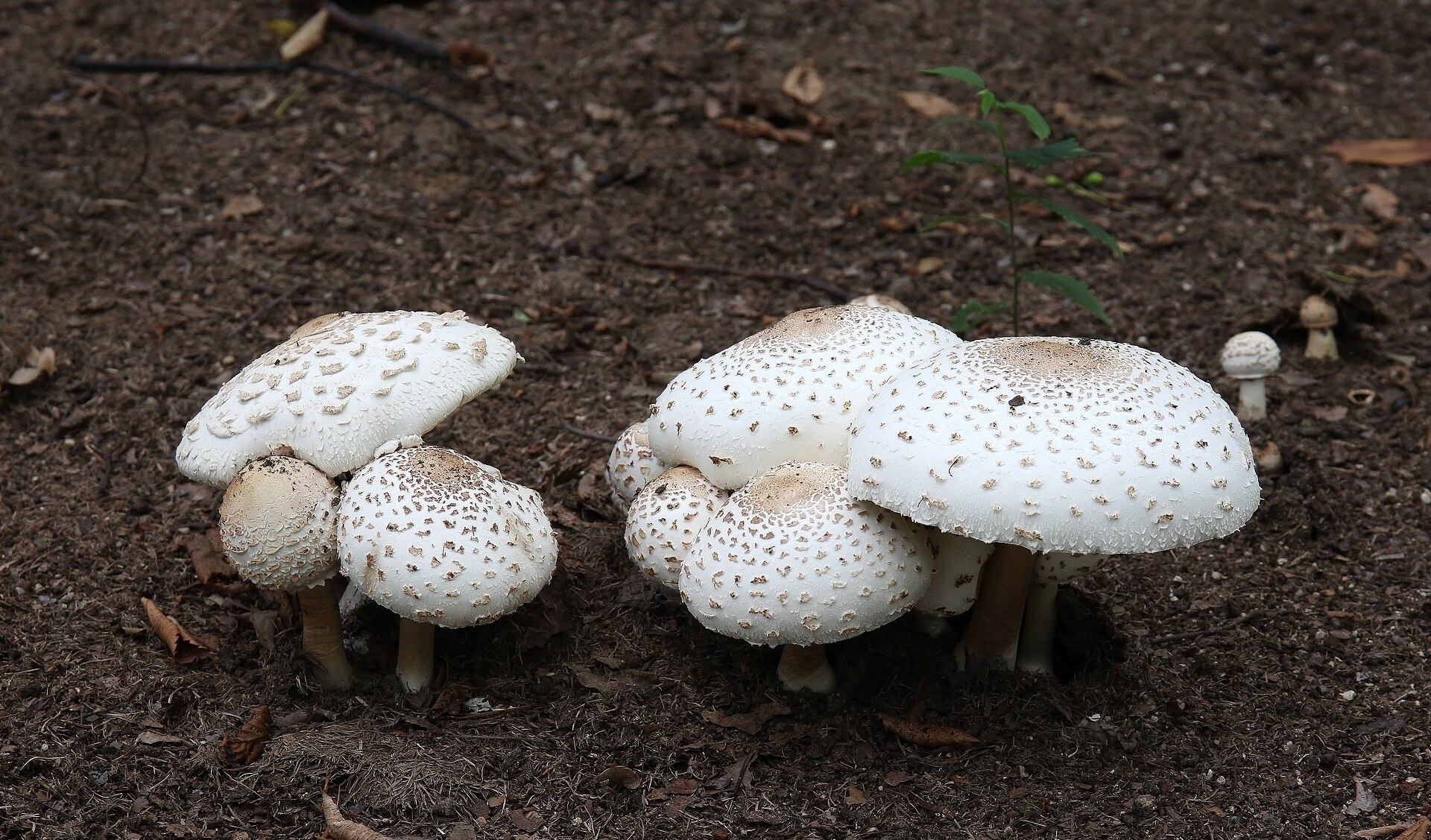
Both are large whitish mushrooms, but the similarities end there. Chlorophyllum molybdites has a scaly cap, a prominent ring on the stem, free gills that turn green with age, a green spore print, and grows in lawns and grassy areas — never in forests. It's also one of the most common causes of mushroom poisoning in North America.
Side-by-side comparison →Read more on iNaturalist →Short-stemmed Russula Edibility
Too acrid and peppery to eat on its own — the raw flesh produces a burning sensation on the tongue that cooking does not fully eliminate. However, when parasitized by Hypomyces lactifluorum, the resulting 'Lobster Mushroom' is considered a choice edible with a mild, nutty, seafood-like flavor and firm texture. The parasite essentially neutralizes the host's unpleasant chemistry.
Always verify with local experts before consuming wild mushrooms.
Found something that looks like this in the wild? Don't guess — identify it from a photo with Orangutany and check it against look-alikes before you touch it.