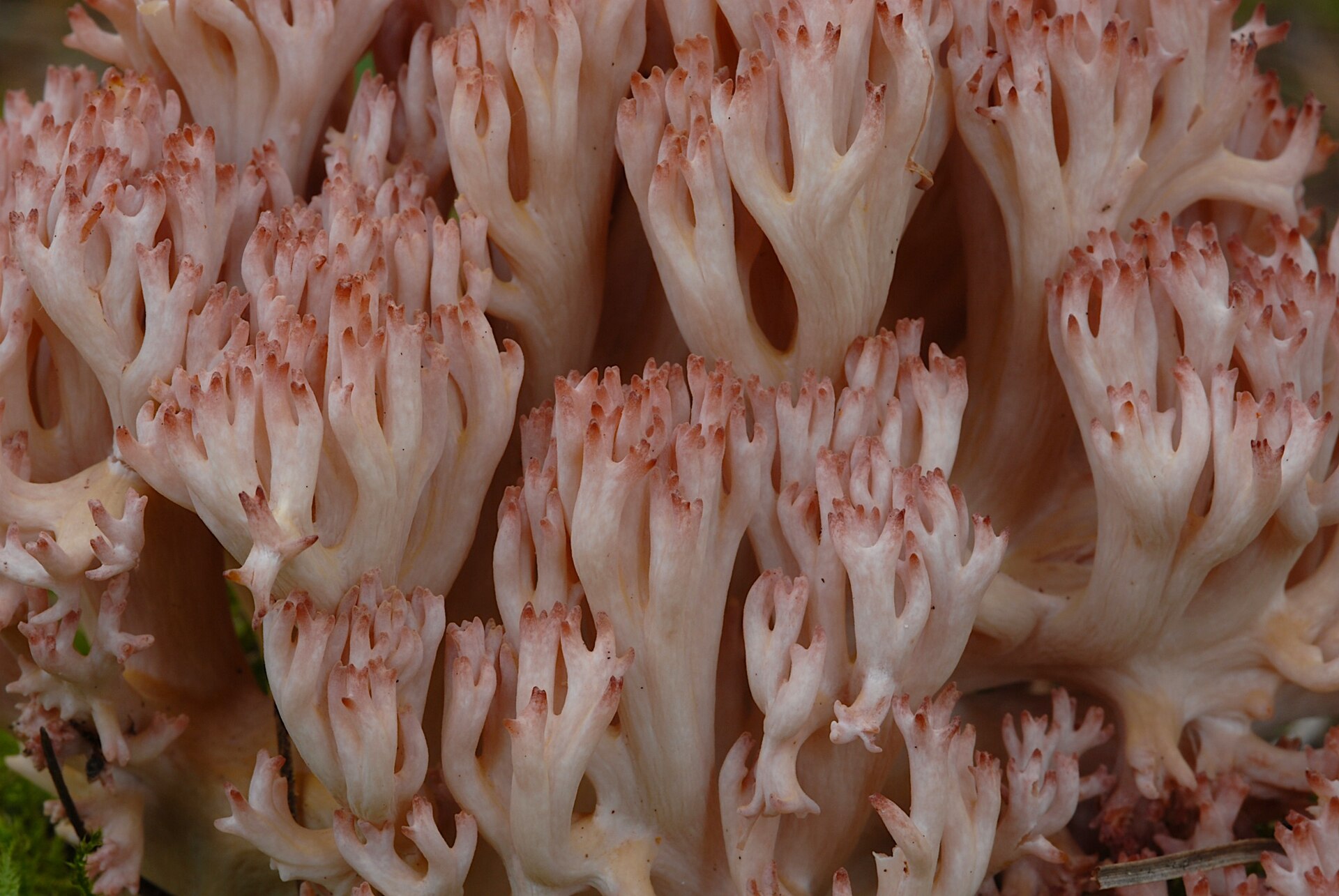
Photo by John Kirkpatrick (natashadak) · Wikimedia Commons · CC BY-SA 3.0
A large, striking coral fungus that looks like a head of cauliflower dipped in pink paint. Ramaria botrytis is the most recognizable and most commonly eaten species in the notoriously difficult coral fungus genus, found in mature beech and oak forests across the Northern Hemisphere. The pink-to-purple tipped branches on a thick white base make it one of the few Ramaria species that can be identified with reasonable confidence in the field.
Coral fungi are the oddballs of the mushroom world. They look nothing like a typical toadstool; instead, they resemble underwater coral, branching upward from a central base in clusters of fleshy fingers. The genus Ramaria contains hundreds of species, most of which are difficult or impossible to identify without microscopic examination and chemical tests. Ramaria botrytis is the glorious exception.
The Pink-tipped Coral is large (up to 15 cm tall and 20 cm across), with a thick, fleshy, whitish base that branches repeatedly into increasingly fine tips. The branch tips are colored pink to pinkish-purple to wine-red, fading to brownish with age. The overall effect is like a pale cauliflower or broccoli head that someone has airbrushed with raspberry. It is unmistakable once you have seen one.
The species is mycorrhizal, forming partnerships with mature beech and oak trees in old-growth and semi-natural woodlands. It tends to fruit in late summer and autumn, often in areas with deep leaf litter and rich, loamy soil. Finding one is a genuine event; they are not common, and their large size and striking appearance always draw attention.
As an edible, Ramaria botrytis is considered good when young and fresh. The flesh is firm and white, with a mild, slightly peppery flavor. Older specimens become tough and can cause mild gastrointestinal upset. The critical warning with all coral fungi is that many Ramaria species cause digestive problems, and some are genuinely laxative. Only collect Ramaria botrytis if you can confidently identify the pink-tipped branches and thick white base. When in doubt, leave coral fungi alone.
Pink-tipped Coral Facts
- ●Ramaria botrytis is one of the very few coral fungi that can be identified with reasonable confidence in the field, thanks to its distinctive pink-to-purple branch tips and thick white base. Most other Ramaria species require microscopy.
- ●The species name 'botrytis' means 'like a cluster of grapes,' referring to the densely branched, clustered form of the fruiting body.
- ●The genus Ramaria contains over 300 described species worldwide, and many regions are believed to harbor undescribed species. It is considered one of the most taxonomically challenging groups in all of mycology.
- ●A single large Ramaria botrytis can weigh over a kilogram, making it one of the heaviest non-bracket fungi you are likely to encounter on a forest floor.
Stories From the Field
The Italian Ditola Tradition
In parts of central Italy, Ramaria botrytis is called 'ditola' or 'manina' and has been collected from beech forests for generations. It appears in traditional recipes from Abruzzo and Umbria, typically sauteed with garlic and olive oil or added to pasta sauces. Local markets in autumn occasionally display impressive specimens alongside porcini and ovoli.
A Mycologist's Crown Jewel Find
A mycologist from Bavaria described finding a specimen of Ramaria botrytis weighing 1.2 kg in an old beech forest near Berchtesgaden. The fruiting body was perfectly fresh, with vivid pink tips and no insect damage. She photographed it extensively before collecting it, calling it 'the most beautiful single mushroom I have found in 30 years of fieldwork.'
The Coral Fungus Identification Challenge
A Reddit post showing a large coral fungus sparked a 200-comment thread debating whether it was Ramaria botrytis, R. formosa, or something else entirely. The episode illustrated why most field mycologists advise leaving coral fungi alone unless you have deep experience with the genus. One commenter summed it up: 'Ramaria identification is a career, not a hobby.'
Where It's Been Found
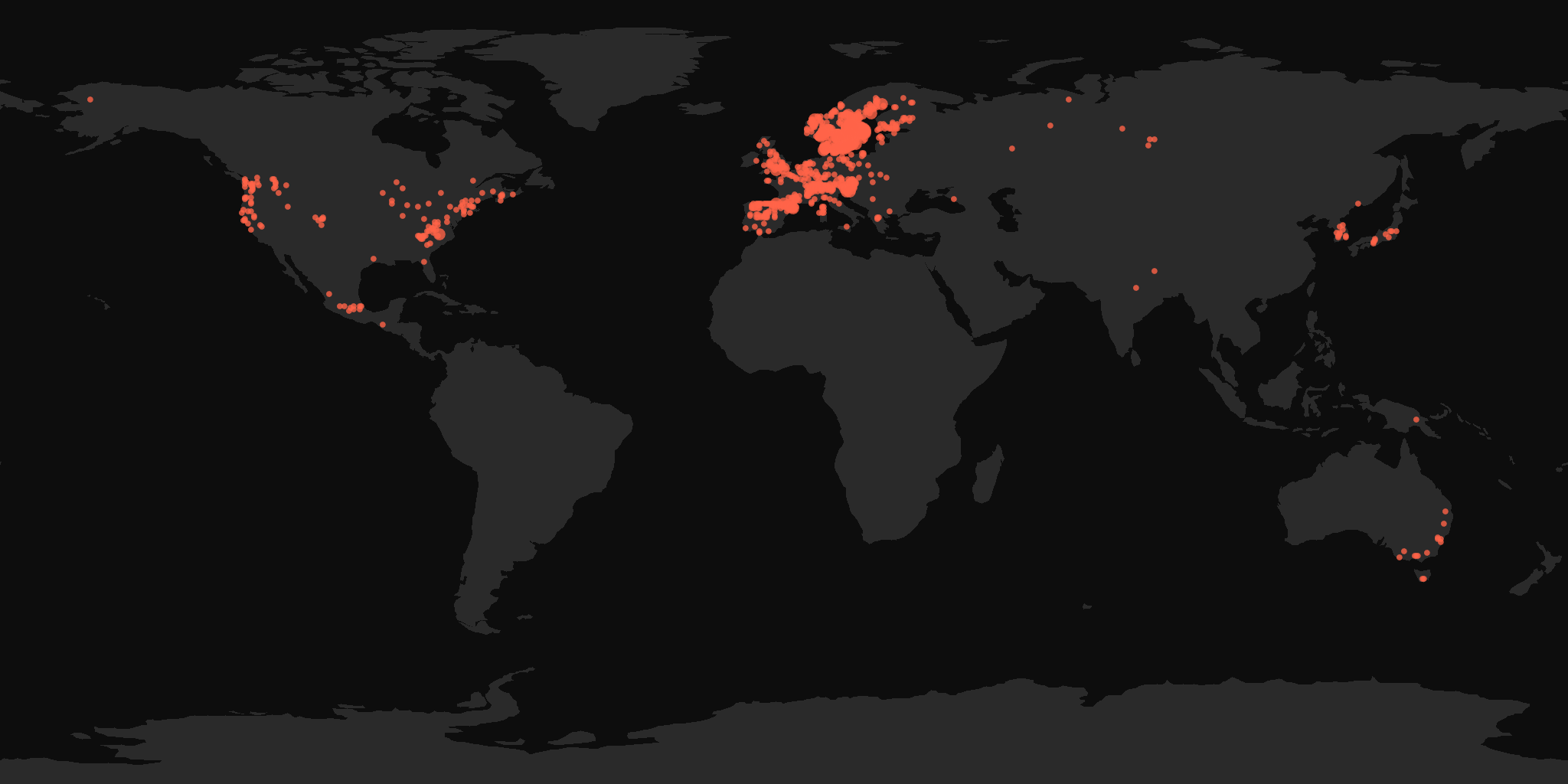
Based on reported sightings worldwide
How to Identify Pink-tipped Coral
Cap
No cap. Fruiting body is a densely branched, coral-like structure, 8-15 cm tall and up to 20 cm across. Branches arise from a thick, fleshy, whitish base (up to 8 cm wide). Branches divide repeatedly, becoming finer toward the tips. Branch tips are pink, pinkish-purple, or wine-red when fresh, fading to brownish with age.
Gills
No gills. Spores are produced on the outer surface of the branches.
Stem
No true stem. The base is a thick, compact, whitish to pale buff mass from which all branches arise. Flesh is white, firm, and solid when young.
Spore Print
Yellowish to ochre-brown.
Odor
Mild, pleasant, slightly sweet or fruity.
Mushrooms That Look Like Pink-tipped Coral
Ramaria formosa (Salmon Coral)
CAUTION: causes gastrointestinal upset. Similar branching coral form but the branches are salmon-pink to orange throughout (not just at the tips), and the base is often pinkish rather than white. The flesh stains brown when bruised. Branch tips are yellowish, not pink-purple.
Read more on First Nature →Ramaria stricta (Strict-branch Coral)
Smaller, with more upright, parallel branches. Yellowish to tan throughout, without pink tips. Grows on dead wood rather than from soil. Bitter taste. Not recommended for eating.
Read more on MushroomExpert →Cauliflower Fungus (Sparassis crispa)
Superficially similar in overall shape (large, pale, cauliflower-like), but Sparassis has flat, wavy, ribbon-like lobes rather than branching fingers. Grows at the base of pine trees, not in beech or oak woodland. Excellent edible.
Read more on iNaturalist →Is Pink-tipped Coral Edible?
Edible when young and fresh. The flesh is firm with a mild, slightly peppery flavor. Older specimens become tough and may cause mild gastrointestinal upset. Must be positively identified, as several other Ramaria species cause digestive problems. Only the young, fresh, pink-tipped form should be collected. Cook thoroughly. Do not eat any coral fungus you cannot confidently identify to species level.
Always verify with local experts before consuming wild mushrooms.
Found something that looks like this in the wild? Don't guess — identify it from a photo with Orangutany and check it against look-alikes before you touch it.