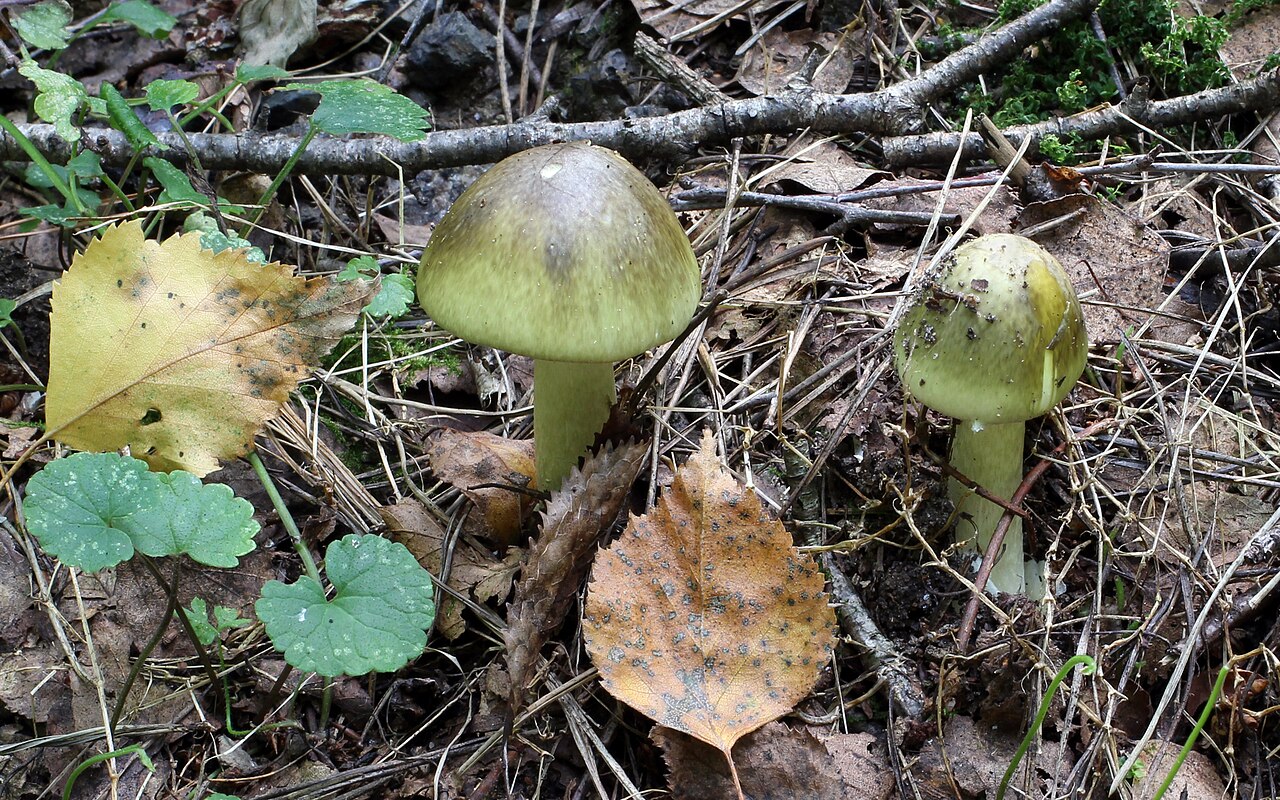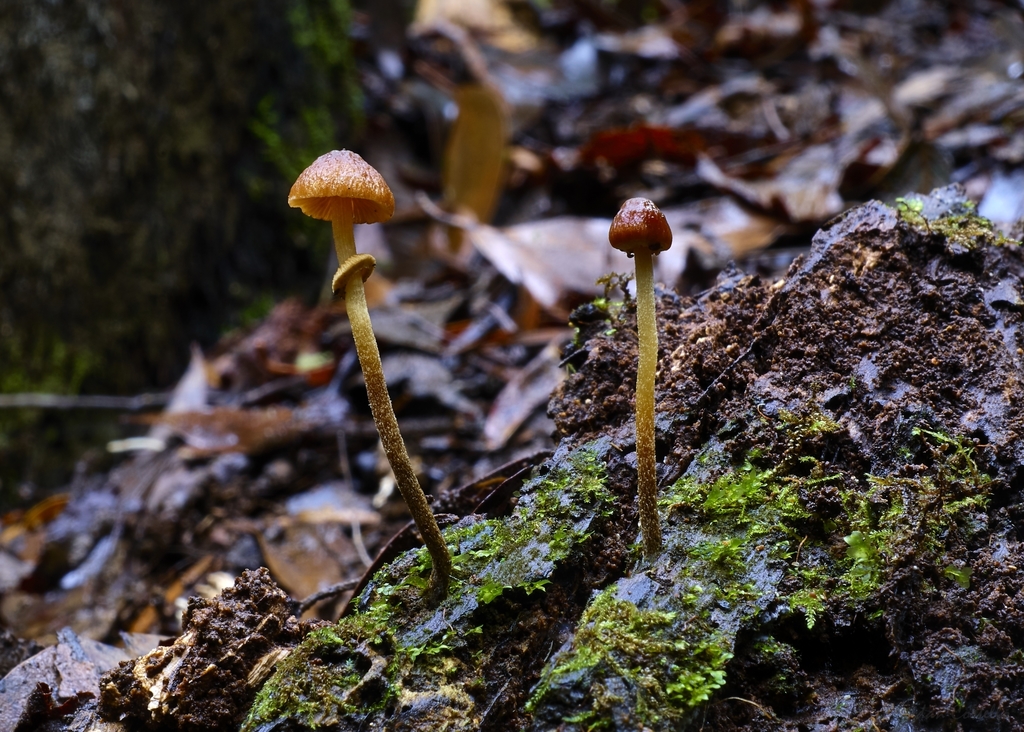
Photo by Alan Rockefeller · Wikimedia Commons · CC BY-SA 2.5
A tiny, forgettable brown mushroom that pops up in lawns, gardens, and wood chips across North America and Europe. Do not let the size fool you: Conocybe filaris contains amatoxins, the same liver-destroying compounds found in the Death Cap. It is one of the most overlooked deadly mushrooms in the world.
Conocybe filaris is the silent threat lurking in your front yard. While most foragers know to fear the Death Cap and the Destroying Angel, almost nobody worries about the dainty little brown mushroom poking through the grass by the mailbox. That oversight has landed people in the hospital. Conocybe filaris produces amatoxins, specifically alpha-amanitin, which irreversibly damages the liver and kidneys. It is the same toxin profile as Amanita phalloides, packed into a mushroom you could fit on a thumbnail.
The species is maddeningly common. It fruits on lawns, mulched garden beds, compost piles, and disturbed soil throughout the temperate world. Children and pets are at particular risk because the mushrooms appear right where they play. In adults, the danger comes from casual foragers who assume that small, lawn-growing mushrooms are harmless Conocybe or Psilocybe species. The mushroom has a thin, fragile ring on the stem that is easily missed or lost, and its rusty brown spore print is a clue that often goes unchecked.
Mycologists have debated whether all collections identified as C. filaris actually contain dangerous levels of amatoxins, since the species complex is poorly understood. But the confirmed cases are enough to make the rule simple: never eat any small brown mushroom from a lawn. Period. The genus Conocybe contains over 200 species, many of them impossible to distinguish without a microscope, and at least several contain lethal toxins.
Deadly Conocybe Facts
- ●Conocybe filaris contains the same amatoxins as the Death Cap, but in a package small enough to sit on a coin. Size has absolutely nothing to do with toxicity in mushrooms.
- ●The genus Conocybe contains over 200 species, and telling them apart often requires microscopic examination of spore shape and cystidia. Even experienced mycologists struggle with this group.
- ●Conocybe filaris was previously known as Pholiotina filaris and Conocybe rugosa. The taxonomy of this group has been reorganized multiple times as DNA sequencing reveals hidden relationships.
- ●The thin ring on the stem of C. filaris is one of the few macroscopic clues that separates it from other small brown lawn mushrooms, but rain and handling can destroy it in minutes.
Stories From the Field
The Lawn Mushroom That Sent a Toddler to the ER
A 2017 case report from the Pacific Northwest described a two-year-old who picked and ate small brown mushrooms from the family's backyard lawn. The parents brought the child to the ER when vomiting began eight hours later. Toxicology confirmed amatoxin exposure consistent with Conocybe filaris. The child survived after four days of intensive care, but the case highlighted the danger of lawn-growing amatoxin species that most parents have never heard of.
Mistaken for Psilocybe in a College Town
In 2015, two college students in Eugene, Oregon, collected small brown mushrooms from a landscaped wood chip bed, believing they were Psilocybe cyanescens. They brewed a tea and drank it. When they experienced no psychoactive effects but developed stomach cramps twelve hours later, they went to the hospital. Spore analysis of leftover mushrooms identified Conocybe filaris. Both recovered after treatment for mild liver enzyme elevation.
The Dog Walker's Discovery
A veterinarian in Minneapolis documented a case in 2020 where a Labrador retriever ate Conocybe filaris from a neighbor's lawn during a morning walk. The dog presented with vomiting and lethargy the next day. Liver enzymes were dangerously elevated. After three days of aggressive IV fluids and liver support, the dog survived, but the vet noted that most pet owners would never suspect a tiny lawn mushroom of being lethal.
Where It's Been Found

Based on reported sightings worldwide
How to Identify Deadly Conocybe
Cap
1-2.5 cm across. Conical to bell-shaped, sometimes flattening slightly with age. Tawny brown to ochre-brown, smooth, slightly sticky when moist. Hygrophanous, drying to a paler buff from the center outward. Surface often has fine radial striations when moist.
Gills
Attached (adnate to adnexed), fairly crowded. Pale cinnamon-brown when young, darkening to rusty brown as spores mature. Thin and fragile.
Stem
3-7 cm tall, 1-3 mm thick. Very slender and fragile, pale brownish, often with a thin, membranous ring (annulus) in the upper third. The ring is easily lost or collapsed against the stem. Base may be slightly enlarged.
Spore Print
Rusty brown to cinnamon-brown. Always take a spore print on any small brown lawn mushroom before making any identification.
Odor
Mild, not distinctive. Some report a faintly earthy or mealy smell.
Mushrooms That Look Like Deadly Conocybe
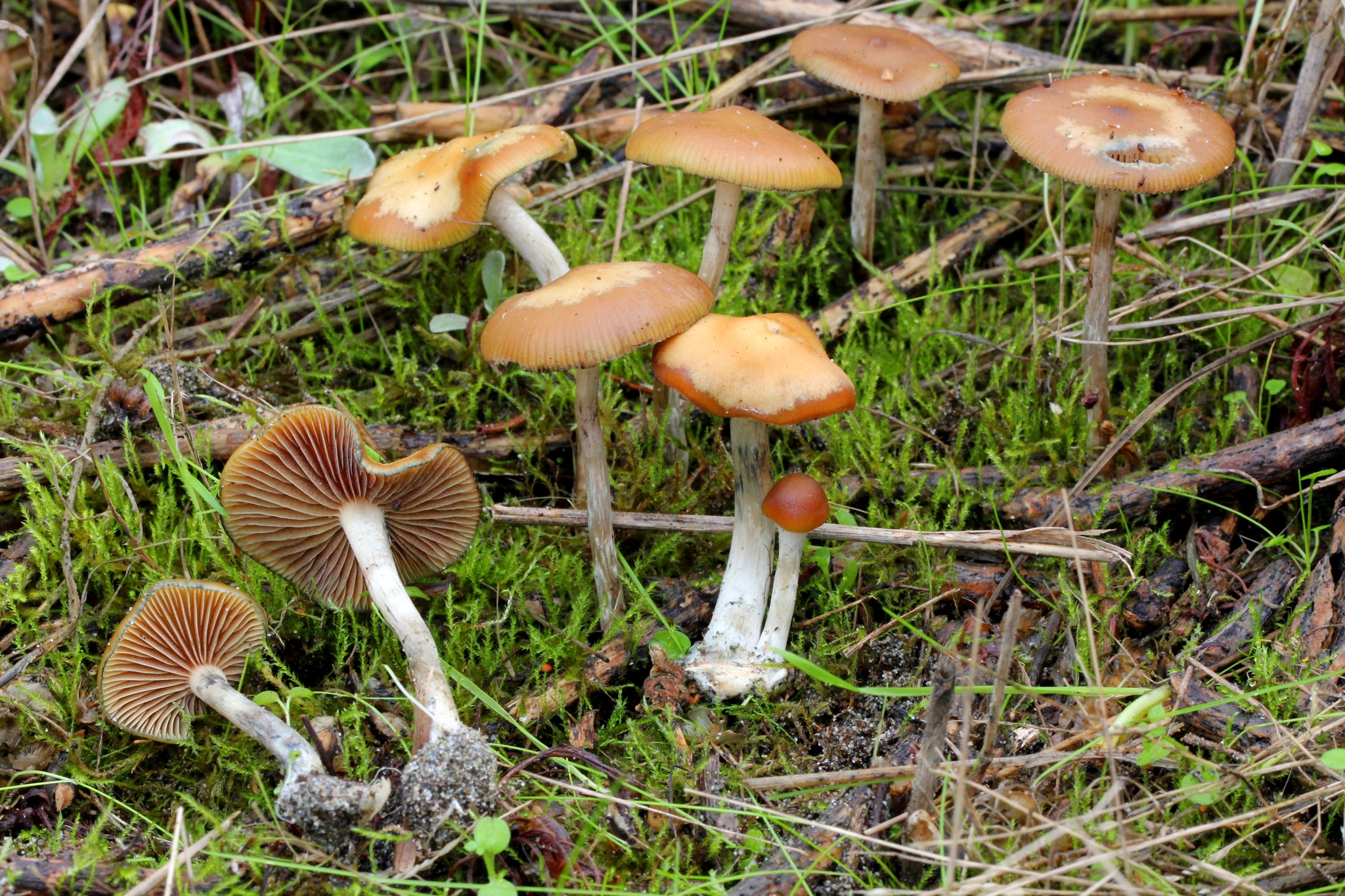
Also small and brown, also found on wood chips. Critical differences: Psilocybe cyanescens bruises blue, has a wavy cap margin, and produces a dark purple-brown spore print. Conocybe filaris never bruises blue and has a rusty brown spore print. Confusing the two could be fatal.
Side-by-side comparison →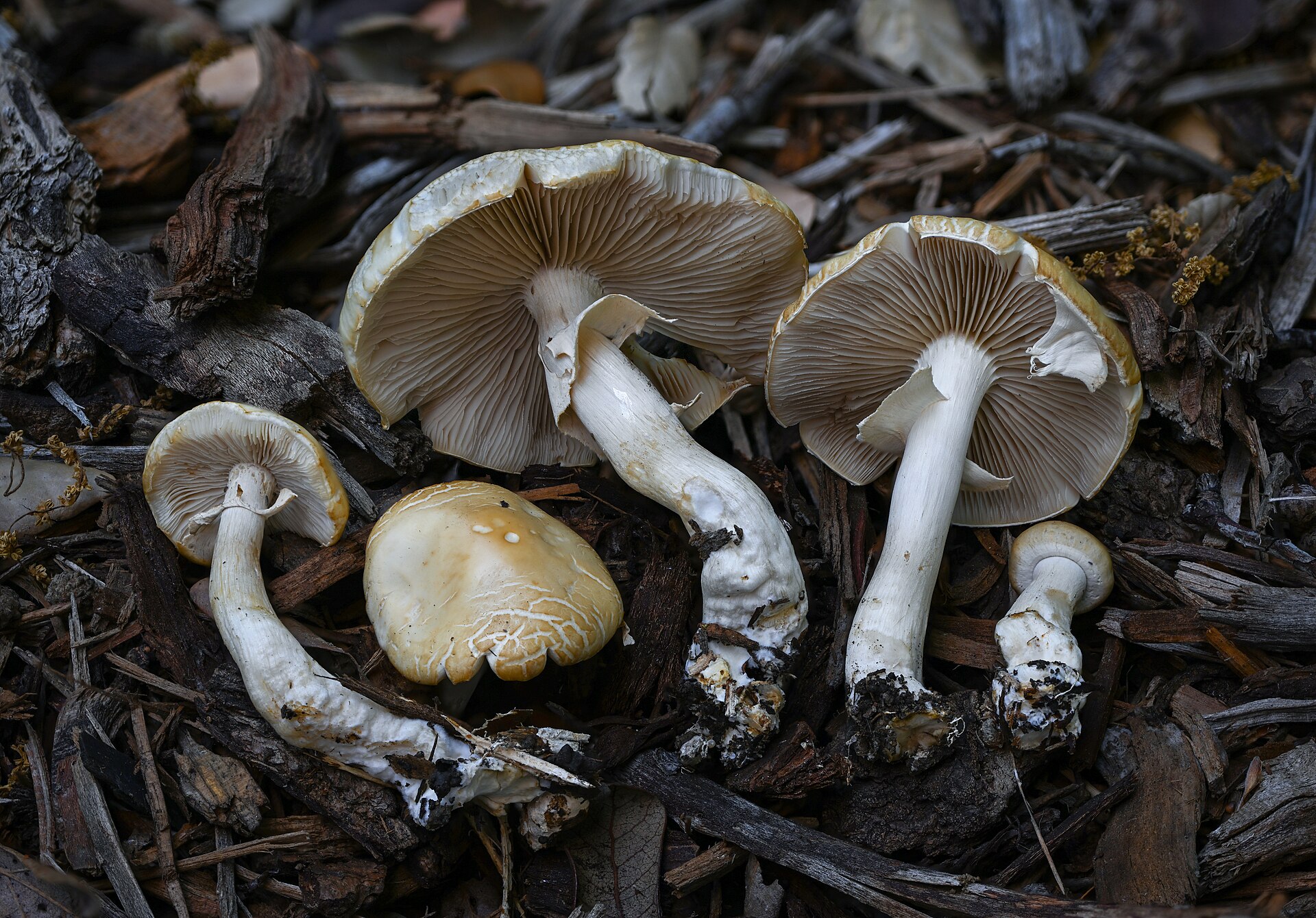
Larger (3-8 cm cap), sturdier build, with a more persistent ring and a pale buff to yellowish cap. Grows in similar lawn and garden habitats but is significantly more robust. Spore print is dark brown, not rusty cinnamon.
Side-by-side comparison →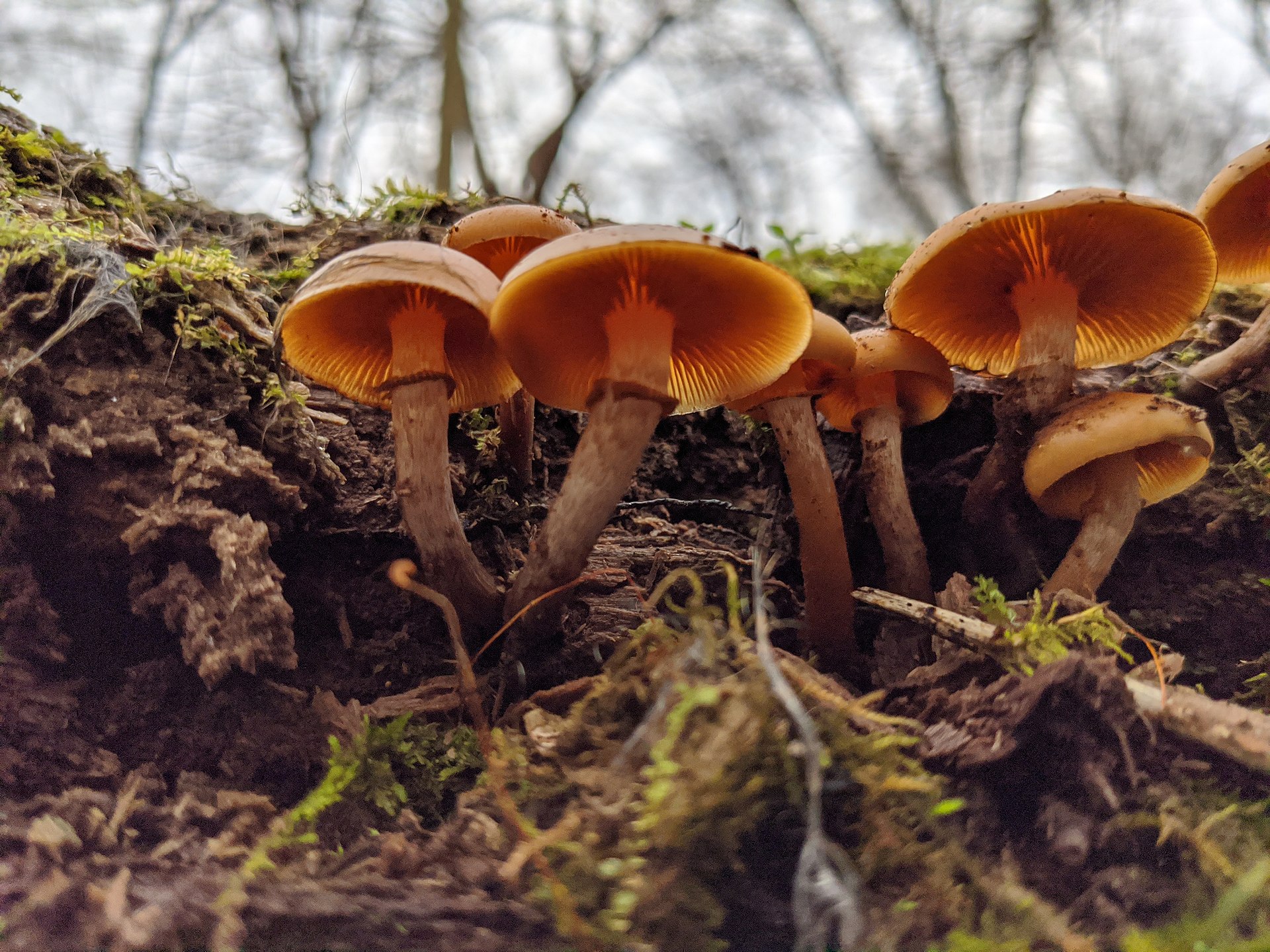
Also deadly, also has amatoxins and a rusty brown spore print. Galerina typically grows on wood (logs, stumps, chips), while Conocybe filaris prefers soil and lawns. Both should be avoided entirely.
Side-by-side comparison →Why Deadly Conocybe Is Deadly
Contains amatoxins (alpha-amanitin), the same compounds found in Amanita phalloides. Symptoms are delayed 6-12 hours: severe gastrointestinal distress, followed by a deceptive period of improvement, then catastrophic liver and kidney failure over 3-7 days. Even a few small caps can cause serious organ damage. There is no antidote. Treatment requires intensive care and potentially liver transplant. Do not eat any small brown lawn mushroom.
Always verify with local experts before consuming wild mushrooms.
Found something that looks like this in the wild? Don't guess — identify it from a photo with Orangutany and check it against look-alikes before you touch it.