Poison Fire Coral vs Pink-tipped Coral
Podostroma cornu-damae compared with Ramaria botrytis — how to tell them apart in the field.
This is a dangerous confusion.
At least one of these species is potentially deadly. Never eat a wild mushroom based on a photo comparison alone — verify with local experts.
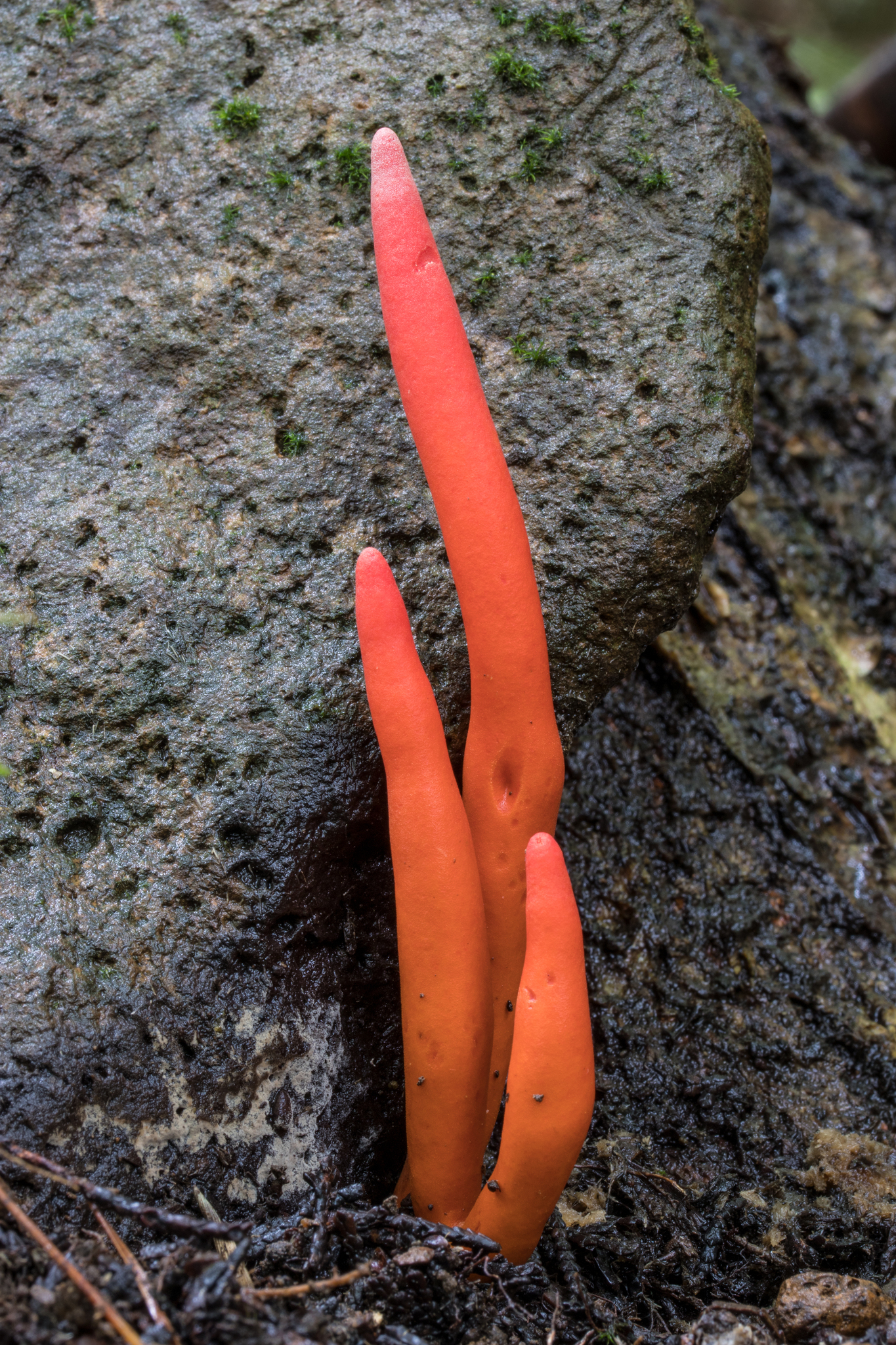
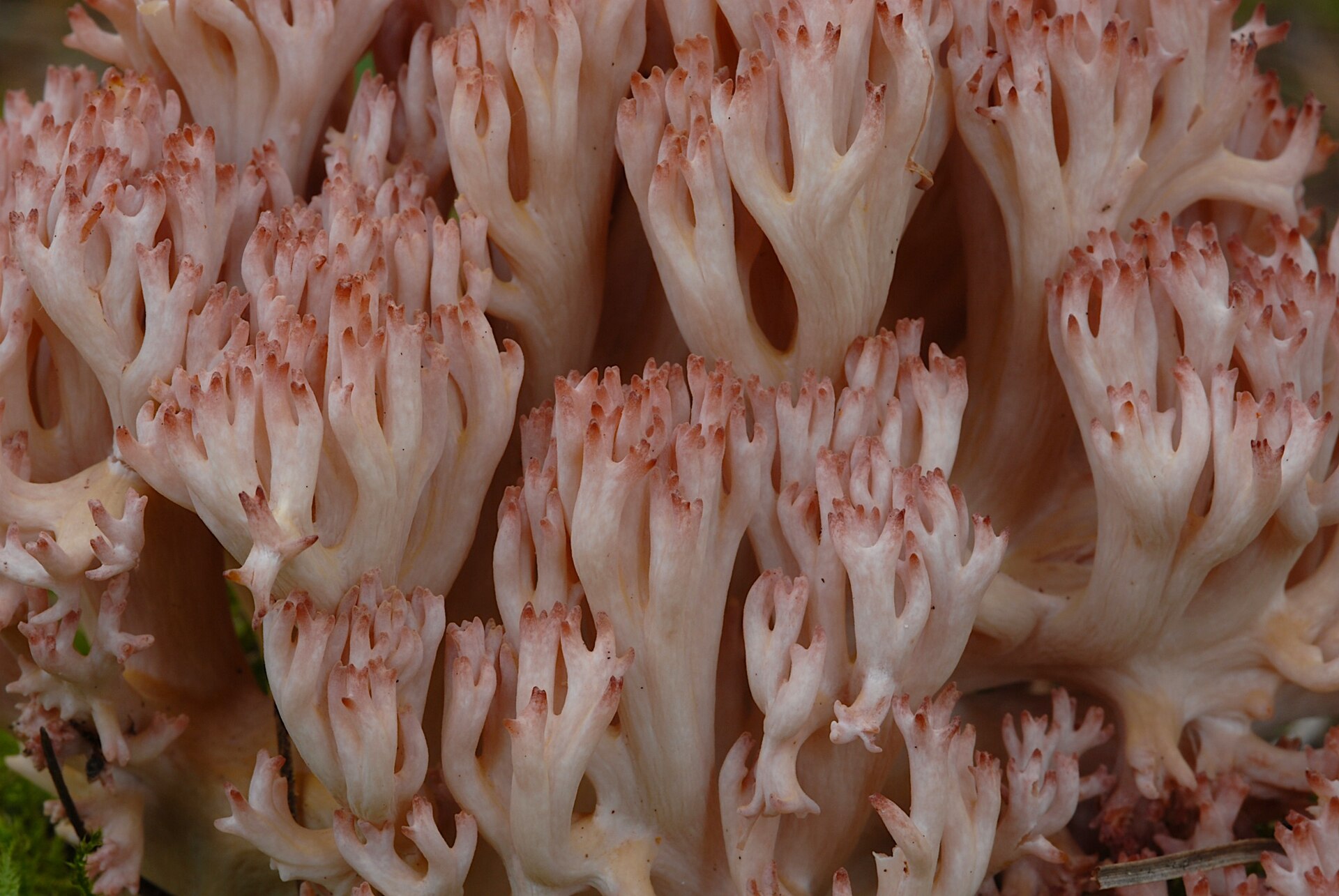
How to Tell Them Apart
A large, much-branched coral fungus with white to pinkish branches and purple-pink tips. Much larger and more extensively branched than Podostroma. Grows on the ground in broadleaf forests. Considered edible.
Side-by-Side Identification
| Trait | Poison Fire Coral | Pink-tipped Coral |
|---|---|---|
| Cap | No cap in the traditional sense. Fruiting body consists of upright, finger-like or antler-like projections, 3-13 cm tall. Bright orange-red to blood-red. Surface is smooth to slightly roughened. Branches may be simple or forked. | No cap. Fruiting body is a densely branched, coral-like structure, 8-15 cm tall and up to 20 cm across. Branches arise from a thick, fleshy, whitish base (up to 8 cm wide). Branches divide repeatedly, becoming finer toward the tips. Branch tips are pink, pinkish-purple, or wine-red when fresh, fading to brownish with age. |
| Gills | None. Spores are produced on the surface of the finger-like projections. | No gills. Spores are produced on the outer surface of the branches. |
| Stem | No distinct stem. The projections emerge directly from a base attached to dead wood or soil near buried wood. | No true stem. The base is a thick, compact, whitish to pale buff mass from which all branches arise. Flesh is white, firm, and solid when young. |
| Spore print | White (though collecting a spore print from this species is strongly discouraged due to skin-contact toxicity). | Yellowish to ochre-brown. |
| Odor | Mild or not distinctive. | Mild, pleasant, slightly sweet or fruity. |
| Habitat | Grows on or near dead hardwood stumps and roots, particularly in montane broadleaf forests. Often found near oak and beech. Prefers humid, shaded environments in mountainous terrain. | Mycorrhizal with mature beech (Fagus) and oak (Quercus) in old-growth and semi-natural deciduous woodlands. Prefers rich, loamy, well-drained soils with deep leaf litter. Found on the forest floor, often partially hidden under leaves. Also reported under conifers in some regions. |
| Season | July through October. Most commonly found in late summer and early autumn in Japan and Korea. | Late summer through autumn, typically August through November. Peak season is September to October in most of its range. |
Found one of these in the wild? Don't rely on memory — identify it from a photo with Orangutany and check it against both species before you touch it.