Death Caps Are Spreading Across North America
By Priya Sharma · Orangutany · March 2026
The deadliest mushroom on Earth is not native to North America. But it lives here now, and it's spreading faster than anyone predicted.
Amanita phalloides, commonly known as the death cap, is responsible for more than 90% of mushroom-related fatalities worldwide. A single cap contains enough amatoxin to kill an adult. It has no taste, no smell, and no visual feature that screams “danger” to the untrained eye.
For most of the 20th century, death caps in North America were confined to a narrow strip of the California coast. That is no longer the case. Over the past two decades, confirmed sightings have expanded into British Columbia, the Pacific Northwest, the mid-Atlantic states, and parts of the Northeast. The mushroom is now established on both coasts and appears to be moving inland.
This is the story of an invasion in progress — one that most people don't even know is happening.
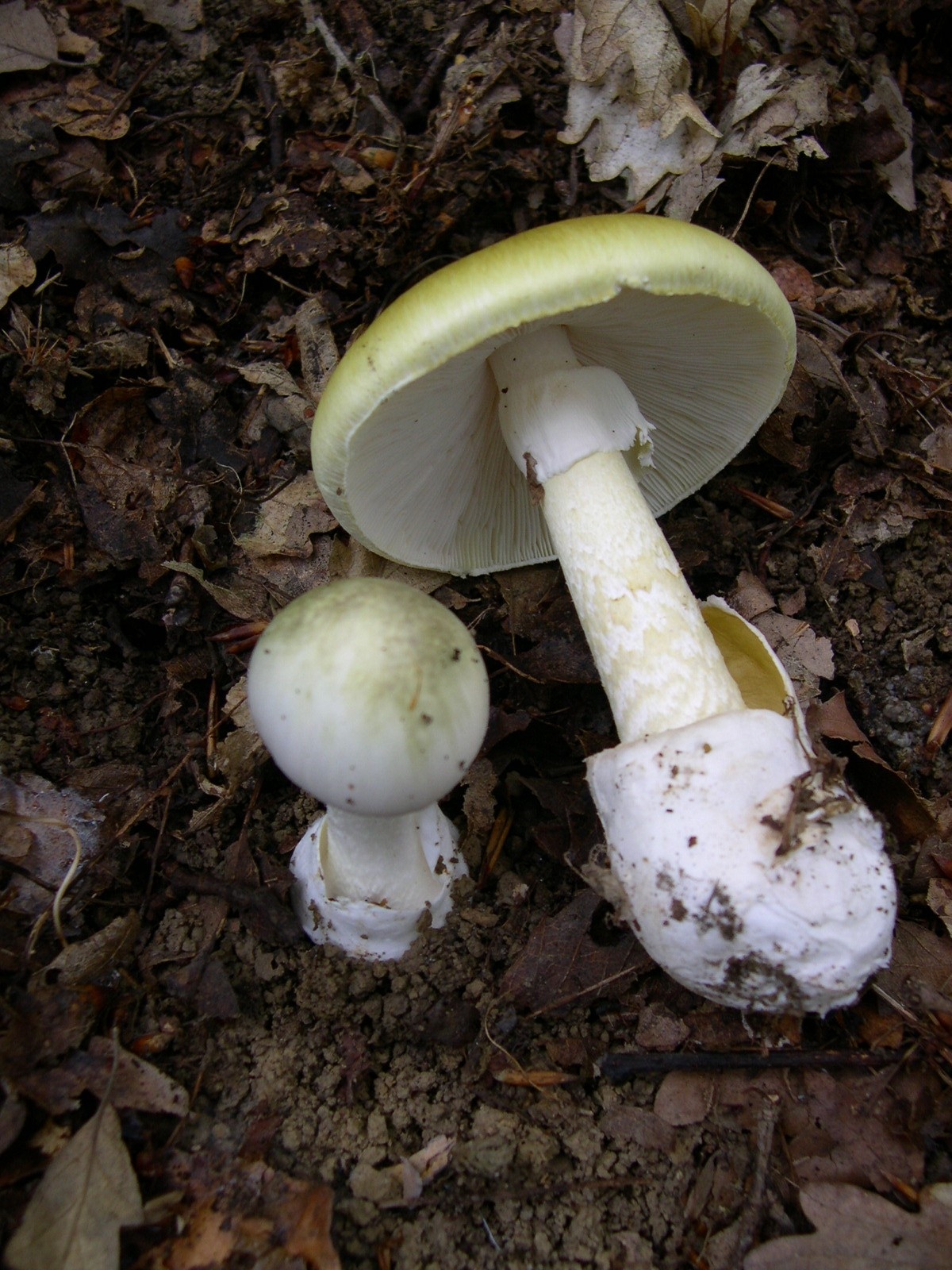
How Death Caps Arrived in North America
Amanita phalloides is native to Europe, where it has coexisted with broadleaf trees for millennia. It forms mycorrhizal partnerships — mutualistic relationships where the fungus colonizes tree roots, exchanging soil nutrients for sugars produced by the tree through photosynthesis.
In Europe, death caps associate primarily with oaks (Quercus species), beeches, chestnuts, and hazels. When European settlers began importing these trees to North America in the 18th and 19th centuries for landscaping, timber, and ornamental purposes, the fungal spores came along, embedded in the root balls and surrounding soil.
The earliest confirmed North American collections of A. phalloides date to the mid-20th century, primarily from the San Francisco Bay Area and the broader California coast. The mild, Mediterranean-like climate of coastal California, with its wet winters and dry summers, closely mirrors the conditions death caps thrive in across southern Europe. The abundant plantings of European oaks on university campuses, in city parks, and along residential streets gave the fungus exactly what it needed.
For decades, mycologists treated death caps in California as a curiosity — an introduced species that had naturalized in a limited range. That assessment turned out to be dangerously optimistic.
The Mycorrhizal Relationship: Why Oaks Matter
To understand why death caps are spreading, you need to understand how they live. Amanita phalloides is an ectomycorrhizal fungus. It wraps its hyphae around the fine root tips of host trees, forming a sheath called a mantle. Through this interface, the fungus delivers phosphorus, nitrogen, and water to the tree. In return, the tree feeds the fungus carbon in the form of simple sugars.
This is not parasitism. Both organisms benefit. But it means the fungus cannot survive without a compatible tree host. In Europe, death caps partner with dozens of native broadleaf species. In North America, the critical finding has been that A. phalloides is not limited to imported European oaks. It has jumped to native North American trees.
Research published by Anne Pringle and colleagues at the University of Wisconsin-Madison demonstrated that death caps in California have formed mycorrhizal associations with native coast live oaks (Quercus agrifolia), a species that had no evolutionary history with the fungus. This was a pivotal discovery. It meant death caps were no longer tethered to imported trees. They could spread anywhere suitable native oaks grew.
Subsequent studies have found death caps associating with additional native species, including tanoak (Notholithocarpus densiflorus) and possibly some pine species. Each new host relationship expands the potential range of the invasion.
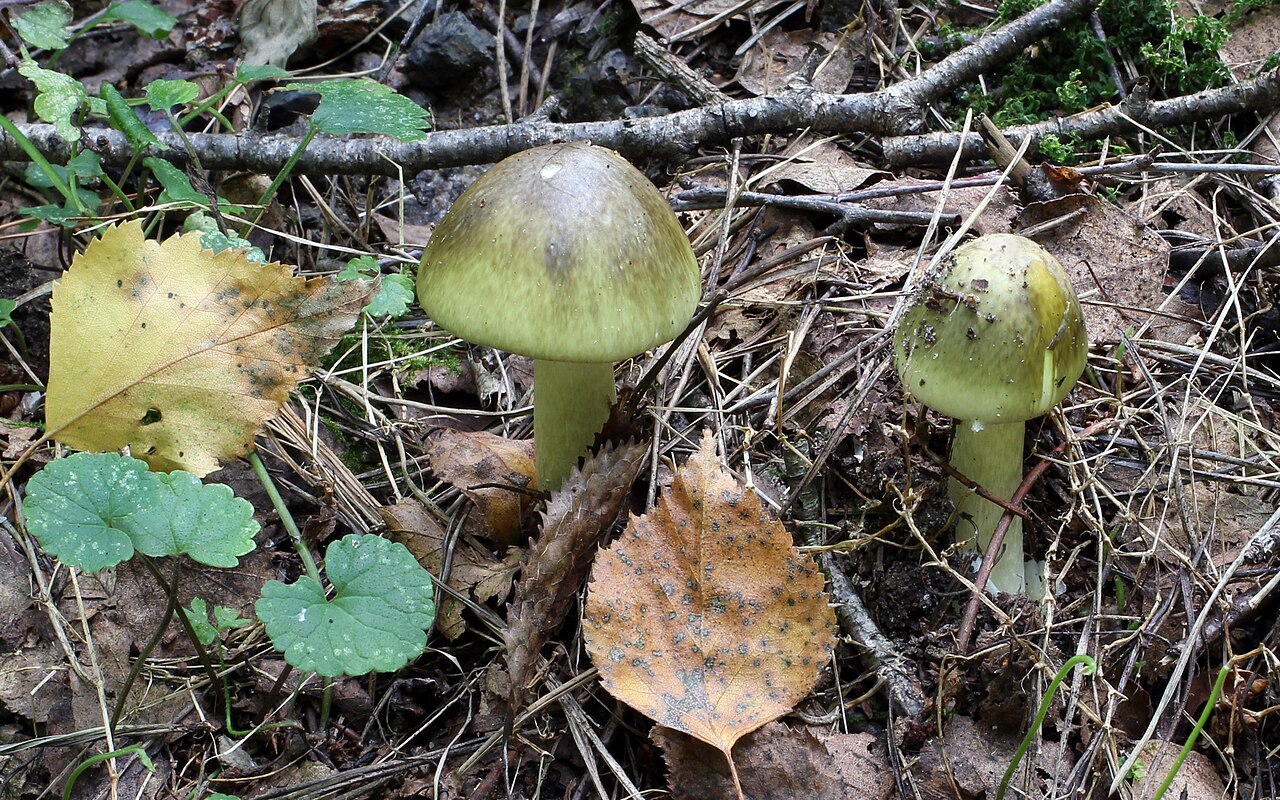
The Spread: From California to Both Coasts
The expansion of A. phalloides across North America has accelerated significantly since the early 2000s. The pattern is not uniform — death caps are appearing in scattered locations, often tied to urban areas with planted European trees, then establishing and spreading outward.
California (established since mid-1900s)
The epicenter. Death caps are abundant throughout the San Francisco Bay Area, Sacramento, and coastal communities from Mendocino County south to Santa Cruz. They fruit prolifically under both imported oaks and native coast live oaks during the fall and winter rainy season. California accounts for the majority of death cap poisonings in North America.
Pacific Northwest (expanding since 2000s)
Confirmed populations now exist in Oregon's Willamette Valley, the Portland metro area, and parts of Washington state. The Pacific Northwest's wet climate and abundant oak and hazel plantings provide ideal habitat. British Columbia has reported death caps in the Greater Vancouver area and on Vancouver Island, with the first confirmed Canadian specimens documented in the early 2000s.
Eastern Seaboard (emerging since 2010s)
This is the front that concerns mycologists most. Death caps have been confirmed in New Jersey, New York, Pennsylvania, and parts of New England. The eastern populations appear to be independent introductions, likely through imported nursery stock from Europe. The abundance of native oaks across the eastern deciduous forest provides an enormous amount of potential habitat.
Mid-Atlantic and Southeast (early reports)
Scattered reports from Maryland, Virginia, and the Carolinas are under investigation. Not all have been genetically confirmed, but the trajectory suggests continued southward and inland expansion along the eastern seaboard.
Why the Spread Is Accelerating
Several factors are driving the expansion of death caps beyond their initial footholds.
Urban tree planting. Cities across North America continue to plant European oaks, beeches, and hornbeams for their aesthetic qualities and shade coverage. Nursery stock often comes with soil that may harbor fungal spores or colonized root fragments. Every European oak planted in a new park or streetscape is a potential beachhead for A. phalloides.
Climate change. Warmer winters and shifting precipitation patterns are expanding the climate envelope where death caps can fruit. Areas that were previously too cold or too dry are becoming suitable. The Pacific Northwest, which has seen warmer and wetter autumns, is a prime example of a region where climate change is facilitating fungal expansion.
Host jumping. As noted above, the ability of death caps to form mycorrhizal relationships with native North American trees removes the biggest constraint on their spread. They are no longer limited to the footprint of imported European trees. Native oaks span the continent.
Spore dispersal. Death caps produce billions of spores per fruiting body. These spores are carried by wind, water, and animal activity. Once a population establishes in a park or garden, spores can disperse to nearby wooded areas and colonize native tree roots. The spread from urban plantings into native forests has already been documented in California.
Why Native Wildlife Isn't Adapted
In Europe, certain animals have evolved tolerances to amatoxins. Some European slug species, for instance, readily consume death caps without apparent harm. Squirrels and deer in European forests have long coexisted with the mushroom.
North American wildlife has no such history. Dogs are particularly vulnerable — veterinary poisoning cases from death caps have risen sharply in California, the Pacific Northwest, and British Columbia. Dogs are attracted to the faintly sweet smell of young death caps and may consume them during walks in parks and wooded areas.
The ecological impact on native invertebrates and small mammals is not yet well studied, but the introduction of a highly toxic fungal species into ecosystems that evolved without it raises obvious concerns. Death caps may also be competing with native mycorrhizal fungi for root space on native trees, potentially displacing beneficial species that have coevolved with North American forests.
The California Poisoning Crisis
California remains the epicenter of death cap poisonings in North America. The state sees cases every year, concentrated in the Bay Area during the November through February fruiting season.
The 2024–2025 season was particularly severe. Heavy rains following drought years triggered prolific fruiting, and emergency rooms across the Bay Area reported multiple amatoxin poisoning cases. The California Poison Control System issued repeated public warnings, and several Bay Area counties launched multilingual awareness campaigns targeting communities where wild mushroom foraging is culturally common.
A recurring and tragic pattern drives many of these cases. Immigrants from Southeast Asia, particularly from Laos, Vietnam, and Cambodia, mistake death caps for paddy straw mushrooms (Volvariella volvacea), an edible species widely consumed in their home countries. The resemblance between young death caps and paddy straw mushrooms is striking — both emerge from a volval sac, both have white gills, and both can appear in grassy areas near trees.
In their home countries, Amanita phalloides does not exist. The foraging knowledge that kept them safe for generations becomes deadly in a new environment. This is not ignorance — it is a collision between deeply held cultural knowledge and an invasive species that doesn't belong here.
Parallels with Australia's Death Cap Invasion
North America is not the only continent dealing with an A. phalloides invasion. Australia has been fighting the same battle for over a century, and the parallels are instructive.
Death caps arrived in Australia in the 1800s on the roots of European oaks imported during British colonization. They established in Melbourne, Canberra, and Adelaide, and now fruit reliably every autumn. Australia has seen numerous fatal poisonings, including the high-profile 2023 Leongatha case in which three people died after being served death caps at a family lunch.
Like North America, Australia's death cap problem is exacerbated by the mushroom's resemblance to edible species familiar to immigrant communities. And like North America, the fungus appears to be expanding its range into native Australian ecosystems, forming new mycorrhizal relationships with native trees.
The lesson from Australia is sobering: once established, death caps are essentially impossible to eradicate. The mycelial network lives underground, intertwined with tree roots, and can persist for decades. The only defense is awareness.
What Regions Should Expect Death Caps Next
Based on current distribution trends, climate modeling, and the availability of host trees, mycologists have identified several regions at high risk for death cap establishment in the coming decades.
- The Ohio and Mississippi River valleys: Rich in native oaks, with a climate that increasingly resembles the temperate conditions death caps prefer.
- The upper Midwest: University campuses and urban parks with European tree plantings could serve as introduction points, with native oak forests nearby.
- The Southeast: Georgia, the Carolinas, and Tennessee have extensive oak forests and warming winters that may become suitable for death cap fruiting.
- Interior British Columbia and Alberta: As climate warms and the fungus establishes on the BC coast, inland spread through forest corridors is possible.
The critical variable is not just climate but the presence of mycorrhizal host trees. Since A. phalloides has demonstrated the ability to colonize native North American oaks, virtually any temperate region with oak forests is potentially vulnerable.
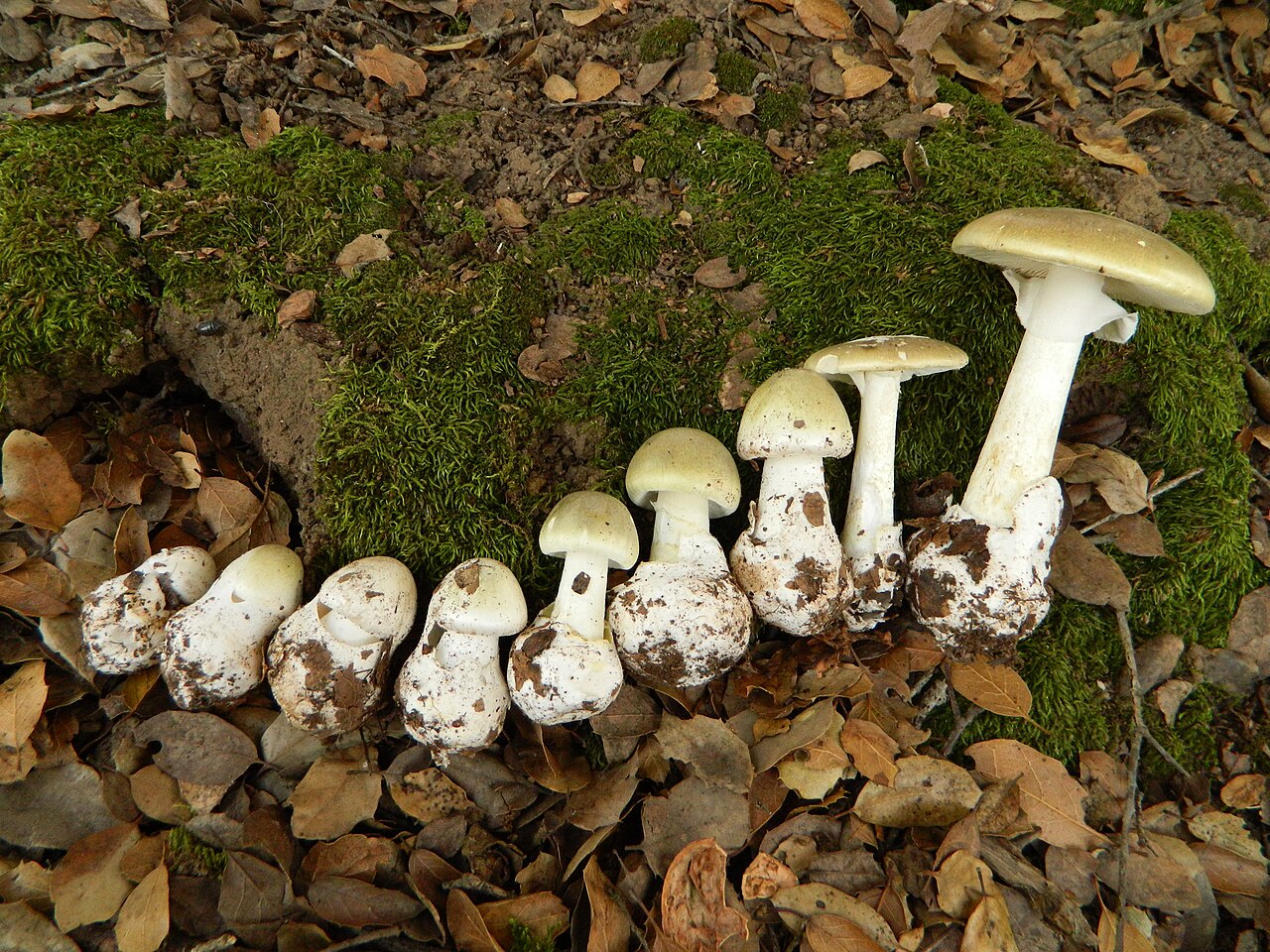
How to Identify a Death Cap
Identification is the first line of defense. Death caps have several distinguishing features, though no single feature is diagnostic on its own.
- Cap: 5–15 cm across, typically greenish-yellow to olive, sometimes pale white or brownish. Smooth and slightly sticky when wet. The color can vary significantly, which is part of what makes identification difficult.
- Gills: White, crowded, and free (not attached to the stem). They remain white even as the mushroom matures, unlike many look-alikes whose gills darken with age.
- Stem: White with faint greenish-yellow tones, 5–15 cm tall, with a thin skirt-like ring (annulus) on the upper portion.
- Volva: This is the most important feature. The base of the stem is enclosed in a cup-shaped sac (volva) that is often buried underground. You must dig around the base of the mushroom to see it. Many misidentifications happen because foragers cut the stem at ground level and miss the volva entirely.
- Spore print: White.
- Smell: Faintly sweet or honey-like when young, becoming sickly and unpleasant as the mushroom ages.
- Habitat: Under oaks, beeches, and other broadleaf trees, often in parks, gardens, and urban areas in North America.
Death caps can be confused with several edible species. Young specimens still enclosed in their universal veil can resemble puffballs. Field mushrooms (Agaricus campestris) share a similar overall shape, though their gills turn pink then brown with maturity. The paddy straw mushroom confusion has already claimed lives.
Related deadly species in North America include the destroying angel (Amanita virosa), which is all-white and carries the same lethal amatoxins, and Galerina marginata, a small brown mushroom that grows on decaying wood and also produces amatoxins.
For a complete identification guide, see our death cap species page.
Prevention for Foragers
The most effective prevention is simple: never eat a wild mushroom unless you are absolutely certain of the identification. With death caps, there is no margin for error.
- Always dig up the entire mushroom. The volva at the base is the single most important identification feature for death caps. Cutting at ground level can cause you to miss it.
- Do not rely on a single identification feature. Confirm cap color, gill attachment, spore print, presence of a ring, and presence of a volva before considering any white- gilled mushroom safe to eat.
- Be especially cautious under oak trees. In North America, any white-gilled mushroom fruiting near oaks should be treated with suspicion until positively identified.
- Do not assume cooking destroys the toxins. Amatoxins are heat-stable. Boiling, frying, drying, and freezing do not reduce their toxicity.
- Seek immediate medical attention if you experience gastrointestinal symptoms 6–12 hours after eating wild mushrooms. The delayed onset is a hallmark of amatoxin poisoning and distinguishes it from less dangerous types of mushroom illness.
The death cap invasion of North America is not a future threat. It is happening now, and it is accelerating. Every year the range expands. Every year new poisonings are reported in areas where death caps were previously unknown.
Unlike many invasive species, death caps cannot be sprayed, trapped, or culled. The mycelium lives underground, intertwined with the roots of trees, invisible and persistent. Once a population establishes, it is there to stay.
The only real defense is knowledge: knowing what death caps look like, knowing where they grow, and knowing that the safe-looking mushroom under the oak tree in your local park may be the most dangerous organism in the forest. North America is learning a lesson that Europe has known for centuries and that Australia learned the hard way: wherever there are oaks, there may be death caps. And death caps kill.