Photo by Pufui PcPifpef · Wikimedia Commons · CC BY-SA 4.0
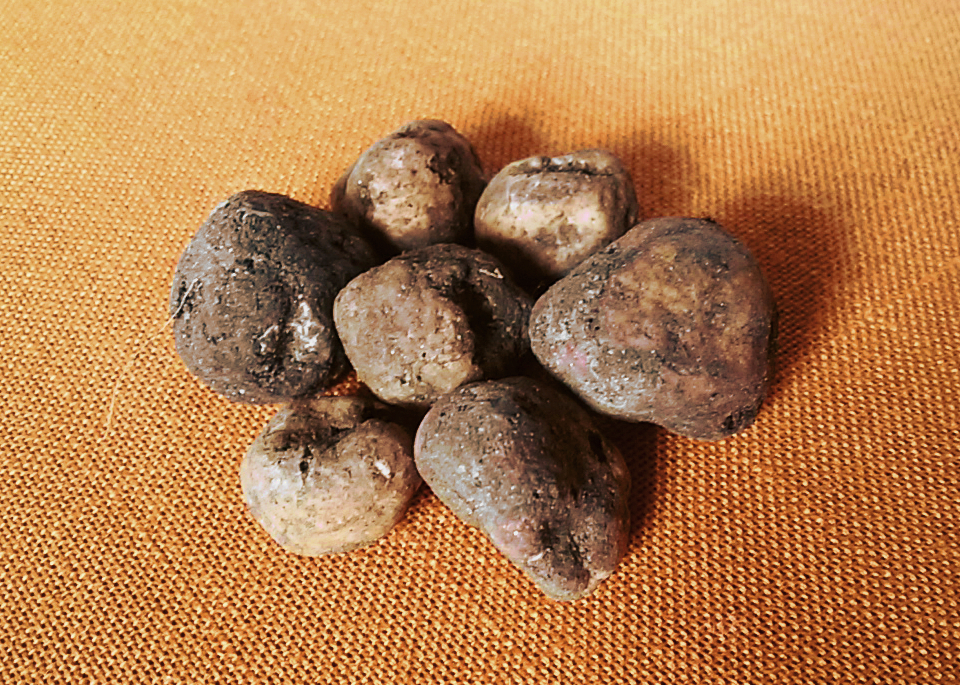
A prized edible truffle native to Europe and now cultivated on four continents. Smaller and more affordable than the legendary white truffle (Tuber magnatum), it fruits from January through April and is valued for its intense garlicky-musky aroma. Also called tartufo marzuolo — the March truffle.
Tuber borchii produces small, irregular, roughly spherical fruiting bodies typically 2-4 cm in diameter, occasionally reaching 7 cm. The outer surface (peridium) is smooth to slightly pubescent when young, becoming glabrous at maturity. Color progresses from whitish in youth to ochre-brown or reddish-brown, sometimes with reddish spots. The interior flesh (gleba) is initially whitish, maturing to beige or pinkish-brown, marbled throughout with wide, white, branching veins characteristic of the genus.
This truffle is remarkable for its ecological flexibility. It forms ectomycorrhizal partnerships with an exceptionally wide range of host trees including oaks, hazels, pines, chestnuts, lindens, and even strawberry tree. It tolerates soil pH ranging from 4.5 to 8.5 — the widest range of any cultivated truffle — and can begin producing truffles within just 4 years of tree inoculation, roughly half the wait time of Tuber melanosporum.
Also called tartufo marzuolo because it peaks in maturity during March, Tuber borchii occupies an important niche in Italian cuisine as a more accessible alternative to the astronomically priced white truffle. Young specimens have a pleasant, garlicky aroma with buttery and hazelnut notes, though over-mature specimens develop a strong, unpleasant odor compared to kitchen gas. Market prices range from 650 to 1,200 euros per kilogram — expensive by any standard, but a fraction of white truffle prices. It is traditionally shaved raw over pasta, risotto, and eggs.
The bianchetto is deeply woven into Italian rural traditions, particularly in the Marche region where Acqualagna — the self-proclaimed truffle capital of Italy — hosts dedicated festivals. Truffle hunting in Italy was inscribed on UNESCO's Representative List of the Intangible Cultural Heritage of Humanity in December 2021, recognizing centuries of knowledge passed down through oral tradition, including the intimate bond between hunter (trifolao) and trained dog.
Bianchetto Truffle Facts
- ●Called 'marzuolo' in Italian because it reaches peak maturity in March (marzo) — one of the few truffles named after its harvest month.
- ●It can begin producing truffles just 4 years after tree inoculation — roughly half the wait time of Tuber melanosporum, making it the fastest commercially viable truffle to cultivate.
- ●The bianchetto tolerates soil pH from 4.5 to 8.5, the widest range of any cultivated truffle species, letting it grow in soils where no other truffle can.
- ●Over-ripe specimens smell like kitchen gas — a dramatic shift from the pleasant garlicky aroma of young truffles, one of the most extreme odor changes in any edible fungus.
- ●Australian plantations can yield 50-240 kg of bianchetto truffles per hectare, far exceeding typical yields for the more famous Périgord black truffle (5-50 kg/ha).
Stories From the Field
UNESCO Recognizes Italy's Truffle Hunting Heritage
In December 2021, UNESCO inscribed truffle hunting and extraction in Italy on its Representative List of the Intangible Cultural Heritage of Humanity. The decision recognized centuries of oral tradition, ecological knowledge, and the unique bond between truffle hunters (trifolai) and their trained dogs — a practice that characterizes rural life across Italian truffle-growing regions.
Acqualagna — Italy's Year-Round Truffle Capital
The small town of Acqualagna in the Marche region handles roughly two-thirds of Italy's wholesale truffle trade. It is the only territory in Italy where fresh truffles of every commercial species are available year-round, including bianchetto from January through April. The town hosts a dedicated bianchetto festival each spring.
First Tuber borchii Harvested in Australia
In March 2015, the first documented Tuber borchii was harvested in Australia, marking a milestone for Southern Hemisphere truffle cultivation. The achievement demonstrated that bianchetto truffles could successfully fruit far outside their native European range, opening new commercial opportunities for Australian truffle farmers.
Genome Sequencing Reveals Truffle Biology
In 2018, an international team published the draft genome sequence of Tuber borchii, revealing a 97 megabase genome with over 12,000 predicted protein-coding genes. The genomic data has enabled researchers to study the molecular mechanisms underlying ectomycorrhizal symbiosis and truffle aroma production, advancing prospects for improved cultivation.
North Carolina Diversifies Truffle Cultivation
North Carolina A&T State University launched a USDA-funded research project to diversify tree host ranges for sustainable Tuber borchii production in the southeastern United States. The project explores which native tree species can serve as effective mycorrhizal partners, aiming to establish bianchetto truffle farming as a viable agroforestry crop for American growers.
Where It's Been Found
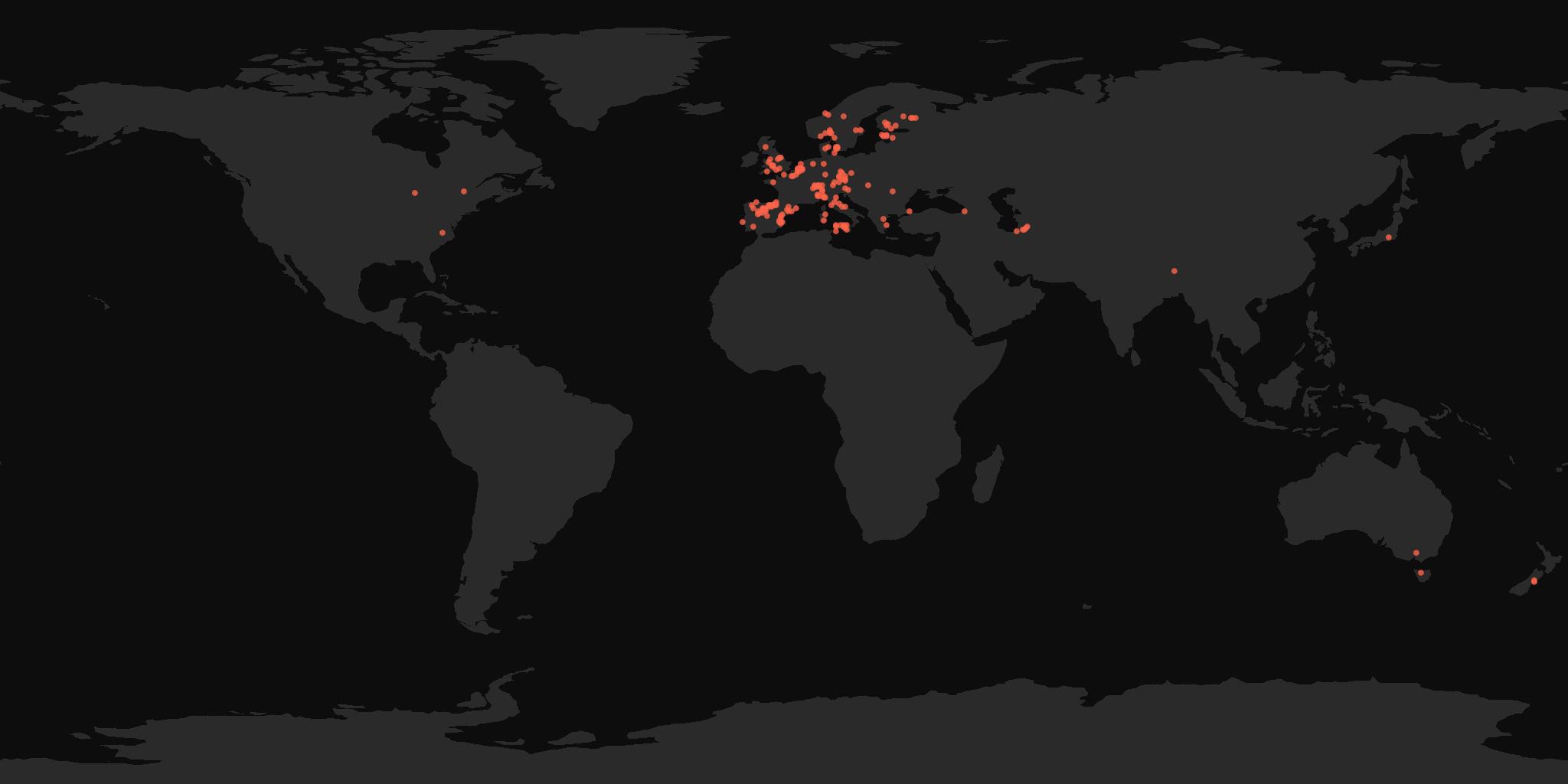
Based on reported sightings worldwide
How to Identify Bianchetto Truffle
Cap
Irregularly globose to lobed, 2-4 cm diameter (up to 7 cm). Outer surface (peridium) whitish when young, maturing to ochre-brown or reddish-brown with possible reddish spots. Surface smooth to finely pubescent, becoming glabrous. Interior flesh (gleba) whitish when immature, becoming beige to pinkish-brown at maturity, marbled with wide, white, branching veins.
Odor
Young specimens: pleasant, garlicky, with buttery and hazelnut notes. Over-ripe specimens: strong, pungent, often compared to kitchen gas or sulfurous compounds. Aroma is the primary identification tool used by truffle hunters and their dogs.
Mushrooms That Look Like Bianchetto Truffle
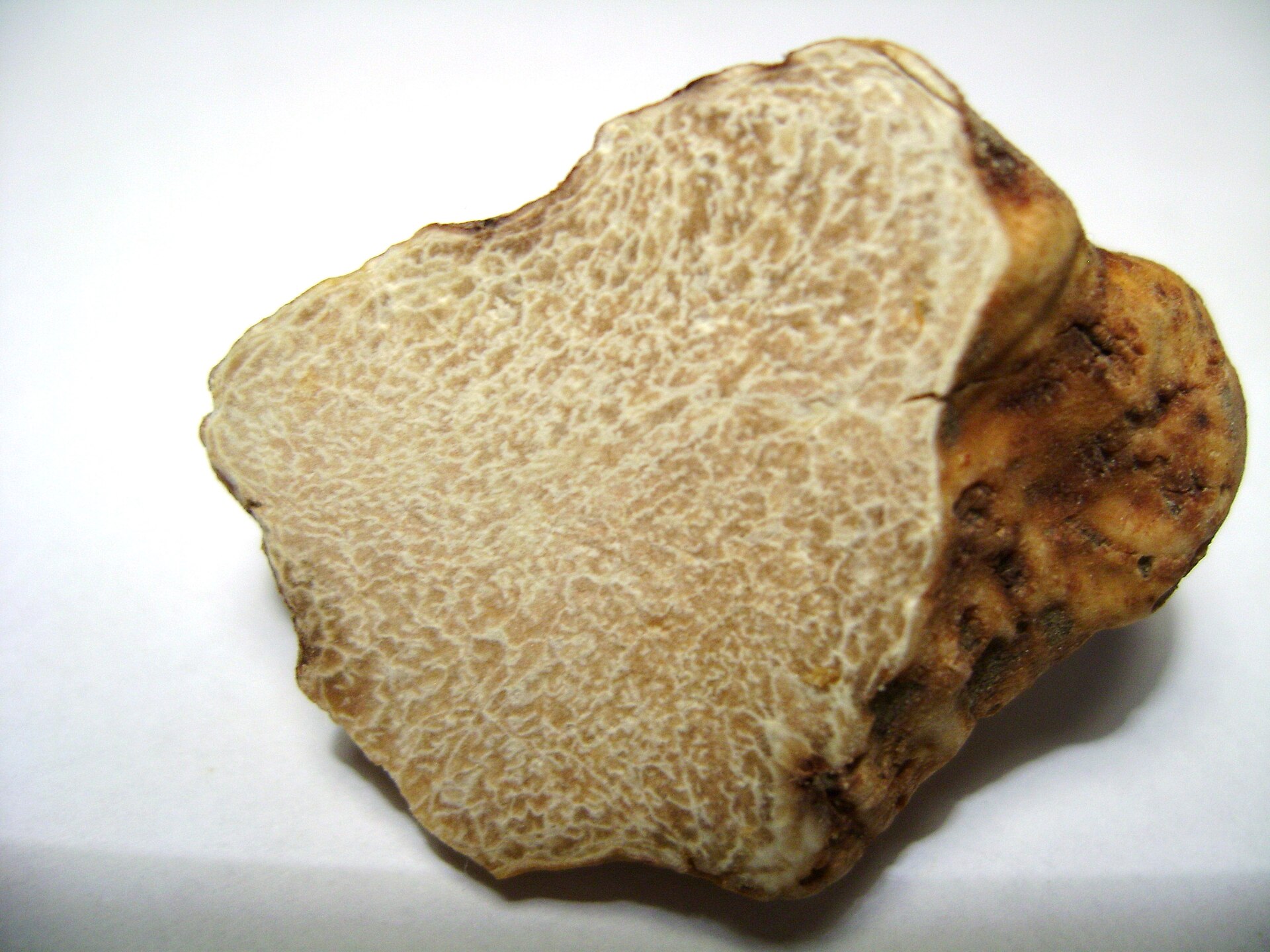
Much larger (up to 12 cm), smoother peridium, gleba more ochre-yellow with finer veins. Intensely complex honey-garlic-cheese aroma that is never unpleasant. Harvested in autumn (October-December), not spring. Far more expensive ($3,000-9,000/kg).
Side-by-side comparison →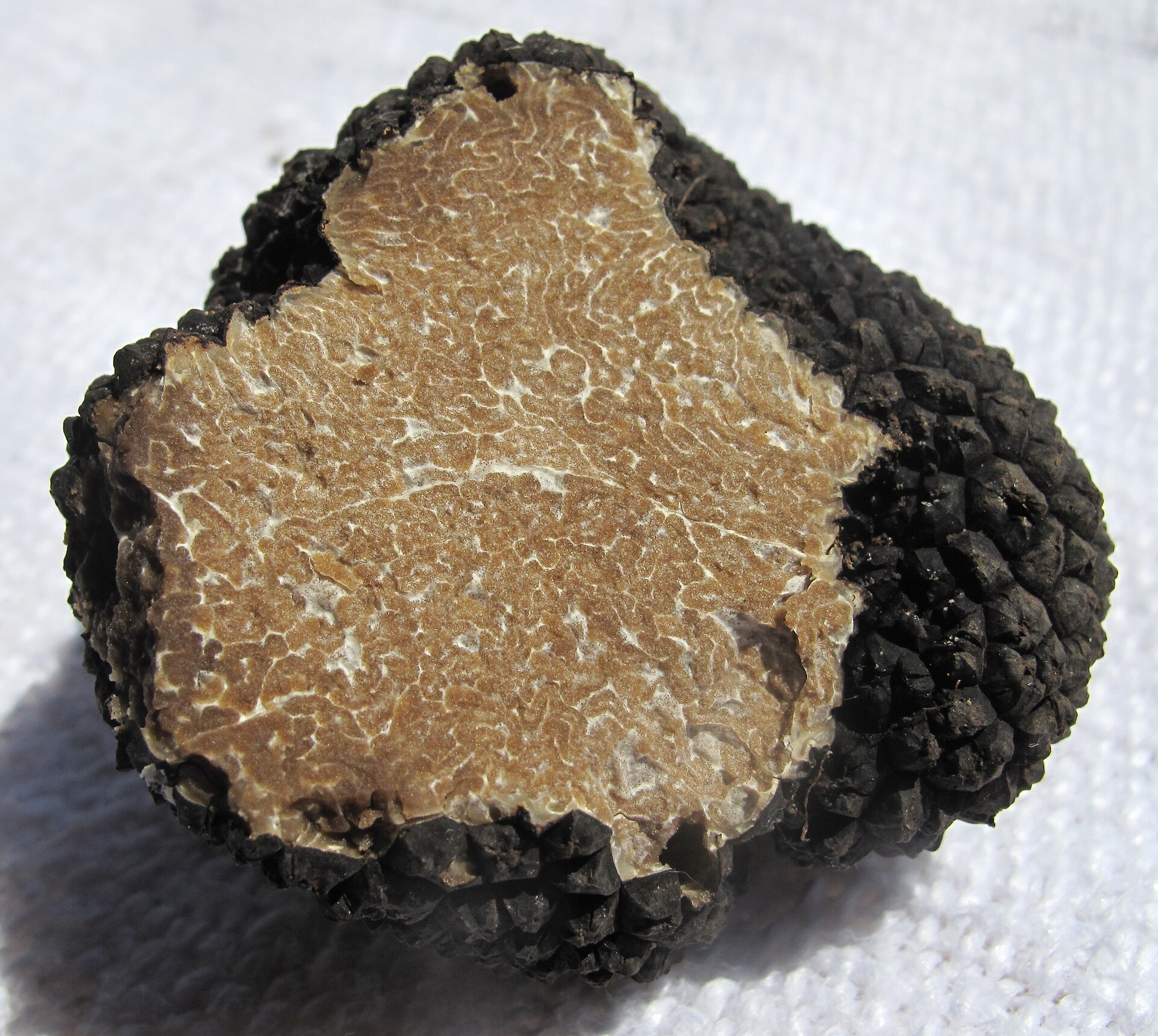
Larger, with prominent black pyramidal warts on the peridium (smooth on T. borchii). Gleba pale brown with white veins. Milder, hazelnut-like aroma. Harvested May through September.
Side-by-side comparison →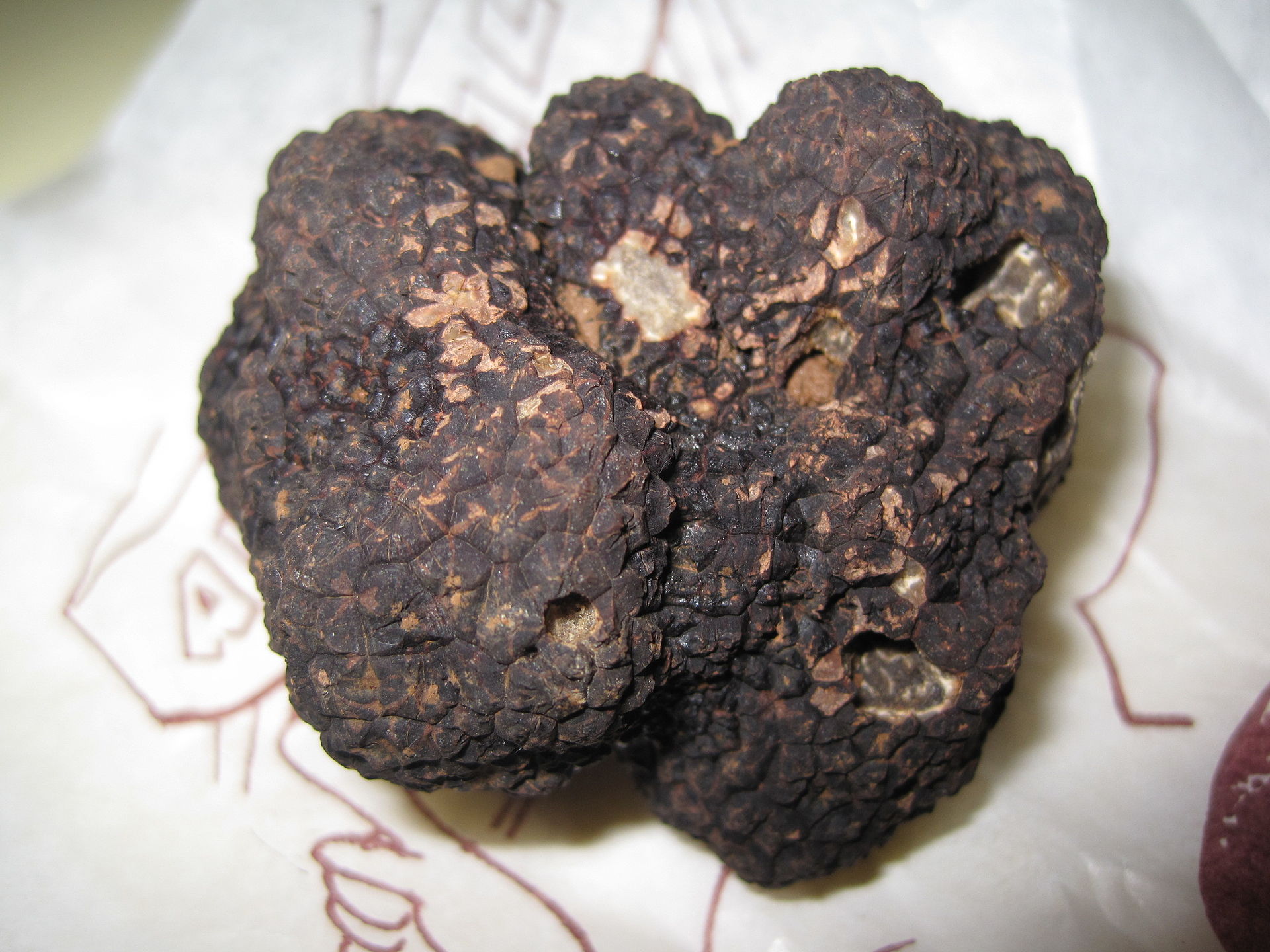
Black exterior with fine polygonal warts, dark purple-black interior with white veins. Intensely aromatic with chocolate and earthy notes. Harvested November through March. Easily distinguished by its dark coloration.
Side-by-side comparison →Is Bianchetto Truffle Edible?
Edible and commercially valued. Best consumed young and fresh, when the aroma is pleasantly garlicky with buttery-hazelnut undertones. Traditionally shaved raw over warm dishes — fresh pasta, risotto, scrambled eggs, fonduta — where heat releases the volatile aromatics. Also used in truffle-infused oils, butters, and sauces. Avoid over-mature specimens with a sulfurous or gas-like smell. Store wrapped in paper towels in a sealed container in the refrigerator; use within 5-7 days.
Always verify with local experts before consuming wild mushrooms.
Found something that looks like this in the wild? Don't guess — identify it from a photo with Orangutany and check it against look-alikes before you touch it.