Photo by iNaturalist contributor · iNaturalist · CC BY
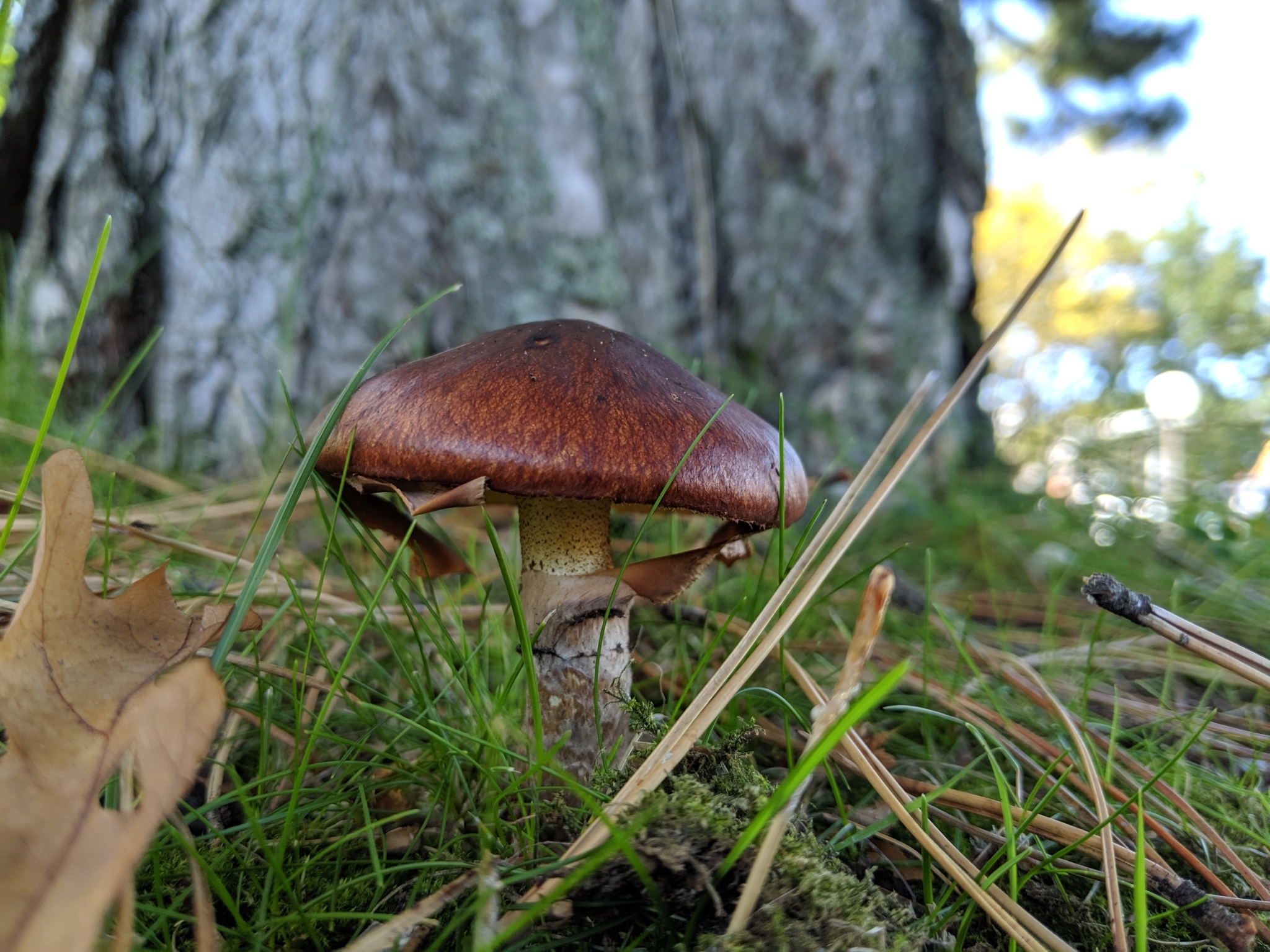
A slimy-capped pine bolete that 'weeps' milky droplets from its pore surface when young. Common, reliable, and perfectly edible once you peel the sticky cap skin, though it will never win a beauty contest.
Suillus granulatus is the mushroom forager's reliable workhorse. It will never dazzle you like a porcini or excite you like a chanterelle, but it shows up in enormous quantities under pine trees from early summer through late autumn, and it is free food for anyone willing to deal with its slimy cap.
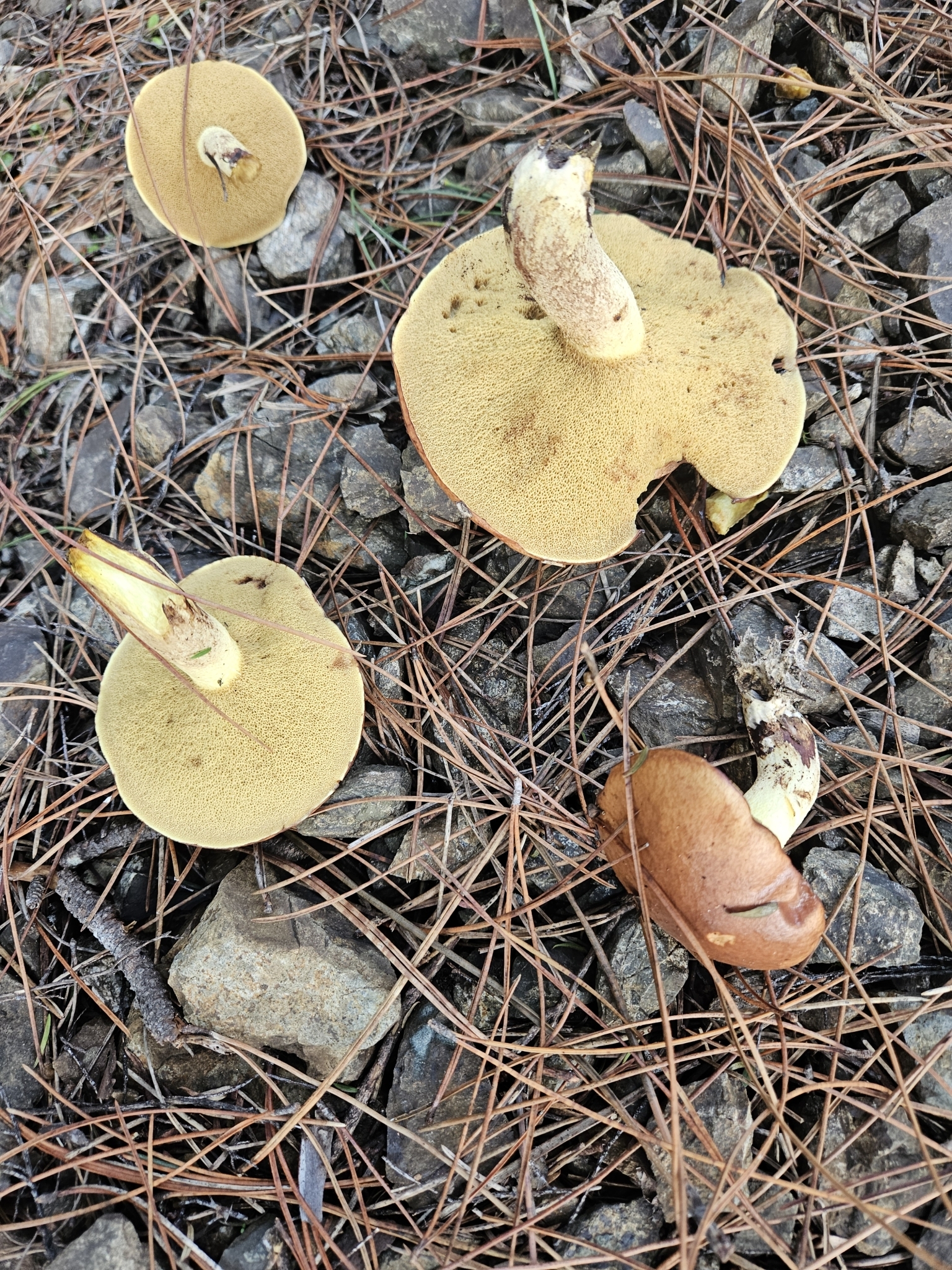
The defining feature of young specimens is the milky droplets that bead up on the pore surface, giving the species its common name. These droplets dry to leave brownish granules on the stem, which is how the species got its Latin name (granulatus). The cap is slimy when wet, ranging from pale tan to cinnamon brown, and peeling the sticky skin before cooking is strongly recommended to avoid a gelatinous texture in the finished dish.
Suillus granulatus is one of the most widespread boletes on the planet, found wherever pines grow. It has traveled the world alongside pine plantations, establishing itself in countries where pines are not native. In parts of southern Europe, Asia, and South America, it is regularly collected for food and sold in markets. The flavor is mild and mushroomy, nothing spectacular, but the sheer quantity available makes it a practical wild food source.
The main downside is its popularity with insects. Suillus mushrooms seem to attract larvae faster than almost any other genus, and large specimens are frequently riddled with worm tunnels. Harvest them young and firm for best results.
Weeping Bolete Facts
- ●The milky droplets that bead up on young pore surfaces are rich in oxalic acid, which is why they leave brownish granular stains as they dry.
- ●Suillus granulatus has hitchhiked around the world with pine tree seedlings, establishing itself on every continent where pines have been planted for forestry.
- ●In Russia and Eastern Europe, pickled Suillus mushrooms are a traditional appetizer, often served alongside vodka and dark bread.
- ●Despite being perfectly edible, Suillus mushrooms are ignored by many western European foragers who consider the slimy texture beneath their culinary standards. Eastern European and Asian foragers, by contrast, harvest them enthusiastically.
Stories From the Field
Pine Plantation Bounty in Chile
In central Chile, where Monterey pines were planted extensively for the timber industry, Suillus granulatus arrived along with the trees. Local foragers quickly adopted it as a food source. A mycologist in Valparaiso described pine plantation edges where hundreds of weeping boletes would emerge after autumn rains, collected by families who pickled them in vinegar and oil.
The Slimy Cap Debate
On a mushroom foraging forum, a long-running debate simmered over whether peeling the Suillus cap is strictly necessary. Some foragers argued the slime adds body to soups. Others insisted it makes any dish unpalatably gooey. The consensus: peel it if you are sauteing, leave it if you are making stock. Both camps agreed that insect damage is the bigger problem.
A Russian Grandmother's Pickled Suillus
A Russian-American forager in New Jersey described her grandmother's tradition of pickling Suillus mushrooms every autumn in the pine barrens. The recipe involved peeling the caps, blanching, then layering with garlic, dill, and vinegar in glass jars. 'She would make 30 or 40 jars every September,' the forager recalled. 'It was mushroom canning day, and the whole house smelled like vinegar and dill.'
Where It's Been Found

Based on reported sightings worldwide
How to Identify Weeping Bolete
Cap
4-12 cm across. Convex to broadly convex, sometimes flat with age. Color ranges from pale yellowish tan to cinnamon brown to dark brown. Surface is very slimy and viscid when wet, shiny when dry. The skin peels easily from the cap edge toward the center.
Gills
No gills. Has tubes ending in small, round, yellowish pores. Young specimens produce milky white to yellowish droplets from the pore surface ('weeping'). These droplets dry to brown granules. Pores are pale yellow, becoming more ochre with age. Do not bruise blue.
Stem
3-8 cm tall, 1-2.5 cm thick. Solid, pale yellowish to whitish. No ring. Upper portion dotted with brownish granules (dried droplets), which is the most reliable field character after the weeping pores. No reticulation.
Spore Print
Brown to ochre-brown.
Odor
Mild, slightly fruity. Not particularly distinctive.
Mushrooms That Look Like Weeping Bolete
Suillus luteus (Slippery Jack)
Very similar slimy cap but has a prominent ring (annulus) on the stem and a purplish to chocolate-brown cap. S. granulatus lacks a ring entirely. Both are edible and both benefit from peeling the slimy cap skin.
Read more on Wikipedia →Suillus bovinus (Jersey Cow Bolete)
Duller, more pinkish-brown cap. Pores are larger and more angular, often compound (divided by thin walls). Stem lacks the granular dots. Also edible but with softer texture. Found under pines like S. granulatus.
Read more on iNaturalist →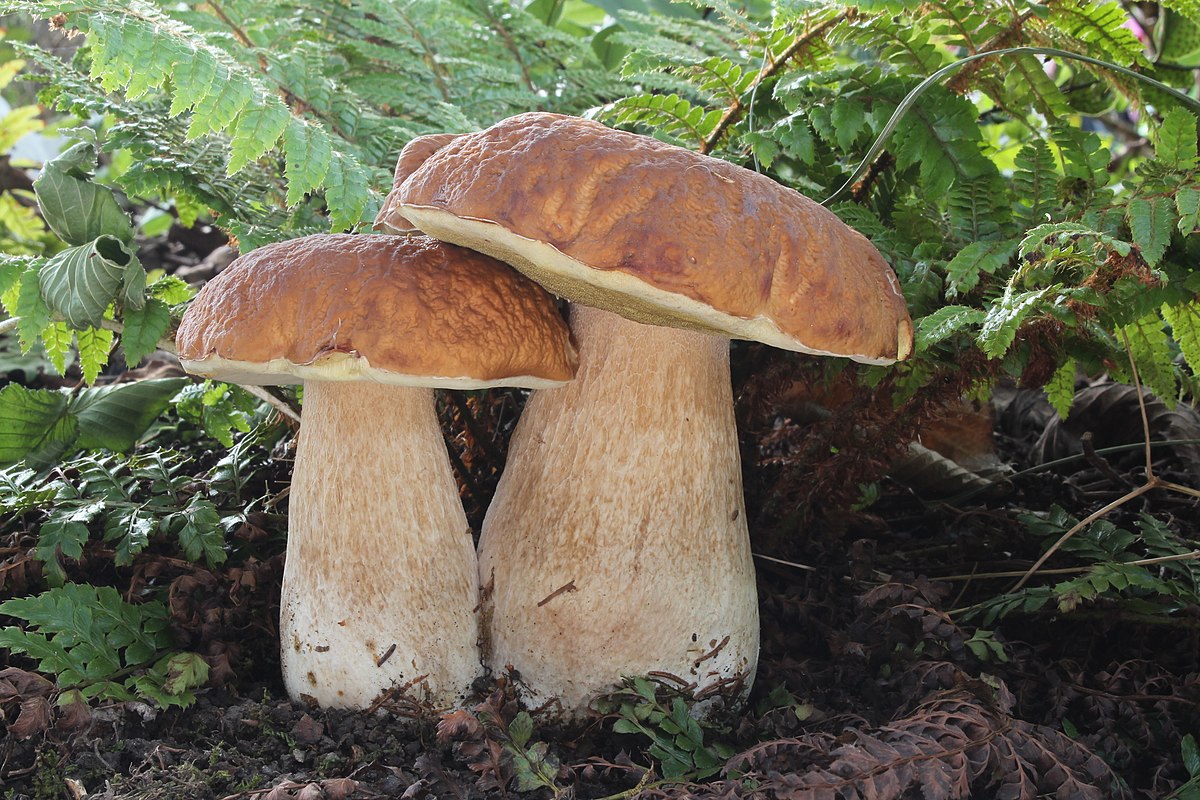
Much more robust with a non-slimy cap, prominent white reticulation on the stem, and white pores when young. Not exclusively associated with pines. Superior in flavor and texture. The slimy cap of Suillus is an immediate visual separator.
Side-by-side comparison →Is Weeping Bolete Edible?
Edible and widely eaten, though not considered a top-tier species. Peel the slimy cap skin before cooking to avoid gelatinous texture. Harvest young specimens to minimize insect damage. Best sauteed, in soups, or pickled (a popular preparation in Eastern Europe and Russia). Mild, pleasant flavor that absorbs seasonings well.
Always verify with local experts before consuming wild mushrooms.
Found something that looks like this in the wild? Don't guess — identify it from a photo with Orangutany and check it against look-alikes before you touch it.