Allen's Psilocybe
Psilocybe allenii
By Varun Vaid · Orangutany
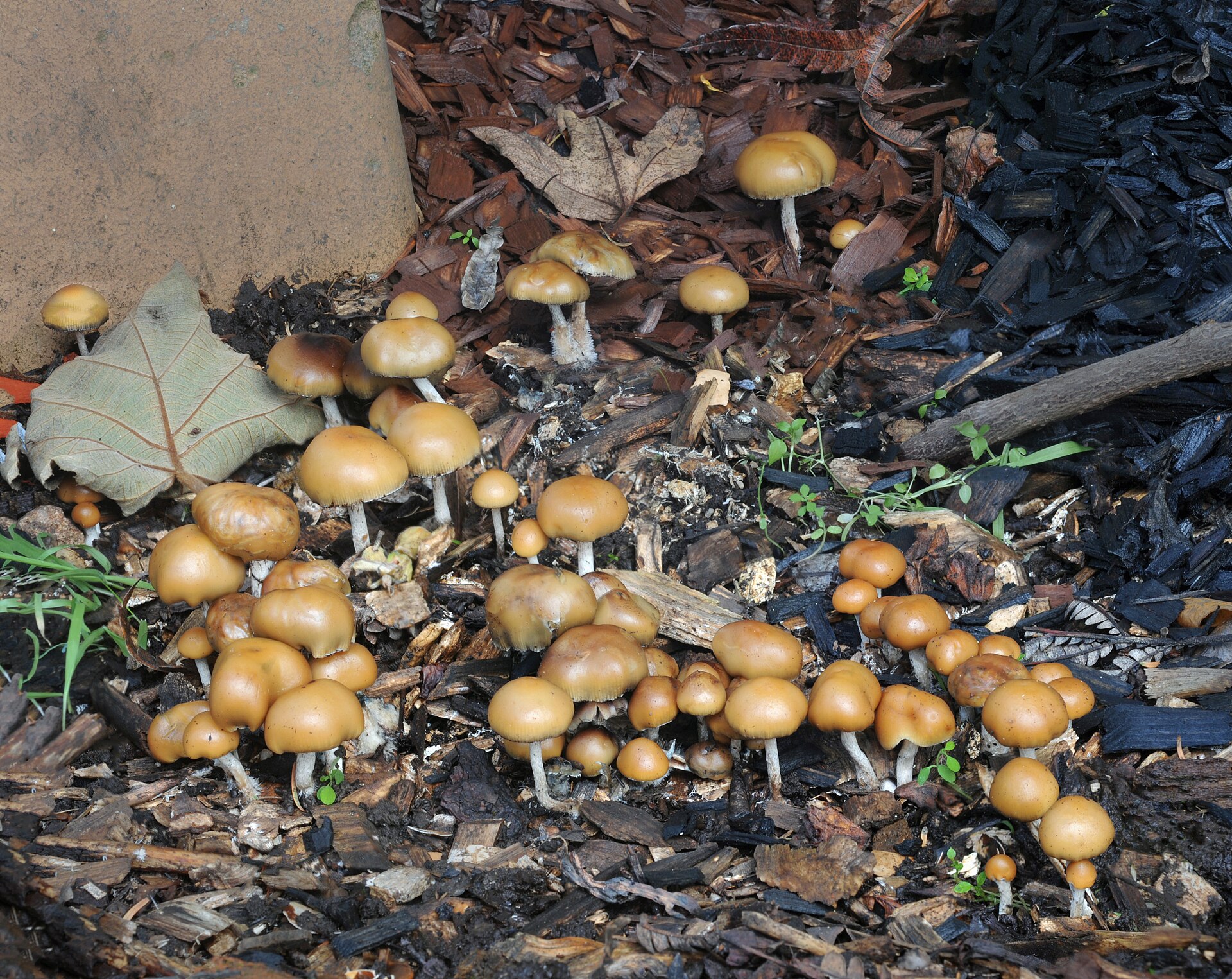
Photo by Alan Rockefeller · Wikimedia Commons · CC BY-SA 4.0
A potent psilocybin-containing mushroom found in urban wood chip landscaping along the Pacific Coast of North America. First formally described in 2012, it is one of the most commonly encountered psychoactive species in the San Francisco Bay Area and Pacific Northwest — and was hiding in plain sight for decades before receiving its own name.
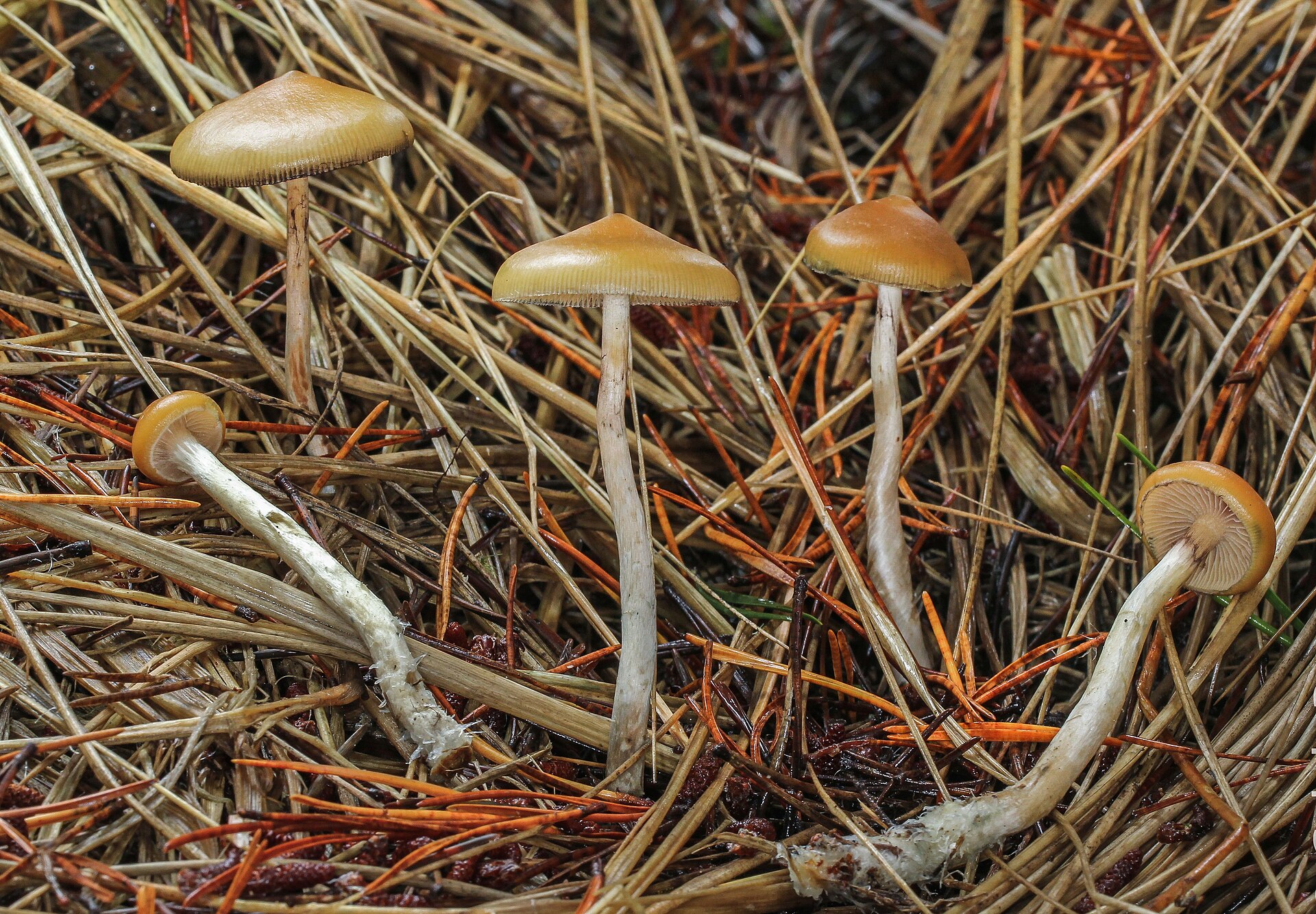
Psilocybe allenii produces small to medium-sized fruiting bodies with caps 1.5-6 cm in diameter. The cap is convex to broadly convex, sometimes with a slight umbo, and features a smooth, slightly viscid surface when moist. Fresh caps are chestnut brown to caramel-colored, fading to pale buff or straw-yellow as they dry. The cap margin is typically even to slightly wavy but not as dramatically undulate as P. cyanescens. All parts of the mushroom bruise blue to blue-green when handled, a hallmark reaction caused by oxidation of psilocin.
This species is a saprobic wood decomposer found almost exclusively in urban and suburban environments. It fruits prolifically in landscaping wood chips, particularly from hardwoods like alder, maple, and eucalyptus. Unlike many Psilocybe species that favor wild habitats, P. allenii thrives in city parks, garden beds, highway median strips, and commercial property landscaping. It fruits gregariously, often in dense clusters, and can colonize newly laid wood chip mulch within one to two seasons.
Psilocybe allenii contains the psychoactive compounds psilocybin and psilocin, with potency considered moderate to high and comparable to P. cyanescens. As with all psilocybin-containing species, effects include altered perception, visual and auditory changes, and shifts in mood and thought patterns. Possession remains illegal in many jurisdictions despite growing decriminalization movements.
The species was formally described in 2012 by Jan Borovička and colleagues, though it had been collected and informally recognized for years before that. It was distinguished from P. cyanescens primarily through molecular phylogenetic analysis combined with subtle morphological differences. The epithet honors John W. Allen, a researcher who extensively documented psychoactive fungi worldwide.
Allen's Psilocybe Facts
- ●Psilocybe allenii was hiding in plain sight for decades — it was only recognized as a distinct species in 2012, despite being one of the most common mushrooms in San Francisco wood chip beds.
- ●City landscaping crews inadvertently act as dispersal agents by moving colonized wood chips between parks and medians, effectively 'planting' the fungus across urban areas.
- ●The blue bruising reaction that helps identify this mushroom is caused by the oxidation of psilocin molecules — the same compound responsible for its psychoactive effects.
- ●Unlike most wild mushrooms that prefer forests, P. allenii is almost exclusively an urban species — far more likely to be found in a parking lot median than a pristine woodland.
- ●Psilocybe allenii and P. cyanescens are so closely related that they can only be reliably distinguished using DNA analysis; even experienced mycologists struggle to tell them apart by eye.
Stories From the Field
Formal Description in 2012
Mycologist Jan Borovička and colleagues formally described Psilocybe allenii in 2012 in the journal Mycotaxon, separating it from P. cyanescens using both molecular phylogenetics and morphological analysis. The species had been collected for years in the San Francisco Bay Area before receiving its own name.
Named for John W. Allen
The species epithet honors John W. Allen, an American ethnomycologist who spent decades documenting psychoactive mushrooms across Southeast Asia and the Pacific. Allen's fieldwork contributed significantly to the scientific understanding of global Psilocybe diversity.
San Francisco's Urban Psilocybe Boom
Starting in the 2000s, Bay Area mycologists noticed Psilocybe species fruiting in unprecedented numbers in city landscaping. P. allenii turned out to be one of the most common, thriving in the region's mild winters and abundant municipal wood chip mulch programs.
The Wood Chip Colonization Pattern
Urban ecologists have documented how Psilocybe allenii colonizes freshly laid wood chip mulch within 1-2 years, making it one of the fastest Psilocybe species to establish in new substrate. City landscaping crews unknowingly spread the fungus when they redistribute colonized mulch between sites.
Decriminalization Wave
Psilocybe allenii gained wider public attention as cities including Denver (2019), Oakland (2019), and Oregon statewide (2020) moved to decriminalize or create regulated frameworks for psilocybin-containing fungi. As one of the most commonly encountered species in the Pacific urban corridor, it became associated with the West Coast decriminalization movement.
Where It's Been Found
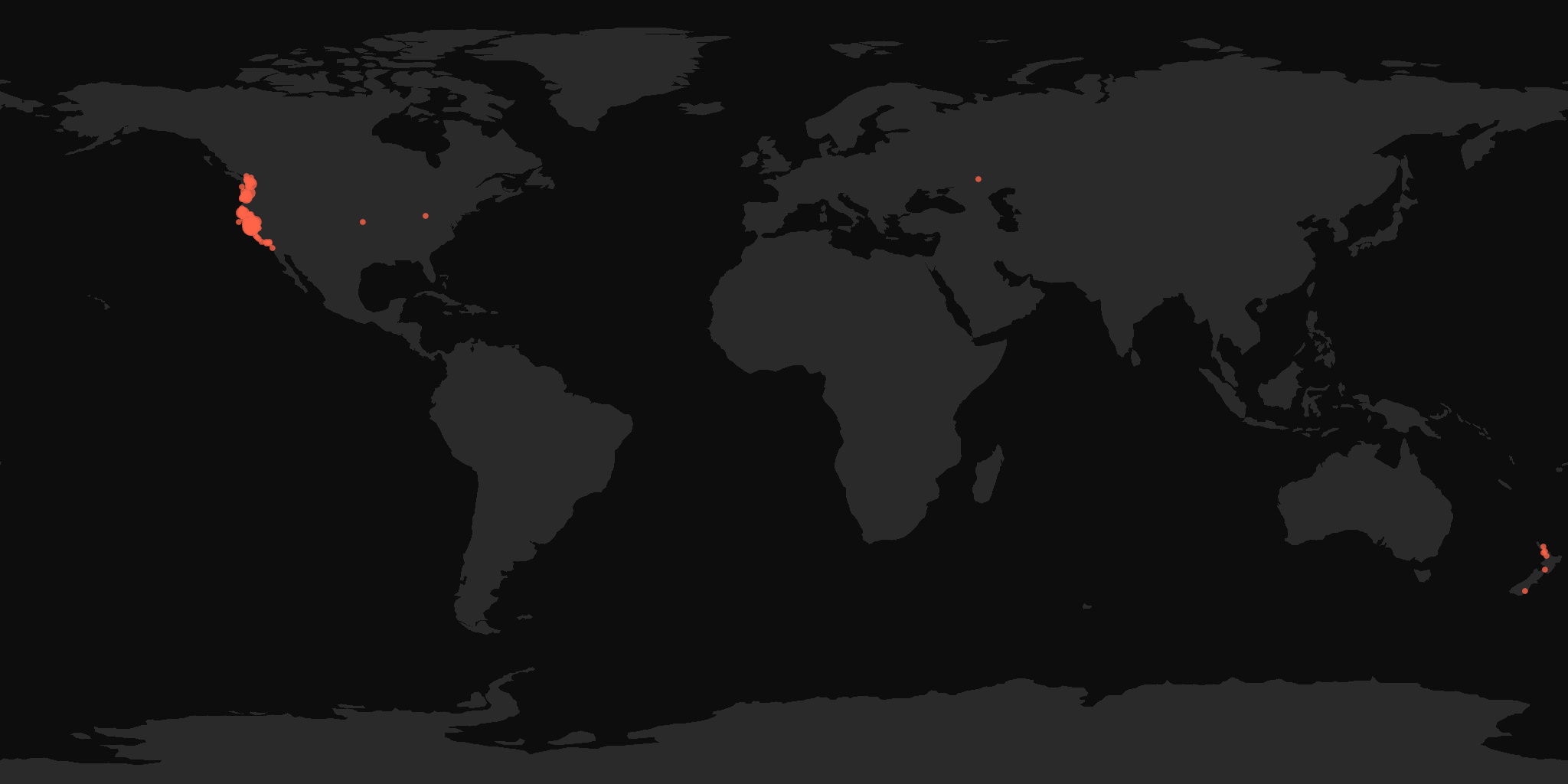
Based on reported sightings worldwide
How to Identify Allen's Psilocybe
Cap
1.5-6 cm diameter. Convex to broadly convex, sometimes with a low umbo. Chestnut to caramel brown when moist, drying to pale buff (strongly hygrophanous). Surface smooth, slightly viscid. Margin even to slightly wavy. Bruises blue.
Gills
Adnate to sinuate, close. Pale brown when young, darkening to purple-brown to dark violet-brown at maturity. Edges slightly lighter.
Stem
4-9 cm tall, 3-7 mm thick. White, silky fibrous surface. Bruises blue readily. Partial veil leaves a fragile, often evanescent annular zone that darkens with spore deposit.
Spore Print
Dark purple-brown to violet-brown.
Odor
Farinaceous (flour-like) when fresh. Bluing reaction: all parts bruise blue to blue-green within minutes of handling — a key diagnostic feature caused by psilocin oxidation.
Mushrooms That Look Like Allen's Psilocybe
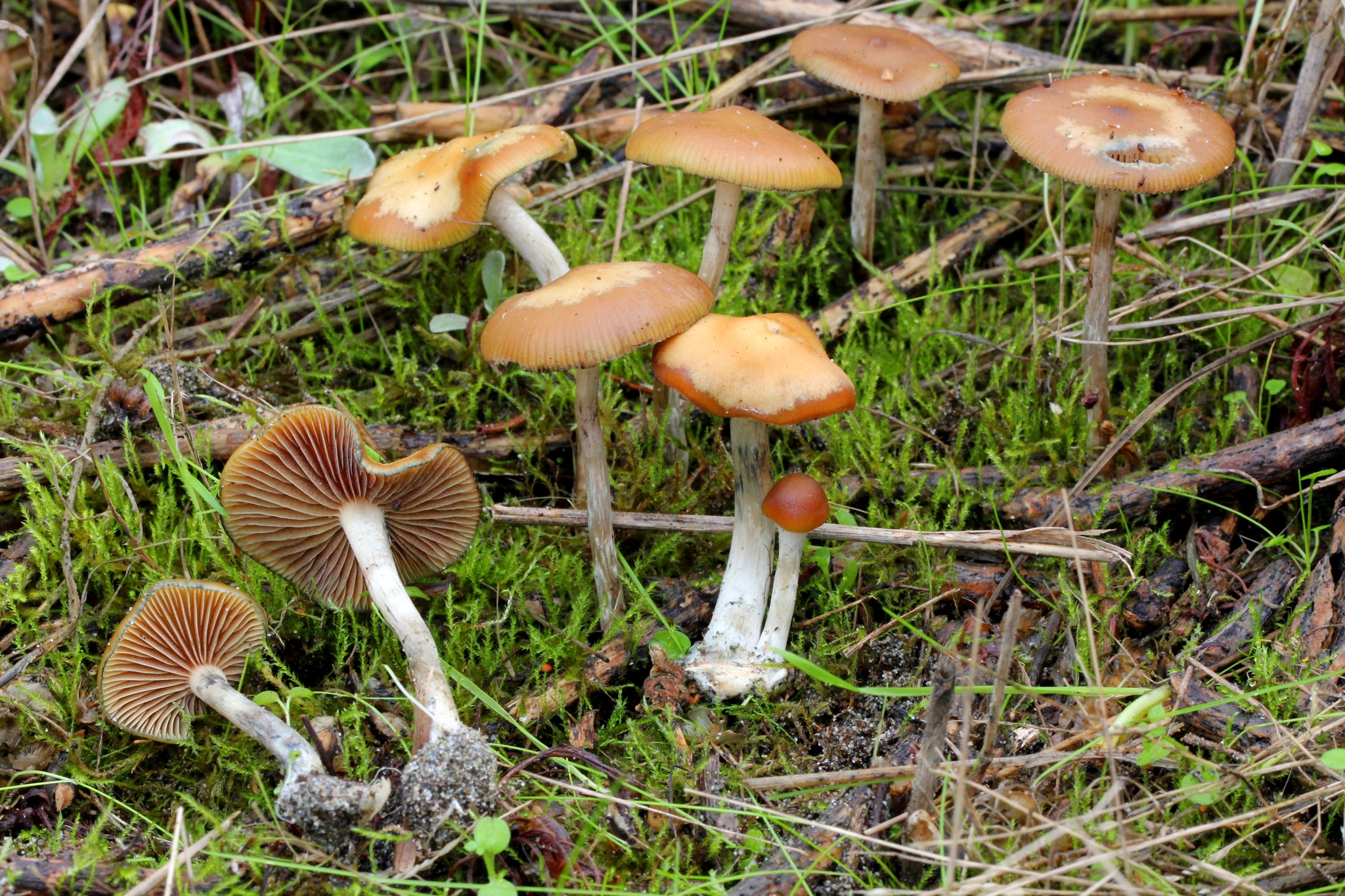
The most similar species. P. cyanescens has a distinctly wavy, undulating cap margin at maturity, while P. allenii has a more evenly convex cap. Both bruise blue and share identical habitat in wood chips. Molecular analysis is the most reliable way to distinguish them.
Side-by-side comparison →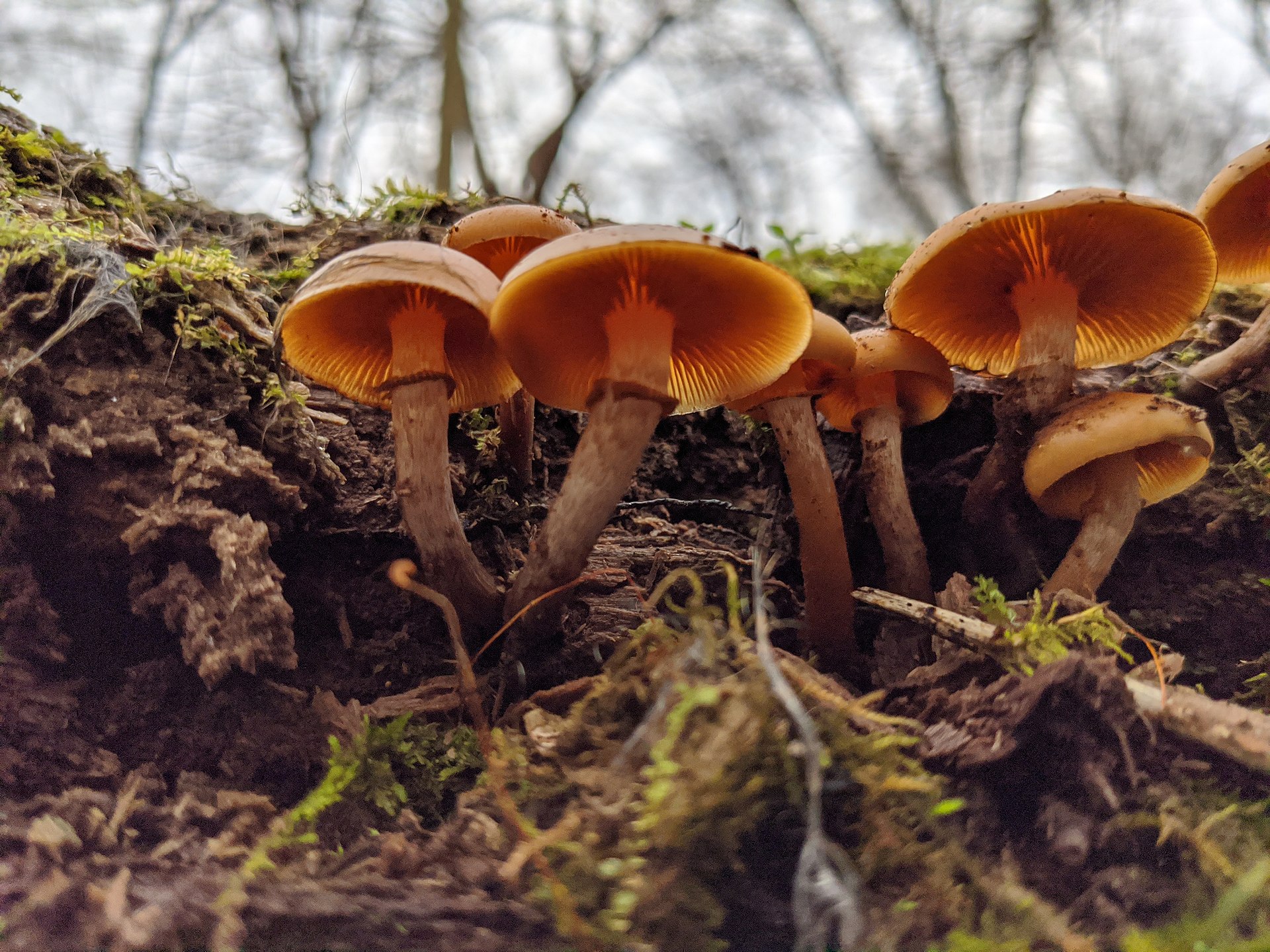
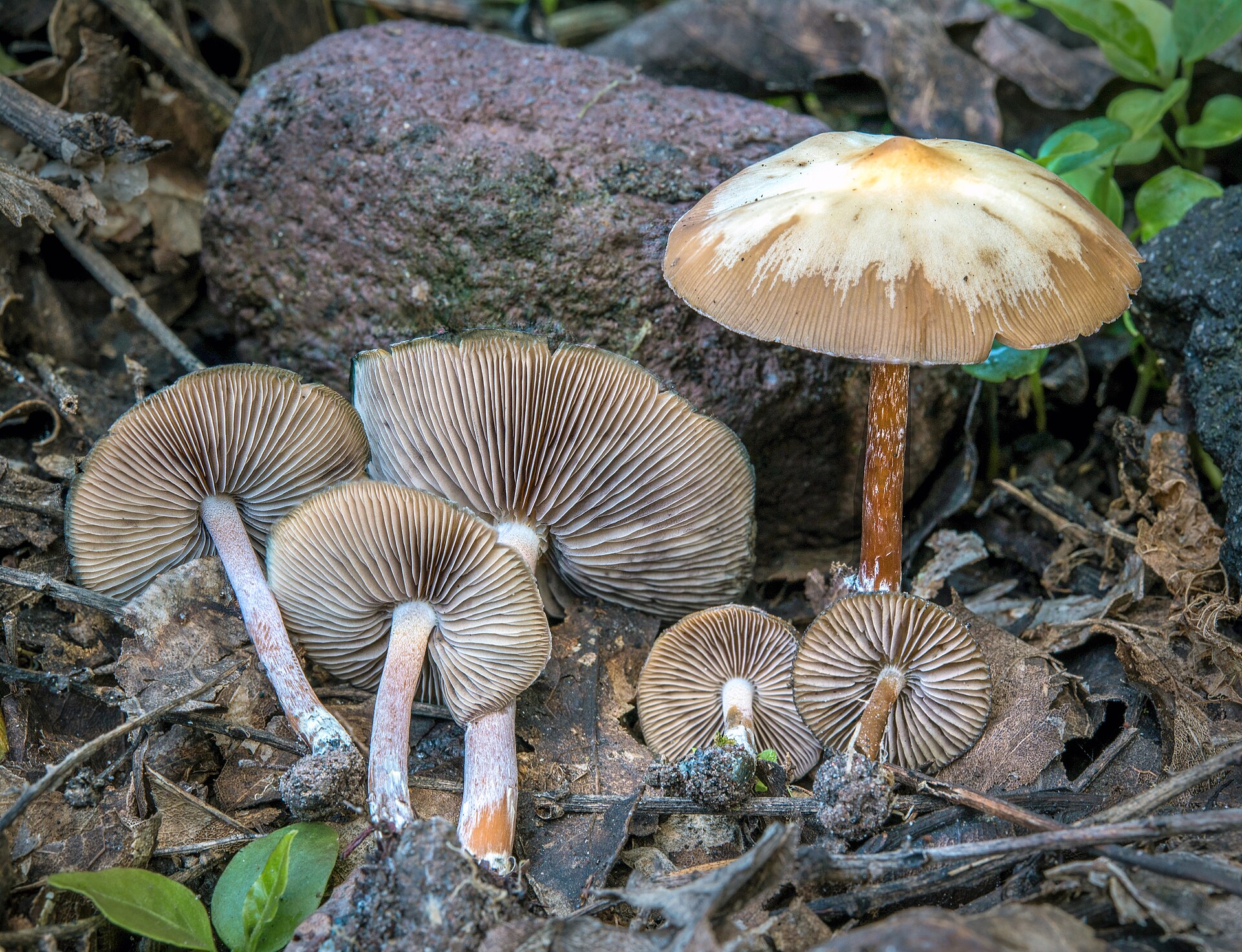
DEADLY. Small brown wood-chip mushroom containing amatoxins. Has a brown spore print (not purple-brown), a membranous ring, rusty-brown gills, and does NOT bruise blue. Can fruit alongside Psilocybe species — the most dangerous misidentification risk in this habitat.
Side-by-side comparison →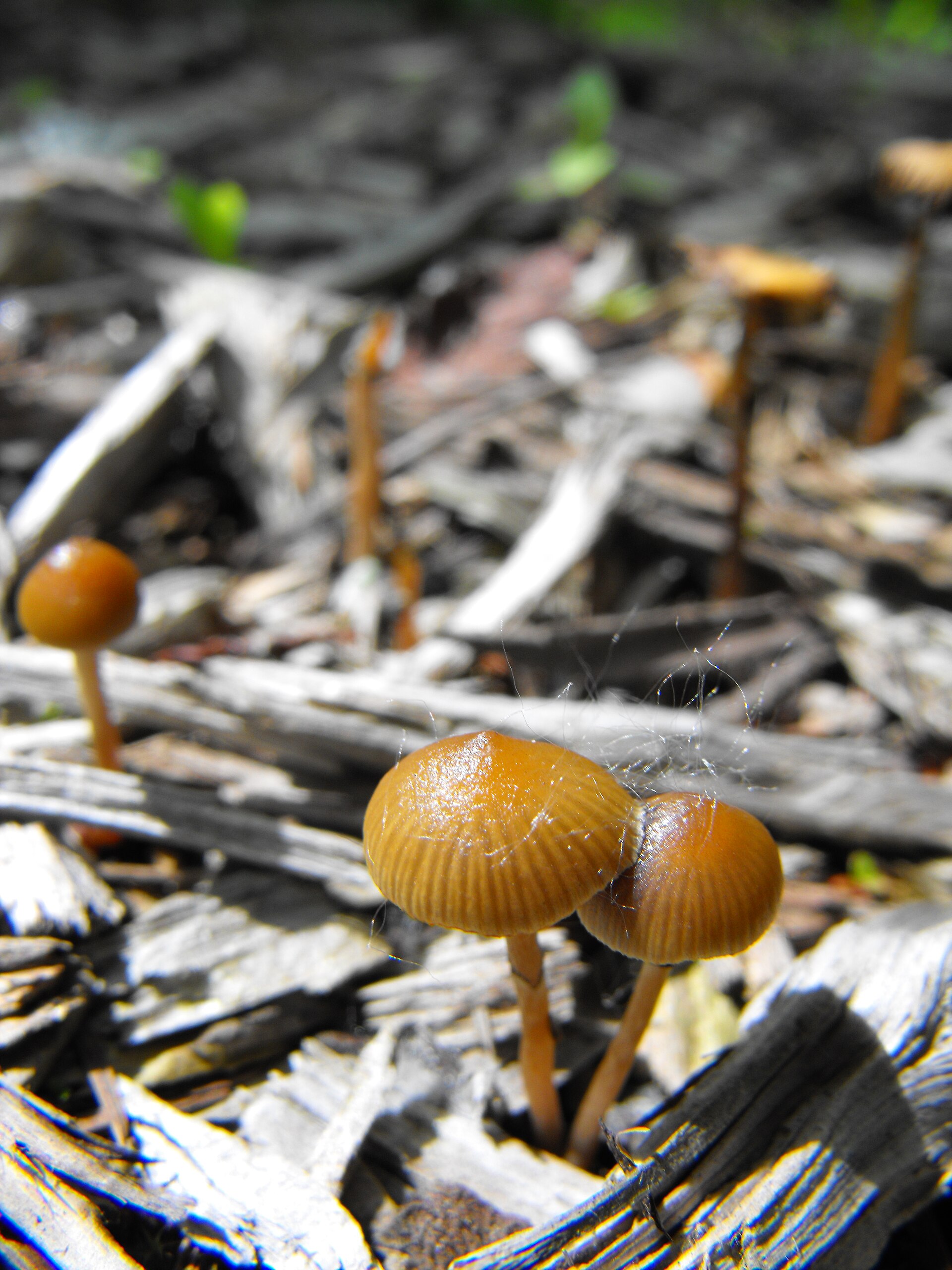
Another Pacific Northwest wood-chip Psilocybe. Generally smaller, with a more persistent annulus and slightly darker olive-brown cap. Bruises blue but is considered less potent. Shares the same urban wood-chip habitat.
Side-by-side comparison →Redlead Roundhead (Leratiomyces ceres)
Bright orange-red to red-brown cap, common in wood chips alongside Psilocybe species. Distinguished by its vivid color, lack of blue bruising, and lighter spore print. Not psychoactive.
Read more on iNaturalist →Is Allen's Psilocybe Edible?
Psilocybe allenii is a psychoactive mushroom containing psilocybin and psilocin, which are controlled substances in most jurisdictions. Consumption produces significant psychoactive effects and carries legal, psychological, and physiological risks. It must never be confused with the deadly Galerina marginata, which shares the same wood chip habitat and can fruit alongside Psilocybe species. This species is not recommended for consumption as food.
Always verify with local experts before consuming wild mushrooms.
Found something that looks like this in the wild? Don't guess — identify it from a photo with Orangutany and check it against look-alikes before you touch it.