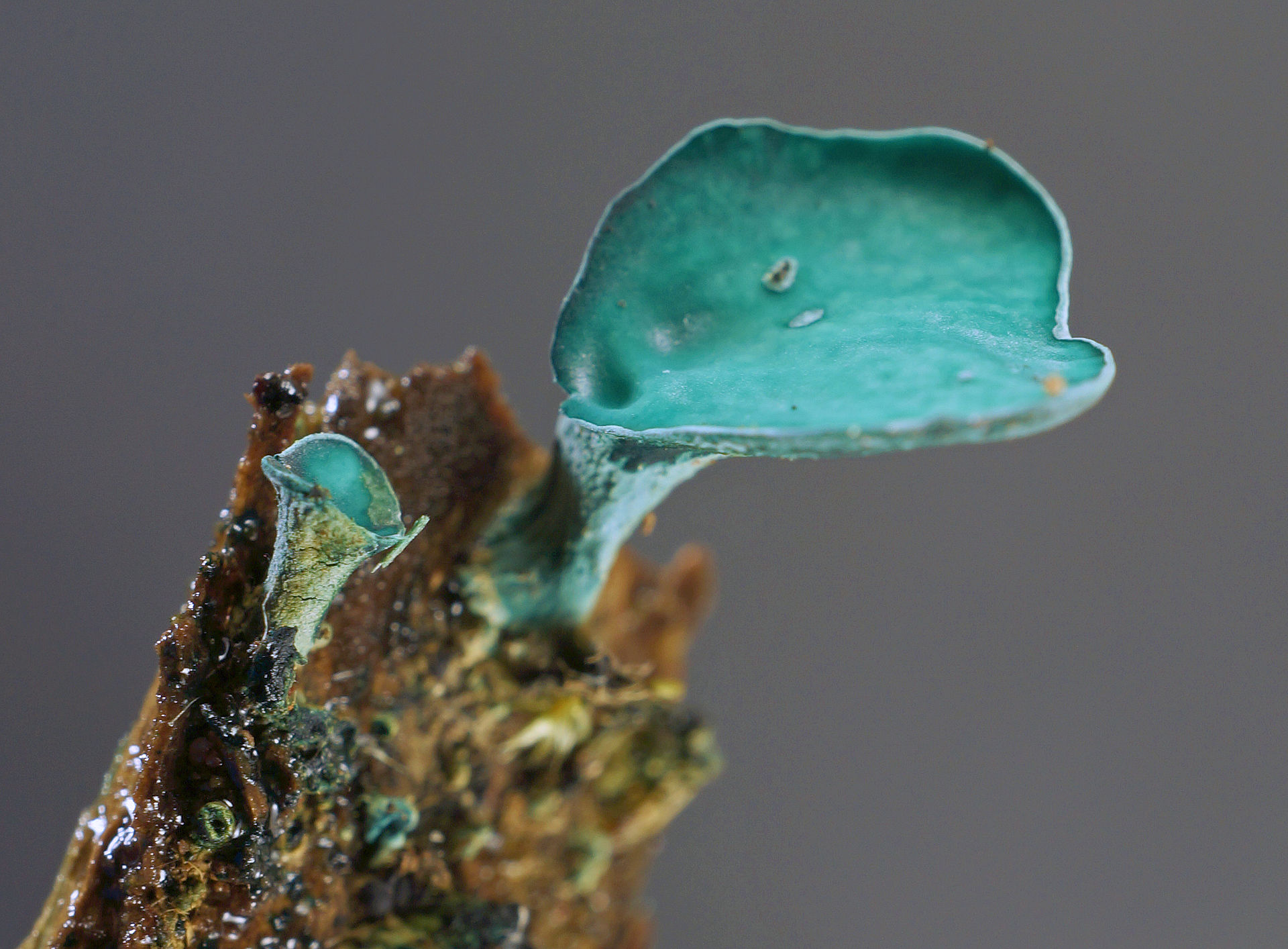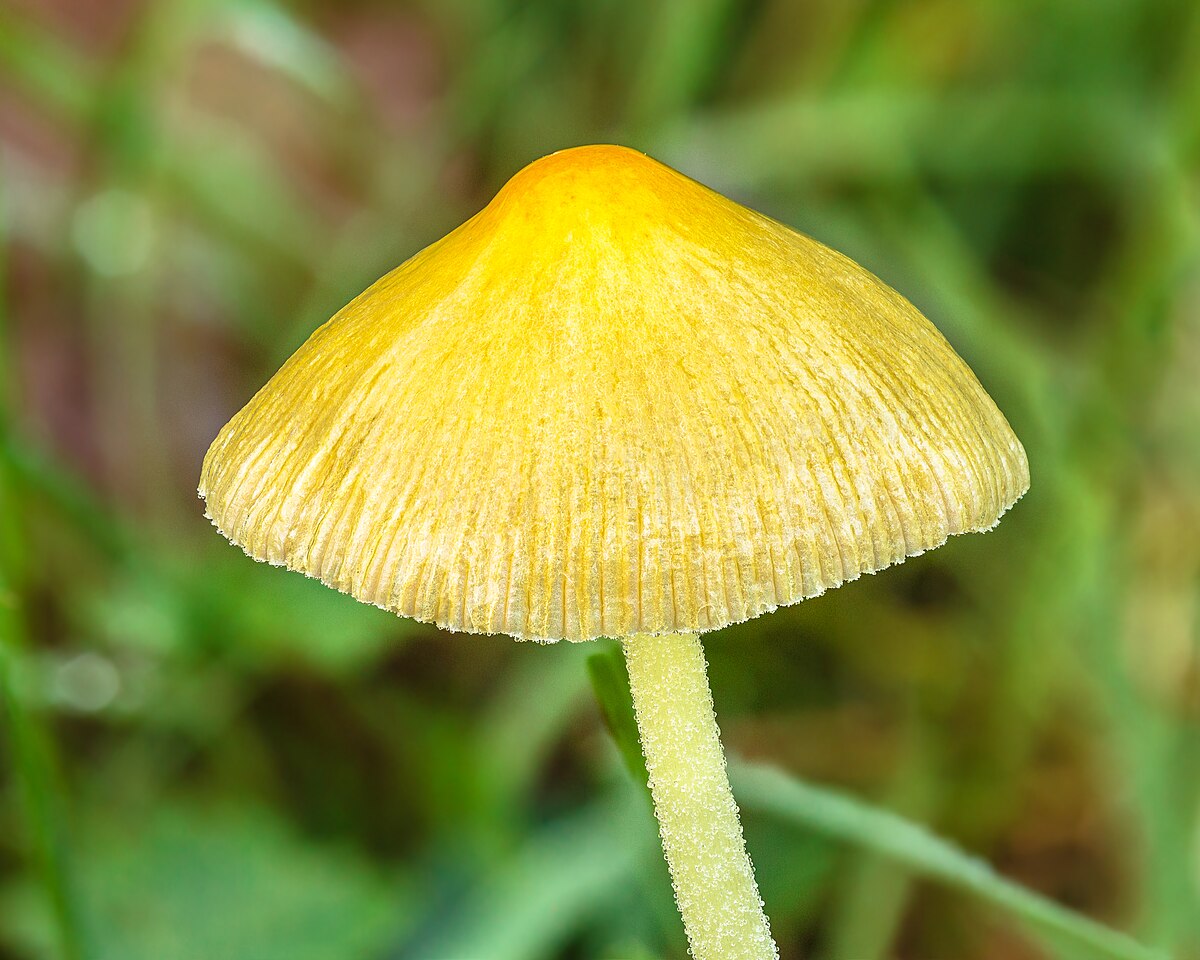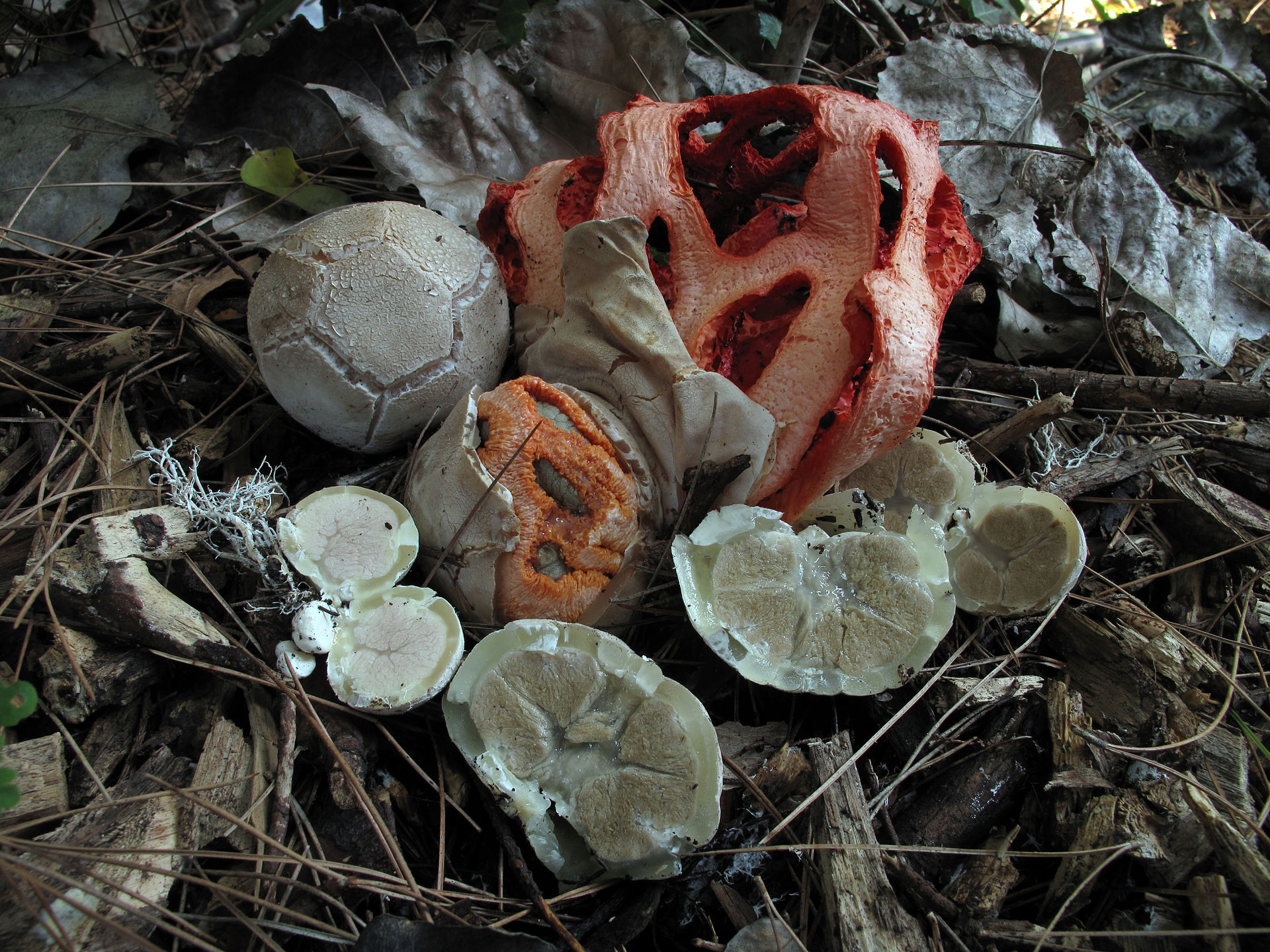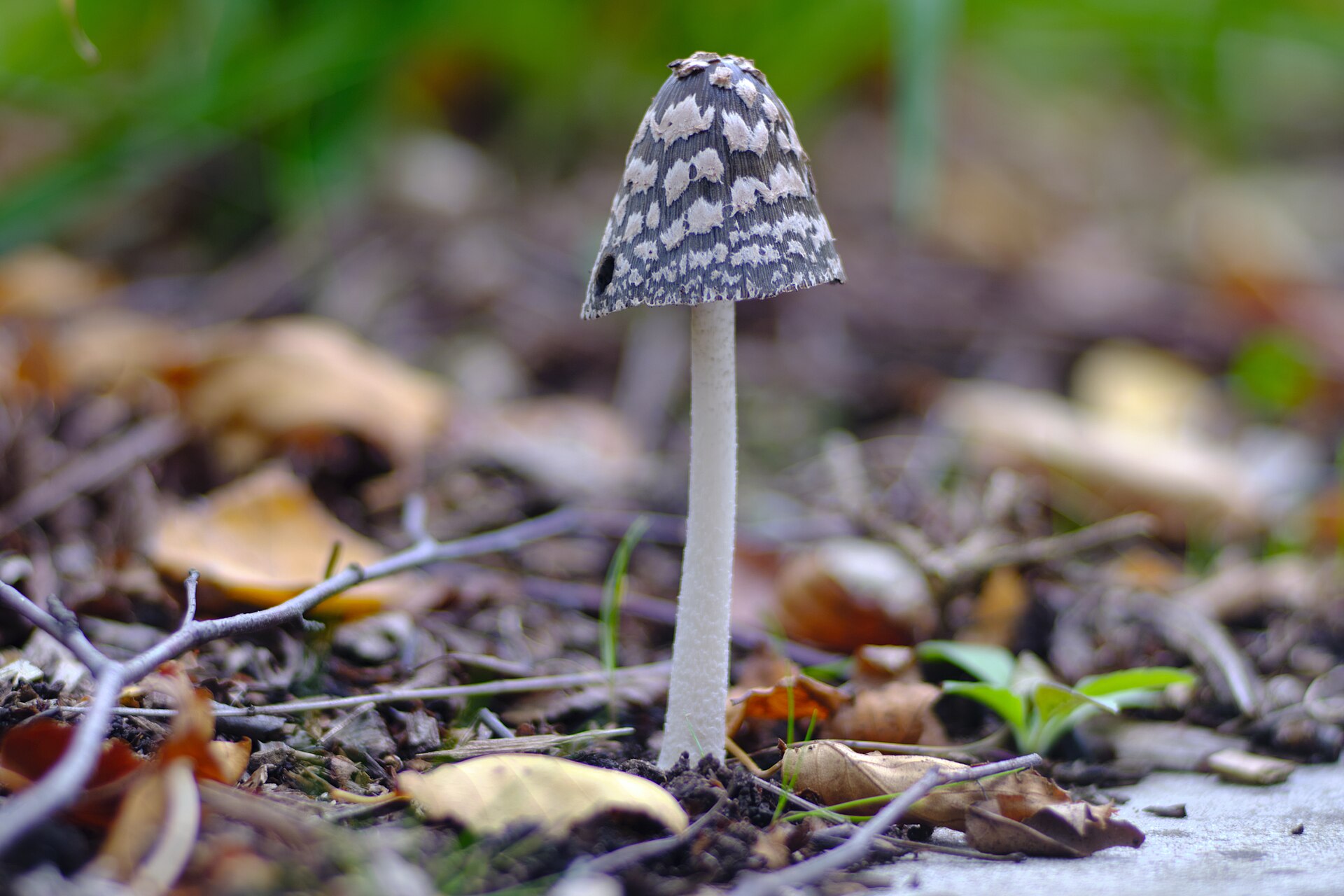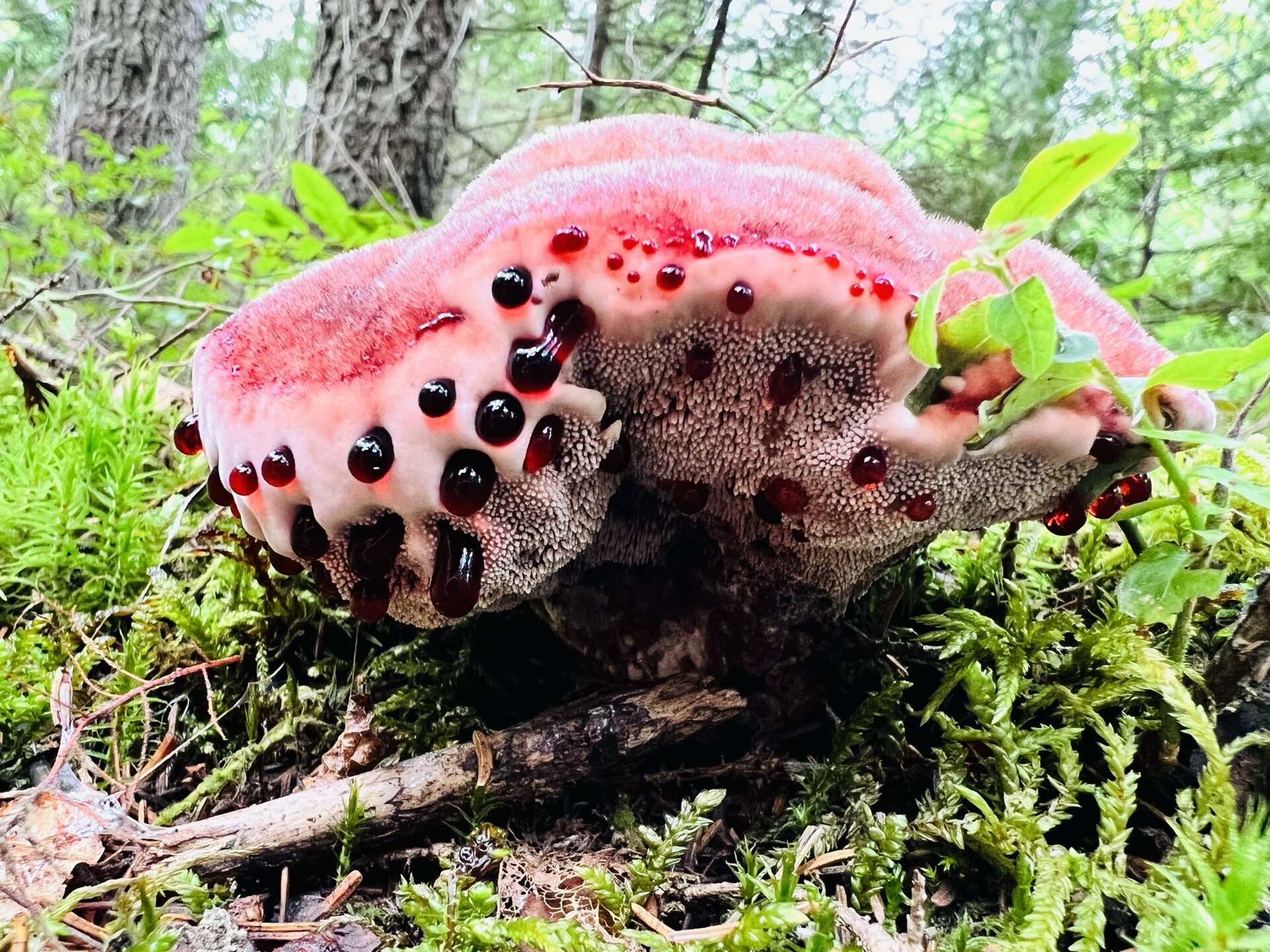
Photo by Eric.stewart · Wikimedia Commons · CC BY-SA 4.0
A striking tooth fungus famous for the blood-red droplets that ooze from its white cap through guttation. Ectomycorrhizal with conifers, inedible due to extreme bitterness, and declining across Europe. Contains atromentin, a compound with anticoagulant properties comparable to heparin.
Young fruit bodies of Hydnellum peckii are among the most visually arresting organisms in the fungal kingdom. The cap surface is initially white to pale pink and velvety, adorned with glistening droplets of thick, blood-red liquid that bead up across the surface like wounds. This phenomenon — called guttation — occurs when root pressure forces excess moisture through the fungal tissue. As the fungus matures, the cap darkens through shades of buff and brown, eventually becoming nearly black, and the dramatic bleeding ceases entirely.
As an ectomycorrhizal fungus, H. peckii forms intimate partnerships with coniferous trees, particularly Scots pine and Norway spruce. The fungus colonizes the tree's root tips, exchanging soil-derived minerals and amino acids for fixed carbon from photosynthesis. Its presence in a forest is considered an indicator of old, species-rich woodland with healthy soil ecosystems. The species is sensitive to nitrogen deposition from air pollution, which has contributed to significant population declines across Europe — it is now considered extinct in the Netherlands and endangered in the UK.
The red guttation fluid contains atromentin, a pigment compound that doubles as both a potent anticoagulant comparable to heparin and an antibacterial agent effective against Streptococcus pneumoniae. Textile artists and natural dyers prize dried specimens for producing unexpected blues and greens when treated with alkaline mordants — a tradition connected to the mushroom dyeing movement pioneered by Miriam C. Rice in California in the 1960s.
Despite its dramatic appearance, H. peckii is thoroughly inedible. The flesh has an intensely acrid, peppery-bitter taste that persists even after cooking. Combined with its extremely tough, corky-leathery texture, there is no culinary application for this species. Its value is ecological, scientific, and aesthetic — a reminder that some of nature's most beautiful organisms are best appreciated in place.
Bleeding Tooth Fungus Facts
- ●The red guttation fluid contains atromentin, a compound with anticoagulant activity comparable to the pharmaceutical drug heparin — this fungus literally bleeds its own blood thinner.
- ●Despite bleeding red, dried specimens dyed in an alkaline bath produce shades of blue and green on wool and silk — the opposite end of the color spectrum from the crimson droplets.
- ●Most of the stem is hidden underground, with some specimens having only 0.5 cm visible above soil while the subterranean portion extends several centimeters deeper into conifer roots.
- ●Once found across the Netherlands, H. peckii is now considered locally extinct there — wiped out by nitrogen pollution and habitat loss, making it a biological indicator of forest ecosystem health.
- ●Atromentin from H. peckii inhibits the FabK enzyme of Streptococcus pneumoniae with an IC50 of just 0.24 micromolar, making it one of the most potent natural antibacterials known from fungi.
Stories From the Field
Named for New York's Greatest Mycologist
In 1912, mycologist Howard James Banker formally described Hydnellum peckii, naming it in honor of Charles Horton Peck, the New York State Botanist who had collected the type specimens near North Elba, New York. Peck described nearly 3,000 fungal species during his career, making him one of the most prolific mycologists in North American history.
The Anticoagulant Discovery
Researchers screening ethanolic extracts of Hydnellum peckii identified atromentin as a potent anticoagulant, finding that 1 mg of purified atromentin was equivalent to 5.1 units of heparin in vitro. This discovery demonstrated that a common forest fungus produces a compound with medically significant blood-thinning activity.
Scotland's Caledonian Forest Refuge
As Hydnellum peckii populations collapsed across northwestern Europe — going extinct in the Netherlands and declining severely in Germany — Scotland's ancient Caledonian Forest became a critical refuge. Researchers documented the species' persistence among native Scots pine, leading to the inclusion of stipitate hydnoid fungi in the UK Biodiversity Action Plan.
Finding Fungi Without Fruiting Bodies
Because H. peckii fruits sporadically and inconsistently, conservationists struggled to monitor populations. A breakthrough came when researchers developed PCR-based methods to detect Hydnellum mycelium directly from soil DNA samples, proving the fungus could persist for years underground without producing visible mushrooms.
Miriam Rice and the Mushroom Dye Revolution
Starting in the late 1960s in Mendocino, California, artist and naturalist Miriam C. Rice pioneered the use of wild fungi as textile dyes. Hydnellum species, including H. peckii, became prized among natural dyers for producing unexpected blues and greens when treated with alkaline mordants. Rice's work established an entire craft tradition that continues through organizations like the International Mushroom Dye Institute.
Where It's Been Found

Based on reported sightings worldwide
How to Identify Bleeding Tooth Fungus
Cap
3-10 cm across. Initially flat-topped, becoming funnel-shaped with age, often irregular or multi-lobed. Surface velvety, white to pale pink when young with bright red guttation droplets; darkening through buff, brown, to nearly black with age. Flesh tough, corky, and fibrous.
Stem
0.5-6 cm tall (mostly underground), 0.5-2 cm diameter. Cylindrical or tapering to base, often with bulbous expansion. Pinkish-buff, coarsely velvety. Largely subterranean, anchored to conifer roots.
Spore Print
Dull brown.
Odor
Not distinctive.
Mushrooms That Look Like Bleeding Tooth Fungus

Mealy Tooth (Hydnellum ferrugineum)
Most similar species. Also exudes reddish droplets when young, but has a mild, floury taste (not intensely acrid). Darker flesh overall. Cap more consistently brown even when young. Distinguished microscopically by the absence of clamp connections on hyphae.
Read more on iNaturalist →
Ridged Tooth (Hydnellum scrobiculatum)
Cap 2-6 cm, fibrillose to pitted-scaly, brown to reddish-brown with a distinctly zonate (ringed) margin. Mild or faintly farinaceous taste. Does not produce red guttation droplets. Purple-brown spines underneath.
Read more on iNaturalist →
Shingled Hedgehog (Sarcodon imbricatus)
Much larger (cap up to 15 cm) with coarse, upturned brown scales on the cap surface. Flesh is fleshy and soft, not tough or leathery. Grey-brown teeth underneath. Edible, though sometimes bitter. Completely different texture and overall appearance.
Read more on iNaturalist →Bleeding Tooth Fungus Edibility
Inedible. Not toxic or poisonous, but thoroughly inedible due to an intensely acrid, peppery-bitter taste that persists even after cooking. The flesh is also extremely tough and corky-leathery in texture, ruling out any culinary use. No adverse health effects have been documented from handling or incidental tasting.
Always verify with local experts before consuming wild mushrooms.
Found something that looks like this in the wild? Don't guess — identify it from a photo with Orangutany and check it against look-alikes before you touch it.