Photo by Lukas Large from Stourbridge, United Kingdom · Wikimedia Commons · CC BY-SA 2.0
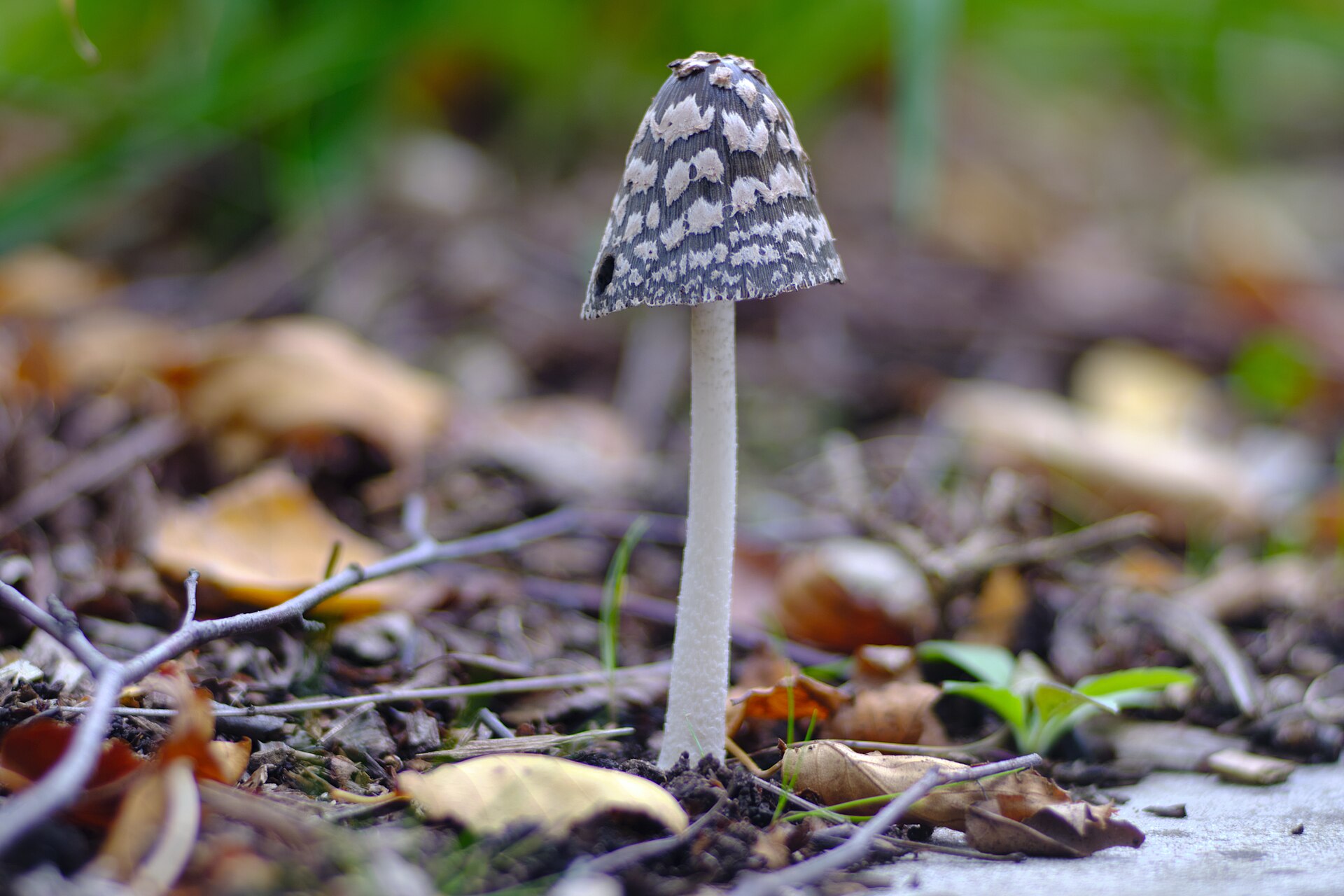
A tall, dramatic inkcap mushroom with a black cap covered in large white patches of veil remnants, giving it a striking magpie-like black-and-white appearance. Found in beech woodlands across Europe and parts of North America. Not edible; causes gastrointestinal upset and is considered too rare and beautiful to pick.
The Magpie Inkcap is one of those mushrooms that stops you in your tracks. Emerging from the leaf litter of a beech wood in October, its tall, slender form with a jet-black cap covered in ragged white patches looks like something from a fairy tale illustration. It is, without exaggeration, one of the most photogenic mushrooms in the temperate world.
The common name references the magpie (Pica pica), the black-and-white bird, and the resemblance is uncanny. The white patches are remnants of a universal veil that enclosed the young mushroom before it expanded. As the cap grows, the veil tears into irregular patches that cling to the dark surface. The effect is dramatic, almost theatrical.
Like other inkcaps, the Magpie Inkcap is ephemeral. The cap starts as a tall, narrow egg shape, expands to a bell, and then begins to liquefy from the margins inward over the course of a day or two. This autodigestion (deliquescence) is the inkcap's spore dispersal strategy: as the gills dissolve into a black, inky liquid, they release mature spores into the dripping fluid, which carries them to the ground and nearby substrate.
Coprinopsis picacea is not considered edible. Reports of gastrointestinal symptoms after consumption are consistent, and some sources suggest it may contain coprine (the same compound that causes the Alcohol Inkcap's disulfiram-like reaction), though this has not been definitively confirmed. Regardless of toxicity, the mushroom is uncommon enough that most mycologists consider picking it a waste. It is better photographed than eaten.
The species is strongly associated with beech (Fagus) trees in Europe, where it fruits on buried wood, roots, and rich leaf litter in autumn. In North America, it is less common and may be associated with other hardwoods. It is typically found singly or in small groups, never in the massive troops that characterize some other inkcap species.
Magpie Inkcap Facts
- ●The Magpie Inkcap dissolves itself from the bottom of the cap upward, converting its gills into a black, inky liquid that carries mature spores to the ground. This process, called autodigestion or deliquescence, allows the mushroom to release spores from the lowest gills first, preventing them from being blocked by gills above.
- ●The white patches on the Magpie Inkcap's cap are remnants of a universal veil that enclosed the entire young mushroom. As the cap expands, the veil cannot stretch with it and tears into the distinctive irregular patches.
- ●In some parts of England, the Magpie Inkcap was traditionally called the 'magpie fungus' and was considered bad luck to pick, echoing the superstition that seeing a single magpie brings misfortune.
- ●The inky black liquid produced by deliquescing inkcaps was historically used as actual writing ink. Manuscripts written with inkcap ink have survived for centuries and can be authenticated by the presence of fungal spores under microscopic examination.
Stories From the Field
The Beech Wood Photo Trophy
Mushroom photographers in the UK consider the Magpie Inkcap one of the most prized subjects. A 2019 post on the British Mycological Society's Facebook page showing a perfect specimen in the Chiltern Hills received over 2,000 likes and dozens of comments from members who had never seen one in person. Several described it as a 'bucket list' mushroom.
The Disappearing Act
A mycologist leading a foray in the New Forest, Hampshire, pointed out a cluster of three Magpie Inkcaps to the group at 10 AM. When they returned to the same spot at 2 PM to photograph them again, two had already begun deliquescing, their caps dissolving into inky rivulets running down the stems. By the next morning, only blackened stems and puddles of ink remained. The entire lifespan of the fruiting body had been less than 36 hours.
Rare Find in the Appalachians
In 2021, a forager in western North Carolina posted photographs of what appeared to be Coprinopsis picacea growing among American beech trees in the Pisgah National Forest. The find was notable because the species is seldom reported in North America, and several mycologists debated whether the specimens might represent a closely related but undescribed species adapted to American Fagus grandifolia.
Where It's Been Found

Based on reported sightings worldwide
How to Identify Magpie Inkcap
Cap
5-8 cm tall when closed, expanding to 6-10 cm across when open. Initially egg-shaped to cylindrical, expanding to conical or bell-shaped before deliquescing. Black to very dark brown, covered with large, irregular white patches of veil remnants. Surface between patches is smooth. Flesh is thin and fragile.
Gills
Free (not attached to stem). White when very young, rapidly darkening to gray, then black, before dissolving into inky black liquid (deliquescence). Crowded and very thin.
Stem
10-25 cm tall, 1-2 cm thick. White, smooth to finely fibrillose, hollow. Tall and slender, often slightly wider at the base. No ring. Surface is smooth and white throughout.
Spore Print
Black. Easily obtained by catching the inky liquid that drips from the dissolving cap.
Odor
Unpleasant when mature, described as chemical or tar-like by some observers. Young specimens have a milder, nondescript odor.
Mushrooms That Look Like Magpie Inkcap
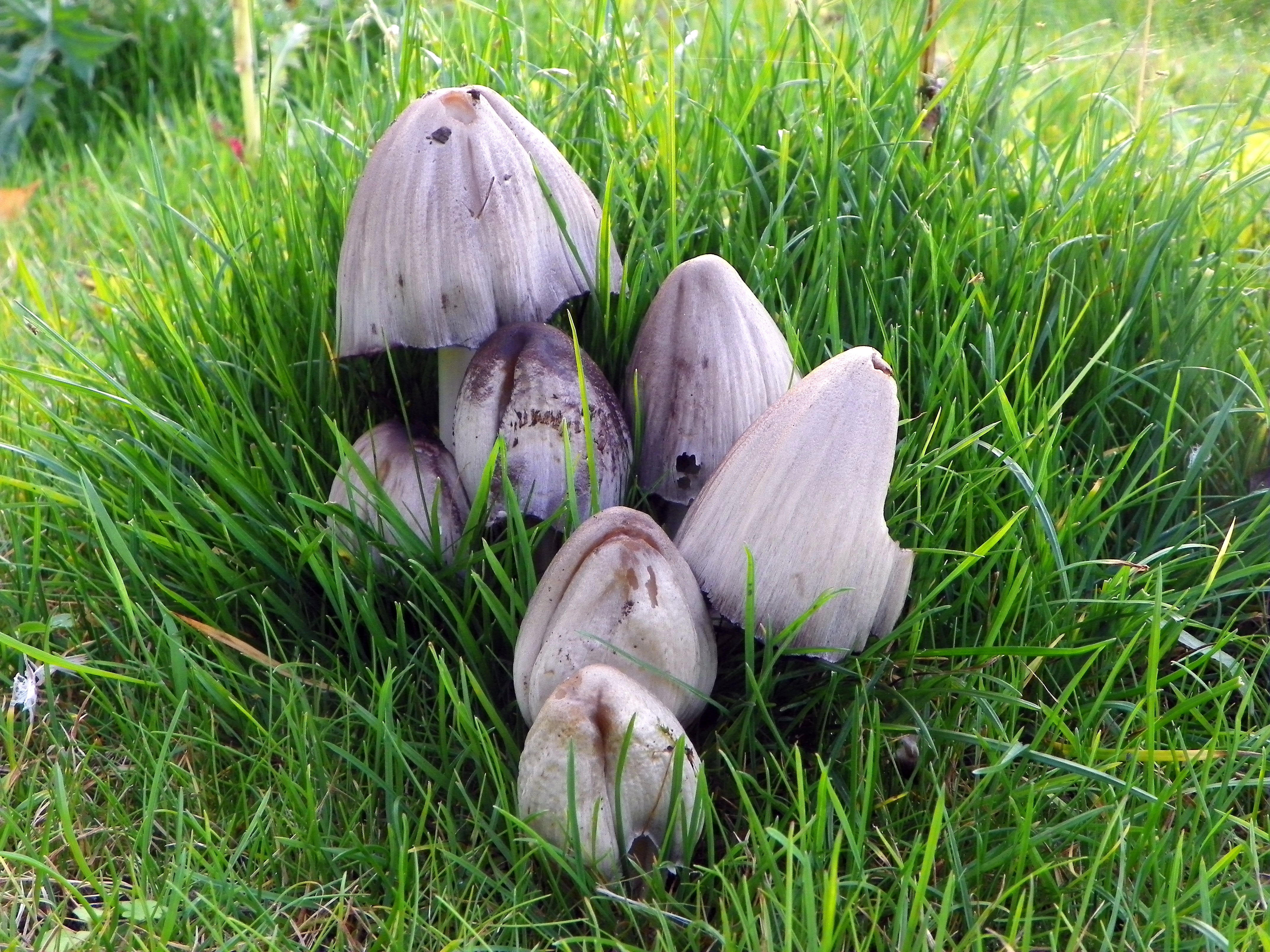
Much more common, lacks the white patches. Cap is uniformly gray-brown. Grows in clusters at the base of stumps, not singly in beech litter. Contains coprine, which causes illness when combined with alcohol.
Side-by-side comparison →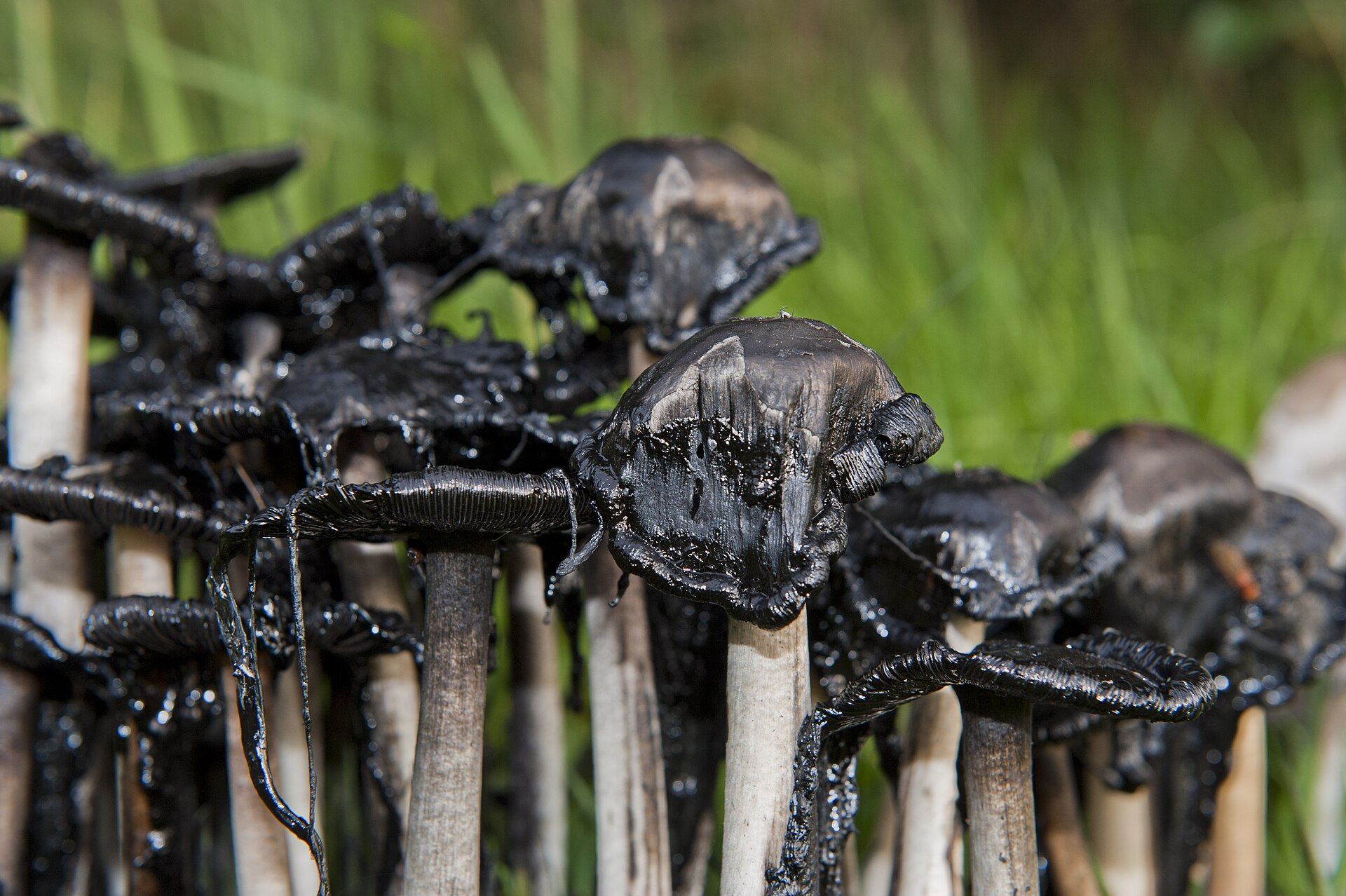
Edible (before deliquescence). Has a white cap with shaggy, upturned scales rather than black with white patches. Grows in lawns and disturbed ground, not in beech woods. Much larger and more robust.
Side-by-side comparison →Coprinellus domesticus (Firerug Inkcap)
Smaller, orange-brown cap, grows on decaying wood indoors and outdoors. Lacks the dramatic black-and-white pattern. Found in damper environments, often on rotting timber in buildings.
Read more on iNaturalist →Magpie Inkcap Edibility
Not edible. Causes gastrointestinal upset including nausea and stomach pain. Some sources suggest it may contain coprine, which causes a disulfiram-like reaction with alcohol, though this has not been definitively confirmed. The species is uncommon enough that it is better appreciated in situ than collected for the table. Photograph it; do not eat it.
Always verify with local experts before consuming wild mushrooms.
Found something that looks like this in the wild? Don't guess — identify it from a photo with Orangutany and check it against look-alikes before you touch it.