Photo by George Chernilevsky · Wikimedia Commons · Public domain
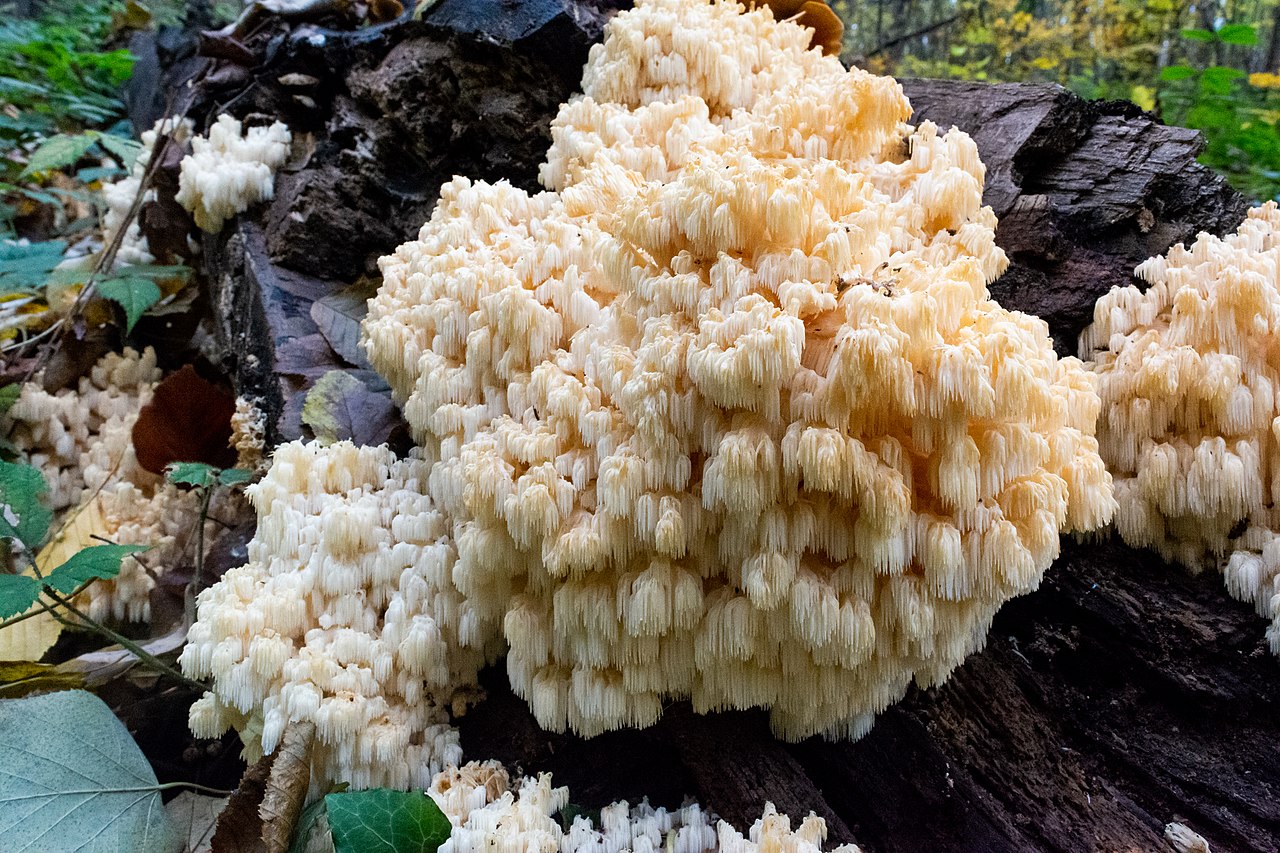
A stunning white fungus that looks like it belongs on a coral reef, not a forest log. Coral Tooth — also called Comb Tooth — grows in delicate branching clusters covered in tiny hanging spines, and it's every bit as delicious as its famous cousin Lion's Mane. Protected by law in several European countries due to declining old-growth habitat.
Finding Hericium coralloides in the wild is one of those moments that stops you mid-stride. It looks like someone glued a chunk of bleached coral onto a dead beech log — an intricate white mass of branching arms, each one dangling rows of short, delicate teeth (spines) that produce the spores. In good light, it almost seems to glow against the dark bark. It's easily one of the most beautiful fungi in the temperate forest.
Unlike its more famous relative Lion's Mane (Hericium erinaceus), which forms a single unbranched clump of long cascading spines, Coral Tooth grows in a highly branched structure — think of a cauliflower crossed with icicles. The individual teeth are shorter (typically 5–15 mm) and arranged along the underside of each branch. When young and fresh, the entire fruiting body is pure white; as it ages, it yellows and eventually turns brownish.
Coral Tooth is saprobic, feeding on dead hardwood — beech and oak are its favorites, though it also appears on maple, birch, and other deciduous trees. It prefers large-diameter logs and standing dead trees in mature forests, which is exactly why it's becoming rarer in managed woodlands where dead wood is removed. In the UK, it's a Priority Species under the Biodiversity Action Plan. Germany, Poland, and several Scandinavian countries also list it as threatened or protected. If you find one, consider yourself lucky — and leave it to sporulate unless you're certain the population is healthy.
Coral Tooth Fungus Facts
- ●Hericium coralloides is legally protected in the UK, Germany, Poland, and several Scandinavian countries — picking it can result in fines. Its decline is directly linked to the removal of dead wood from managed forests.
- ●Despite looking completely alien to most terrestrial fungi, Coral Tooth is closely related to the common Russula mushrooms — they're both in the order Russulales, a connection that surprised mycologists when molecular studies revealed it.
- ●A single Coral Tooth fruiting body can weigh over 1 kg and span 40 cm across, making it one of the largest tooth fungi in the world.
- ●The flavor of Coral Tooth is often described as 'lobster-like' — so similar to shellfish that some chefs use it as a vegan substitute for crab cakes and lobster rolls.
- ●Coral Tooth requires dead logs at least 20 cm in diameter to fruit successfully. Modern forestry practices that remove fallen wood before it reaches this size have eliminated the species from many European forests.
Stories From the Field
The UK's Coral Tooth Recovery Program
In 2013, the New Forest in southern England became the focus of a targeted conservation effort for Hericium coralloides after surveys found it on fewer than 20 trees in the entire forest. The Forestry Commission began deliberately leaving large beech logs in place rather than clearing them — a simple change that gave the fungus the dead wood habitat it desperately needed. By 2020, the number of known sites had more than doubled.
Germany's Red List Protection
Germany listed Hericium coralloides on its national Red List of threatened species in the 1990s, making it illegal to collect in the wild. The listing was driven by decades of intensive forestry that removed the large dead beech logs the fungus depends on. German nature reserves that adopted 'deadwood retention' policies saw the species gradually return within 10–15 years.
A Rising Star on Restaurant Menus
Coral Tooth has gained popularity among chefs in the farm-to-table movement, particularly in the northeastern United States and Pacific Northwest. Its striking appearance and lobster-like flavor make it a natural fit for tasting menus. Some restaurants present it tempura-fried or seared, capitalizing on its photogenic branching structure. As demand has grown, small-scale cultivators have begun offering it alongside Lion's Mane to reduce pressure on wild populations.
Poland's Old-Growth Białowieża Connection
Białowieża Forest, the last lowland primeval forest in Europe straddling the Poland-Belarus border, is one of the most reliable places on the continent to find Hericium coralloides. Researchers from the University of Warsaw documented it on over 100 fallen beech and oak logs during a 2017 survey — a density virtually impossible in managed forests. The find became a powerful argument against logging proposals in the forest.
Cultivation Breakthroughs in China
While Hericium erinaceus has been commercially cultivated in China for decades, Hericium coralloides proved more challenging due to its branching growth habit requiring specific humidity and airflow conditions. Researchers at the Fujian Agriculture and Forestry University published a successful protocol in 2021 using supplemented beech sawdust blocks in climate-controlled chambers, opening the door to commercial production without wild harvesting.
Where It's Been Found
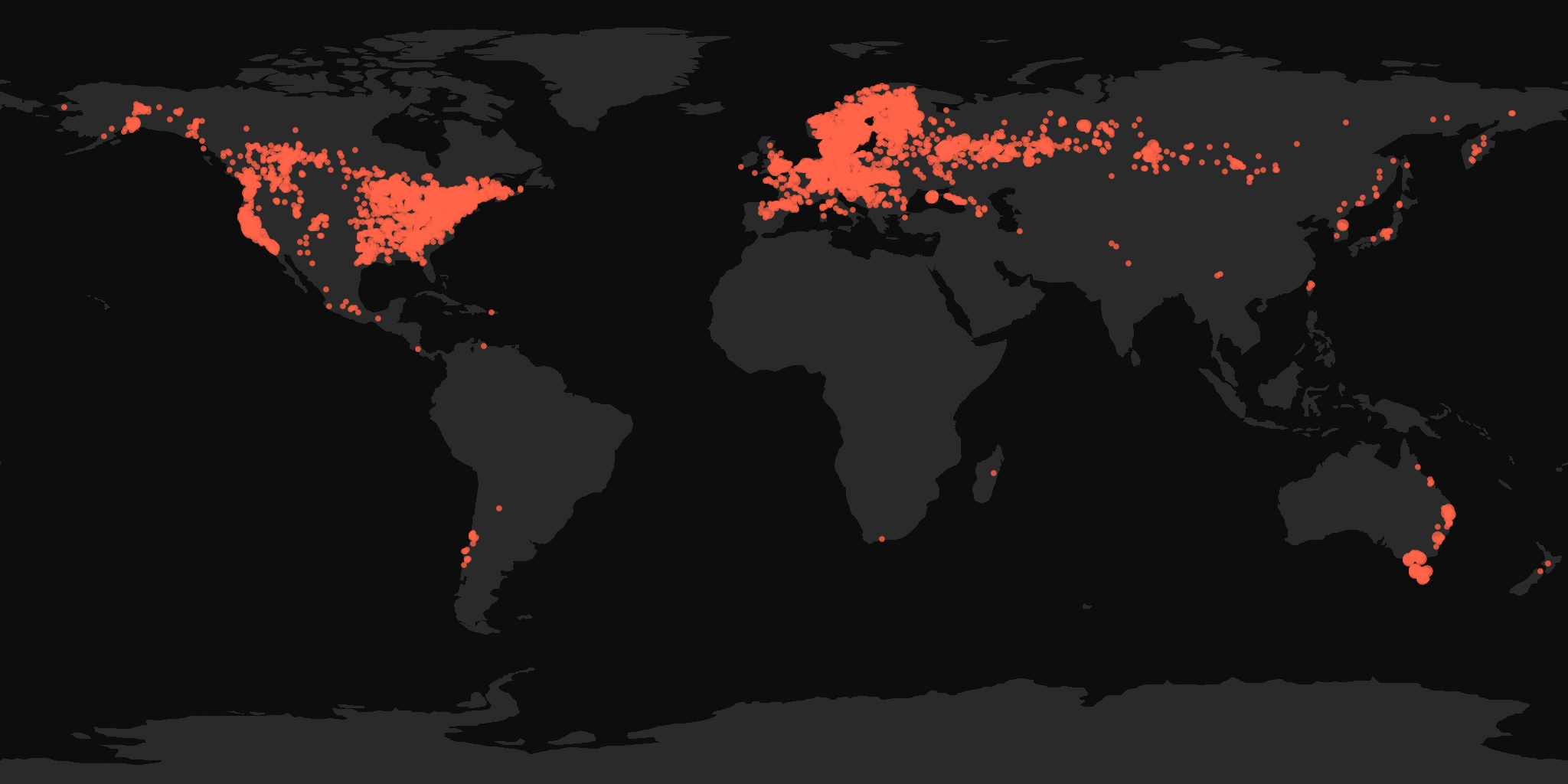
Based on reported sightings worldwide
How to Identify Coral Tooth Fungus
Cap
No traditional cap. The fruiting body is a branching, coral-like structure 10–40 cm across. Pure white when fresh, becoming cream to yellowish with age. The overall shape is irregularly globose with multiple branching arms radiating from a central attachment point.
Gills
No gills. Instead, the spore-bearing surface consists of rows of hanging teeth (spines) 5–15 mm long, arranged along the underside of each branch. Teeth are white, soft, and fragile — they break easily when handled.
Stem
No true stem. The branching structure attaches to the wood substrate at a single point or narrow base, from which all branches radiate outward.
Spore Print
White.
Odor
Mild, pleasant, slightly sweet. Some describe it as faintly fragrant.
Mushrooms That Look Like Coral Tooth Fungus
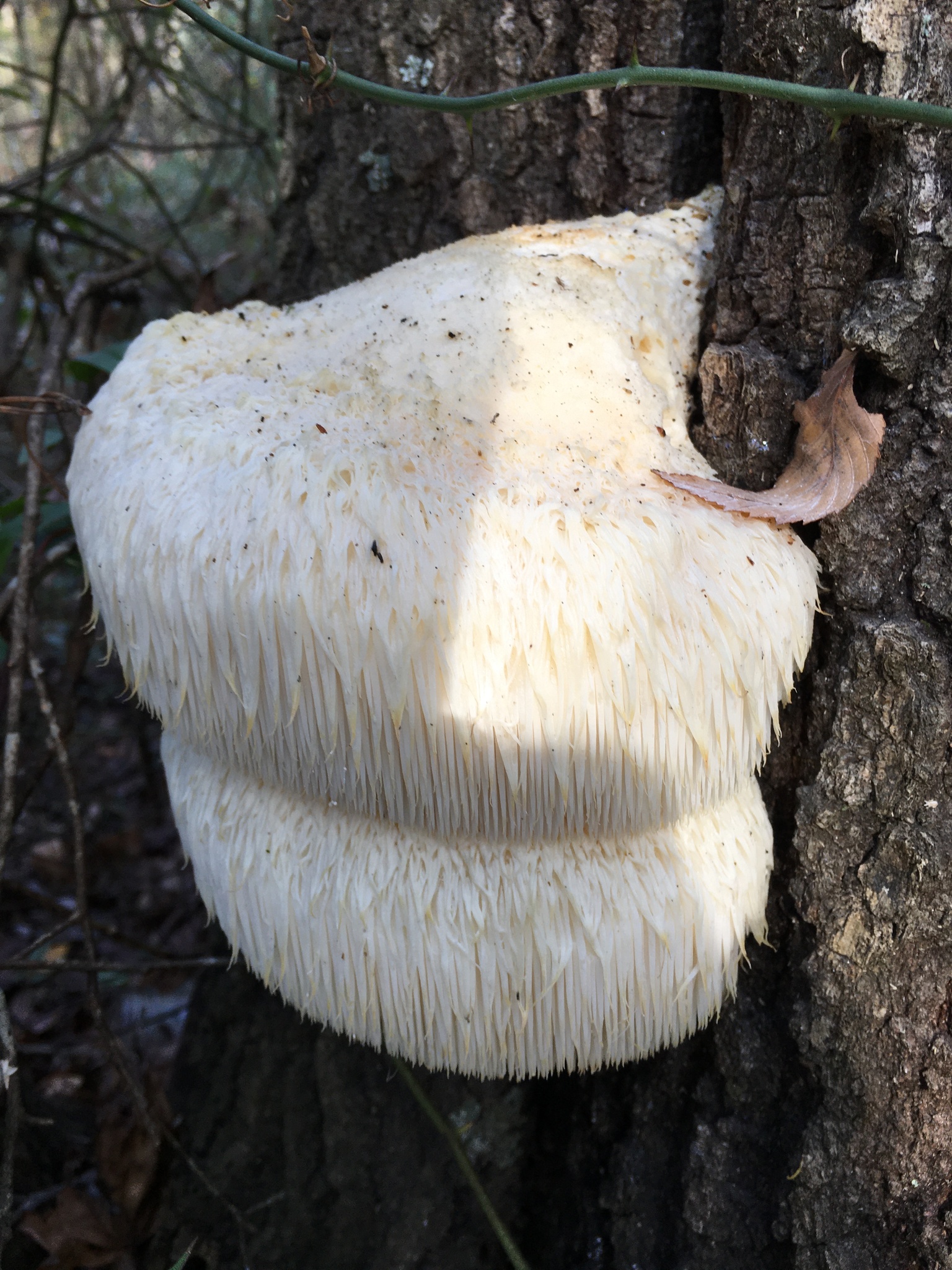
Forms a single, unbranched, globose clump of long cascading spines (often 2–5 cm long) rather than a branching coral-like structure. The overall shape is more like a white pompom or waterfall than a coral. Both are excellent edibles, but their growth form is distinctly different once you've seen both side by side.
Side-by-side comparison →Read more on iNaturalist →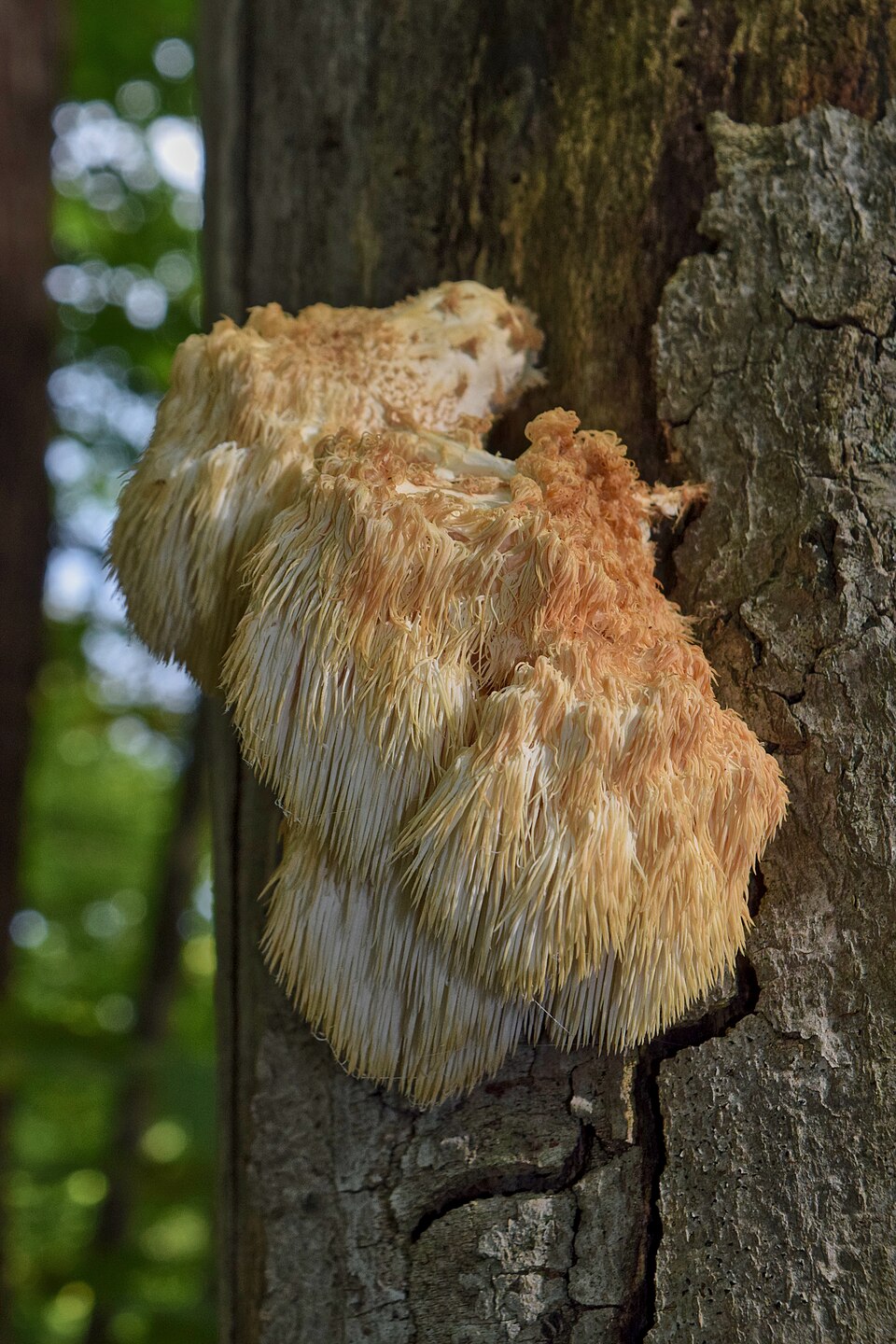
Bear's Head Tooth (Hericium americanum)
Intermediate between Coral Tooth and Lion's Mane — it branches, but less extensively than H. coralloides, and its spines are longer (1–3 cm). Found primarily in eastern North America. Some mycologists consider it a variety of H. coralloides rather than a separate species. Also edible and delicious.
Read more on Wikipedia →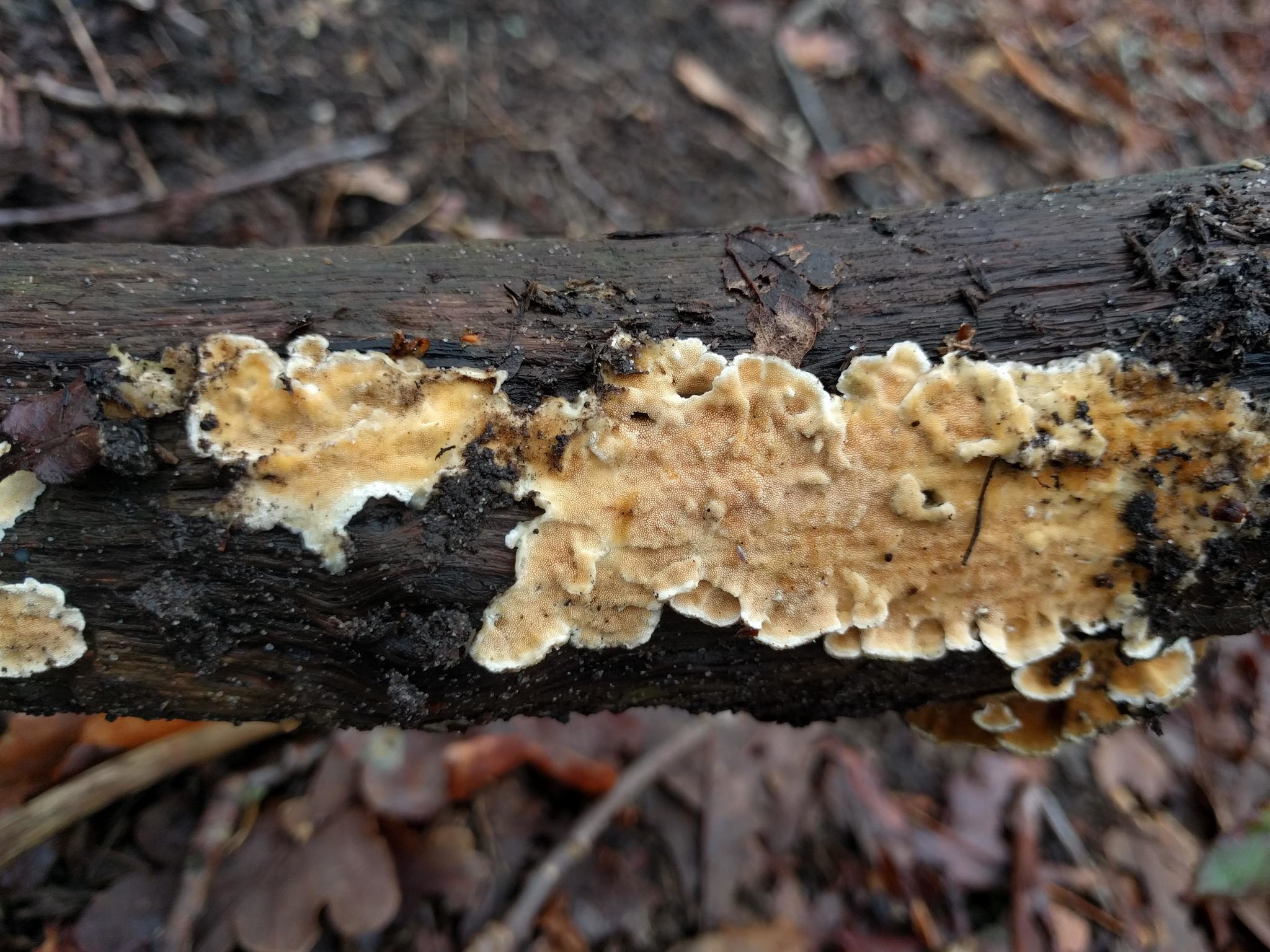
Ochre Spreading Tooth (Steccherinum ochraceum)
Completely different in size and habit. Forms thin, crust-like patches (1–5 cm) on dead wood with tiny orange to ochre teeth on the underside. Much smaller, flatter, and distinctly colored compared to the large, white, branching Coral Tooth. Not edible due to small size and tough texture.
Read more on Wikipedia →Is Coral Tooth Fungus Edible?
An excellent edible mushroom with a delicate flavor often compared to lobster or crab — very similar to Lion's Mane. Best sautéed in butter until the edges turn golden and slightly crispy. The texture is tender and slightly chewy. However, because Coral Tooth is protected in many European countries, foraging may be illegal in your area. Always check local regulations before harvesting. In North America, it's generally legal to forage but not abundant enough to take large quantities.
Always verify with local experts before consuming wild mushrooms.
Found something that looks like this in the wild? Don't guess — identify it from a photo with Orangutany and check it against look-alikes before you touch it.