Photo by Jiří Berkovec · Wikimedia Commons · CC BY-SA 3.0
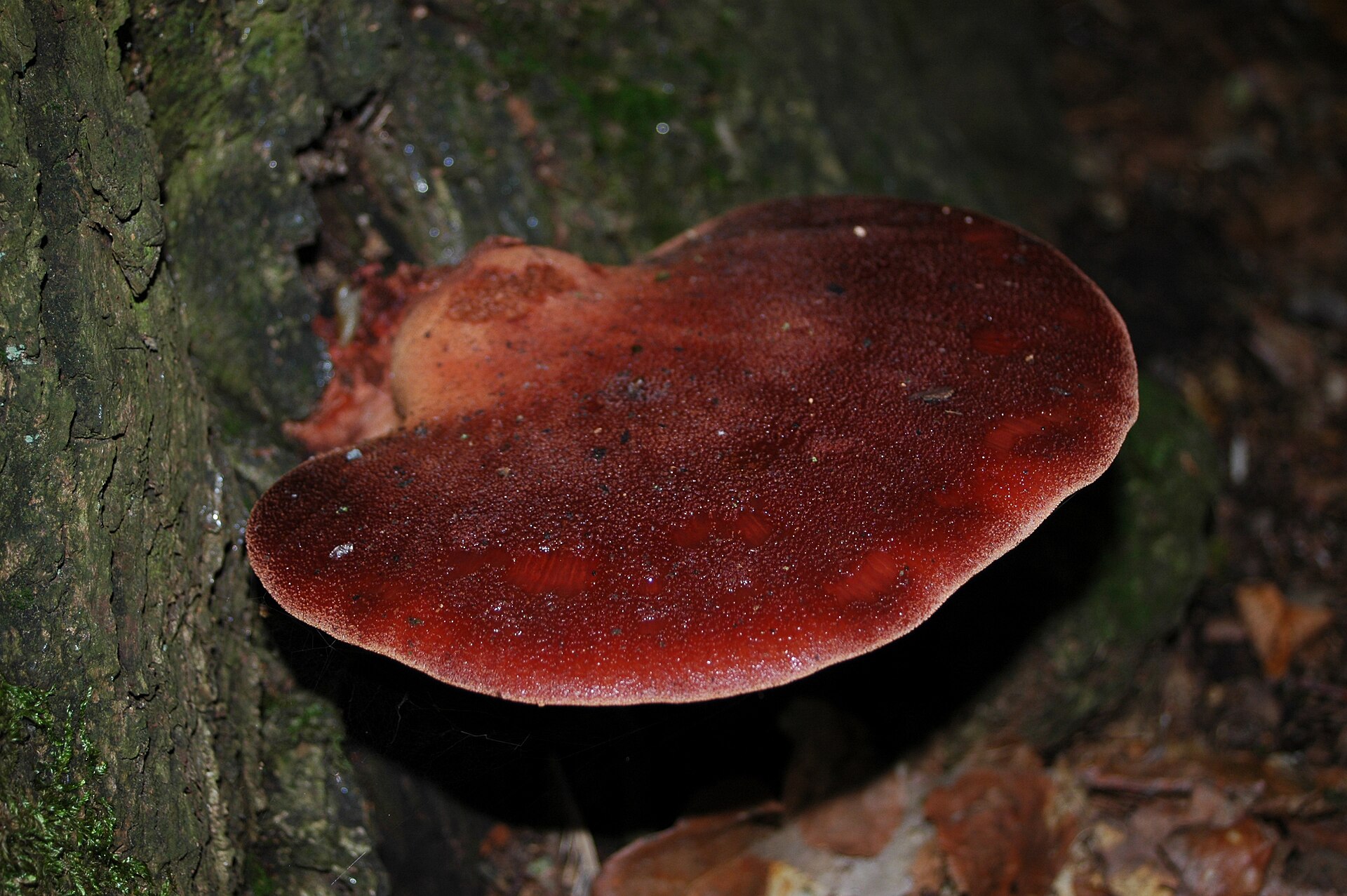
A bracket fungus that looks and bleeds like a slab of raw meat. Fistulina hepatica grows on living oak and sweet chestnut trees, producing a tongue-shaped, blood-red fruiting body that oozes a red juice when cut. Edible with a pleasantly sour, tangy flavor, and paradoxically, the brown heartwood it creates in oak is some of the most valuable timber in the world.
The first time you see a Beefsteak Fungus, the name makes perfect sense. It juts out from an oak trunk like a thick, raw steak, the color of fresh liver or rare beef. Cut it, and it bleeds. Not metaphorically; it actually exudes a dark red juice that looks disturbingly like blood. Slice it open, and the interior is marbled with pale streaks running through deep red flesh, completing the uncanny resemblance to meat.
Fistulina hepatica is a weak parasite of living oaks and sweet chestnuts. It causes a brown rot in the heartwood, slowly breaking down the interior of the tree while the tree continues to grow. This might sound like bad news, but here is the twist: the brown-stained wood produced by Beefsteak Fungus infection is called 'brown oak,' and it is among the most sought-after decorative timbers in Europe. Furniture makers, luthiers, and woodturners will pay a premium for planks with the rich, warm brown coloring that Fistulina creates. A single infected oak can be worth significantly more as timber than a healthy one.
As an edible mushroom, the Beefsteak Fungus is divisive. The flesh is firm, slightly chewy, and distinctly acidic, with a sour, citrusy tang that some people love and others find off-putting. Young specimens are best; older ones become tough and overly acidic. It can be eaten raw in thin slices (it is one of the very few bracket fungi safe to eat uncooked), sauteed, or marinated. The texture and color make it a novelty at the dinner table.
Beefsteak Fungus Facts
- ●The individual tubes on the underside of Fistulina hepatica are not fused together like other polypores. You can separate them with your fingernail, a unique feature that makes this species unmistakable.
- ●Oak infected with Beefsteak Fungus produces 'brown oak,' a premium timber that can sell for 3-5 times the price of regular oak due to its rich chocolate-brown color.
- ●Fistulina hepatica is one of the very few bracket fungi that can be safely eaten raw. The sour, citrusy flavor actually works well in salad preparations.
- ●The red juice that oozes from cut Beefsteak Fungus contains pigments closely related to those found in red wine. The biochemistry is coincidental, not related.
Stories From the Field
The Brown Oak Premium
English furniture makers have prized brown oak for centuries. The warm, chocolate-brown coloring caused by Fistulina hepatica infection transforms ordinary oak into a premium decorative timber. A brown oak plank can sell for several times the price of regular oak. Some woodland managers deliberately leave infected trees standing to increase their timber value.
The Raw Mushroom Steak
A London-based forager and chef gained attention by serving raw Beefsteak Fungus carpaccio at a supper club, sliced paper-thin with olive oil, lemon juice, and shaved parmesan. Guests who did not know it was mushroom reportedly asked what kind of beef it was. The red juice pooling on the plate completed the illusion.
The Ancient Oak's Secret
When a 400-year-old oak in Sherwood Forest was surveyed with a resistograph (a device that measures internal wood density), researchers discovered that nearly 60% of the heartwood had been converted to brown rot by Fistulina hepatica. Despite this, the tree was healthy and still growing. The fungus and the tree had coexisted for possibly over a century.
Where It's Been Found

Based on reported sightings worldwide
How to Identify Beefsteak Fungus
Cap
10-25 cm across, 3-6 cm thick. Tongue-shaped, fan-shaped, or roughly semicircular. Upper surface is rough, slightly bumpy, moist to sticky. Color ranges from orange-red when young to dark blood-red or liver-colored when mature. Margin is rounded and thick.
Gills
No gills. The underside has a layer of densely packed, individual tubes (pores) that are not fused together; they can be separated with a fingernail. This is a unique feature among bracket fungi. Pore surface is yellowish to pinkish, bruising reddish-brown.
Stem
Usually absent or very short and lateral. The bracket attaches directly to the tree trunk, sometimes with a stubby, off-center stalk.
Spore Print
Pinkish-brown to salmon.
Odor
Mild, slightly sour, faintly fruity.
Mushrooms That Look Like Beefsteak Fungus
Liver-colored Polypore (Ganoderma species)
Some Ganoderma brackets can appear reddish-brown, but they are woody, hard, and perennial, not soft and fleshy. Ganoderma does not bleed red juice when cut. Surface is typically shiny or lacquered-looking.
Read more on iNaturalist →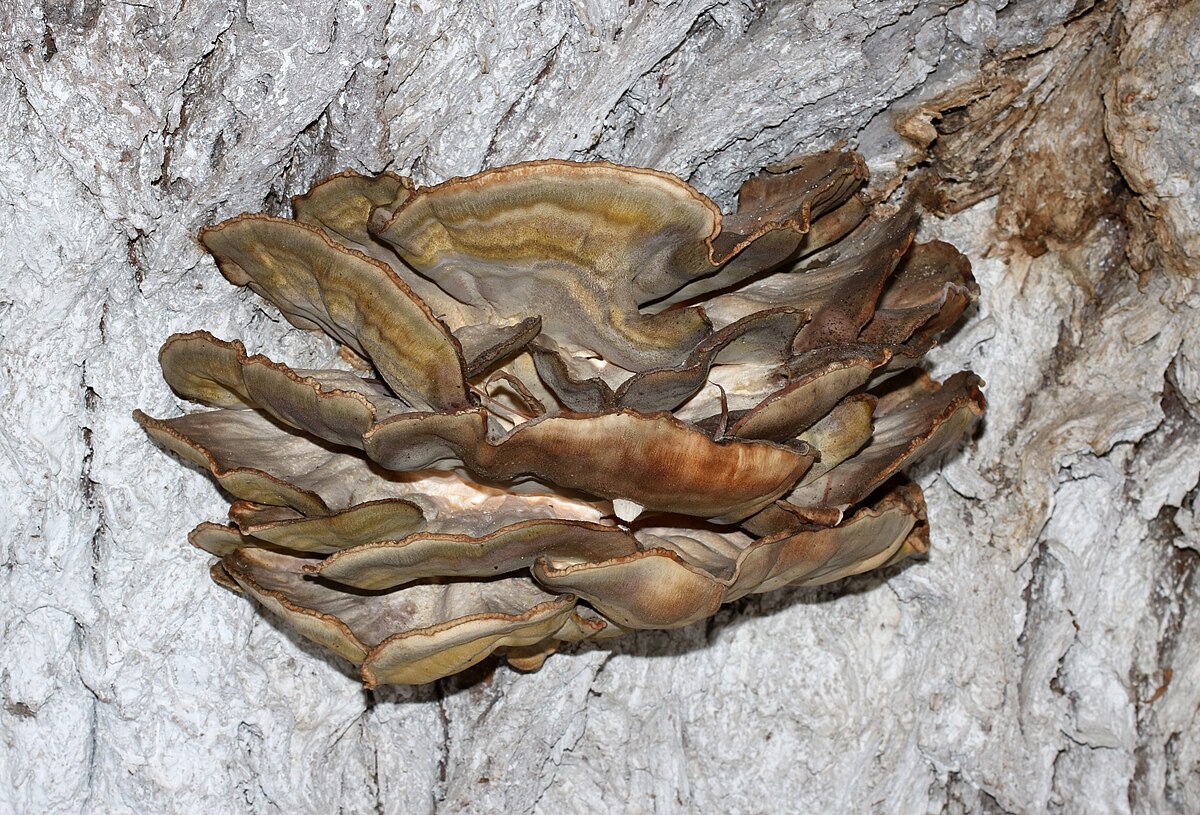
Also a bracket fungus on oaks, but bright orange-yellow rather than blood-red. Texture is more crumbly, not rubbery. Does not exude red juice. Much different color at every stage of growth.
Side-by-side comparison →Read more on MushroomExpert →Is Beefsteak Fungus Edible?
Edible, with a unique sour, tangy flavor. Best when young and fresh; older specimens become tough and excessively acidic. Can be eaten raw in thin slices, sauteed, or marinated. The acidic flavor pairs well with salads and vinaigrettes. Remove the pore layer before cooking, as it can become slimy. Some people experience mild gastrointestinal discomfort; try a small amount first.
Always verify with local experts before consuming wild mushrooms.
Found something that looks like this in the wild? Don't guess — identify it from a photo with Orangutany and check it against look-alikes before you touch it.