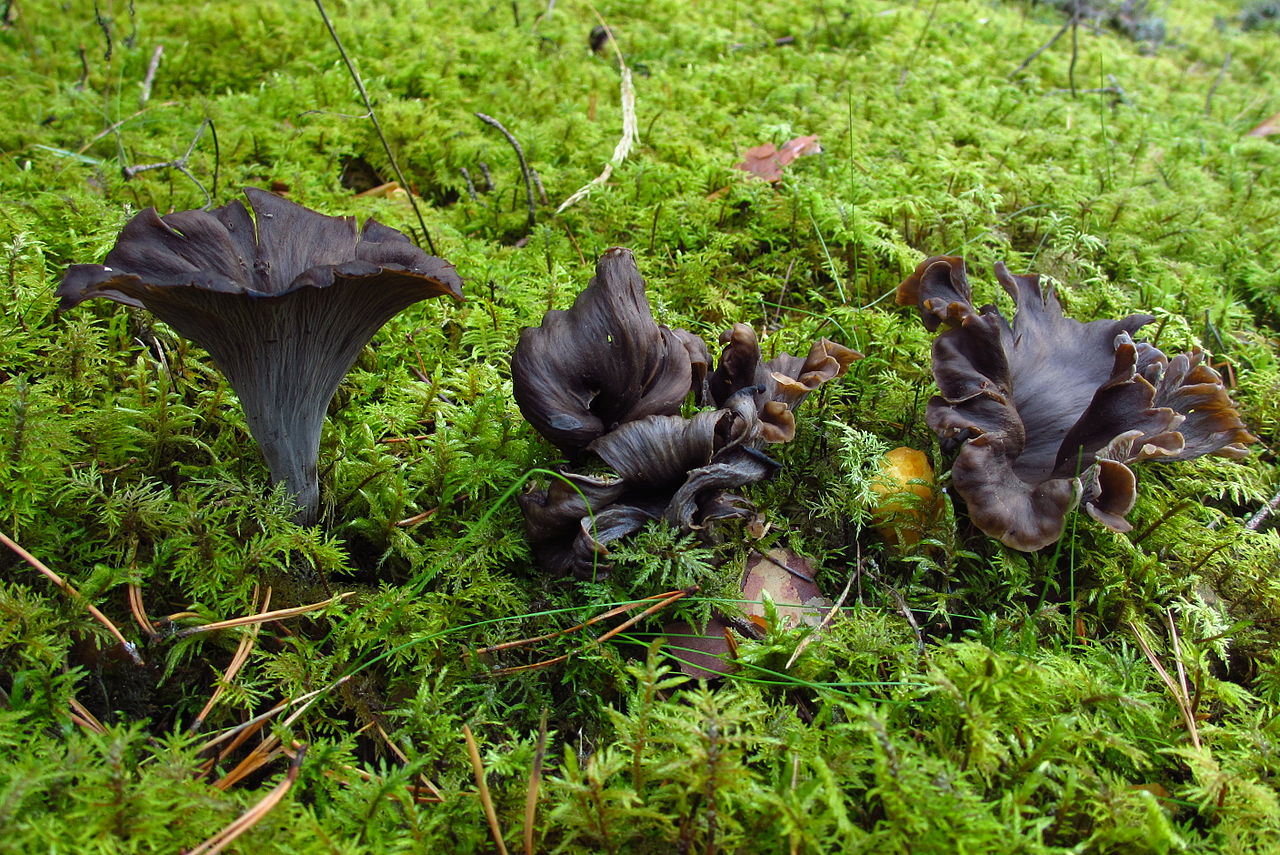
Photo by Tero Karppinen from Finland · Wikimedia Commons · CC BY 2.0
A slender, funnel-shaped chanterelle that carpets mossy conifer forests in autumn. Taxonomists recently moved this species from Cantharellus to Craterellus, but foragers still call it what they always have: a reliable late-season treasure.
The trumpet chanterelle sits at the intersection of taxonomy and tradition. For decades it was classified as Cantharellus tubaeformis, and many field guides still list it that way. Molecular studies have since placed it in Craterellus, alongside the black trumpet. Foragers, predictably, could not care less about the reclassification. What matters is that this mushroom fruits reliably in enormous quantities during the cool, wet months of autumn.
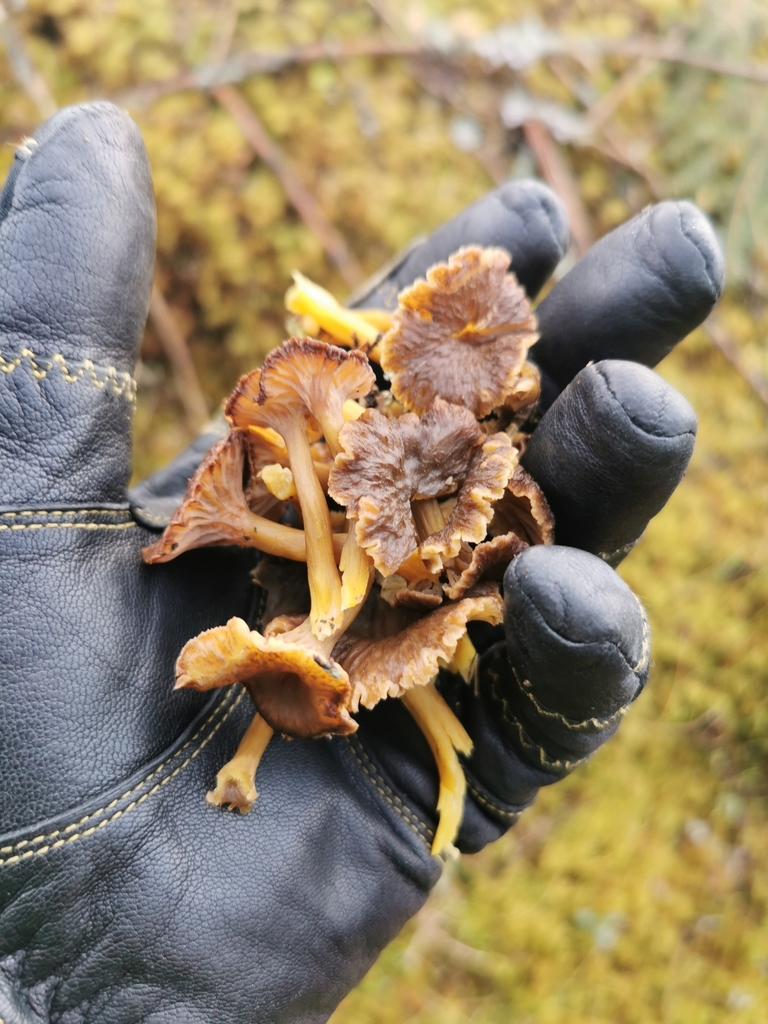
In the field, trumpet chanterelles are elegant little things. The cap forms a delicate funnel with wavy edges, colored in shades of brown and gray-brown. The stem is bright yellow to orange-yellow, hollow from top to bottom, giving the whole mushroom a vaguely trumpet-like silhouette. They grow in mossy conifer forests, often on or near rotting wood, and they tend to appear in dense colonies that can stretch for dozens of meters.
Culinarily, these are a forager's workhorse mushroom. The flavor is subtle, earthy, with a faint sweetness. They dry beautifully and rehydrate well, making them perfect for stocking the winter pantry. In Scandinavian cooking, they are a staple ingredient in cream sauces, on toast, and stirred into scrambled eggs.
Trumpet Chanterelle Facts
- ●The trumpet chanterelle has been bounced between Cantharellus and Craterellus by taxonomists multiple times, making it one of the most reclassified edible mushrooms in mycology.
- ●In Finland, trumpet chanterelles are commercially harvested and sold fresh in supermarkets during autumn, often cheaper than golden chanterelles because they fruit in such abundance.
- ●The hollow stem runs from the cap all the way to the base, and in large specimens you can actually look straight through the mushroom like a tiny telescope.
Stories From the Field
A Norwegian Grandmother's String of Chanterelles
In rural Norway, drying trumpet chanterelles on long strings near the fireplace is a tradition dating back centuries. One forager described visiting her bestemor in Telemark, where the kitchen smelled of drying mushrooms from October through Christmas. 'She would add a handful to everything,' the forager recalled. 'Soups, stews, even porridge.'
The Moss Garden Motherlode
A forager exploring old-growth spruce forest in the Scottish Highlands found trumpet chanterelles growing so densely in a moss garden that individual mushrooms were touching each other. He estimated thousands of fruiting bodies in an area the size of a tennis court. Photos from the outing showed the moss nearly hidden beneath brown funnels.
Taxonomy Wars at the Mushroom Club
At a 2021 meeting of the Puget Sound Mycological Society, a heated but good-natured debate erupted over whether to list Craterellus tubaeformis and Cantharellus tubaeformis as separate entries on their species list. The taxonomists insisted on the split. The foragers insisted it did not matter because they taste the same. The compromise: list both names.
Where It's Been Found

Based on reported sightings worldwide
How to Identify Trumpet Chanterelle
Cap
2-6 cm across. Deeply funnel-shaped with wavy, lobed margins. Brown to grayish brown, sometimes yellowish brown. Surface is slightly scaly or fibrillose. The center often develops a hole that connects to the hollow stem.
Gills
False gills consisting of shallow, forked, vein-like ridges on the underside. Gray to yellowish gray, running down onto the stem. Much less prominent than in golden chanterelles.
Stem
3-8 cm tall, slender and often compressed. Yellow to orange-yellow, distinctly brighter than the cap. Completely hollow throughout. Smooth or slightly grooved lengthwise.
Spore Print
White to pale cream.
Odor
Mild, pleasant, slightly fruity. Less aromatic than golden chanterelles.
Mushrooms That Look Like Trumpet Chanterelle
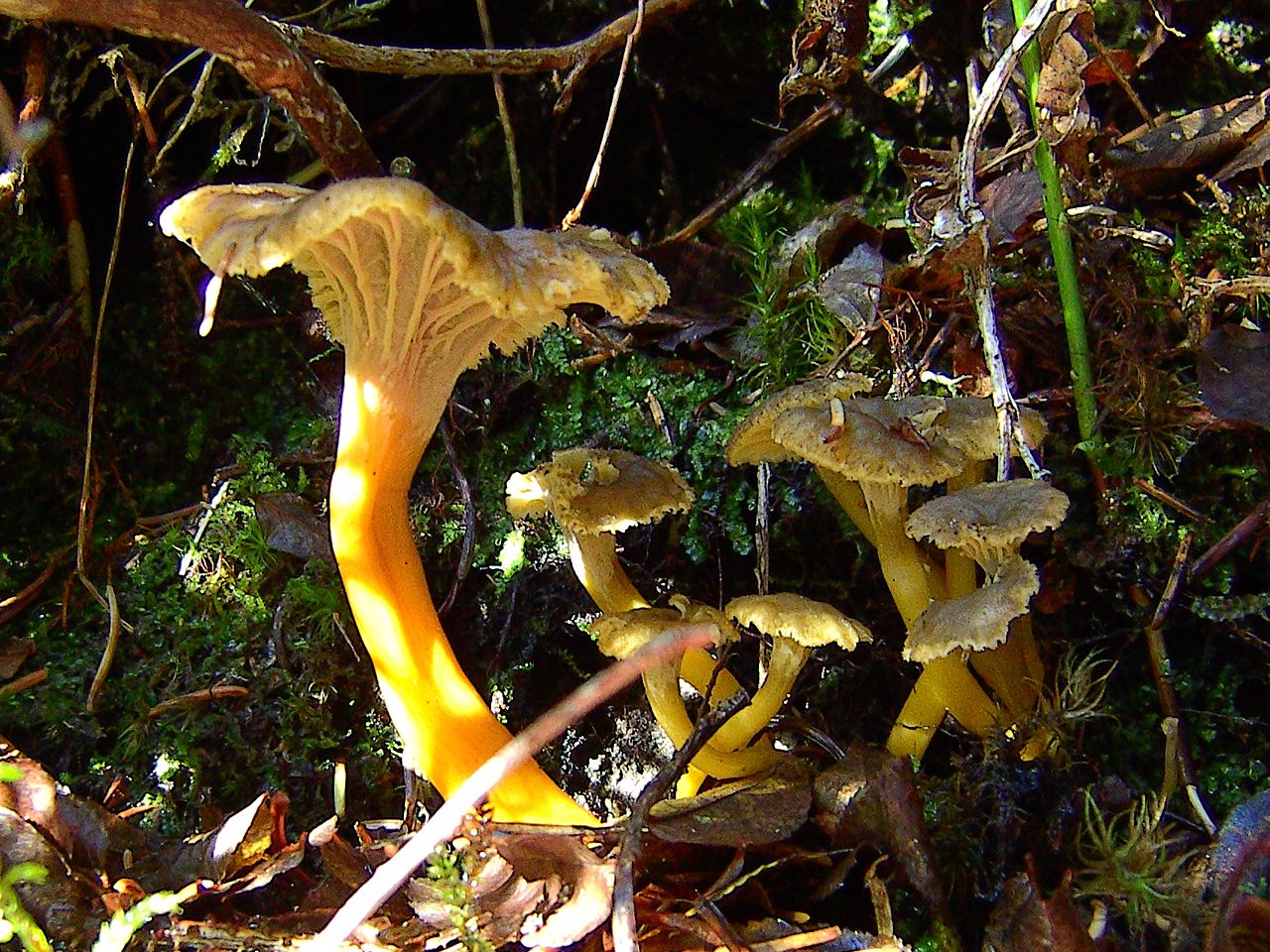
Essentially the same species under the old classification. Some authors treat them as synonyms, others as closely related but distinct. For foraging purposes, both are equally edible and virtually identical in the field.
Side-by-side comparison →
Has true, thin, blade-like gills rather than blunt ridges. Cap is more uniformly orange and often slightly fuzzy. Grows directly on decaying wood. Can cause mild stomach upset.
Side-by-side comparison →Read more on Wikipedia →Is Trumpet Chanterelle Edible?
A fine edible mushroom, especially valued for drying. The flavor is more delicate than golden chanterelles but concentrates well when dried. Excellent in cream sauces, soups, risottos, and with eggs. Cook before eating. The thin flesh means rapid cooking times.
Always verify with local experts before consuming wild mushrooms.
Found something that looks like this in the wild? Don't guess — identify it from a photo with Orangutany and check it against look-alikes before you touch it.