Common Ink Cap
Coprinopsis atramentaria
By Varun Vaid · Orangutany
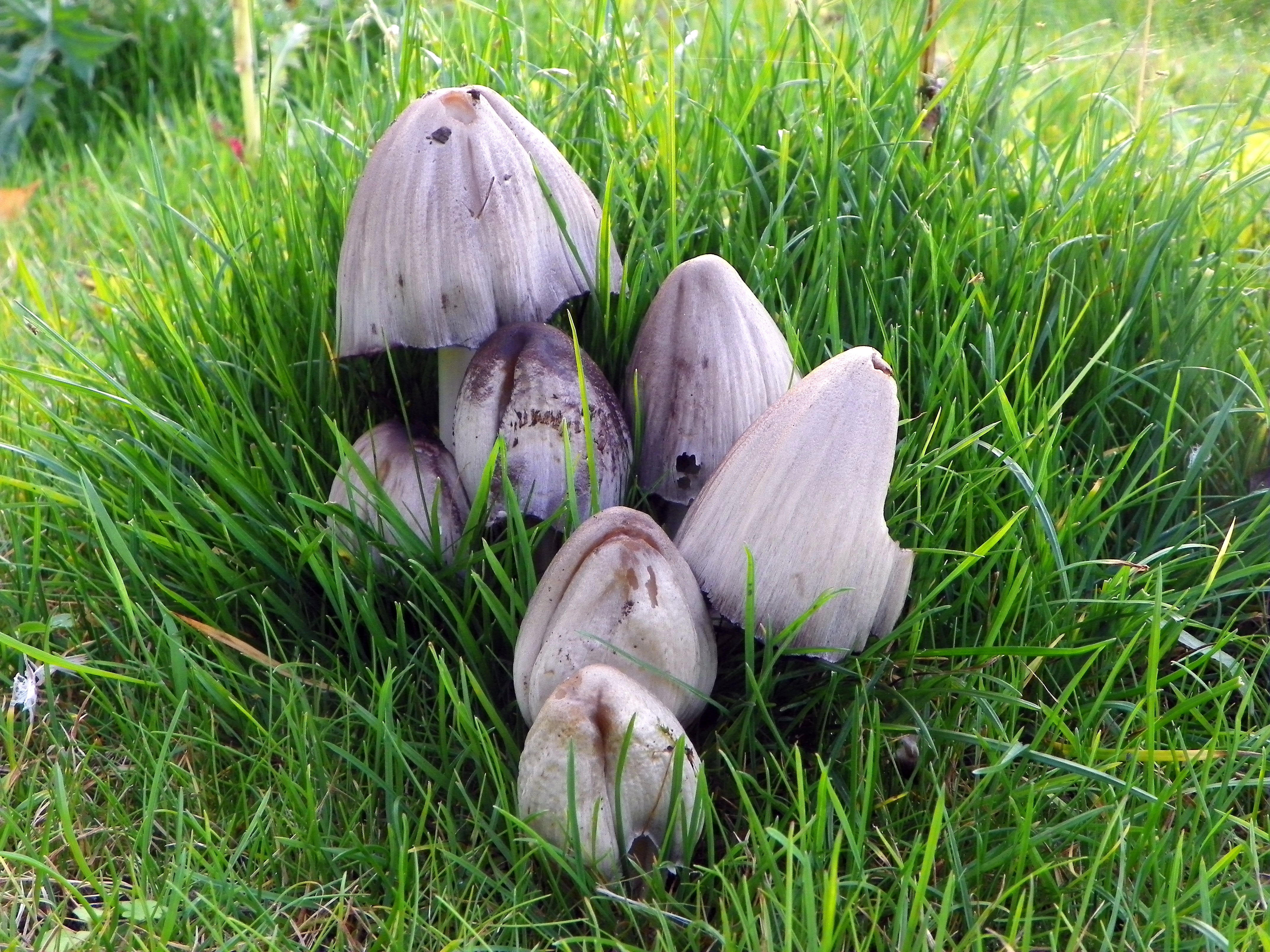
Photo by AnemoneProjectors · Wikimedia Commons · CC BY-SA 2.0
Meet the mushroom that hates drinking. The Common Ink Cap is perfectly edible on its own — but pair it with alcohol within a few days and you're in for nausea, heart palpitations, and a face that turns bright red. Its nickname 'Tippler's Bane' is well earned. It also dissolves itself into black ink when it's done spreading spores, which medieval monks actually used to write with.
Coprinopsis atramentaria is one of nature's most devious tricks. It looks harmless — clusters of smooth grey-brown caps popping up in parks, gardens, and along roadsides. You can even eat it if you want. But the moment you wash it down with a beer (or have a drink anytime in the next 2-3 days), a compound called coprine kicks in and blocks your body's ability to process alcohol. The result is an intensely unpleasant reaction: flushing, nausea, vomiting, heart racing, and a general feeling that your body is staging a revolt. Doctors call it a 'disulfiram-like reaction' because coprine works almost identically to the drug Antabuse, which is prescribed to discourage alcoholics from drinking.
The other party trick? Autodigestion. Once this mushroom has finished releasing its spores, the cap literally dissolves from the edges inward into a puddle of black, inky liquid. This isn't rot — it's a deliberate self-destruct mechanism called deliquescence. The ink drips down and carries spores with it. Medieval scribes collected this ink and used it for writing and drawing. Some mycologists have noted that documents written in ink cap ink can be identified centuries later by the presence of spores under a microscope — making it an accidental anti-forgery feature.
Despite the alcohol drama, the Common Ink Cap has been eaten for centuries across Europe and Asia. Just... not with wine at dinner.
Common Ink Cap Facts
- ●Coprine, the compound that causes the alcohol reaction, works almost identically to the prescription drug Antabuse (disulfiram), which is given to people trying to quit drinking.
- ●The black ink produced by dissolving ink caps contains microscopic spores that can be identified centuries later — making ink cap ink one of the earliest accidental anti-forgery measures.
- ●You don't even need to drink at the same meal. The alcohol sensitivity can last 2-3 days after eating the mushroom, because coprine irreversibly disables the enzyme — your body has to manufacture new copies.
- ●Despite the dramatic name 'Tippler's Bane,' the mushroom-alcohol reaction is almost never fatal. It's extremely unpleasant, but healthy adults recover within a few hours.
- ●Ink caps can appear seemingly overnight after rain and dissolve into mush within 24 hours. The entire lifecycle from fresh mushroom to puddle of black ink can happen faster than most mushrooms take to open their caps.
Stories From the Field
The Mushroom That Outed Secret Drinkers
In mid-20th century Europe, doctors experimented with feeding Common Ink Cap to patients in alcohol treatment programs. The idea was simple: eat the mushroom, and any attempt to sneak a drink would trigger violent illness. It reportedly worked — but was abandoned in favor of the pharmaceutical drug disulfiram (Antabuse), which does the same thing more reliably.
Medieval Monks and Mushroom Ink
Monasteries across medieval Europe collected the black liquid from dissolving ink caps and used it as writing ink. The spores embedded in the ink served as an unintentional security feature — documents could be verified centuries later by examining the ink under a microscope for the presence of Coprinopsis spores.
Wedding Reception Gone Wrong in Poland
A 2003 case report described a Polish couple who served foraged Common Ink Caps as part of their wedding feast. Multiple guests who paired the dish with champagne toasts experienced facial flushing, rapid heartbeat, and nausea within 30 minutes. All recovered within a few hours, but the reception was effectively over.
A Dog Walker's Discovery in London
A post on the UK-based Wild Food forum in 2017 described a dog walker in Hampstead Heath who noticed dense clusters of ink caps near an old oak stump every autumn for years. One year they collected a batch, fried them in butter, and enjoyed them — then had a beer an hour later. The resulting hour of nausea and bright red face taught them a lesson they shared in vivid detail online.
Coprine Almost Became a Drug
In the 1970s, researchers at Karolinska Institute in Sweden isolated coprine and studied its mechanism. They found it was a prodrug — the body converts it to 1-aminocyclopropanol, which irreversibly blocks aldehyde dehydrogenase. Pharmaceutical companies briefly considered developing it as an alcoholism treatment before deciding that existing drugs were easier to dose reliably.
Where It's Been Found

Based on reported sightings worldwide
How to Identify Common Ink Cap
Cap
4-8 cm across, 3-8 cm tall. Starts as a smooth, egg-shaped grey-brown bell. Surface has fine radial grooves and sometimes tiny scales near the top. As it ages, the edges curl up and begin dissolving into black ink. Young caps are the only ones worth looking at — once the ink starts flowing, it's past its prime.
Gills
Packed tightly together, initially white, turning pink, then black as spores mature. Eventually liquefy into ink from the cap edge inward. Free from the stem.
Stem
5-15 cm tall, white, hollow, smooth with a slight silky sheen. Has a faint ring zone near the base but no persistent ring. Fibrous and snaps cleanly.
Spore Print
Black — very dark, almost jet black.
Odor
Mild and pleasant when young. Nothing remarkable.
Mushrooms That Look Like Common Ink Cap
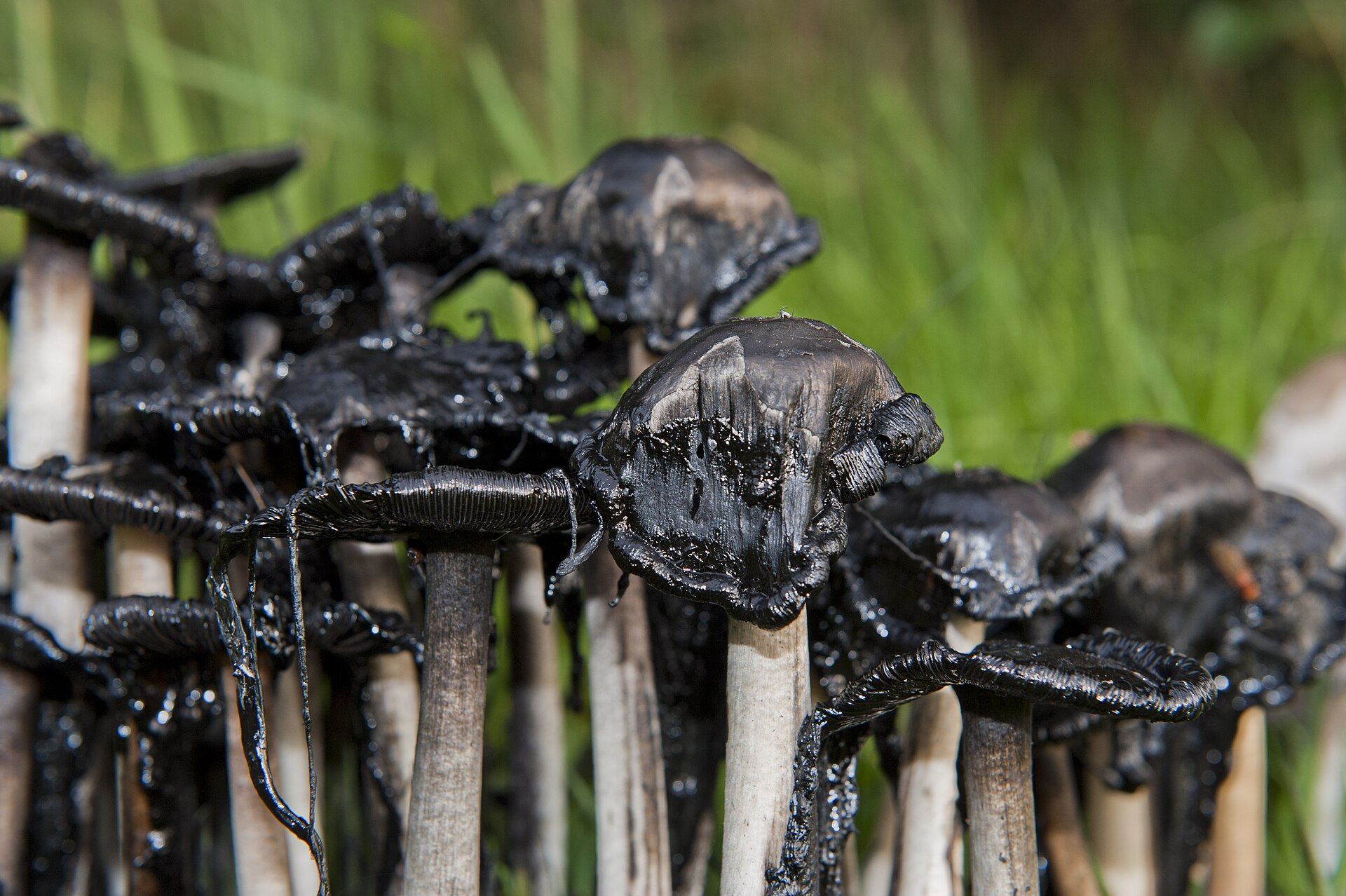
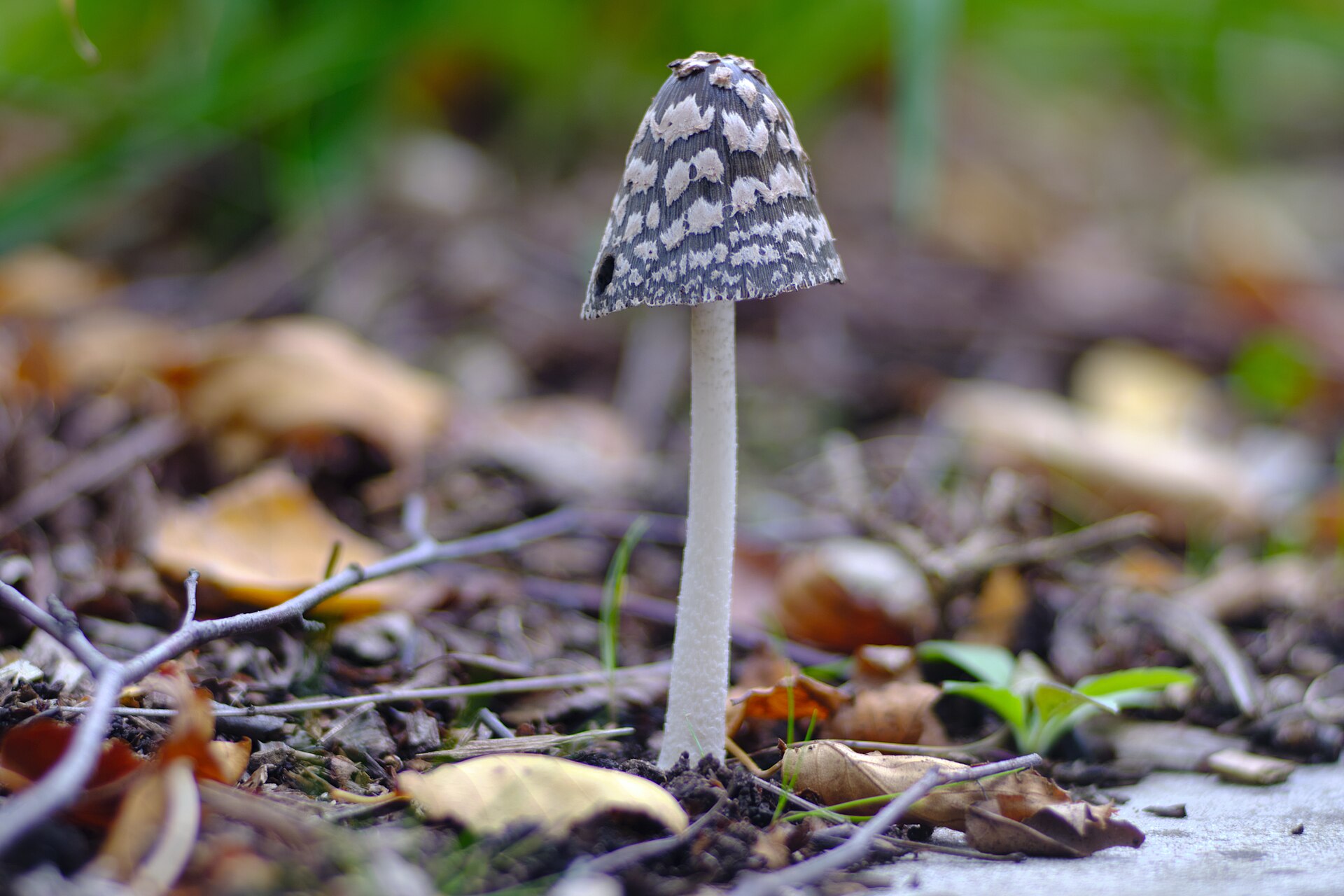
Taller and more cylindrical with shaggy, upturned white scales covering the cap — looks like a lawyer's wig. Does NOT contain coprine, so it's safe with alcohol. One of the best-known edible mushrooms. If the cap is shaggy and white, it's not the Common Ink Cap.
Side-by-side comparison →Read more on iNaturalist →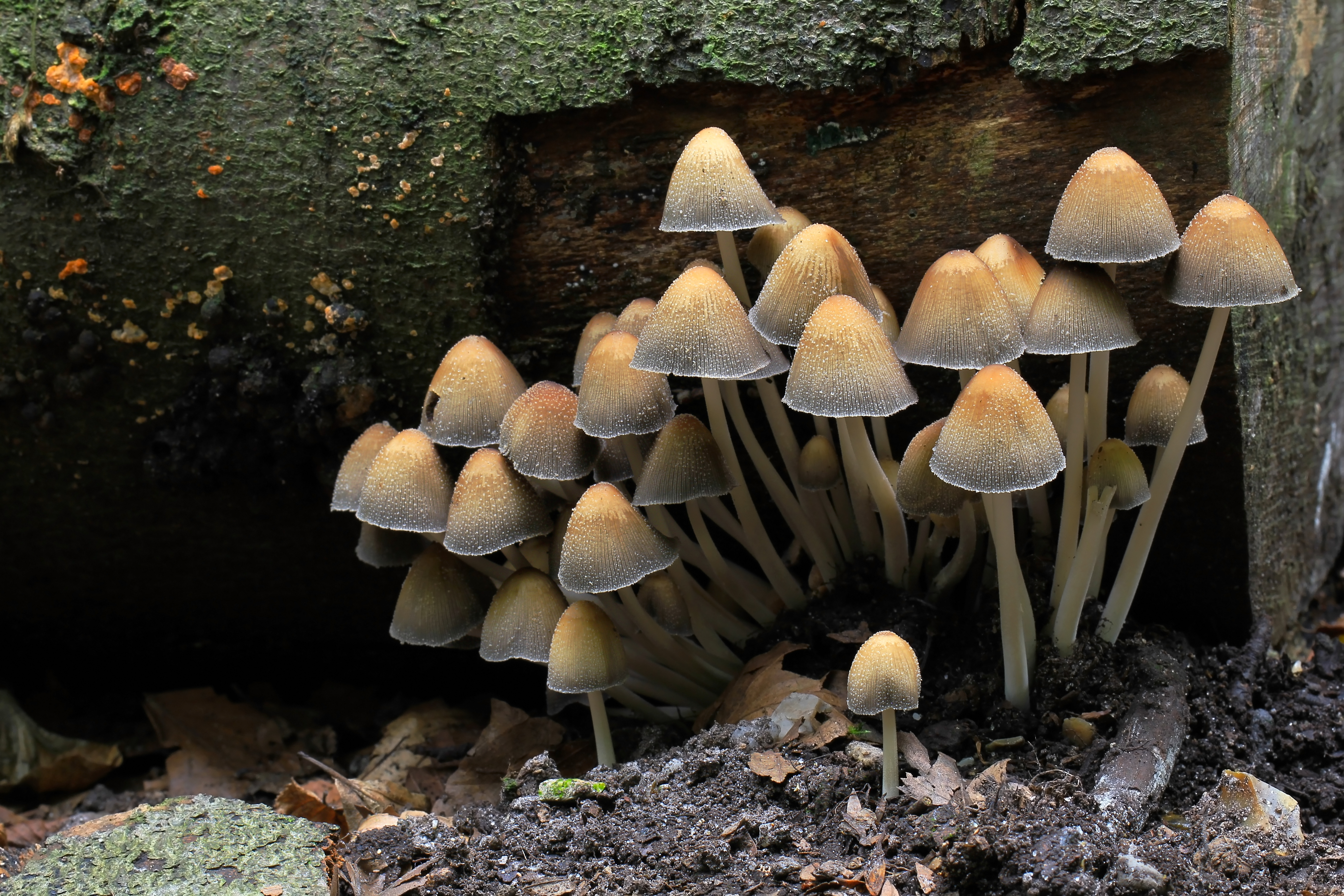
Mica Cap (Coprinellus micaceus)
Smaller and more delicate with a tawny-brown cap covered in tiny glistening granules (like mica flakes) when young. Grows in similar clusters on buried wood. Edibility is debated — some sources say it may also cause mild alcohol reactions. If you see sparkly granules, think Mica Cap.
Read more on iNaturalist →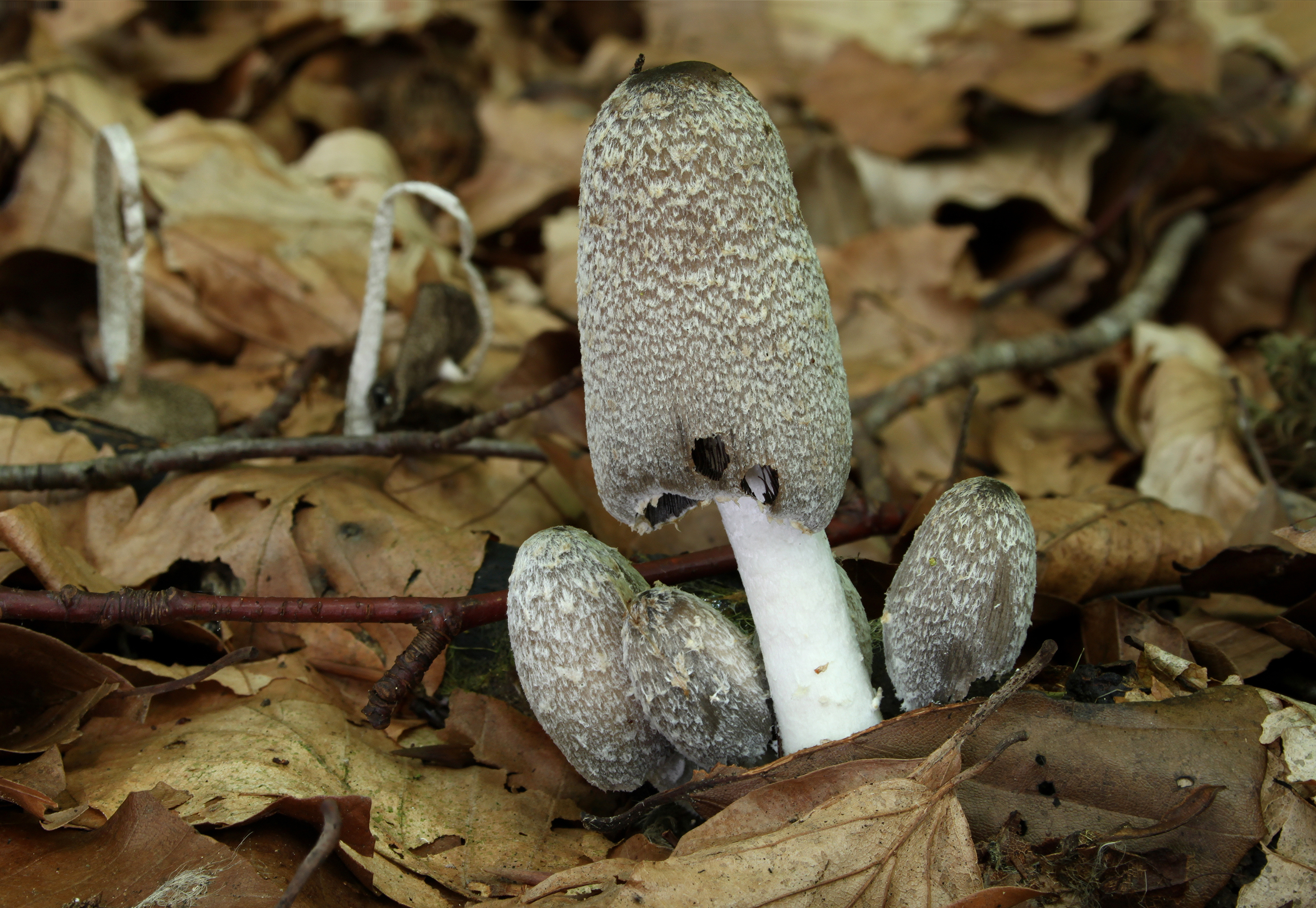
Hare's Foot Ink Cap (Coprinopsis lagopus)
Much more fragile and covered in dense white woolly fibers when young, giving it a fuzzy appearance. Grows singly or in small groups on wood chips and compost. Deliquesces rapidly — often gone within hours of appearing. If it looks furry, it's the Hare's Foot.
Read more on iNaturalist →Is Common Ink Cap Edible?
Edible when cooked and eaten WITHOUT any alcohol. Contains coprine, which blocks acetaldehyde dehydrogenase — the enzyme your body uses to break down alcohol. If you drink alcohol within 2-3 days before or after eating this mushroom, you'll experience severe flushing, nausea, vomiting, heart palpitations, and chest tightness. The reaction can occur even from small amounts of alcohol. Eat only young specimens before the ink starts flowing, and stay completely sober for at least 72 hours.
Always verify with local experts before consuming wild mushrooms.
Found something that looks like this in the wild? Don't guess — identify it from a photo with Orangutany and check it against look-alikes before you touch it.