Photo by This image was created by user {{{2}}} at Mushroom Observer, a source for mycological images.You can contact this user h · Wikimedia Commons · CC BY-SA 3.0
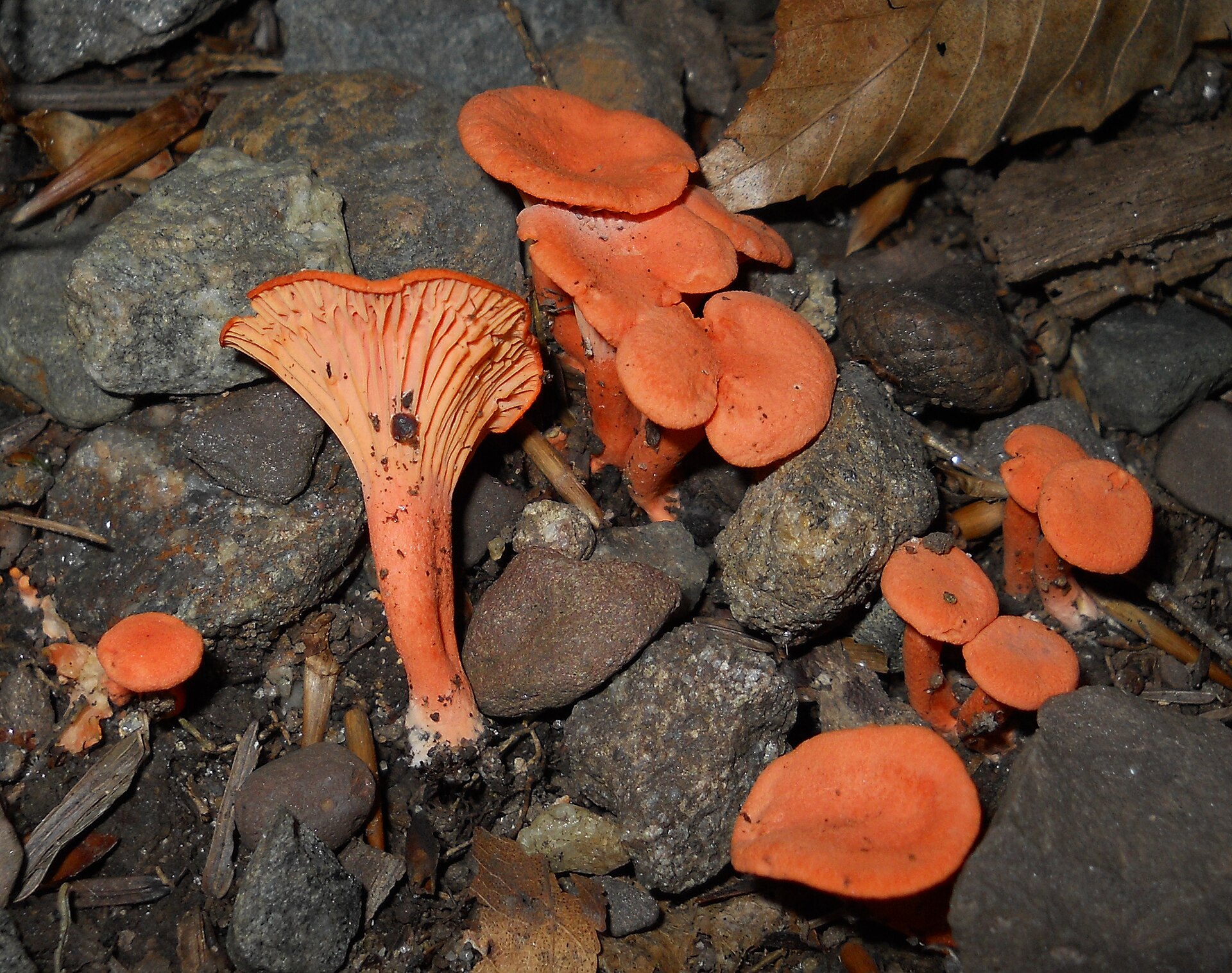
A tiny flame-colored chanterelle that lights up eastern hardwood forests in summer. What cinnabar chanterelles lack in size, they make up for in sheer visual impact and surprisingly concentrated flavor.
Cinnabar chanterelles are the small, fiery-red cousins of the golden chanterelle, and finding them feels like discovering jewels scattered across the forest floor. They rarely grow larger than a few centimeters across, but they fruit in dense troops that can number in the hundreds, turning patches of leaf litter into a sea of flamingo pink and vermillion.
They are strictly an eastern North American species, fruiting from June through September in hardwood forests dominated by oak, beech, and hickory. They love the same warm, humid conditions that bring out golden chanterelles, and the two species often fruit in the same forests at the same time. Many foragers collect both during the same outing.
Despite their small size, cinnabar chanterelles have a flavor that punches well above their weight. The taste is peppery and slightly sweet, with a fruity quality that intensifies when they are dried. They work beautifully in pasta dishes, omelets, and anywhere you want a burst of color and flavor. The bright red-pink color fades somewhat with cooking but remains more vivid than most mushrooms.
Cinnabar Chanterelle Facts
- ●Cinnabar chanterelles get their name from cinnabar, the bright red mercury sulfide mineral. The color match is remarkably close.
- ●Despite being one-tenth the size of golden chanterelles, cinnabar chanterelles have a more concentrated peppery flavor gram for gram.
- ●This species is strictly a North American mushroom. European foragers have no equivalent small red chanterelle.
- ●Cinnabar chanterelles often grow in mixed troops with golden chanterelles, creating a striking two-toned display of red and gold on the forest floor.
Stories From the Field
A Sea of Red on an Appalachian Trail
A forager hiking a section of the Appalachian Trail near Shenandoah in July 2020 turned a corner and found an entire hillside covered in cinnabar chanterelles. She described it as 'someone spilled a bucket of tiny red jewels across the forest floor' and spent an hour carefully picking over two pounds of the tiny mushrooms.
The Patience of Picking Cinnabars
A mycologist in Ohio wrote about the meditative quality of harvesting cinnabar chanterelles. Each mushroom is tiny, and cleaning them takes real patience. She compared it to picking wild blueberries: tedious in the moment, but the concentrated flavor of the final dish makes every minute worthwhile.
Cinnabar Chanterelle Pasta Goes Viral
In 2022, a food blogger in North Carolina posted a photo of pasta tossed with sauteed cinnabar chanterelles. The vivid pink-red mushrooms against the pale noodles caught fire on Instagram, racking up thousands of shares. Her caption: 'Nature makes the best food coloring.'
First Find at Summer Camp
A nature educator in Pennsylvania described the joy of helping a group of 10-year-olds find their first cinnabar chanterelles during a summer camp foray. The kids were initially unimpressed by mushroom hunting until the bright red caps appeared against the brown leaf litter. 'It was like finding tiny red treasure,' one camper said.
Where It's Been Found
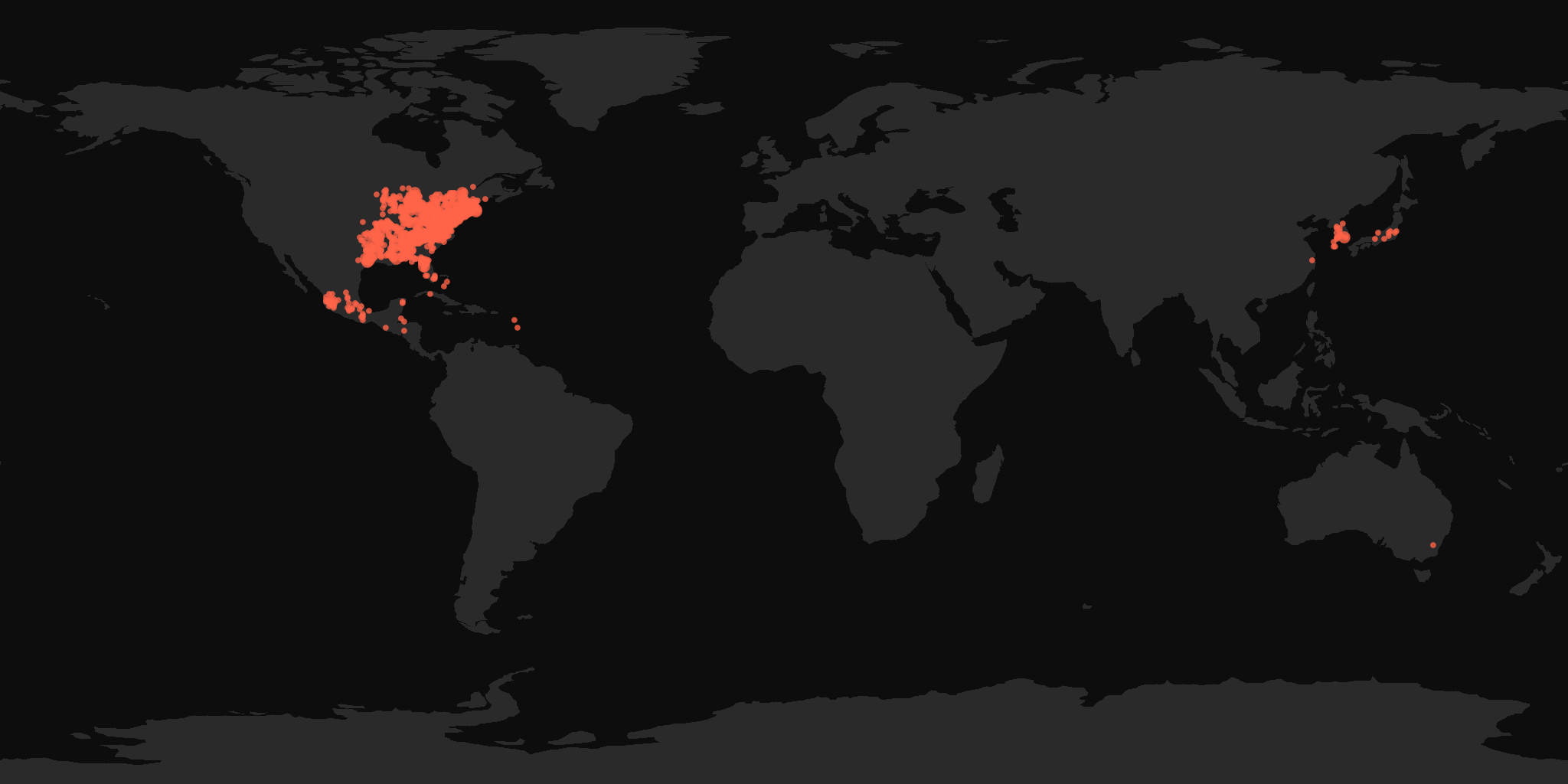
Based on reported sightings worldwide
How to Identify Cinnabar Chanterelle
Cap
1-4 cm across. Convex when young, becoming flat to slightly funnel-shaped with wavy, irregular margins. Color is the defining feature: vivid cinnabar red to flamingo pink, sometimes fading to pinkish orange with age. Smooth, dry surface.
Gills
False gills, as with all chanterelles. Blunt, forked, vein-like ridges running partway down the stem. Same cinnabar red to pinkish color as the cap. Well-spaced and shallow.
Stem
1-4 cm tall, slender, solid or slightly hollow in older specimens. Same vivid red-pink as the cap, sometimes slightly paler. Smooth, tapering slightly toward the base.
Spore Print
Pinkish to pale salmon.
Odor
Mildly fruity, similar to golden chanterelles but less pronounced. Some detect a faint peppery quality.
Mushrooms That Look Like Cinnabar Chanterelle
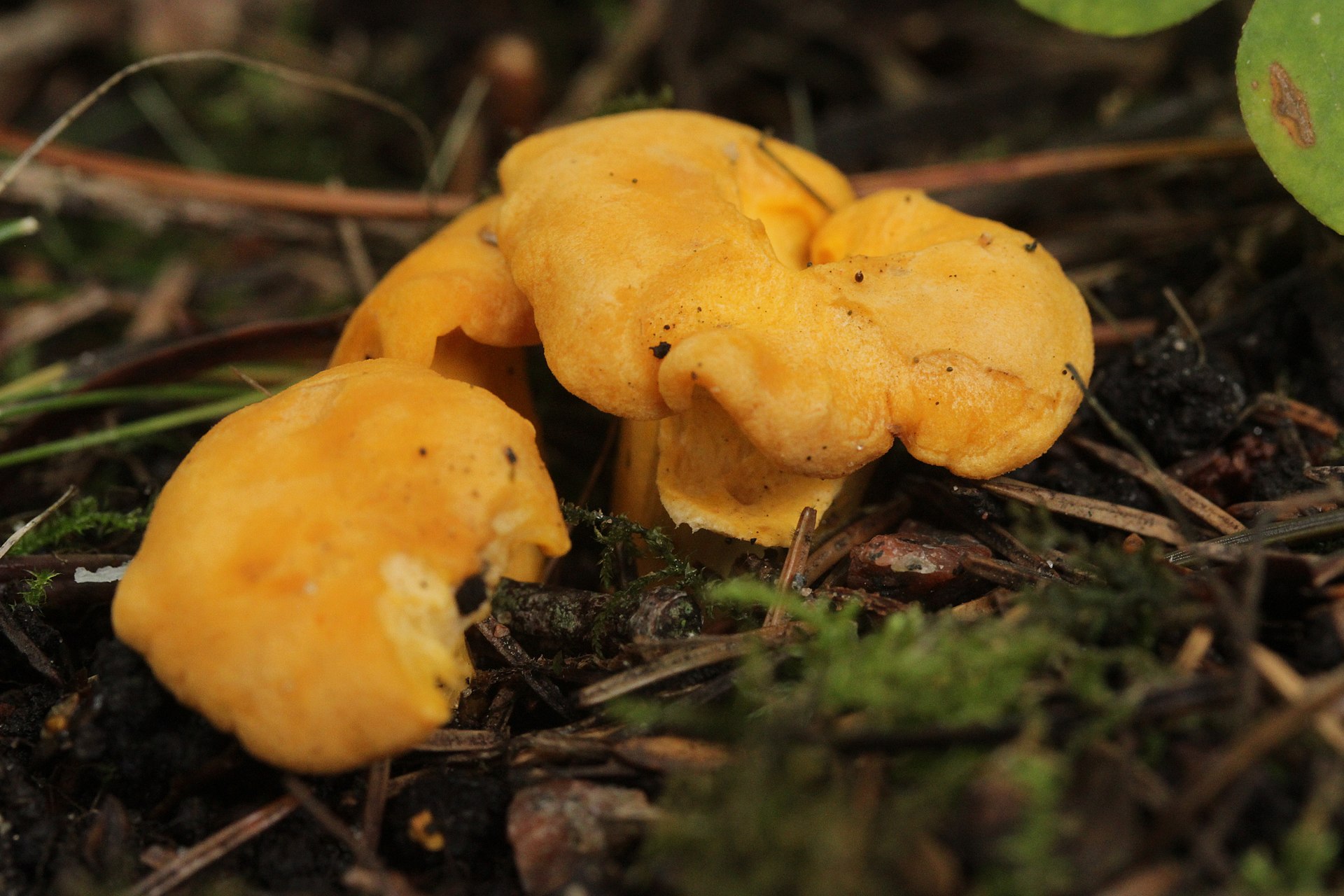
Much larger (up to 12 cm), golden yellow rather than red-pink. The color difference is obvious in person. Both are excellent edibles with false gills, so confusion between them is harmless.
Side-by-side comparison →Hygrocybe miniata (Vermilion Waxcap)
Similar red color but has true blade-like gills, not false ridges. Cap is smooth and waxy rather than dry. Grows in grassy areas and meadows rather than deep forest. Not harmful but not particularly flavorful.
Read more on MushroomExpert →Is Cinnabar Chanterelle Edible?
A choice edible chanterelle with concentrated peppery, fruity flavor despite its small size. Best collected in quantity due to small individual size. Excellent sauteed in butter, in pasta, or dried for later use. Cook before eating. The vivid color makes them a beautiful garnish.
Always verify with local experts before consuming wild mushrooms.
Found something that looks like this in the wild? Don't guess — identify it from a photo with Orangutany and check it against look-alikes before you touch it.