Landslide Mushroom vs Teonanácatl
Psilocybe caerulescens compared with Psilocybe mexicana — how to tell them apart in the field.
This is a dangerous confusion.
At least one of these species is toxic. Never eat a wild mushroom based on a photo comparison alone — verify with local experts.
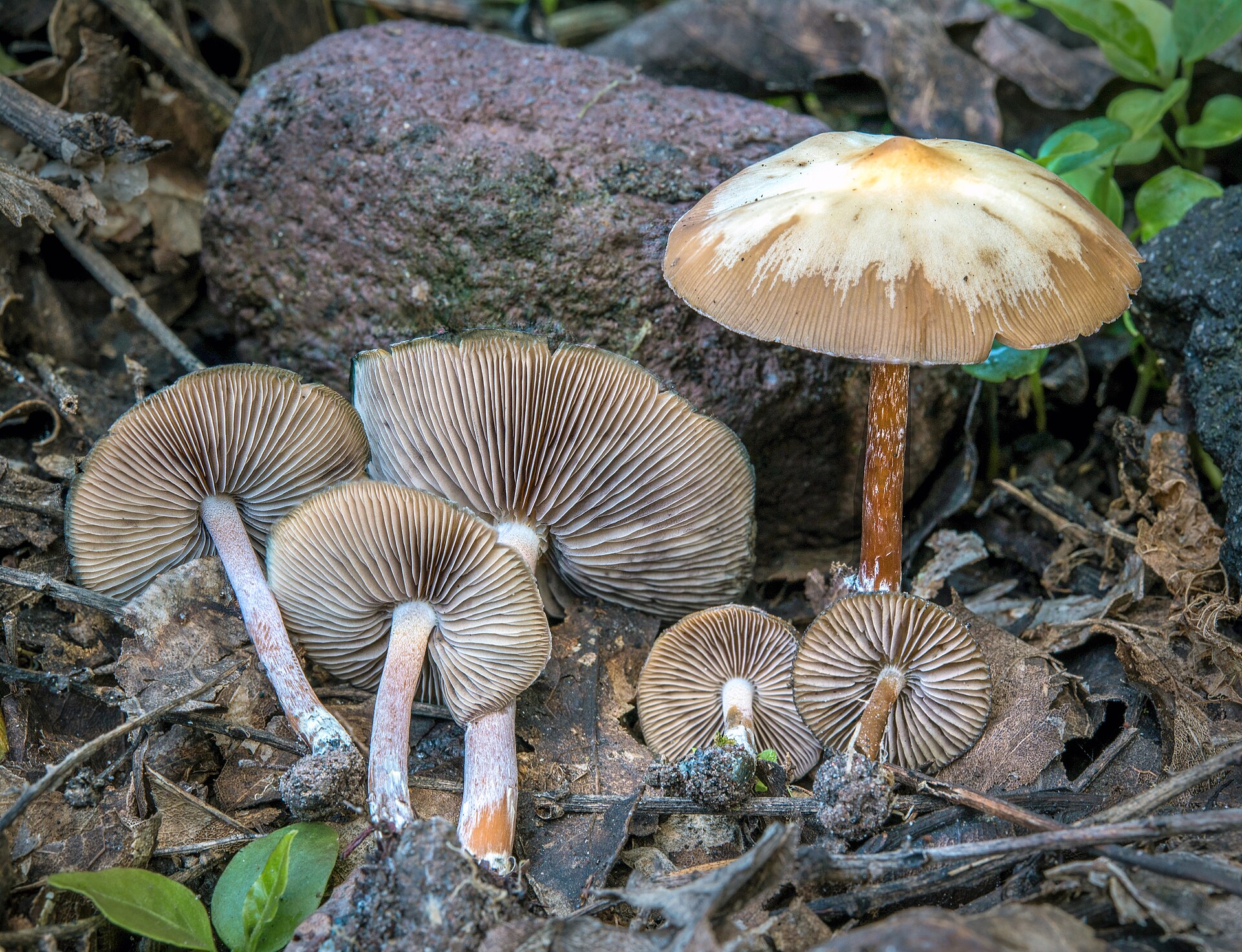
Landslide Mushroom / Derrumbe
Psilocybe caerulescens
ToxicPsychoactive
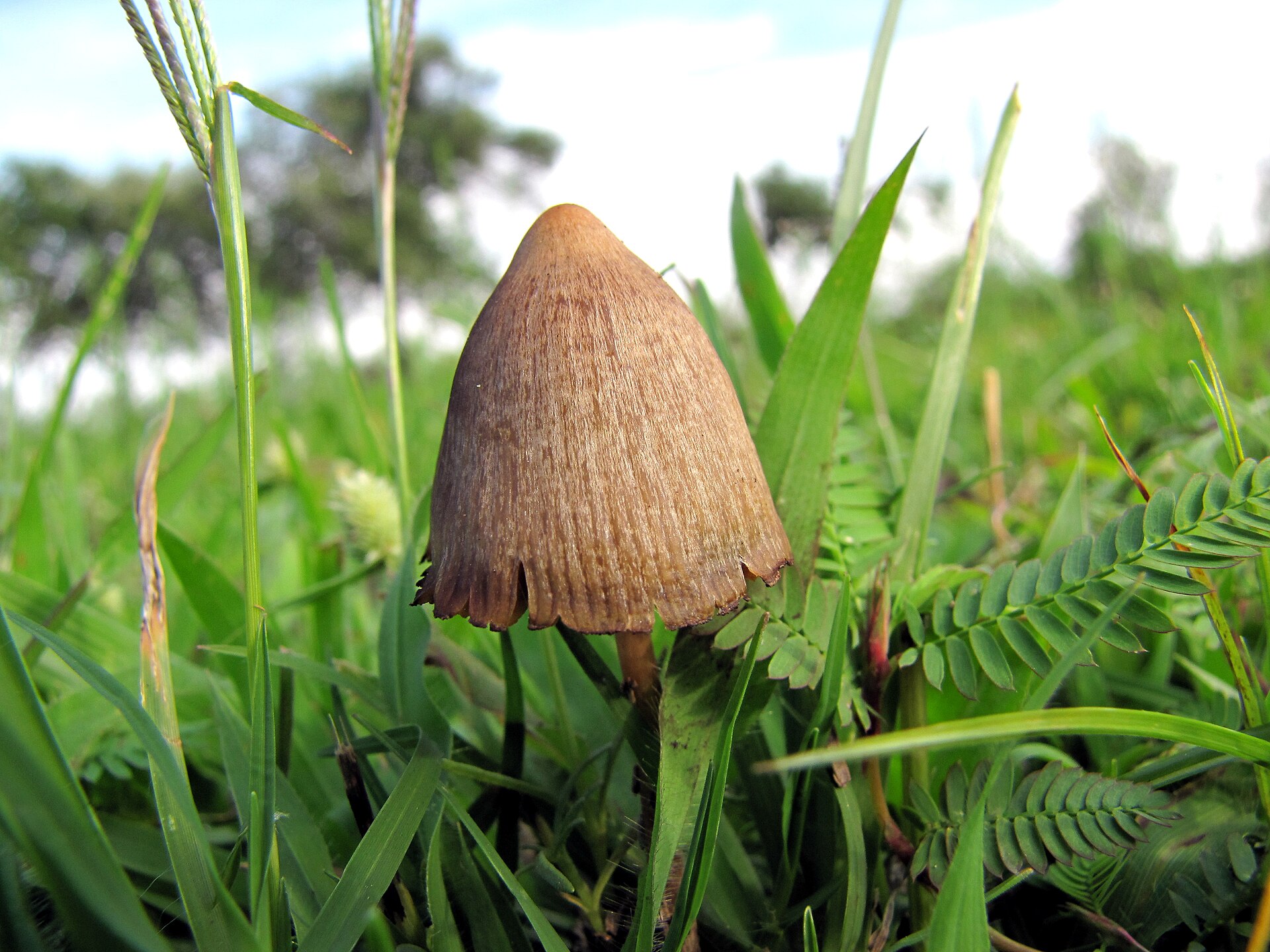
Teonanácatl / Mexican Magic Mushroom
Psilocybe mexicana
ToxicPsychoactive
How to Tell Them Apart
Smaller (cap 1-3 cm vs 2-6 cm), grows in grassy meadows rather than bare disturbed earth. More conical cap shape. Both contain psilocybin and are used in Mazatec ceremonies.
Side-by-Side Identification
| Trait | Landslide Mushroom | Teonanácatl |
|---|---|---|
| Cap | 2-6 cm across. Convex to broadly convex, sometimes with a low umbo. Silvery-blue to olive-brown with a distinctive metallic or greasy sheen when fresh. Hygrophanous — dries to pale straw or beige. Surface smooth, sometimes with a slight gelatinous feel. | 1-3 cm across. Conical to campanulate (bell-shaped), sometimes with a small umbo. Straw-yellow to brown, darker when moist, paler when dry. Surface smooth, slightly hygrophanous. Margin sometimes slightly translucent-striate when wet. |
| Gills | Adnate to slightly sinuate, close to moderately spaced. Grayish when young, becoming dark purple-brown with maturity. Edges often lighter or whitish. | Adnate to adnexed, moderately spaced. Gray to purple-brown at maturity. Edges whitish. |
| Stem | 4-10 cm tall, 3-7 mm thick. White to pale brownish, silky-fibrous. Equal or slightly enlarged at the base. Bruises strongly blue-green when handled. Partial veil leaves a faint fibrous zone. | 4-12 cm tall, 1-3 mm thick. Thin, wiry, and flexible. Yellowish to reddish-brown, darker toward the base. Hollow. May show faint blue-green bruising when handled. |
| Spore print | Dark purple-brown to blackish-purple. | Dark purple-brown. |
| Bruising | Strong and rapid blue-green bruising on all parts when damaged. The cap surface often shows blue-green tones naturally, especially near the margin. | Blue-green bruising on stem and cap when damaged, though often faint. Indicates presence of psilocybin. |
| Habitat | Disturbed, bare soil — landslide scars, road cuts, trail edges, stream banks, and exposed clay or muddy substrates. Often among mosses on freshly exposed earth. Subtropical to tropical montane forests at 500-1,700 meters elevation. | Grows in small groups on mossy, grassy slopes and trails in subtropical cloud forests, often among mosses and grasses at elevations of 1,000-1,800 meters. Also found in meadows and roadsides at the margins of forests. Occasionally in disturbed grassy areas. |
| Season | June through October during the rainy season. Peak fruiting in July and August after heavy rains expose and saturate soil. | May through October, corresponding with the rainy season in southern Mexico and Central America. Peak fruiting in June through August. |
Found one of these in the wild? Don't rely on memory — identify it from a photo with Orangutany and check it against both species before you touch it.