Allen's Psilocybe vs Blue Ringer
Psilocybe allenii compared with Psilocybe stuntzii — how to tell them apart in the field.
This is a dangerous confusion.
At least one of these species is toxic. Never eat a wild mushroom based on a photo comparison alone — verify with local experts.
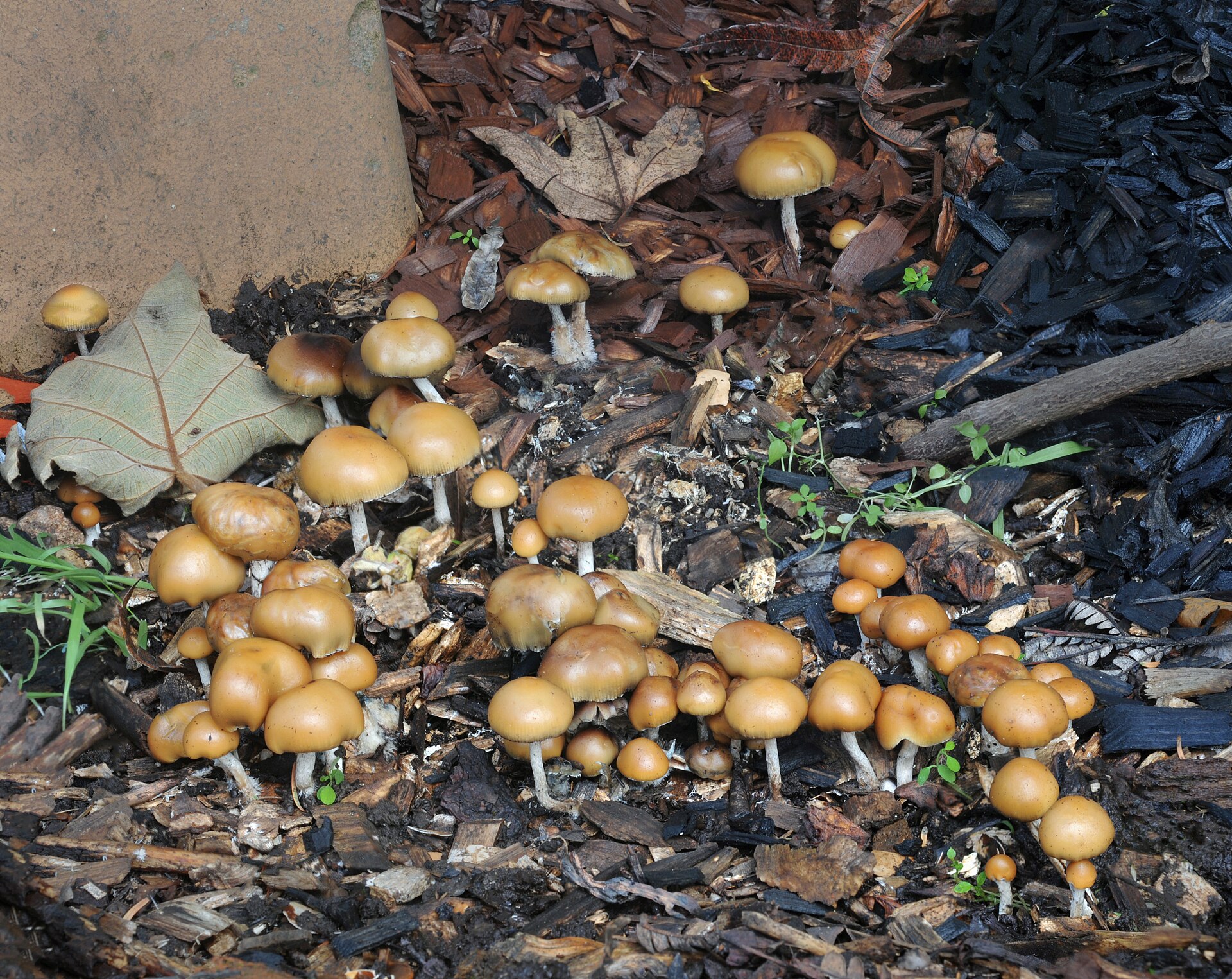
Allen's Psilocybe
Psilocybe allenii
Edible with Caution
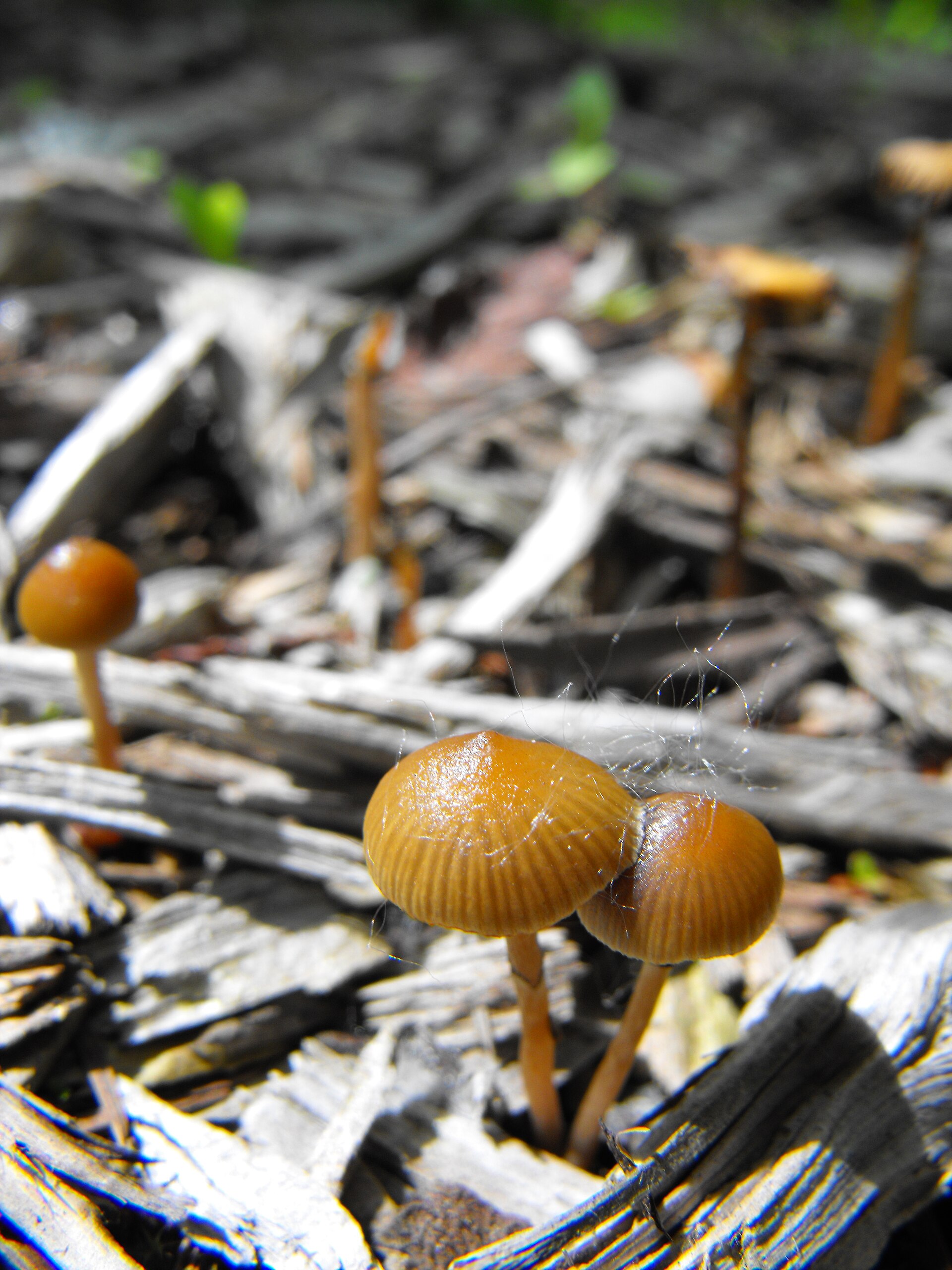
Blue Ringer / Stuntz's Blue Legs
Psilocybe stuntzii
ToxicPsychoactive
How to Tell Them Apart
Another Pacific Northwest wood-chip Psilocybe. Generally smaller, with a more persistent annulus and slightly darker olive-brown cap. Bruises blue but is considered less potent. Shares the same urban wood-chip habitat.
Side-by-Side Identification
| Trait | Allen's Psilocybe | Blue Ringer |
|---|---|---|
| Cap | 1.5-6 cm diameter. Convex to broadly convex, sometimes with a low umbo. Chestnut to caramel brown when moist, drying to pale buff (strongly hygrophanous). Surface smooth, slightly viscid. Margin even to slightly wavy. Bruises blue. | 1-4 cm across. Convex to broadly convex or nearly flat with age. Dark olive-brown to chestnut-brown when moist, drying to yellowish-tan or straw-colored from the center outward. Hygrophanous with a characteristic dark marginal band. Surface smooth, slightly sticky when wet. Pellicle separable. |
| Gills | Adnate to sinuate, close. Pale brown when young, darkening to purple-brown to dark violet-brown at maturity. Edges slightly lighter. | Adnate to slightly decurrent, close. Pale brown when young, becoming dark purple-brown as spores mature. Edges may appear slightly lighter. |
| Stem | 4-9 cm tall, 3-7 mm thick. White, silky fibrous surface. Bruises blue readily. Partial veil leaves a fragile, often evanescent annular zone that darkens with spore deposit. | 3-6 cm tall, 2-4 mm thick. Whitish to pale brownish, darkening toward the base. A fragile partial veil leaves a thin annular zone that often catches purple-brown spores, creating the "blue ring" when it bruises. Bruises blue-green. |
| Spore print | Dark purple-brown to violet-brown. | Dark purple-brown. CRITICAL: must distinguish from Galerina marginata's rusty-brown spore print. |
| Bruising | — | Blue-green bruising on stem and cap, often visible on the annular zone. The ring area frequently appears blue-green from combined spore deposit and bruising. |
| Odor | Farinaceous (flour-like) when fresh. Bluing reaction: all parts bruise blue to blue-green within minutes of handling — a key diagnostic feature caused by psilocin oxidation. | — |
| Habitat | Urban and suburban landscapes with wood chip mulch, garden beds, park trails, highway medians, and commercial landscaping. Strongly associated with hardwood chips (alder, maple, eucalyptus, oak). Occasionally on woody debris in disturbed soils. Rarely in undisturbed forest. | Wood chips, bark mulch, freshly landscaped areas, garden beds, and new lawns with wood-chip amendments. Also on decaying conifer and deciduous wood debris, sawdust, and composted bark. Common in urban and suburban settings. |
| Season | Late autumn through early winter (October-February), with peak fruiting after the first sustained rains and cool temperatures. In mild coastal climates, fruiting can extend into March. | September through December in the Pacific Northwest. Peak fruiting in October and November. Can appear as early as late August after the first fall rains. |
Found one of these in the wild? Don't rely on memory — identify it from a photo with Orangutany and check it against both species before you touch it.