Common Bonnet vs Bleeding Mycena
Mycena galericulata compared with Mycena haematopus — how to tell them apart in the field.
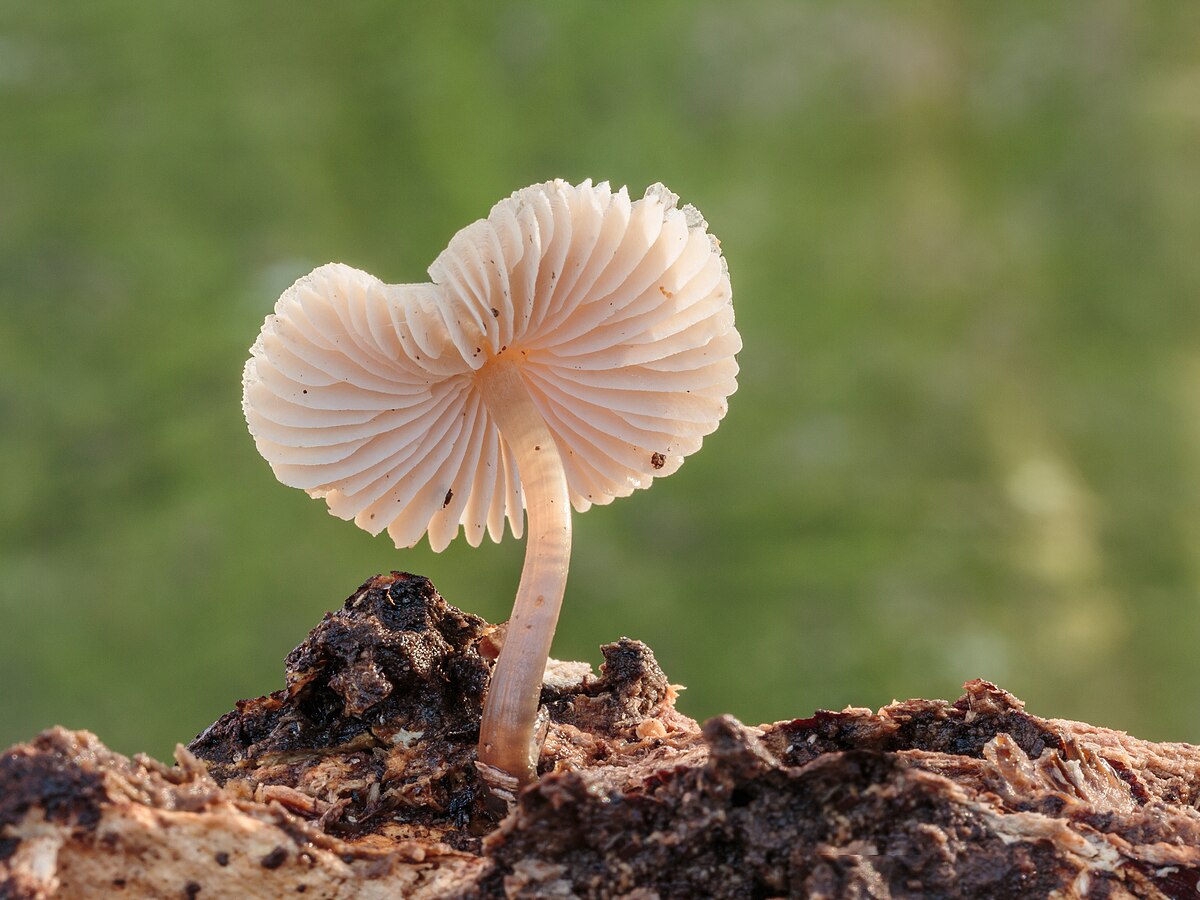
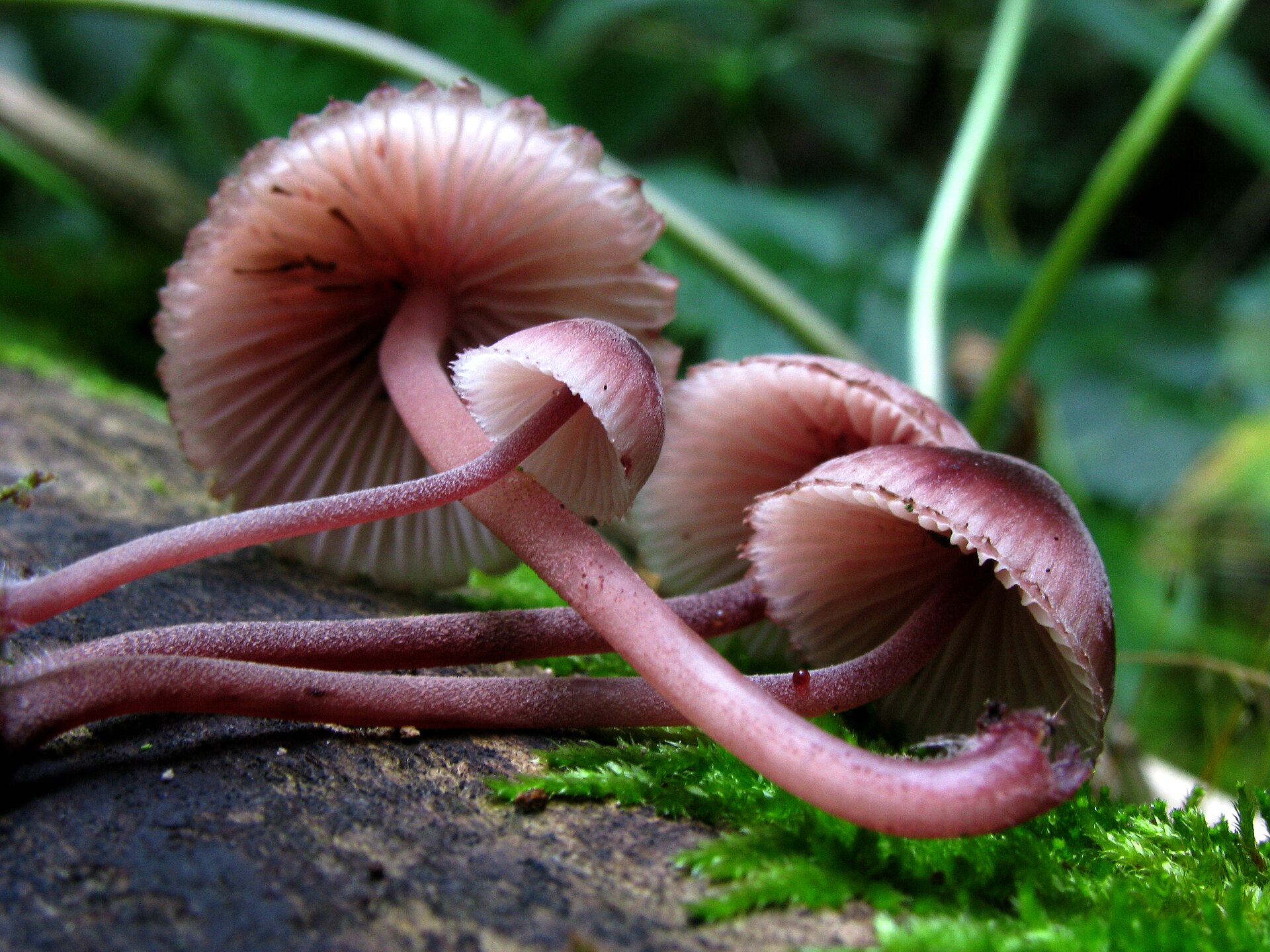
How to Tell Them Apart
Similar size and habitat on decaying wood. Distinguished immediately by the dark reddish-purple latex that oozes from the stem when broken. M. galericulata produces no latex at all. M. haematopus also tends to have darker, more reddish-brown caps with a scalloped or toothed margin edge.
Similar size and habitat on wood. Pinkish-brown cap, but does NOT exude latex when the stem is broken. The tougher, more elastic stem and lack of bleeding reaction distinguish it. Very common and easily confused visually until you break the stem.
Side-by-Side Identification
| Trait | Common Bonnet | Bleeding Mycena |
|---|---|---|
| Cap | 2–6 cm across. Conical to bell-shaped when young, expanding to broadly convex or nearly flat with age, usually retaining a distinct central umbo (bump). Surface smooth, dry, often slightly wrinkled radially. Grayish-brown to date-brown, paler toward the margin. Margin distinctly striate (translucent lines revealing gill outlines beneath). Hygrophanous — darker brown when moist, drying to pale grayish-buff. | 1-3 cm across. Conical to bell-shaped, rarely flattening. Pinkish-brown to reddish-brown or wine-brown, often darker at the center. Surface is smooth, slightly translucent when wet (striate, showing gill outlines). Margin is scalloped or finely toothed and often darker than the rest of the cap. Exudes reddish-purple latex when damaged. |
| Gills | Narrowly attached (adnate) to sinuate with a small decurrent tooth. Moderately spaced. White at first, developing a distinct pinkish flush at maturity from the ripening spores. The key diagnostic feature: gills are connected by conspicuous cross-veins (intervenation) — small ridges running between adjacent gills like ladder rungs. This feature is visible with the naked eye and is unusual among Mycena species. | Attached (adnate to slightly decurrent). Pale pinkish to pinkish-gray, sometimes with reddish-brown edges. Moderately spaced. Exude dark reddish-purple latex when cut. |
| Stem | 5–10 cm tall, 2–5 mm thick. Slender, hollow, tough and cartilaginous — bends without snapping, unlike many fragile Mycena species. Smooth to slightly polished above, often with fine whitish hairs at the base. Grayish to brownish, paler above. Base may be slightly swollen and attached to the wood by whitish mycelial threads. Does NOT exude latex when broken. | 4-8 cm tall, 1-3 mm thick. Slender, wiry, tough. Reddish-brown, often with fine whitish hairs (pubescence) at the base. Hollow. Exudes dark reddish-purple to blood-red latex when broken; this is the key identification feature. |
| Spore print | White. | White. |
| Odor | Faintly farinaceous (mealy, like fresh flour or cucumber). Sometimes described as slightly rancid in older specimens. | Not distinctive. Some report a faintly sweet or earthy smell. |
| Habitat | Saprotrophic on decaying hardwood stumps, logs, fallen branches, and buried roots. Strongly associated with beech, oak, birch, and other deciduous trees, but occasionally found on conifer wood. Typically grows in dense clusters or tufts of 5–50+ fruiting bodies from a single point on the wood. Found in deciduous forests, mixed woodland, parks, gardens, and hedgerows — anywhere rotting wood is available. | Saprotrophic on decaying hardwood logs, stumps, and fallen branches. Prefers beech, oak, maple, and other deciduous hardwoods. Grows in clusters of a few to several dozen fruiting bodies. Found in deciduous and mixed forests, woodlands, and parks. |
| Season | Late spring through early winter, typically May through December. Peak fruiting in September through November. In mild oceanic climates (western UK, Pacific Northwest), can fruit nearly year-round. One of the most persistent woodland fungi, with fresh fruitings appearing over many months from the same piece of wood. | Late spring through autumn, typically May through November. Can fruit throughout the growing season in moist conditions. Peak fruiting in late summer and autumn in most of its range. |
Found one of these in the wild? Don't rely on memory — identify it from a photo with Orangutany and check it against both species before you touch it.