Photo by This image was created by user Dan Molter (shroomydan) at Mushroom Observer, a source for mycological images.You can con · Wikimedia Commons · CC BY-SA 3.0
A delicate, small woodland mushroom that exudes a dark reddish-purple "blood" when the stem is broken or cut. Found in clusters on decaying hardwood logs and stumps across the temperate world. Not edible due to small size and uncertain toxicity, but instantly recognizable and one of the most memorable finds for new foragers.
There is a moment in every forager's education when they snap the stem of a small, pinkish-brown mushroom on a log and watch dark red-purple liquid bead up from the break. That moment is their introduction to Mycena haematopus, the Bleeding Mycena, and they never forget it.
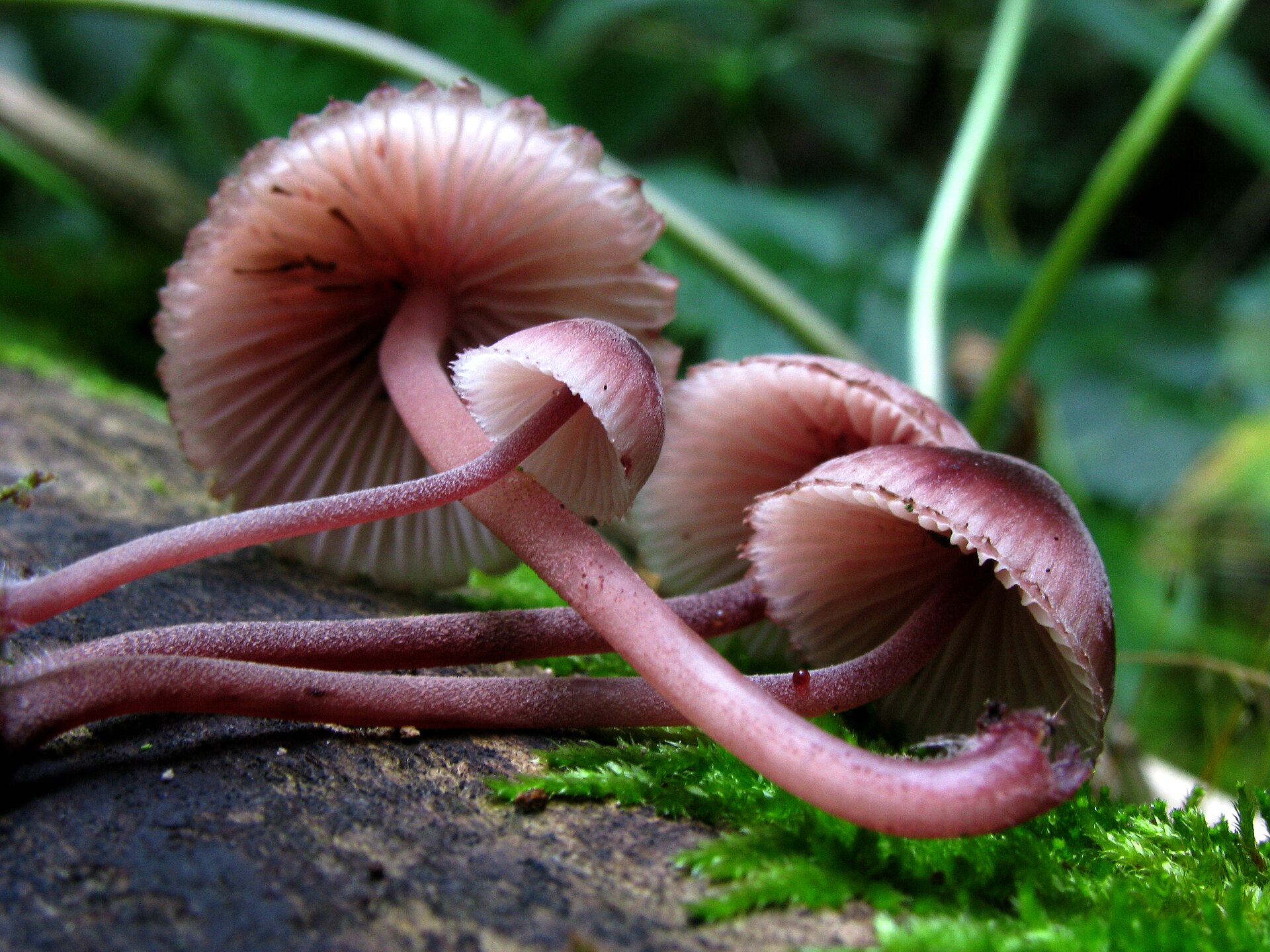
The Bleeding Mycena is a small, fragile saprotroph that grows in clusters on decaying hardwood logs and stumps, particularly beech and oak. The caps are bell-shaped, 1-3 cm across, and range from pinkish-brown to reddish-brown, often with a scalloped or toothed margin that has a slightly darker edge. The stem is slender, wiry, and covered in a fine whitish fuzz at the base. None of this is remarkable. What is remarkable is the latex.
Break the stem and a dark reddish-purple to blood-red liquid immediately appears at the break point. This is not the clear, milky, or orange latex of the Lactarius genus. This is deep, vivid, and unmistakably blood-colored. The pigment responsible is haematopodin, a compound unique to this species and a few close relatives. The latex serves no known defensive purpose; some researchers speculate it may deter invertebrate grazers, but the evidence is inconclusive.
Mycena haematopus is not considered edible. The mushrooms are too small to be worth collecting for food, and some Mycena species contain toxic compounds. The genus is enormous, with over 500 species worldwide, many of which are difficult to distinguish without microscopy. But M. haematopus requires no microscope. The bleeding reaction is instant, dramatic, and diagnostic.
Bleeding Mycena Facts
- ●The dark red-purple latex of Mycena haematopus contains haematopodin, a pyrrolinone pigment that is unique to this species and a handful of close relatives. No other mushroom genus produces this exact compound.
- ●The species name 'haematopus' means 'blood foot' in Greek, a perfect description of the dark red drops that appear when the stem is broken.
- ●Mycena haematopus is bioluminescent under certain conditions: the mycelium (not the fruiting body) emits a faint greenish glow in complete darkness, a property shared by several dozen Mycena species worldwide.
- ●The genus Mycena contains over 500 described species, making it one of the largest genera of gilled mushrooms. Most require microscopic examination to identify, but M. haematopus is one of the few that can be identified instantly by a single macroscopic feature.
Stories From the Field
The Kid Who Found a Bleeding Mushroom
A nature educator in the Great Smoky Mountains described a 2019 field trip where a seven-year-old broke the stem of a Mycena haematopus and screamed that the mushroom was bleeding. The entire group of children gathered around, transfixed. The educator used the moment to explain fungal biology, latex production, and decomposition. She later said it was the most effective teaching moment she had ever had in 15 years of outdoor education.
The Photographer's Favorite Mycena
Alison Pouliot, an Australian mycological photographer known for her stunning fungal images, has described Mycena haematopus as one of the most rewarding subjects in temperate forests. A 2020 photograph she took of a cluster on a beech log in Bavaria, with a single broken stem showing a drop of dark red latex, won recognition in an international nature photography competition.
Haematopodin and the Chemistry of Blood-Red Latex
In 2001, researchers at the University of Munich isolated and characterized haematopodin, the pyrrolinone compound responsible for the dark red latex of Mycena haematopus. The compound oxidizes rapidly on exposure to air, which intensifies the red color at the break point. The biological function remains debated, with hypotheses ranging from insect deterrence to antimicrobial defense.
Where It's Been Found
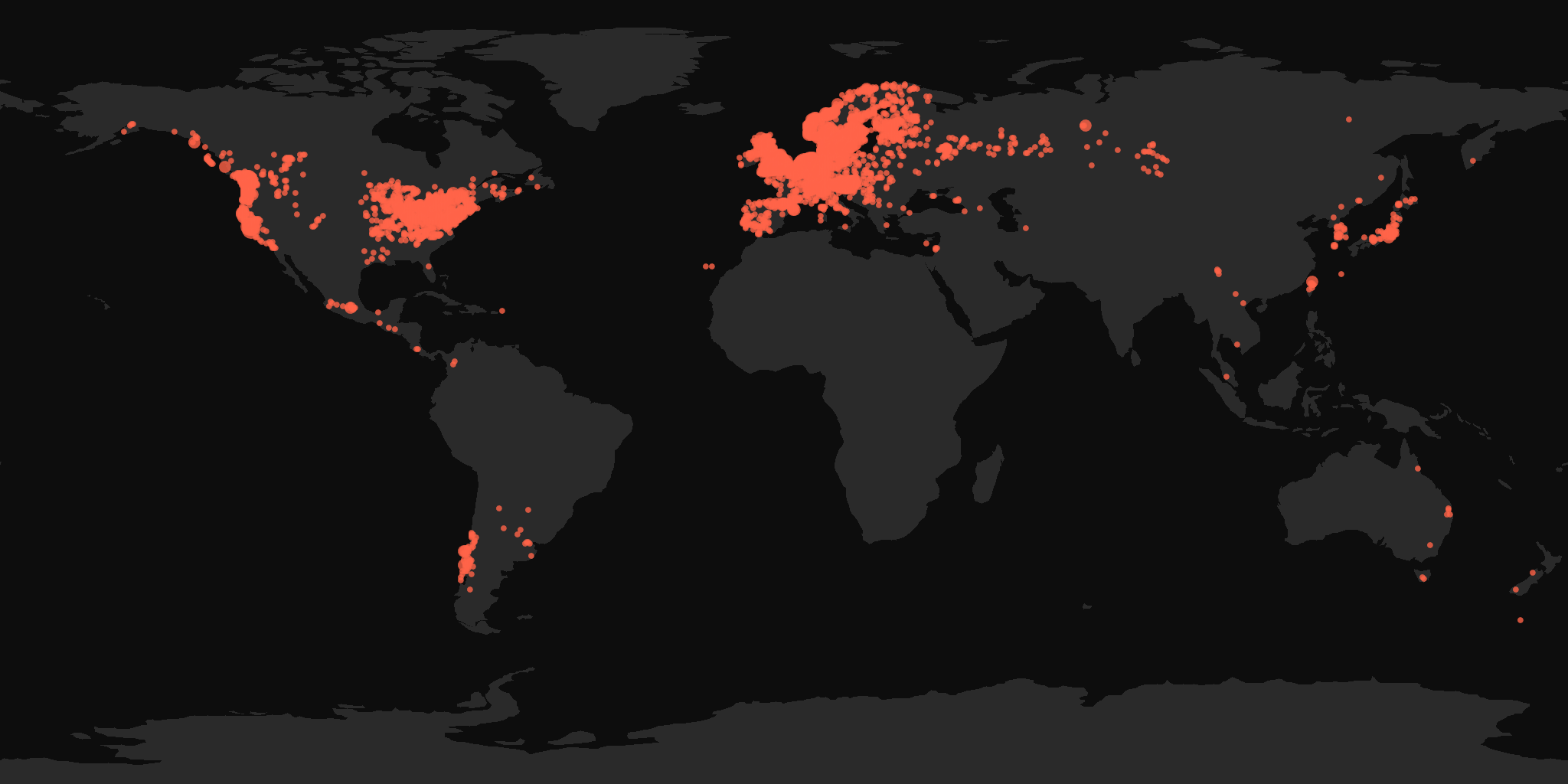
Based on reported sightings worldwide
How to Identify Bleeding Mycena
Cap
1-3 cm across. Conical to bell-shaped, rarely flattening. Pinkish-brown to reddish-brown or wine-brown, often darker at the center. Surface is smooth, slightly translucent when wet (striate, showing gill outlines). Margin is scalloped or finely toothed and often darker than the rest of the cap. Exudes reddish-purple latex when damaged.
Gills
Attached (adnate to slightly decurrent). Pale pinkish to pinkish-gray, sometimes with reddish-brown edges. Moderately spaced. Exude dark reddish-purple latex when cut.
Stem
4-8 cm tall, 1-3 mm thick. Slender, wiry, tough. Reddish-brown, often with fine whitish hairs (pubescence) at the base. Hollow. Exudes dark reddish-purple to blood-red latex when broken; this is the key identification feature.
Spore Print
White.
Odor
Not distinctive. Some report a faintly sweet or earthy smell.
Mushrooms That Look Like Bleeding Mycena
Mycena sanguinolenta (Bleeding Bonnet)
Very similar bleeding reaction, but much smaller (cap under 1 cm) and grows on leaf litter and soil rather than on wood. The latex is similar in color but less copious. Requires careful observation of substrate and size.
Read more on iNaturalist →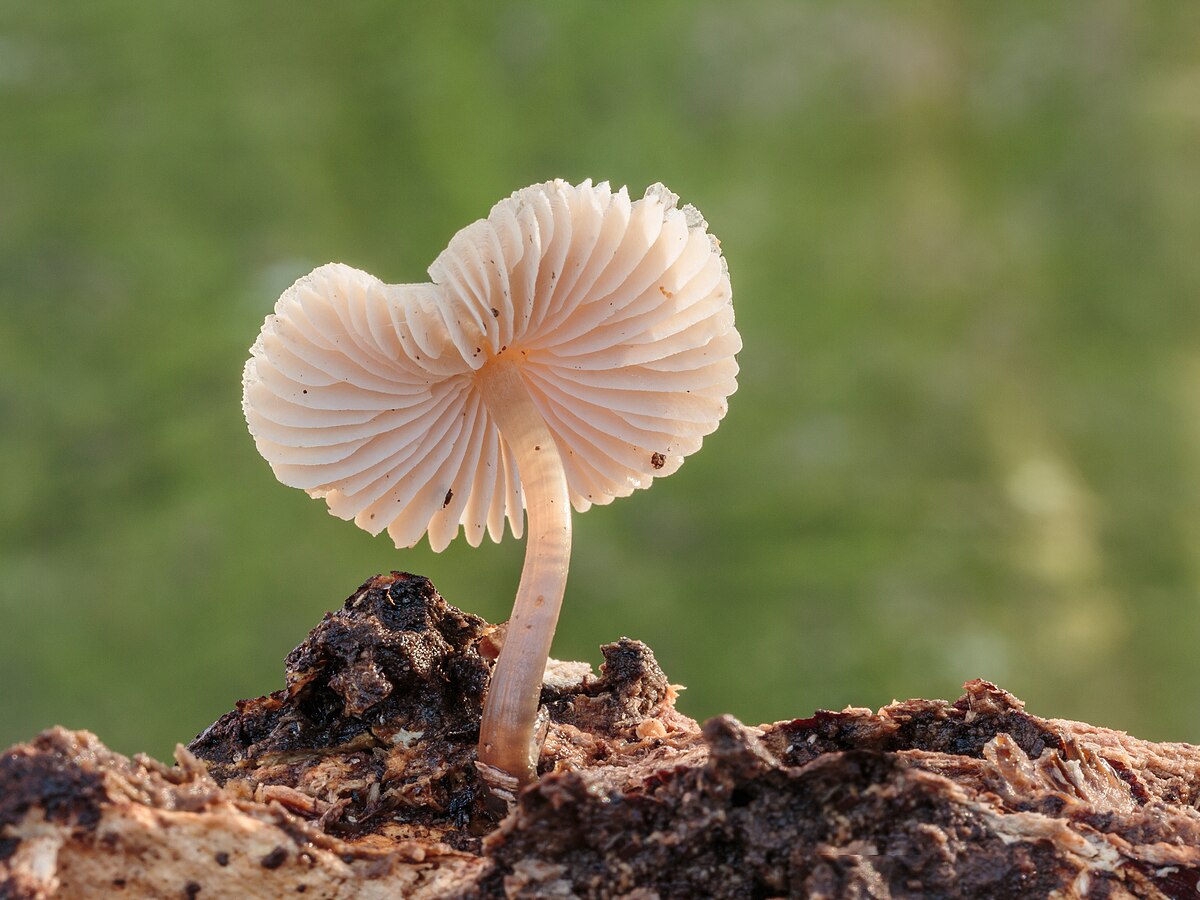
Similar size and habitat on wood. Pinkish-brown cap, but does NOT exude latex when the stem is broken. The tougher, more elastic stem and lack of bleeding reaction distinguish it. Very common and easily confused visually until you break the stem.
Side-by-side comparison →Mycena inclinata (Clustered Bonnet)
Also grows in clusters on wood, similar size. Distinguished by a distinctly rancid or sour odor, a pale toothed margin, and the complete absence of red latex. The stem base often has a yellowish tinge.
Read more on iNaturalist →Bleeding Mycena Edibility
Not edible due to small size and uncertain toxicity. Some Mycena species contain toxic compounds, and the genus is not considered safe for consumption. The mushrooms are too small and fragile to have culinary value even if they were safe. Appreciate this species for its dramatic bleeding reaction, not as a food source.
Always verify with local experts before consuming wild mushrooms.
Found something that looks like this in the wild? Don't guess — identify it from a photo with Orangutany and check it against look-alikes before you touch it.