Common Morel vs Early Morel
Morchella esculenta compared with Verpa bohemica — how to tell them apart in the field.
How to Tell Them Apart
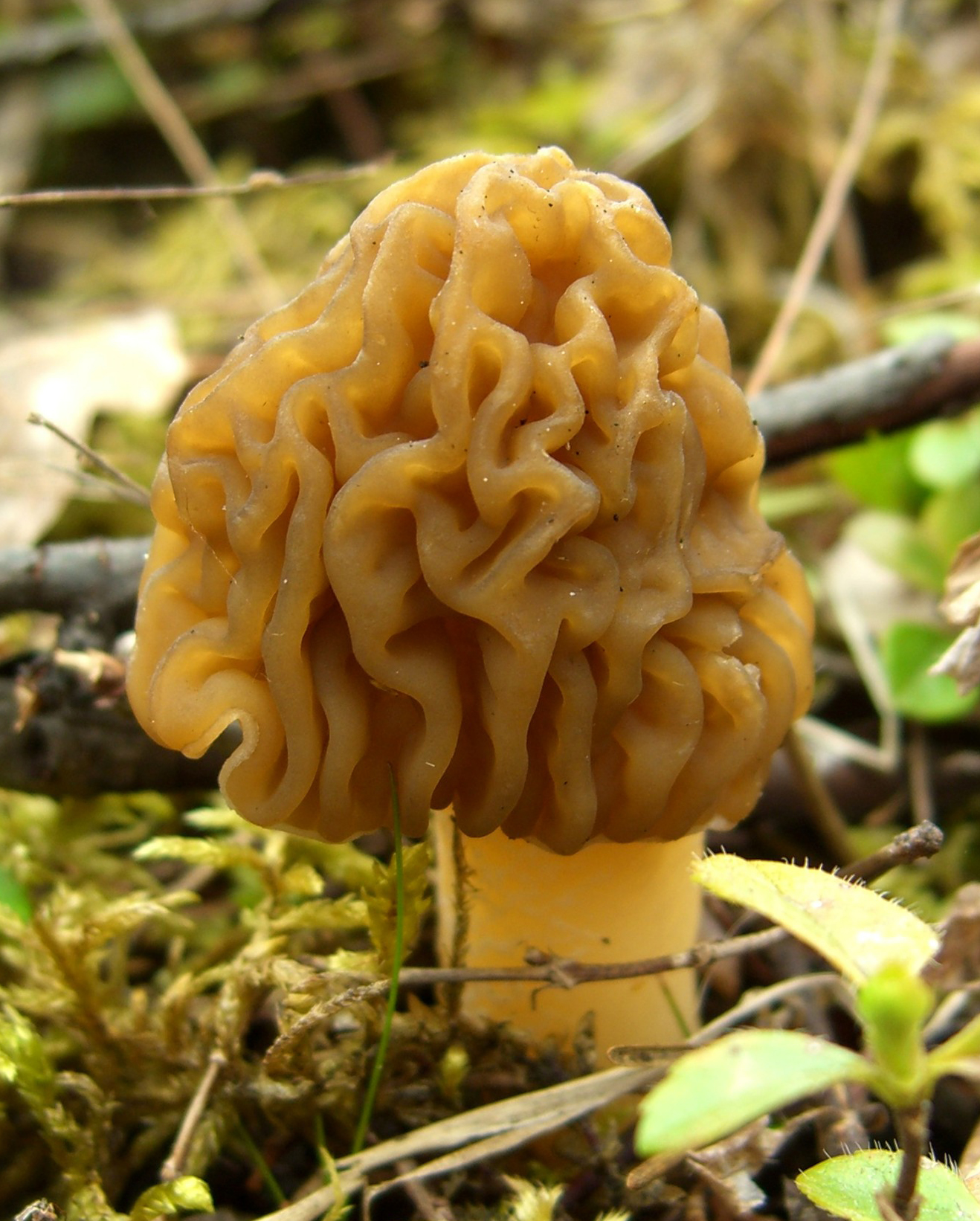
The cap hangs free from the stem like a thimble sitting on a finger — attached only at the very top. True morels have the cap fused to the stem along its full length. Cut one in half: Verpa has a cottony, stuffed stem, while morels are completely hollow. Can cause GI upset in some people.
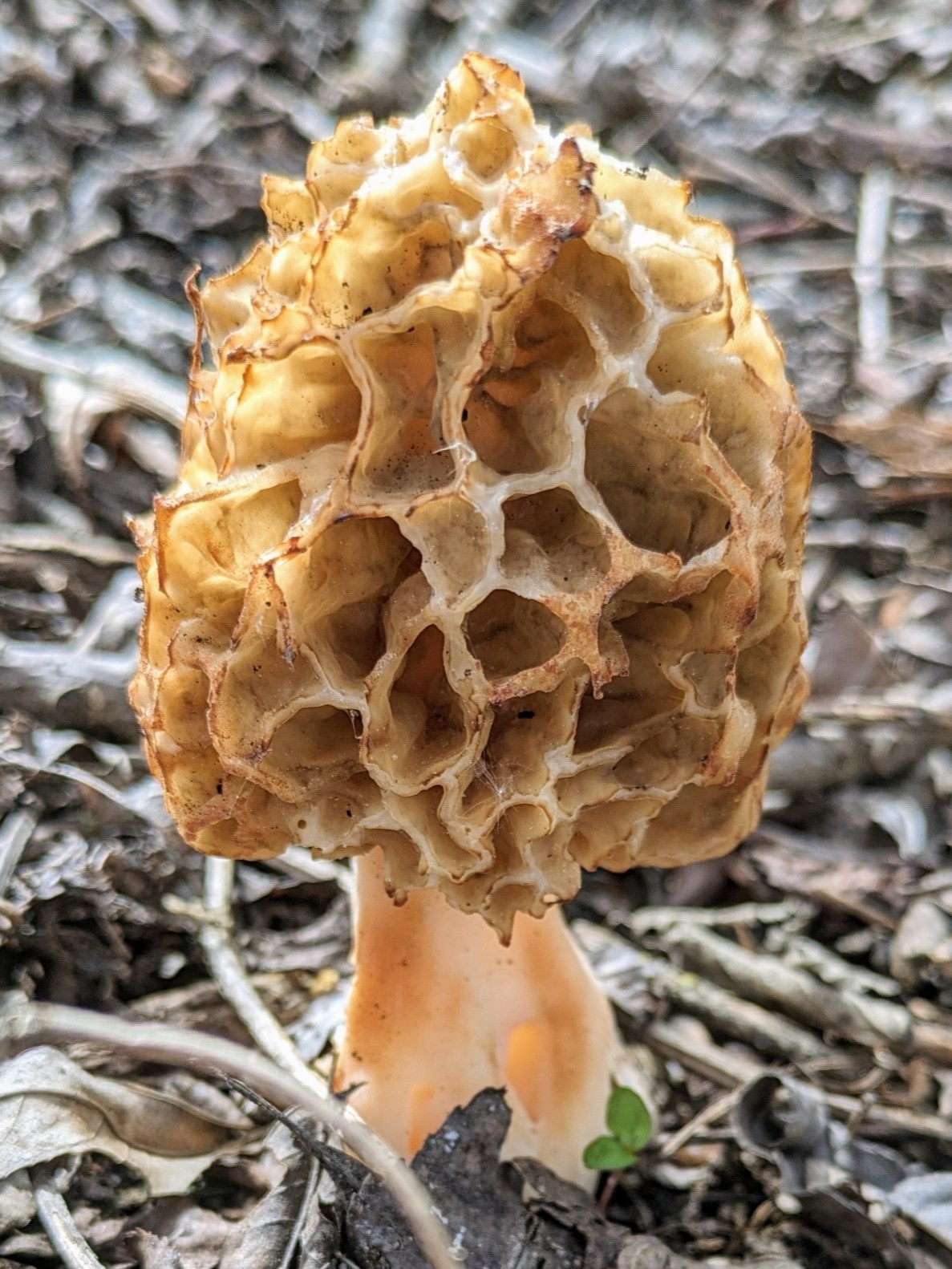
True morels have a honeycomb pattern of distinct pits and ridges, not wrinkled brain-like folds. The cap is fused to the stem along its entire length, not hanging free. Stem is cleanly hollow inside, not stuffed with cottony fibers. Cut one in half lengthwise and the difference is immediately obvious.
Side-by-Side Identification
| Trait | Common Morel | Early Morel |
|---|---|---|
| Cap | 3-8 cm tall, 3-6 cm wide. Honeycomb-like surface covered in irregular pits and ridges. Ranges from pale cream to yellowish-brown to dark tan. The cap is completely hollow inside — slice one in half lengthwise to confirm. The pits are rounded and the ridges are lighter in color. | 2-4 cm tall and wide. Thimble-shaped to bell-shaped, with a wrinkled, brain-like surface of irregular ridges and furrows (not the neat honeycomb pits of true morels). Color is yellowish brown to dark brown. The cap hangs from the top of the stem, attached only at the apex. |
| Gills | No gills at all — morels have a pitted, sponge-like cap surface instead. The exterior is covered in ridges and pits (the pits are where the spores are produced). This is one of the easiest ways to tell a true morel from most other mushrooms. | None. This is an ascomycete, not a gilled mushroom. Spores form on the outer wrinkled surface of the cap. |
| Stem | 3-7 cm tall, white to pale cream, hollow all the way through. The stem attaches directly to the bottom edge of the cap — the cap and stem form one continuous hollow chamber. Slightly granular or mealy texture on the surface. | 6-14 cm tall, often quite long relative to the cap. Whitish to pale cream, sometimes developing brownish stains. Stuffed with cottony, wispy fibers inside (not cleanly hollow like a true morel). Surface is granular or slightly mealy. |
| Spore print | Cream to yellowish — though most foragers identify morels by sight rather than spore print. | Yellow to yellowish brown. |
| Odor | Pleasant, earthy, slightly nutty. Fresh morels smell like the forest floor on a warm spring day. | Mild, somewhat earthy. Less aromatic than true morels. |
| Habitat | Extremely variable. Found in old orchards, river bottoms, tulip poplar stands, dying elm trees, ash forests, and recently burned areas. Loves disturbed ground — old logging roads, flood plains, and the edges of paths. Mycorrhizal with various hardwoods and conifers, but also appears as a saprobe on dead wood. | Floodplains, river bottoms, and riparian areas, especially under cottonwood, ash, elm, and tulip poplar. Loves alluvial soil that gets periodic flooding. Also found in moist, low-lying hardwood forests, orchards, and disturbed ground near streams. Often in sandy or silty soil. |
| Season | March through May in most of North America, depending on latitude and elevation. Peak is April in the Midwest and mid-Atlantic. Follows a northward wave as temperatures warm — southern states get them first. | March through May, typically 2-4 weeks before true morels appear in the same area. One of the earliest spring fungi in many regions. |
Found one of these in the wild? Don't rely on memory — identify it from a photo with Orangutany and check it against both species before you touch it.