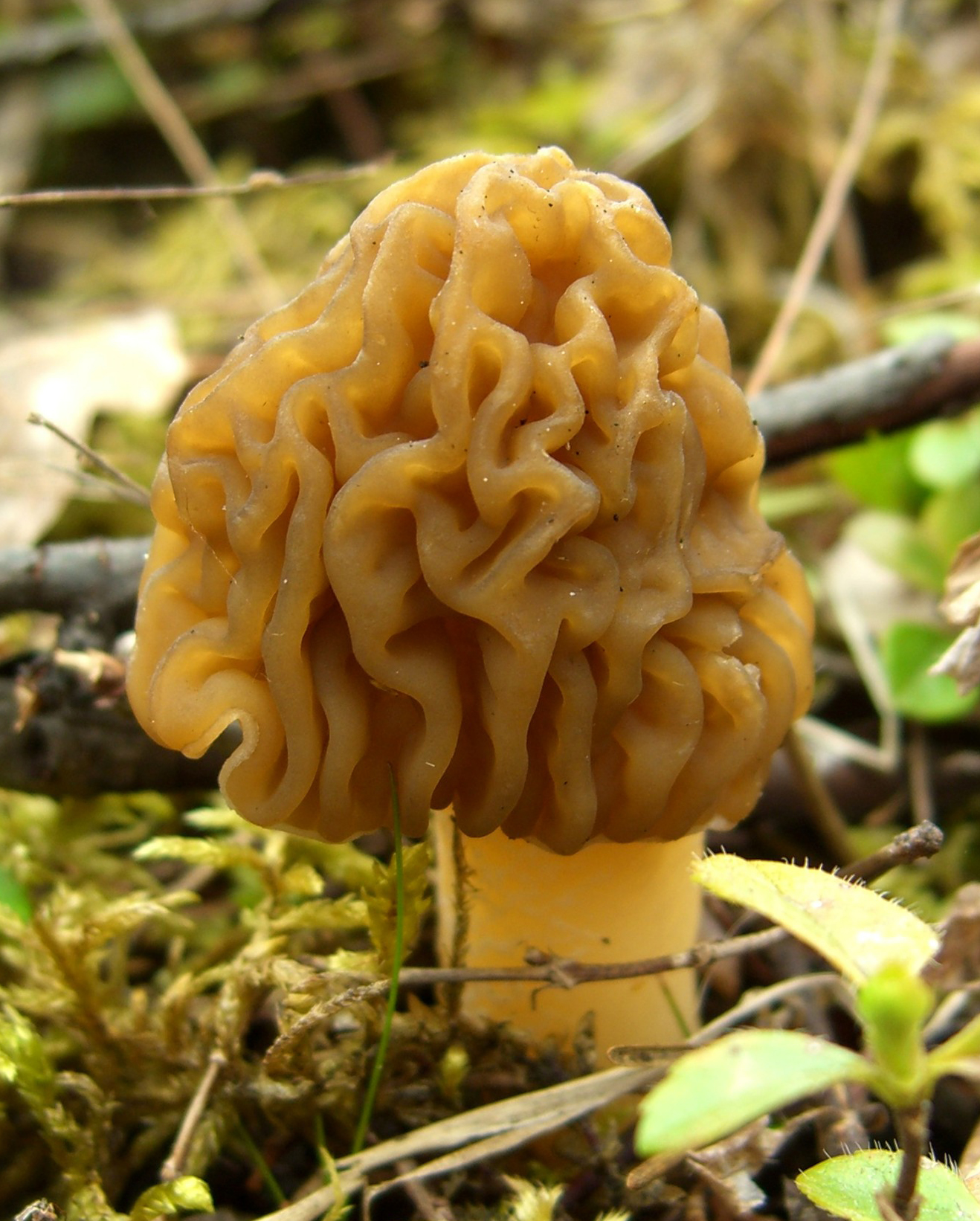
Photo by Jason Hollinger · Wikimedia Commons · CC BY-SA 3.0
The impatient forager's morel. Verpa bohemica fruits weeks before true morels appear, teasing mushroom hunters with its morel-like silhouette. Edible with caution, it has a complicated reputation that divides the foraging community.
Every spring, as morel fever begins to build, Verpa bohemica shows up early to the party. It emerges in floodplains, cottonwood groves, and along river bottoms before true morels have even thought about fruiting, and it catches new foragers off guard with its superficial resemblance to the real thing. The common names tell the story: early morel, wrinkled thimble cap, half-free morel. Each name hints at what it is and what it is not.
The key distinction is in the cap attachment. On a true morel, the cap is fused to the stem along its entire length. On Verpa bohemica, the cap hangs from the very top of the stem like a thimble placed over a finger, attached only at the apex. Slice one lengthwise and you will see the cap dangling free, with the stem running up inside it like a column. The stem interior is stuffed with cottony, wispy fibers rather than being cleanly hollow.
Edibility is where things get contentious. Many experienced foragers eat Verpa bohemica without any issues, treating it as a perfectly fine early-season mushroom. Others have experienced muscular incoordination, GI distress, and other symptoms after eating them, especially in large quantities or over consecutive days. The prudent approach: eat small amounts the first time, never eat them raw, and do not consume them multiple days in a row.
Early Morel Facts
- ●Verpa bohemica consistently fruits 2-4 weeks before true morels in the same area, making it a reliable signal that morel season is approaching.
- ●The common name 'wrinkled thimble cap' perfectly describes both the texture and the way the cap sits on the stem, like a loose thimble on a finger.
- ●Some commercial morel buyers refuse to purchase Verpa bohemica, while others accept them as 'early morels' at a lower price per pound.
- ●The cottony-stuffed stem is one of the most reliable field ID features. Slicing a Verpa lengthwise reveals wispy white fibers inside, while a true morel is cleanly hollow.
Stories From the Field
The Cottonwood Flush Along the Willamette
A Portland-area forager described finding hundreds of Verpa bohemica along the Willamette River floodplain in early April 2021, a full three weeks before the first true morels appeared. 'They were everywhere under the cottonwoods,' he wrote. 'Popping up through the sandy soil like little brown thimbles. I picked a grocery bag full in 20 minutes.'
The Great Verpa Debate
A 2020 thread on a Midwest foraging forum devolved into a 200-comment argument about whether Verpa bohemica is safe to eat. One side cited decades of personal experience eating them without issue. The other side posted case reports of muscular incoordination. The moderator eventually locked the thread with the note: 'Eat at your own risk. This is not medical advice.'
Beginner Mistakes Verpa for Morel
A new forager in Kansas proudly posted photos of his 'first morel haul' in March 2019. Experienced members immediately identified them as Verpa bohemica based on the thimble-like caps and wrinkled surface. The correction was gentle, and the forager later wrote that learning the difference was 'the most important lesson of my first season.'
Where It's Been Found

Based on reported sightings worldwide
How to Identify Early Morel
Cap
2-4 cm tall and wide. Thimble-shaped to bell-shaped, with a wrinkled, brain-like surface of irregular ridges and furrows (not the neat honeycomb pits of true morels). Color is yellowish brown to dark brown. The cap hangs from the top of the stem, attached only at the apex.
Gills
None. This is an ascomycete, not a gilled mushroom. Spores form on the outer wrinkled surface of the cap.
Stem
6-14 cm tall, often quite long relative to the cap. Whitish to pale cream, sometimes developing brownish stains. Stuffed with cottony, wispy fibers inside (not cleanly hollow like a true morel). Surface is granular or slightly mealy.
Spore Print
Yellow to yellowish brown.
Odor
Mild, somewhat earthy. Less aromatic than true morels.
Mushrooms That Look Like Early Morel
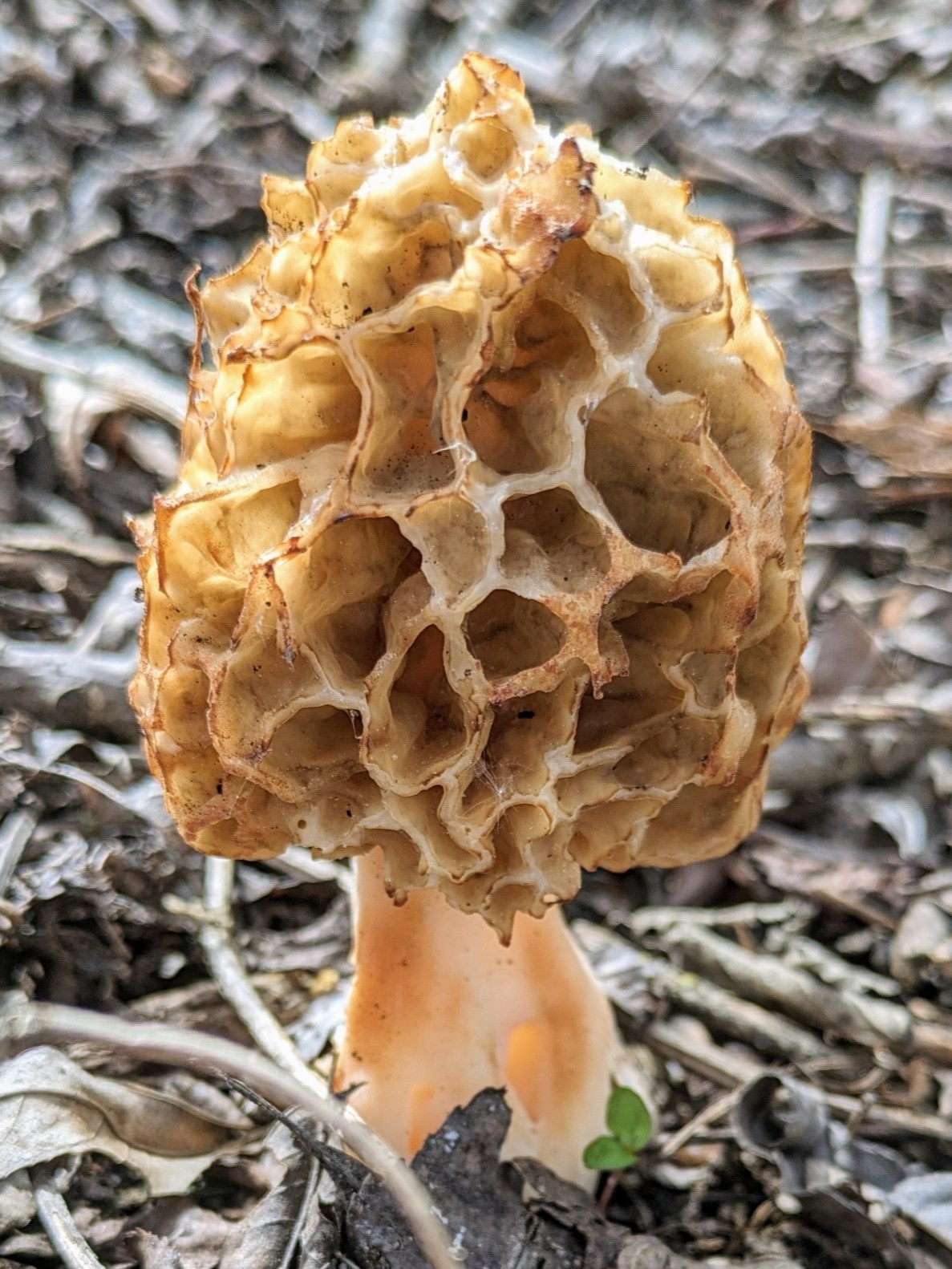
True morels have a honeycomb pattern of distinct pits and ridges, not wrinkled brain-like folds. The cap is fused to the stem along its entire length, not hanging free. Stem is cleanly hollow inside, not stuffed with cottony fibers. Cut one in half lengthwise and the difference is immediately obvious.
Side-by-side comparison →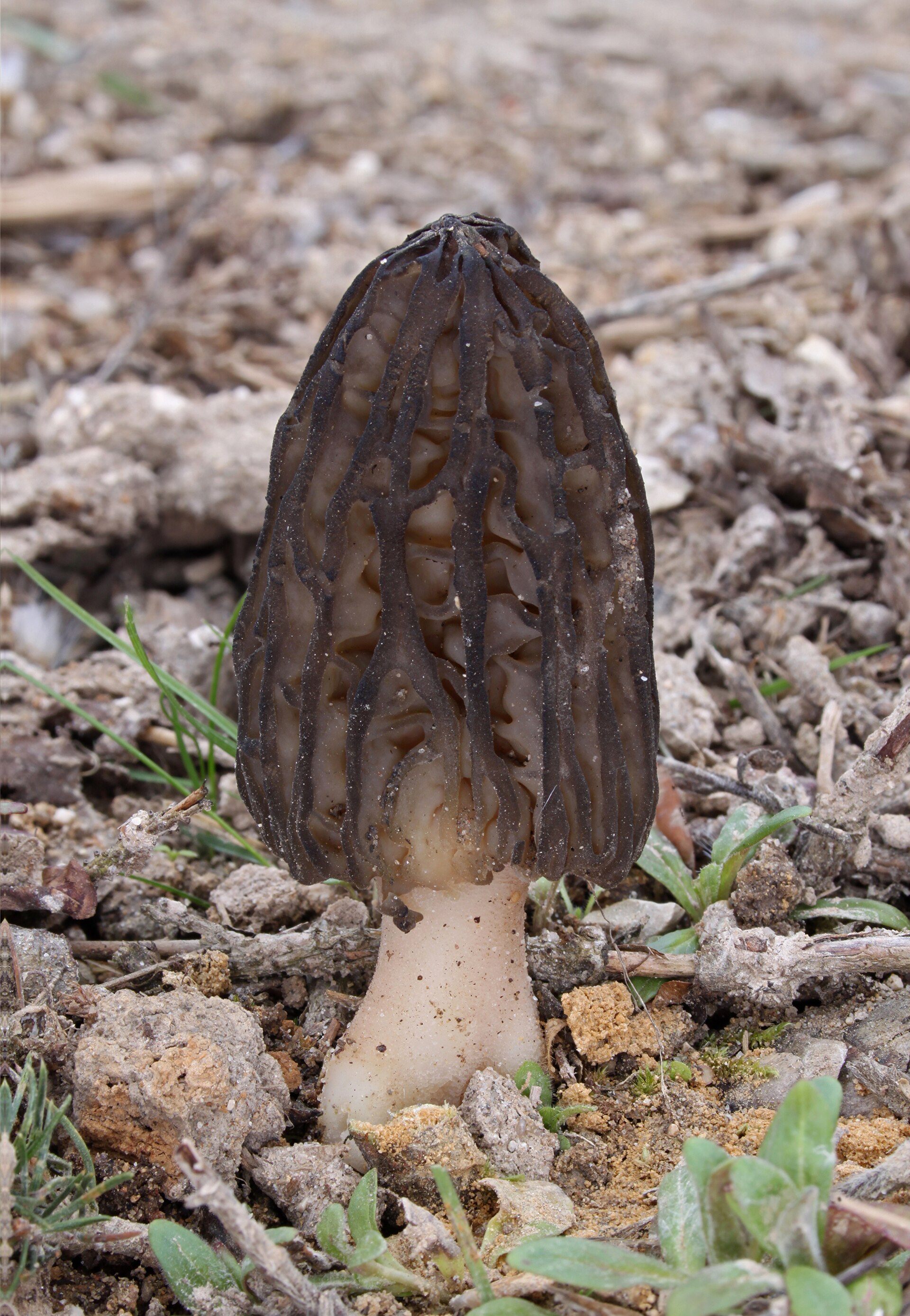
Same key differences as yellow morels: cap attached along full length, clean honeycomb pitting, hollow stem. Black morels are darker and more conical but share the fused-cap and hollow-stem features that distinguish all true morels from Verpa.
Side-by-side comparison →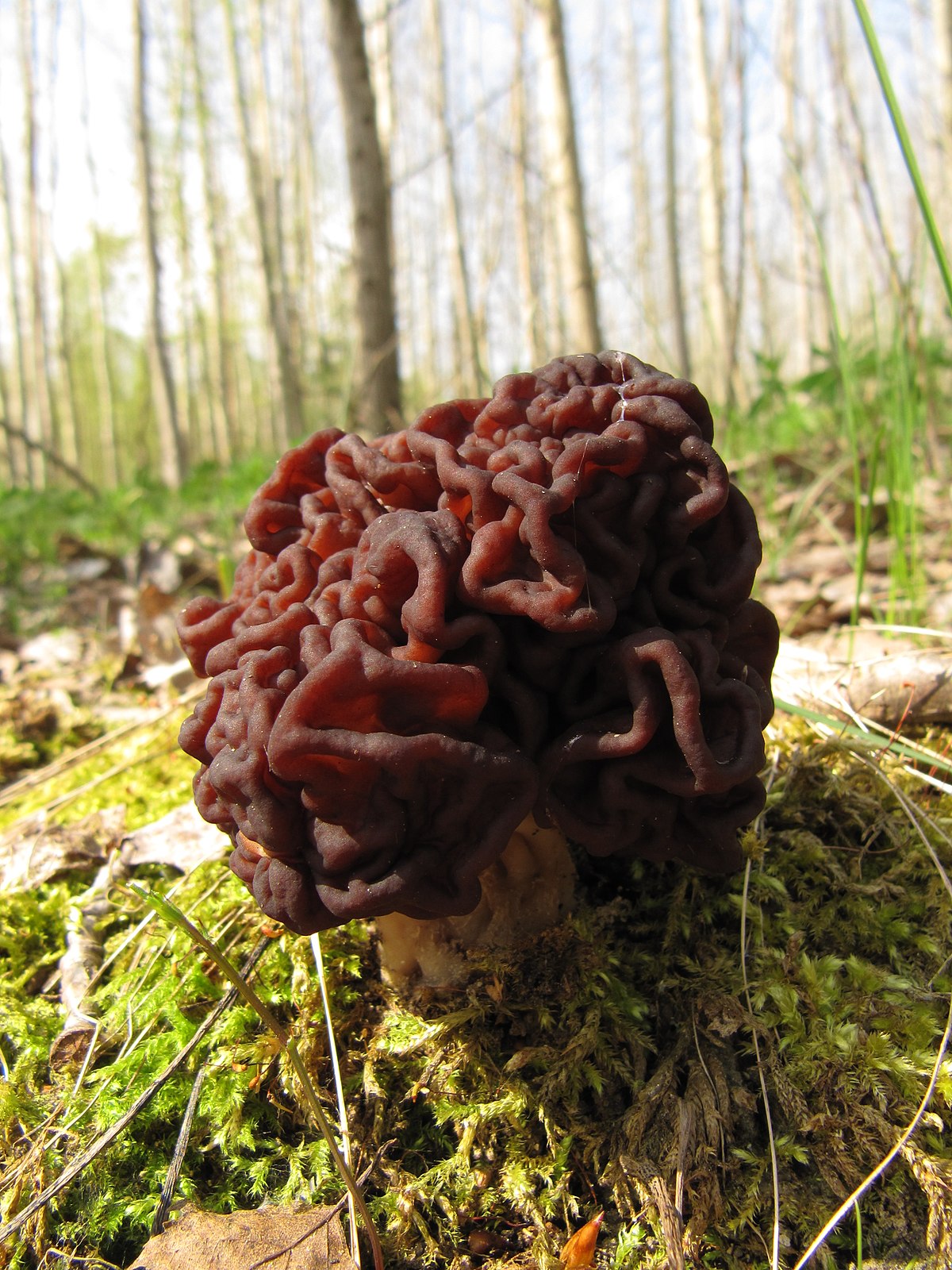
Much more irregular and brain-like cap, often reddish brown to dark brown. Cap lobes are larger and more folded. Interior is chambered with multiple cavities, not a single hollow or cottony-stuffed column. Contains potentially deadly gyromitrin toxin. Much more dangerous than Verpa.
Side-by-side comparison →Is Early Morel Edible?
Eaten by many foragers without problems, but some individuals experience GI distress, muscular incoordination, or other symptoms. Cook thoroughly; never eat raw. Start with small quantities. Do not eat multiple days in a row. Some foraging guides advise against eating this species entirely. If you experience any neurological symptoms, stop consuming immediately.
Always verify with local experts before consuming wild mushrooms.
Found something that looks like this in the wild? Don't guess — identify it from a photo with Orangutany and check it against look-alikes before you touch it.