Black Morel vs Early Morel
Morchella elata compared with Verpa bohemica — how to tell them apart in the field.
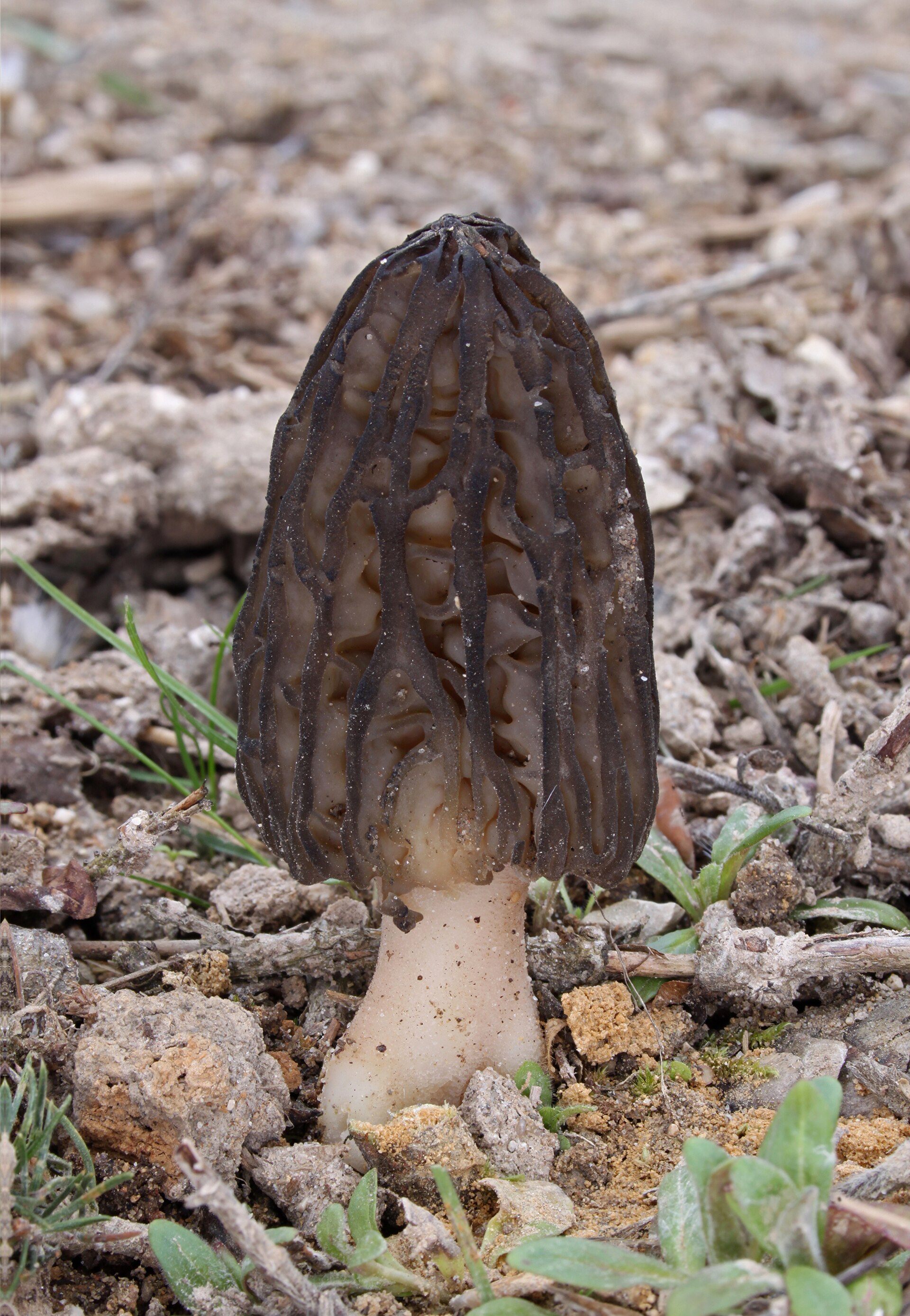
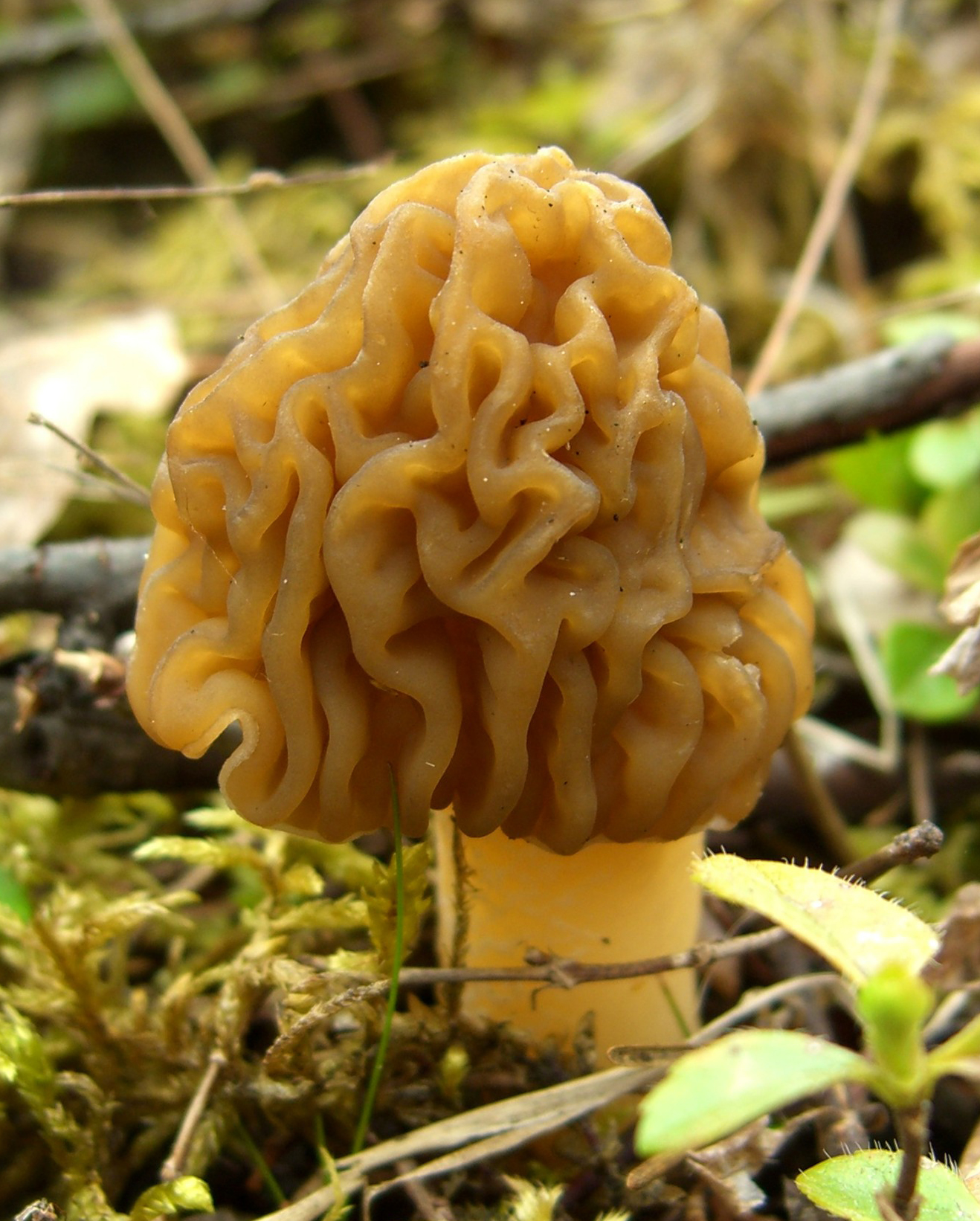
How to Tell Them Apart
Cap hangs from the top of the stem like a thimble, attached only at the apex. True morels have the cap fused to the stem along its full length. Verpa stems are stuffed with cottony fibers rather than cleanly hollow. Edible with caution but can cause GI issues in some people.
Same key differences as yellow morels: cap attached along full length, clean honeycomb pitting, hollow stem. Black morels are darker and more conical but share the fused-cap and hollow-stem features that distinguish all true morels from Verpa.
Side-by-Side Identification
| Trait | Black Morel | Early Morel |
|---|---|---|
| Cap | 3-10 cm tall, conical to elongated-conical. Surface covered in a honeycomb pattern of pits and ridges. Ridges are dark brown to black, pits are lighter brown to grayish. The cap is attached directly to the stem at the base (not hanging free like a Verpa). Completely hollow inside. | 2-4 cm tall and wide. Thimble-shaped to bell-shaped, with a wrinkled, brain-like surface of irregular ridges and furrows (not the neat honeycomb pits of true morels). Color is yellowish brown to dark brown. The cap hangs from the top of the stem, attached only at the apex. |
| Gills | None. Morels are ascomycetes, not gilled mushrooms. Spores are produced on the inner surfaces of the pits. | None. This is an ascomycete, not a gilled mushroom. Spores form on the outer wrinkled surface of the cap. |
| Stem | 3-8 cm tall, pale whitish to cream, sometimes with a granular or slightly roughened surface. Completely hollow from base to tip. The cap attaches at the very bottom of the head, with no skirt-like overhang. | 6-14 cm tall, often quite long relative to the cap. Whitish to pale cream, sometimes developing brownish stains. Stuffed with cottony, wispy fibers inside (not cleanly hollow like a true morel). Surface is granular or slightly mealy. |
| Spore print | Cream to pale yellow-orange. | Yellow to yellowish brown. |
| Odor | Earthy, pleasant, with a slightly smoky quality that intensifies when dried. | Mild, somewhat earthy. Less aromatic than true morels. |
| Habitat | Coniferous forests, especially after wildfire (burn morels). Also found in undisturbed forests under spruce, fir, pine, and Douglas fir. Favors disturbed ground, stream banks, logging roads, and areas with recent soil disturbance. Burn-site morels can fruit in extraordinary quantities the spring following a fire. | Floodplains, river bottoms, and riparian areas, especially under cottonwood, ash, elm, and tulip poplar. Loves alluvial soil that gets periodic flooding. Also found in moist, low-lying hardwood forests, orchards, and disturbed ground near streams. Often in sandy or silty soil. |
| Season | March through June depending on latitude and elevation. Among the earliest spring mushrooms. Burn morel season typically peaks in May and June at higher elevations in western North America. | March through May, typically 2-4 weeks before true morels appear in the same area. One of the earliest spring fungi in many regions. |
Found one of these in the wild? Don't rely on memory — identify it from a photo with Orangutany and check it against both species before you touch it.