Indigo Milk Cap vs Charcoal Burner
Lactarius indigo compared with Russula cyanoxantha — how to tell them apart in the field.
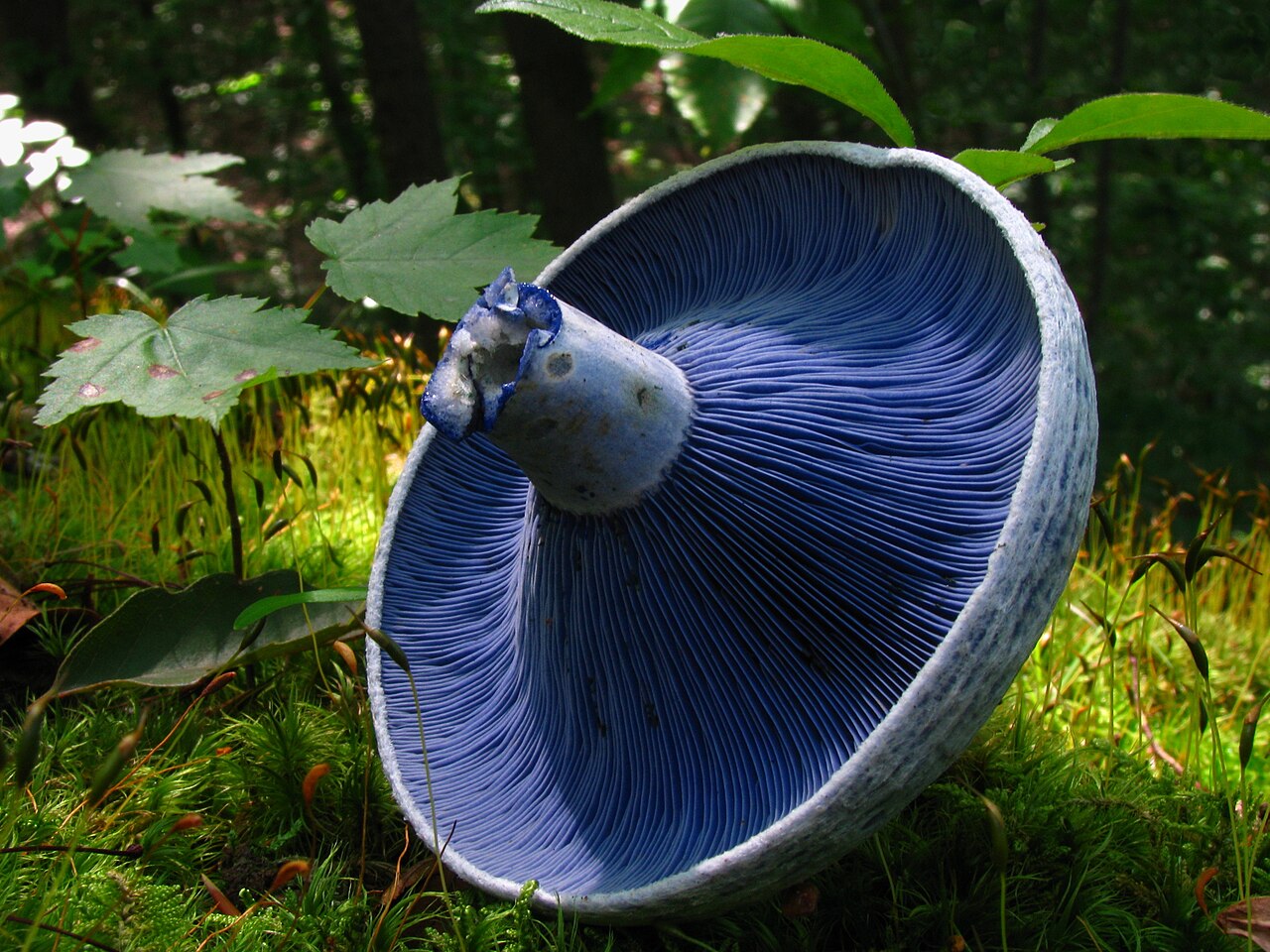
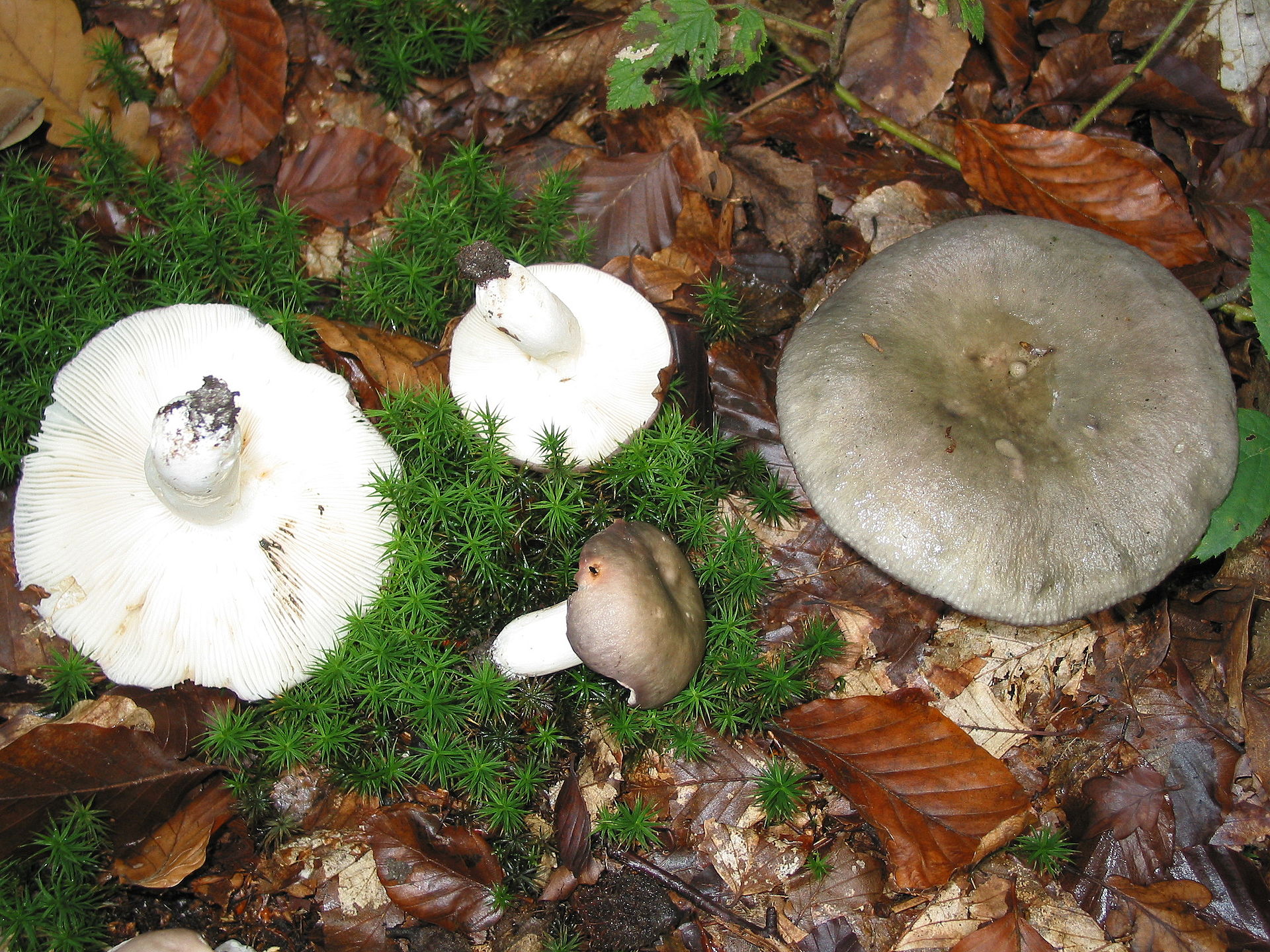
How to Tell Them Apart
Can have bluish-purple cap colors that superficially resemble L. indigo, but Russula cyanoxantha produces NO latex when broken — the flesh is dry and crumbly. Also has flexible, greasy-feeling gills unlike any Lactarius. A good edible mushroom in its own right.
Side-by-Side Identification
| Trait | Indigo Milk Cap | Charcoal Burner |
|---|---|---|
| Cap | 5–15 cm across. Convex when young, becoming flat then slightly funnel-shaped with a depressed center. Indigo blue when fresh, fading to silvery-blue or grayish-blue with greenish tones as it ages. Surface is dry, sometimes with concentric zones of darker and lighter blue. Margin inrolled when young. | 5-15 cm across. Convex becoming flat, sometimes slightly depressed in the center. Color is extremely variable: violet, purple, green, olive, gray, or a mixture of several colors on the same cap. Surface is smooth, slightly sticky when wet, and the cuticle peels about halfway to the center. |
| Gills | Attached to slightly decurrent. Close to crowded. Indigo blue, staining dark blue-green where damaged. Exude dark blue latex (milk) when broken — this is the key diagnostic feature. | The defining feature. White to cream, crowded, and FLEXIBLE. Unlike nearly all other Russulas, whose gills are brittle and crumbly, the gills of R. cyanoxantha bend without breaking and feel greasy or oily when rubbed with a finger. This is the single most reliable field test. |
| Stem | 3–8 cm tall, 1–2.5 cm thick. Cylindrical, sometimes tapering at the base. Same indigo blue as the cap, often with small pits or shallow depressions (scrobiculations). Solid when young, becoming hollow with age. | 5-10 cm tall, 1.5-3 cm thick. White, solid, firm. Smooth or slightly wrinkled. Does not change color when bruised or handled. No ring or volva. |
| Spore print | Pale yellow to creamy yellow. | White. |
| Odor | Mild, not distinctive. | Mild, not distinctive. Faintly mushroomy. |
| Habitat | Mycorrhizal with pines (especially loblolly pine, shortleaf pine) and oaks. Found in mixed pine-oak and pine forests, often on acidic, well-drained sandy soils. Grows singly or in small scattered groups on the ground among leaf litter and pine needles. | Mycorrhizal with hardwoods, especially beech and oak. Also found with birch and chestnut. Grows singly or in scattered groups on the forest floor in well-drained woodland. Common along trails and in clearings. |
| Season | Summer through early autumn, typically July through October. Appears after warm rains. Peak season is August–September across most of its North American range. | June through October, with peak fruiting in July and August. Requires warm temperatures and moderate rainfall. |
Found one of these in the wild? Don't rely on memory — identify it from a photo with Orangutany and check it against both species before you touch it.