Coral Tooth Fungus vs Lion's Mane
Hericium coralloides compared with Hericium erinaceus — how to tell them apart in the field.
How to Tell Them Apart
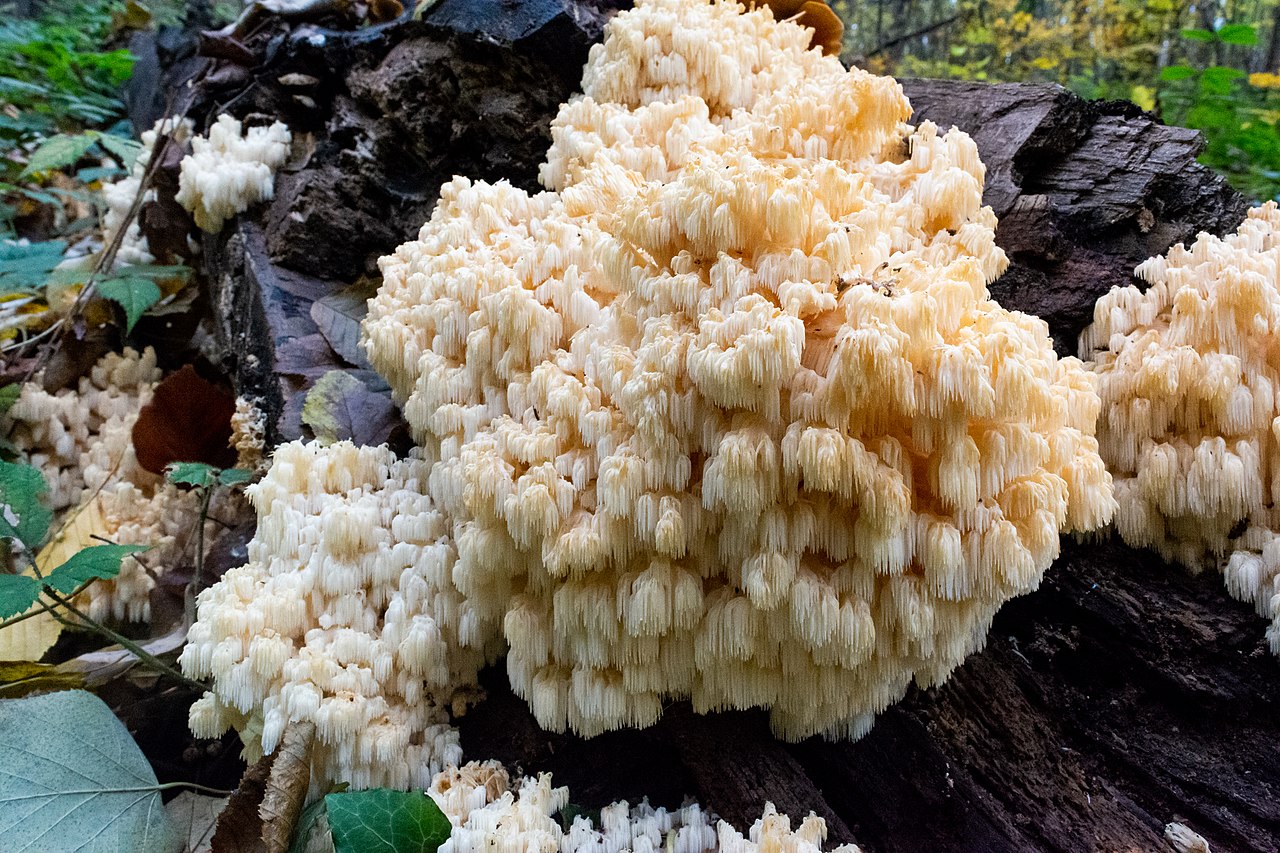
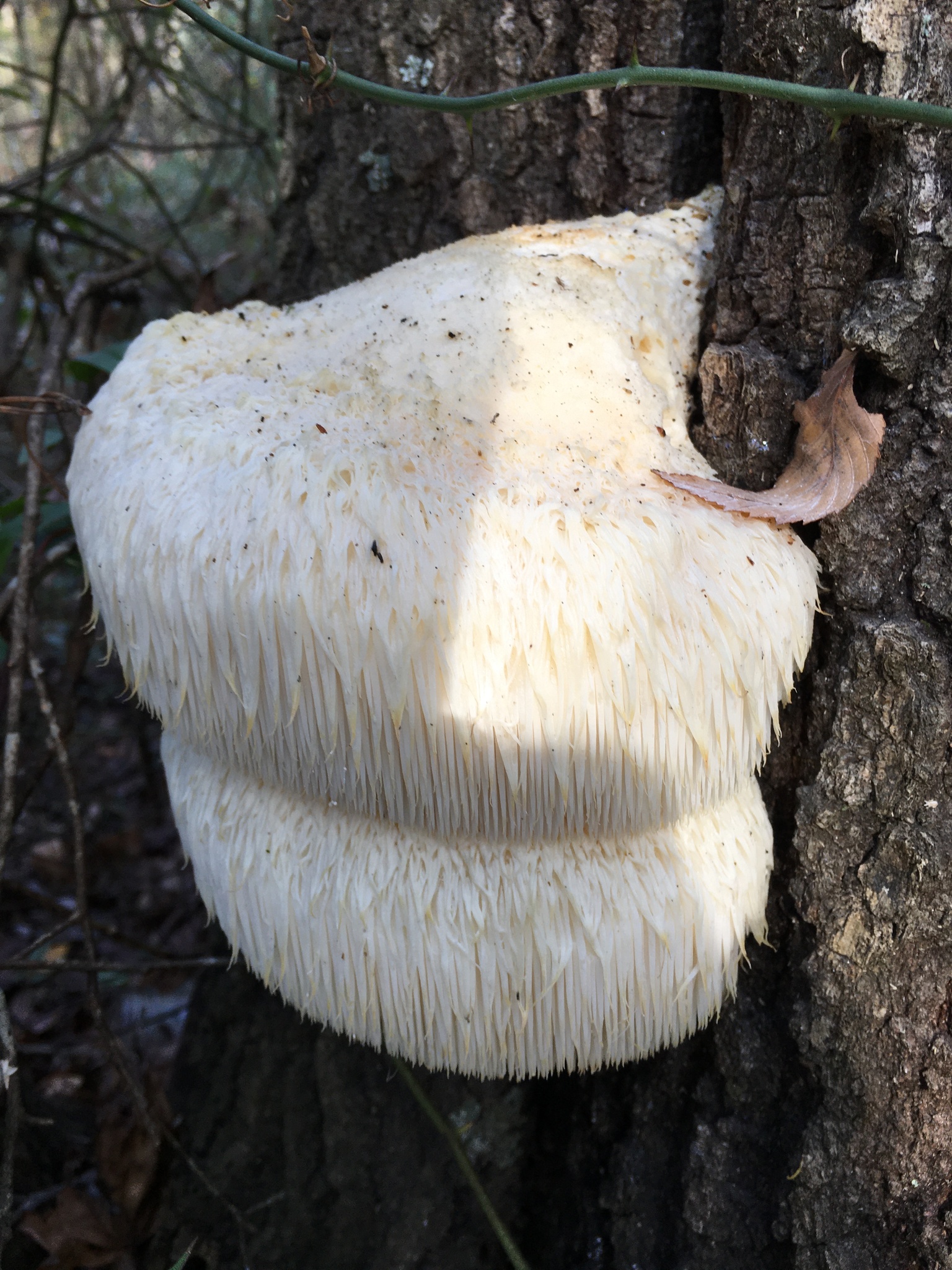
Forms a single, unbranched, globose clump of long cascading spines (often 2–5 cm long) rather than a branching coral-like structure. The overall shape is more like a white pompom or waterfall than a coral. Both are excellent edibles, but their growth form is distinctly different once you've seen both side by side.
Much more branched and coral-like. Spines are shorter (under 1 cm) and hang from an elaborate branching framework. Looks more like an underwater coral than a beard. Also edible.
Side-by-Side Identification
| Trait | Coral Tooth Fungus | Lion's Mane |
|---|---|---|
| Cap | No traditional cap. The fruiting body is a branching, coral-like structure 10–40 cm across. Pure white when fresh, becoming cream to yellowish with age. The overall shape is irregularly globose with multiple branching arms radiating from a central attachment point. | No traditional cap. The fruiting body is a single globular or irregular mass, typically 10-40 cm across, attached to wood at a single point. White when young, turning cream to yellowish-brown with age. |
| Gills | No gills. Instead, the spore-bearing surface consists of rows of hanging teeth (spines) 5–15 mm long, arranged along the underside of each branch. Teeth are white, soft, and fragile — they break easily when handled. | None — has hanging spines instead. This is what makes it so distinctive. Long, soft, icicle-like teeth (1-5 cm) dangle from the underside of the fruiting body. They start white and become brownish. |
| Stem | No true stem. The branching structure attaches to the wood substrate at a single point or narrow base, from which all branches radiate outward. | No real stem. The mushroom attaches directly to the wood substrate at one point, with the entire mass hanging or projecting outward like a frozen waterfall. |
| Spore print | White. | White — though you'll rarely need this since the mushroom is so visually distinctive. |
| Odor | Mild, pleasant, slightly sweet. Some describe it as faintly fragrant. | Mild and pleasant. Some describe a faint seafood-like smell, which makes sense — cooked Lion's Mane is often compared to lobster or crab. |
| Habitat | Saprobic on dead hardwood, especially beech (Fagus) and oak (Quercus). Strongly associated with large-diameter logs, fallen trunks, and standing dead trees in mature and old-growth deciduous forests. Occasionally found on maple, birch, and walnut. Prefers shaded, humid conditions with good air circulation. | Dead or dying hardwood trees, especially American beech, oak, maple, walnut, and sycamore. Grows from wounds or branch stubs on living trees, or on fallen logs and stumps. Prefers temperate forests with good moisture. |
| Season | Late summer through autumn, typically August through November. Fruiting is triggered by autumn rains following warm periods. In favorable conditions, fruit bodies can persist for several weeks before deteriorating. | Late summer through late fall — roughly August through November in most of North America. Can occasionally fruit into early winter in mild climates. |
Found one of these in the wild? Don't rely on memory — identify it from a photo with Orangutany and check it against both species before you touch it.