False Morel vs Early Morel
Gyromitra esculenta compared with Verpa bohemica — how to tell them apart in the field.
This is a dangerous confusion.
At least one of these species is toxic. Never eat a wild mushroom based on a photo comparison alone — verify with local experts.
How to Tell Them Apart
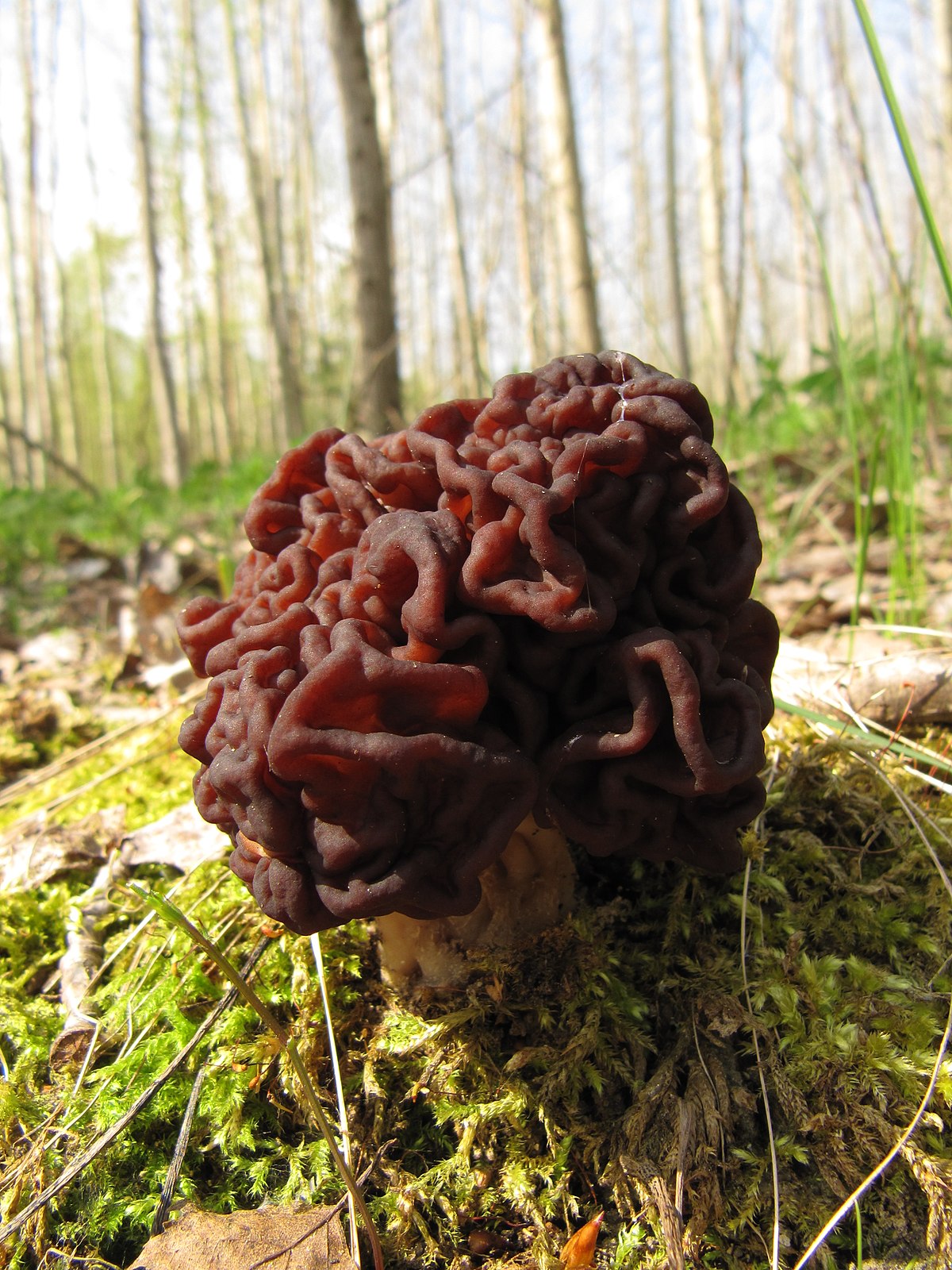
Much more irregular and brain-like cap, often reddish brown to dark brown. Cap lobes are larger and more folded. Interior is chambered with multiple cavities, not a single hollow or cottony-stuffed column. Contains potentially deadly gyromitrin toxin. Much more dangerous than Verpa.
Side-by-Side Identification
| Trait | False Morel | Early Morel |
|---|---|---|
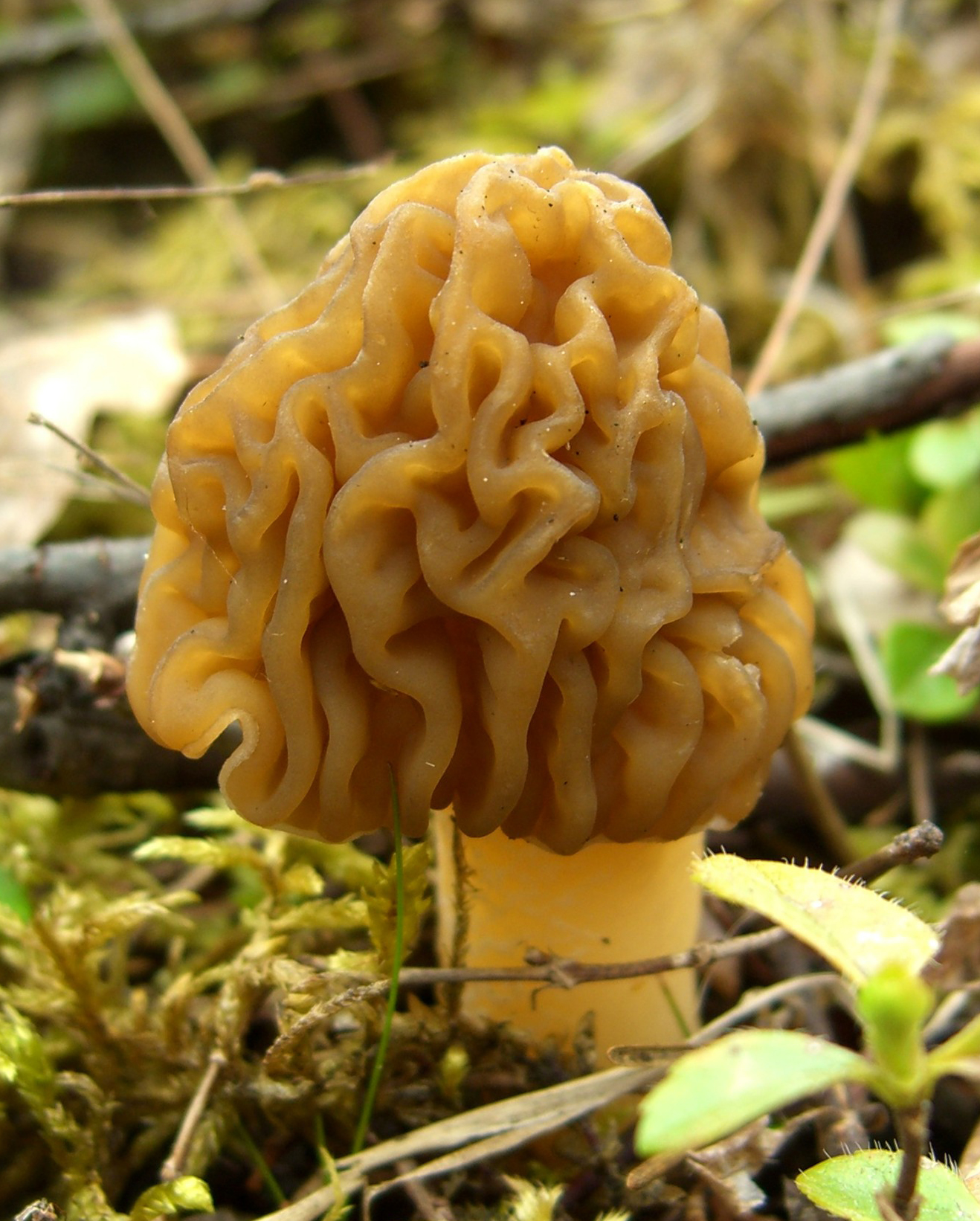
| Cap | 4-10 cm across, irregularly lobed and brain-like with deep folds and wrinkles. Ranges from yellowish-brown to dark reddish-brown. The surface is convoluted like a walnut or cauliflower — nothing like the neat pits of a true morel. The interior is chambered (not hollow like a morel when sliced in half). | 2-4 cm tall and wide. Thimble-shaped to bell-shaped, with a wrinkled, brain-like surface of irregular ridges and furrows (not the neat honeycomb pits of true morels). Color is yellowish brown to dark brown. The cap hangs from the top of the stem, attached only at the apex. |
| Gills | No gills — this is an ascomycete. The spore-bearing surface is the entire wrinkled outer cap. If you slice it open, the interior has irregular chambers and cottony tissue, unlike the completely hollow interior of true morels. | None. This is an ascomycete, not a gilled mushroom. Spores form on the outer wrinkled surface of the cap. |
| Stem | 2-6 cm tall, stout and whitish to pale cream. Often compressed or furrowed. The stem is chambered inside with cottony stuffing — not cleanly hollow like a morel's stem. It can look almost too small for the oversized brain cap sitting on top of it. | 6-14 cm tall, often quite long relative to the cap. Whitish to pale cream, sometimes developing brownish stains. Stuffed with cottony, wispy fibers inside (not cleanly hollow like a true morel). Surface is granular or slightly mealy. |
| Spore print | Whitish to pale yellow. | Yellow to yellowish brown. |
| Odor | Pleasant, mild, somewhat fruity or mushroomy. Nothing alarming — which is part of the problem. | Mild, somewhat earthy. Less aromatic than true morels. |
| Habitat | Grows on sandy soils in and around coniferous forests, especially pine and spruce. Often found on disturbed ground — old logging roads, fire sites, stream banks, and forest edges. Forms a saprotrophic relationship with decaying wood and forest litter rather than a mycorrhizal one. | Floodplains, river bottoms, and riparian areas, especially under cottonwood, ash, elm, and tulip poplar. Loves alluvial soil that gets periodic flooding. Also found in moist, low-lying hardwood forests, orchards, and disturbed ground near streams. Often in sandy or silty soil. |
| Season | A true spring mushroom. Appears from March through May depending on latitude and snowmelt. In Scandinavia and northern North America, peak season is April-May. One of the first mushrooms to fruit after snowmelt. | March through May, typically 2-4 weeks before true morels appear in the same area. One of the earliest spring fungi in many regions. |
Found one of these in the wild? Don't rely on memory — identify it from a photo with Orangutany and check it against both species before you touch it.