Funeral Bell vs Brick Cap
Galerina marginata compared with Hypholoma lateritium — how to tell them apart in the field.
This is a dangerous confusion.
At least one of these species is potentially deadly. Never eat a wild mushroom based on a photo comparison alone — verify with local experts.
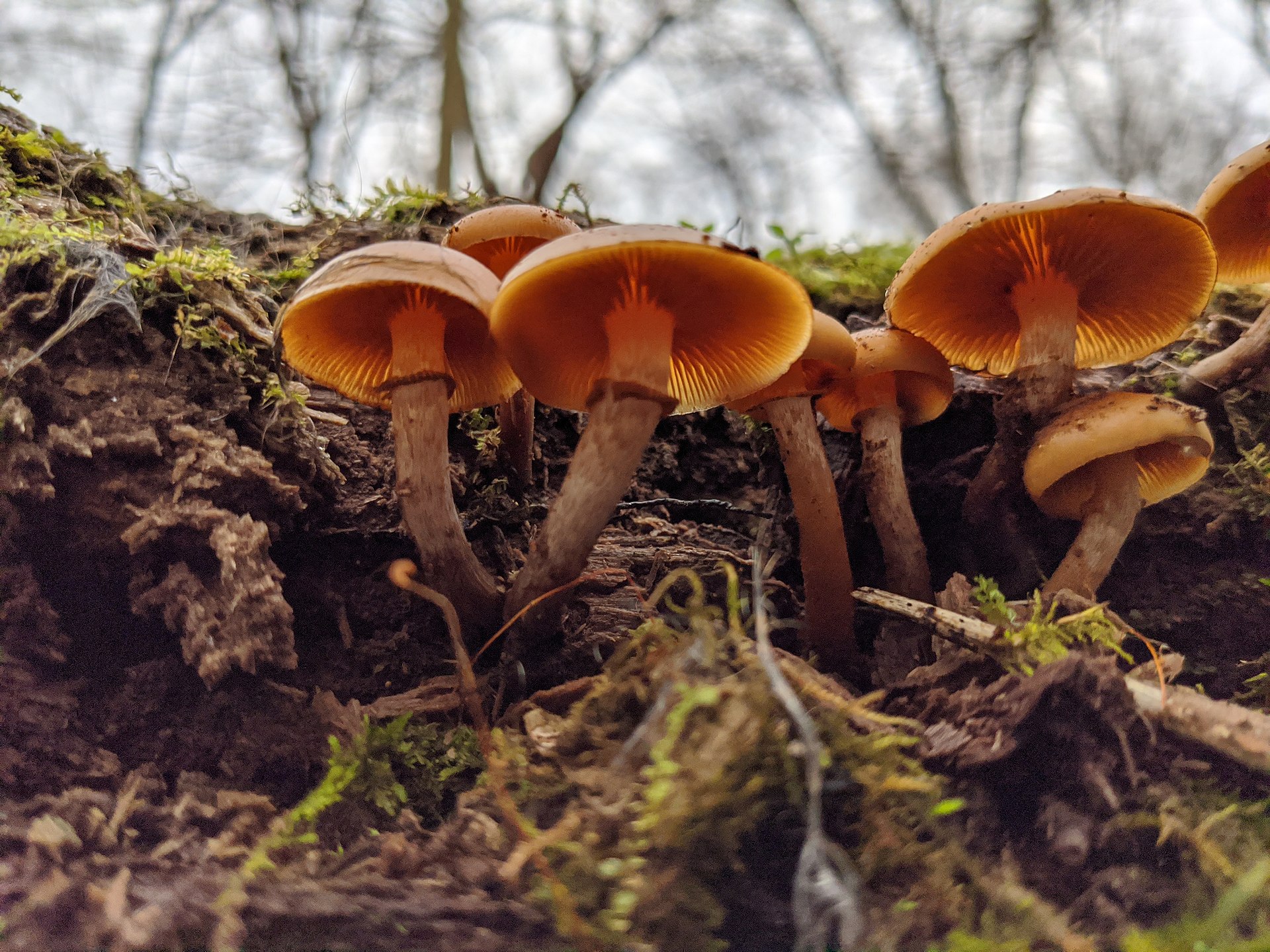
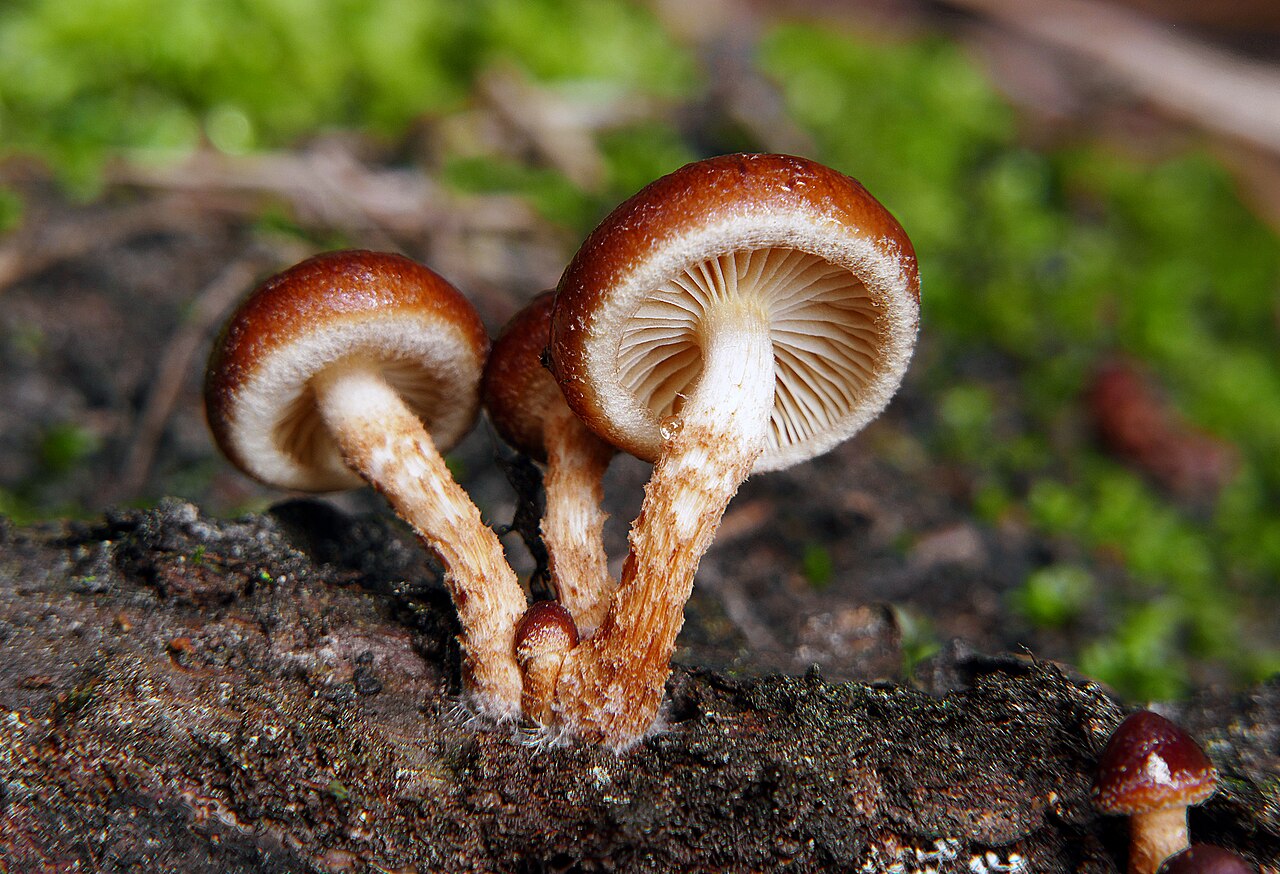
How to Tell Them Apart
DEADLY — contains amatoxins that destroy the liver, the same toxins found in the Death Cap. Much smaller than Brick Cap (cap 1.5–4 cm), uniform brown color without the brick-red tones, and crucially has a distinct membranous ring on the stem. Grows on decaying wood, sometimes mixed in with Hypholoma clusters. Check every single mushroom individually.
Side-by-Side Identification
| Trait | Funeral Bell | Brick Cap |
|---|---|---|
| Cap | 1.5-5 cm across. Convex when young, flattening with age. Honey-brown to tawny when moist, drying to a pale tan from the center outward (hygrophanous). Smooth, slightly sticky when wet. Margin often shows faint striations when moist. | 4–10 cm across, convex when young, flattening with age. Brick-red to reddish-brown, darkest at the center, fading to pale tan or yellowish at the margins. Surface smooth and slightly moist. Young caps often have whitish veil remnants hanging from the edges. The brick-red coloring is the most distinctive feature — Sulphur Tuft is sulfur-yellow, not red. |
| Gills | Attached to slightly decurrent. Crowded, yellowish-brown becoming rusty brown as spores mature. Edges may appear slightly lighter. | Attached to the stem (adnate). Pale yellowish-white when young, becoming olive-grey, then purplish-brown as spores mature. This color progression is important — Sulphur Tuft gills turn greenish-black. Crowded and thin. |
| Stem | 3-8 cm tall, 3-8 mm thick. Pale above the ring, darker brown below. Has a fragile, membranous ring (annulus) that often darkens with deposited spores. Base may have whitish mycelial threads. | 5–12 cm tall, 0.5–1.5 cm wide. Pale yellowish above, darkening to rusty brown toward the base. No true ring (annulus), but may have a faint fibrous zone from the partial veil. This is critical: the Funeral Bell has a distinct membranous ring. If you see a proper ring, stop and re-examine. |
| Spore print | Rusty brown to orange-brown — a critical identification feature that separates it from Psilocybe species (which have purple-brown to black spore prints). | Purplish-brown to dark purple-grey. |
| Odor | Mealy or flour-like when fresh. Some describe it as faintly earthy. | Mild and pleasant, slightly mushroomy. Not distinctive. Importantly, it lacks the unpleasant bitter smell of Sulphur Tuft. |
| Habitat | Strictly saprotrophic — feeds on dead and decaying wood. Found on logs, stumps, buried roots, and wood chip mulch. Prefers conifer wood but also appears on hardwoods. Common in forests, parks, gardens, and landscaped areas with wood chip beds. | Grows exclusively as a saprobe on dead hardwood — stumps, fallen logs, and buried roots of oak, beech, maple, birch, and other deciduous trees. Almost always in dense overlapping clusters of 10–50+ fruiting bodies. Occasionally found on conifer wood but this is unusual. Common in deciduous and mixed forests, parks, and old orchards. |
| Season | Fruits from spring through late autumn, with peak fruiting in September-November in temperate regions. Can appear year-round in mild, wet climates like the Pacific Northwest. | Autumn through early winter, typically September to December. One of the later-fruiting woodland species — often still producing well into November when many other mushrooms have finished. Tolerates light frosts. |
Found one of these in the wild? Don't rely on memory — identify it from a photo with Orangutany and check it against both species before you touch it.