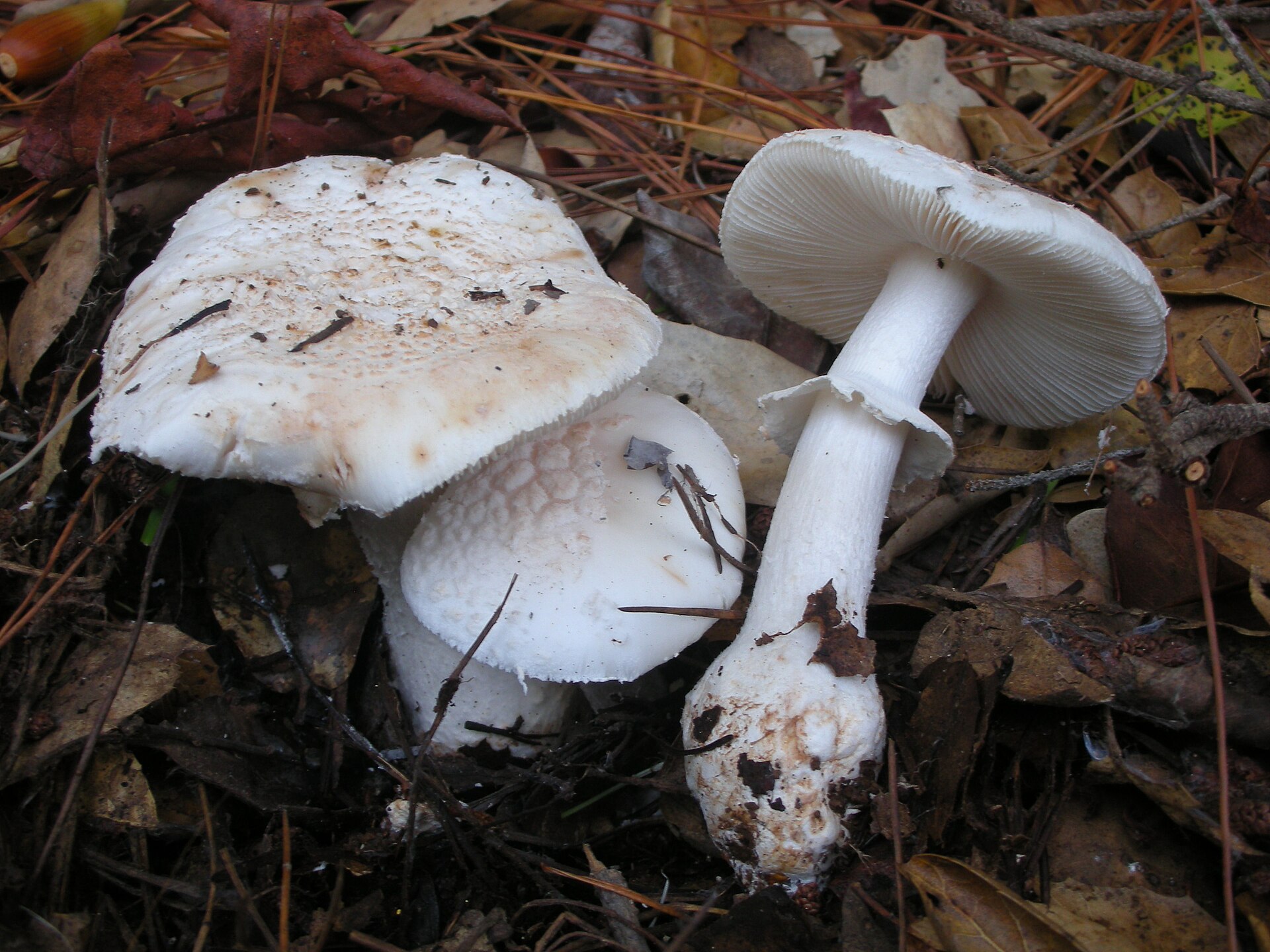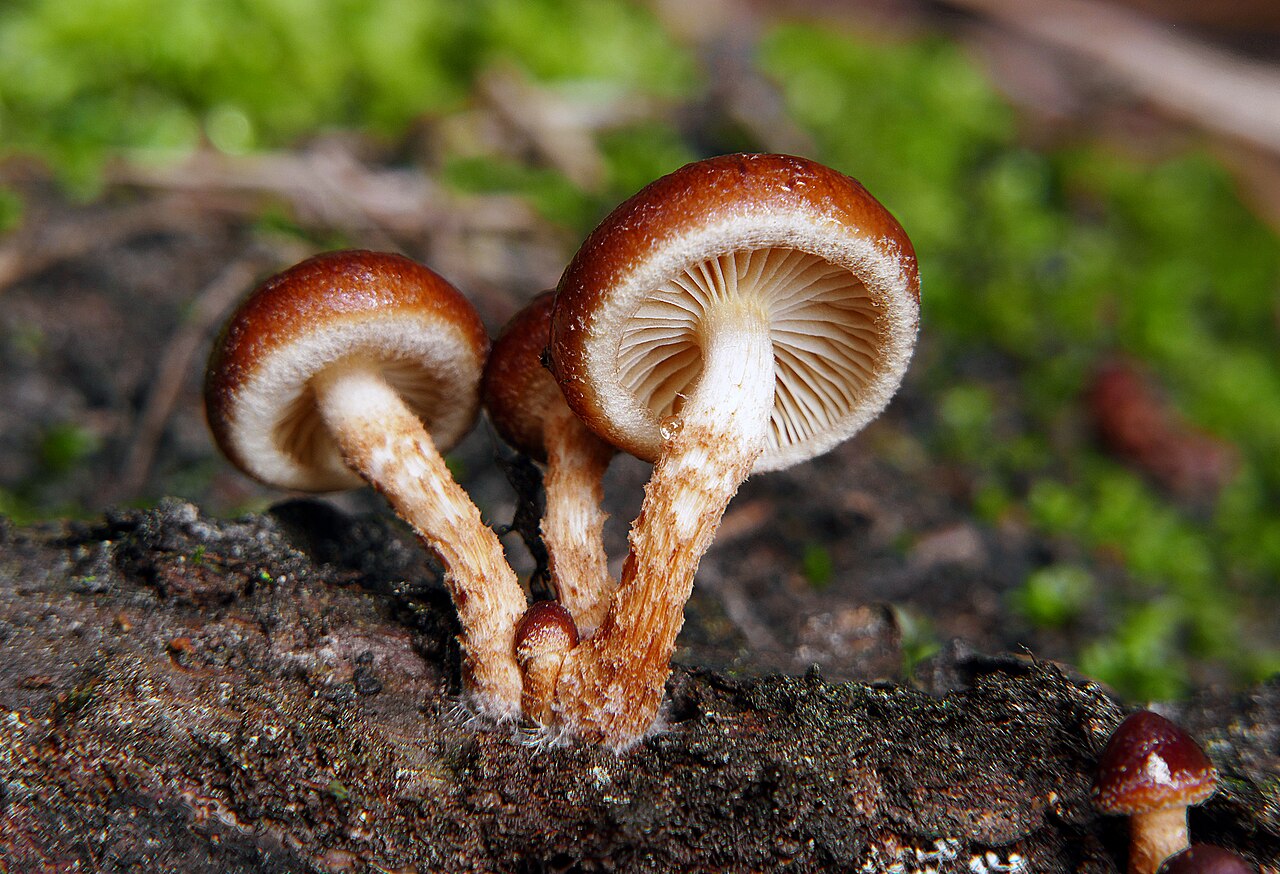
Photo by H. Krisp · Wikimedia Commons · CC BY 3.0
A handsome brick-red mushroom that grows in dense clusters on hardwood stumps every autumn. Brick Cap is edible when properly cooked and positively identified, but it demands respect — its dangerous look-alikes include the deadly Funeral Bell and the toxic Sulphur Tuft. This is not a beginner's mushroom.
Hypholoma lateritium — also known as Brick Tuft or Brick Cap — is one of autumn's most reliable woodland mushrooms, appearing in thick, overlapping clusters on dead hardwood stumps and buried roots from September through the first hard frosts. The caps are a distinctive brick-red to reddish-brown, darker at the center and paler toward the margins, often with remnants of pale veil tissue hanging from the cap edge in young specimens.
The Brick Cap has a complicated reputation. In North America and parts of Asia (especially Japan, where it's known as kuritake), it's been eaten for centuries and is considered a perfectly good edible mushroom with a mild, slightly nutty flavor. In much of Europe, it's been viewed with more suspicion — older field guides often list it as 'suspect' or 'avoid,' partly because of genuine confusion with the toxic Sulphur Tuft and partly because of an overly cautious mycological tradition.
Modern consensus is that Brick Cap is edible when thoroughly cooked, but it absolutely must be distinguished from Hypholoma fasciculare (Sulphur Tuft), which is toxic and bitter, and from Galerina marginata (Funeral Bell), which contains the same deadly amatoxins as the Death Cap. The Funeral Bell confusion is the truly dangerous one — Galerina can occasionally grow mixed in with Hypholoma clusters on the same stump. Every single mushroom in a cluster must be checked individually.
Brick Cap Facts
- ●Brick Caps can produce such dense clusters that a single oak stump may yield 2–3 kg of mushrooms in one flush. Foragers sometimes return to the same stump week after week as new flushes appear throughout autumn.
- ●In Japan, Hypholoma lateritium (kuritake) is one of the 'big five' wild mushrooms traditionally foraged in autumn, alongside matsutake, shiitake, enoki, and nameko. It's considered a reliable everyday mushroom rather than a delicacy.
- ●The species name 'lateritium' comes from the Latin word for brick (later = brick), referring to the cap color. It's one of the more accurately named mushrooms — the brick-red color really does look like old fired clay.
- ●Brick Caps are so cold-hardy that they can continue fruiting after light frosts that kill most other mushroom species. In mild winters, fresh specimens have been found as late as January in southern England and the Pacific Northwest.
- ●A single mature Brick Cap cluster can contain over 100 individual fruiting bodies, all connected by a shared mycelial network running through the decaying wood beneath. The entire cluster is essentially one organism putting up dozens of mushrooms simultaneously.
Stories From the Field
Japan's Beloved Kuritake
In Japan, Hypholoma lateritium has been harvested and eaten for centuries under the name kuritake (栗茸, 'chestnut mushroom'). It appears regularly at autumn farmers' markets in rural Tohoku and Hokkaido, sold in bundled clusters still attached to chunks of wood. Japanese field guides uniformly list it as a good edible, and it features in traditional nabe (hot pot) dishes alongside enoki and shiitake.
The Galerina Growing Among the Brick Caps
A 2016 case study from British Columbia described a seasoned forager who collected a large cluster of what he identified as Brick Caps from an oak stump. After cooking and eating them, he developed symptoms consistent with amatoxin poisoning — delayed onset vomiting and liver enzyme elevation. Investigation revealed that several small Galerina marginata fruitbodies had been growing intermixed within the Hypholoma cluster. He recovered after hospital treatment, but the case became a widely cited warning in North American foraging communities.
From 'Suspect' to 'Edible' — A Reputation Rehabilitated
For most of the 20th century, European field guides listed Hypholoma lateritium as inedible, suspect, or mildly toxic. This reputation stemmed partly from confusion with Sulphur Tuft and partly from the European mycological tradition of erring heavily on the side of caution. Starting in the 1990s, as American and Japanese research confirmed its edibility, European guides gradually upgraded its status. Roger Phillips' landmark 'Mushrooms' (2006 edition) listed it as edible with caution.
A Clustered Bounty on the Appalachian Trail
Foragers along the Appalachian Trail in the eastern United States consider Brick Caps one of the most reliable late-season mushrooms. A popular foraging blog documented finding over 15 kg of Brick Caps on a single half-mile stretch of trail in the Shenandoah Valley in November 2019, all growing on old oak stumps. The author noted that after the chanterelles and hen-of-the-woods are done, Brick Caps keep the season going well into the cold months.
The Taste Test That Tells All
Mycologist David Arora, in his classic guide 'Mushrooms Demystified,' recommended a simple field test for anyone unsure whether they had Brick Cap or Sulphur Tuft: nibble a tiny piece of raw cap and spit it out. Sulphur Tuft is so aggressively, face-scrunchingly bitter that there is zero ambiguity. Brick Cap tastes mild to slightly bitter but never with that punishing chemical bitterness. Arora noted that this test is safe because you spit it out — no swallowing needed.
Where It's Been Found

Based on reported sightings worldwide
How to Identify Brick Cap
Cap
4–10 cm across, convex when young, flattening with age. Brick-red to reddish-brown, darkest at the center, fading to pale tan or yellowish at the margins. Surface smooth and slightly moist. Young caps often have whitish veil remnants hanging from the edges. The brick-red coloring is the most distinctive feature — Sulphur Tuft is sulfur-yellow, not red.
Gills
Attached to the stem (adnate). Pale yellowish-white when young, becoming olive-grey, then purplish-brown as spores mature. This color progression is important — Sulphur Tuft gills turn greenish-black. Crowded and thin.
Stem
5–12 cm tall, 0.5–1.5 cm wide. Pale yellowish above, darkening to rusty brown toward the base. No true ring (annulus), but may have a faint fibrous zone from the partial veil. This is critical: the Funeral Bell has a distinct membranous ring. If you see a proper ring, stop and re-examine.
Spore Print
Purplish-brown to dark purple-grey.
Odor
Mild and pleasant, slightly mushroomy. Not distinctive. Importantly, it lacks the unpleasant bitter smell of Sulphur Tuft.
Mushrooms That Look Like Brick Cap
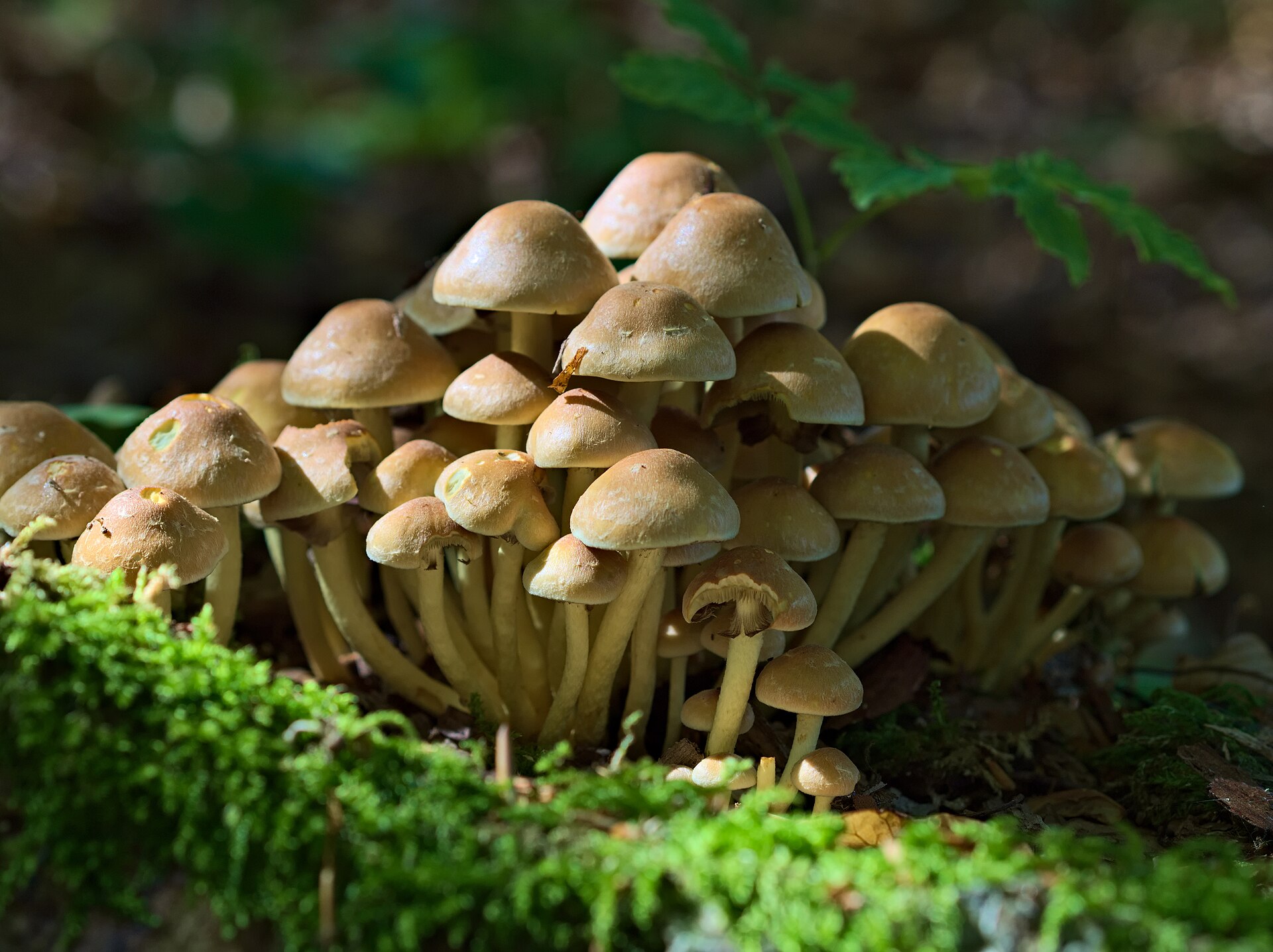
The most common confusion species. Cap is sulfur-yellow to greenish-yellow — NOT brick-red. Gills turn greenish-black with age (Brick Cap gills go purplish-brown). Taste is intensely, unmistakably bitter — if you nibble a tiny piece and spit it out, the bitterness is immediate and lingering. Toxic, causing severe gastrointestinal distress and potentially liver damage.
Side-by-side comparison →Read more on iNaturalist →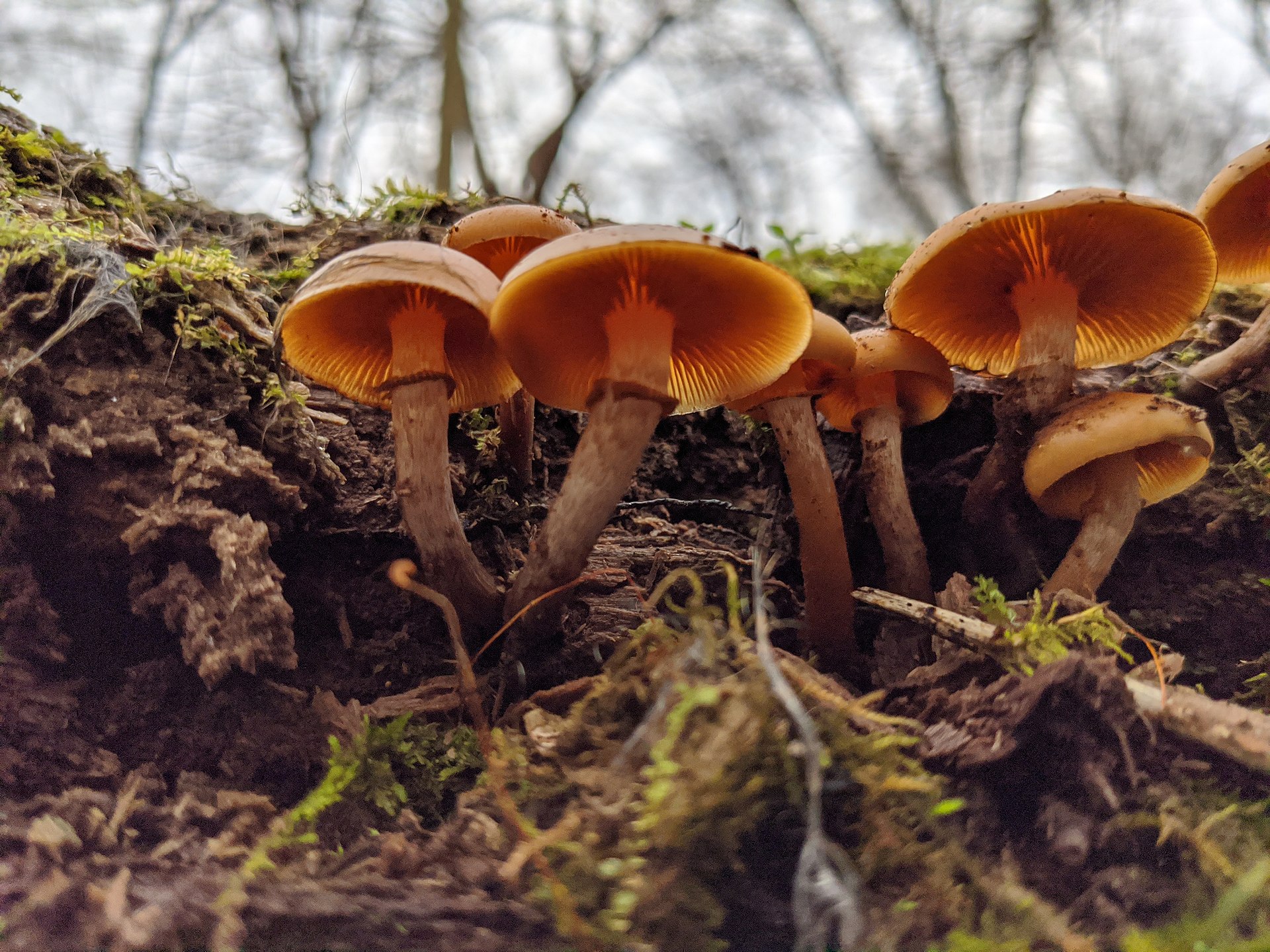
DEADLY — contains amatoxins that destroy the liver, the same toxins found in the Death Cap. Much smaller than Brick Cap (cap 1.5–4 cm), uniform brown color without the brick-red tones, and crucially has a distinct membranous ring on the stem. Grows on decaying wood, sometimes mixed in with Hypholoma clusters. Check every single mushroom individually.
Side-by-side comparison →Read more on iNaturalist →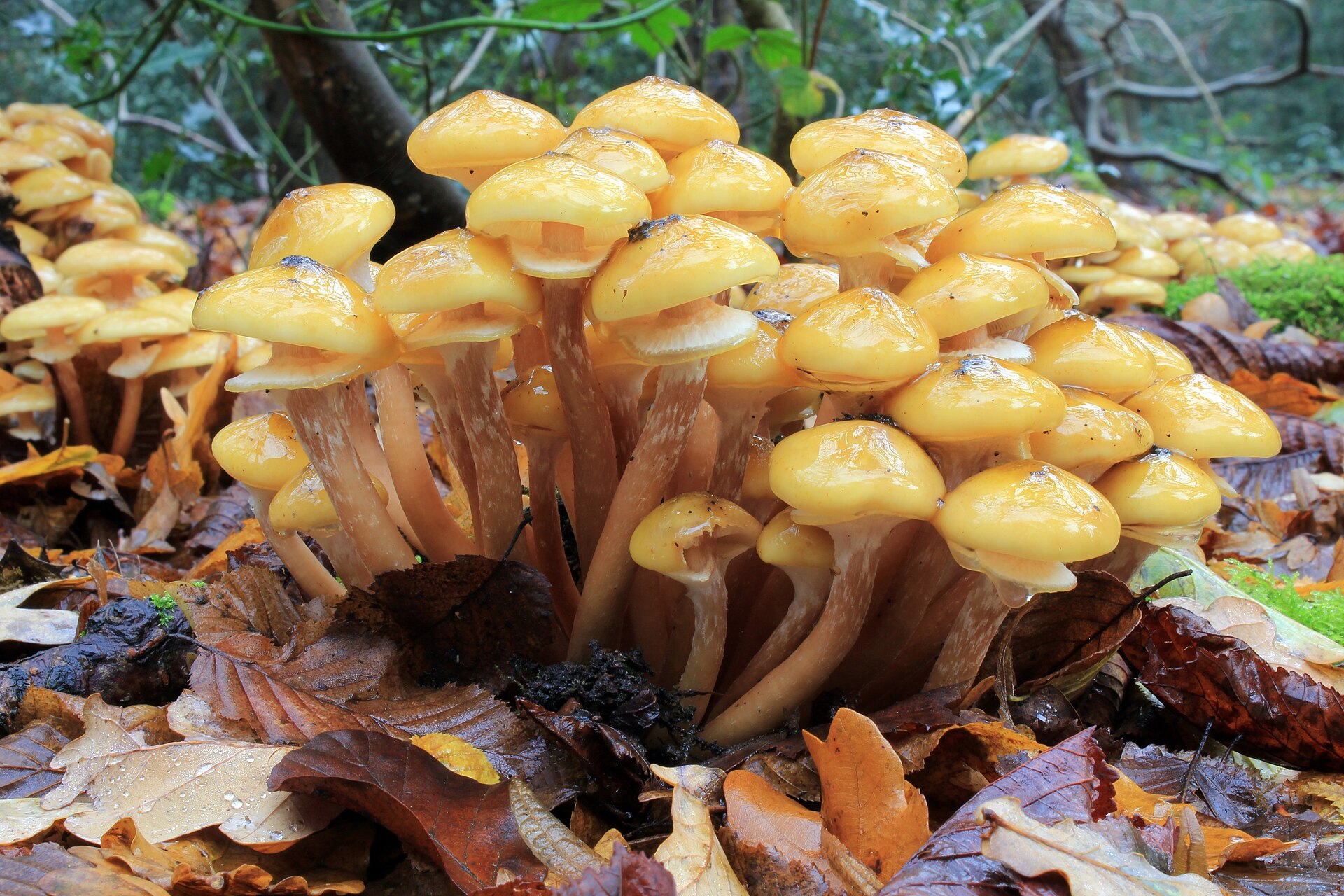
Also grows in dense clusters on wood, but Honey Fungus has a prominent white ring on the stem, white spore print (not purplish-brown), and often has small dark scales on the cap center. Can grow on living trees as well as dead wood — it's a serious tree pathogen. Edible when thoroughly cooked but causes GI upset if undercooked.
Side-by-side comparison →Read more on iNaturalist →Is Brick Cap Edible?
Edible when thoroughly cooked. Has a mild, slightly nutty flavor and firm texture that holds up well in soups, stews, and stir-fries. Widely eaten in Japan and North America. Must be positively distinguished from the deadly Funeral Bell (Galerina marginata) and the toxic Sulphur Tuft (Hypholoma fasciculare). Not recommended for beginners. Always cook thoroughly — raw or undercooked specimens may cause stomach upset.
Always verify with local experts before consuming wild mushrooms.
Found something that looks like this in the wild? Don't guess — identify it from a photo with Orangutany and check it against look-alikes before you touch it.