Birch Polypore vs Chaga
Fomitopsis betulina compared with Inonotus obliquus — how to tell them apart in the field.
How to Tell Them Apart
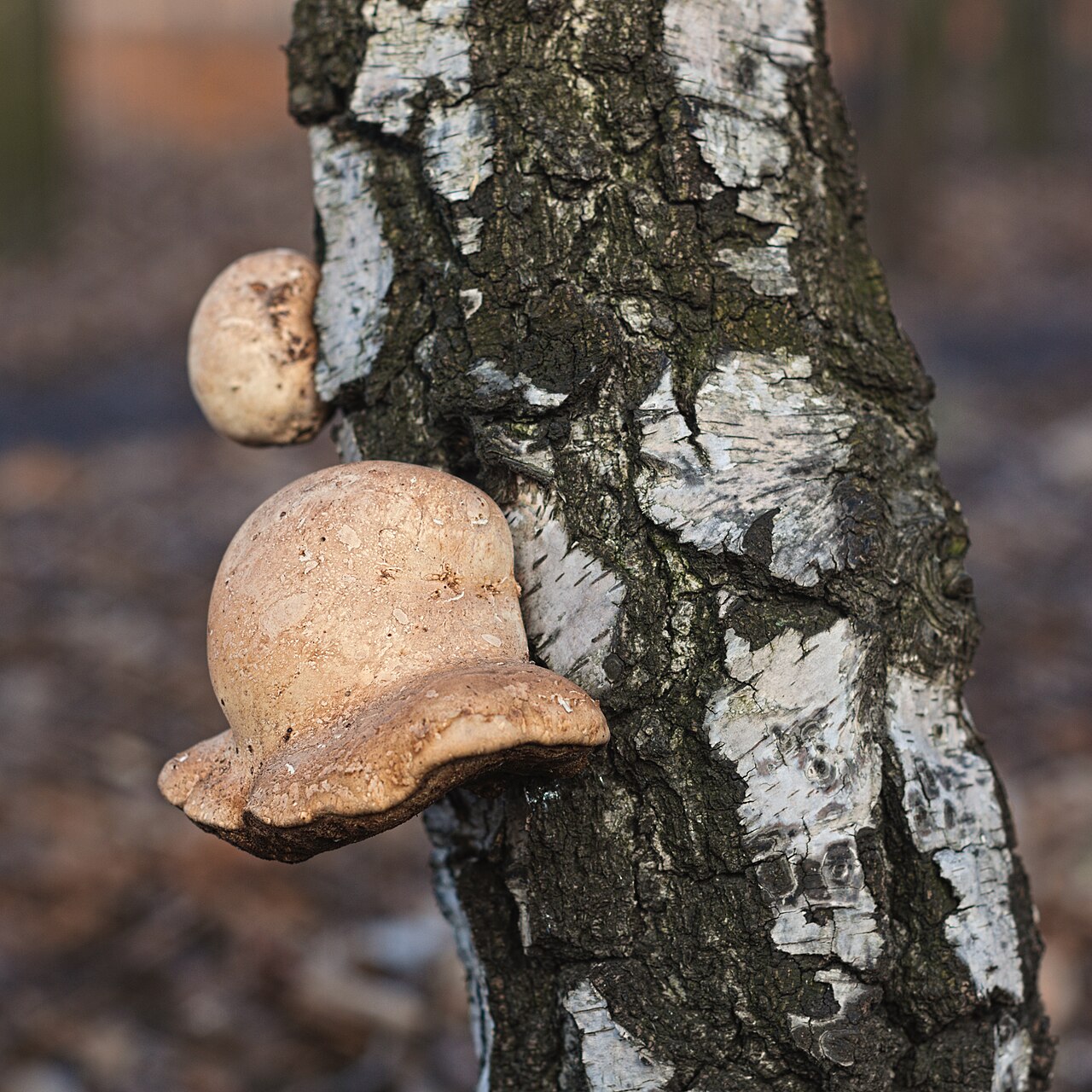
Also grows on birch but looks completely different: a smooth, whitish to grayish bracket with a distinct kidney-shaped form. Not black or charcoal-like. The two are not easily confused once you have seen both.
Side-by-Side Identification
| Trait | Birch Polypore | Chaga |
|---|---|---|
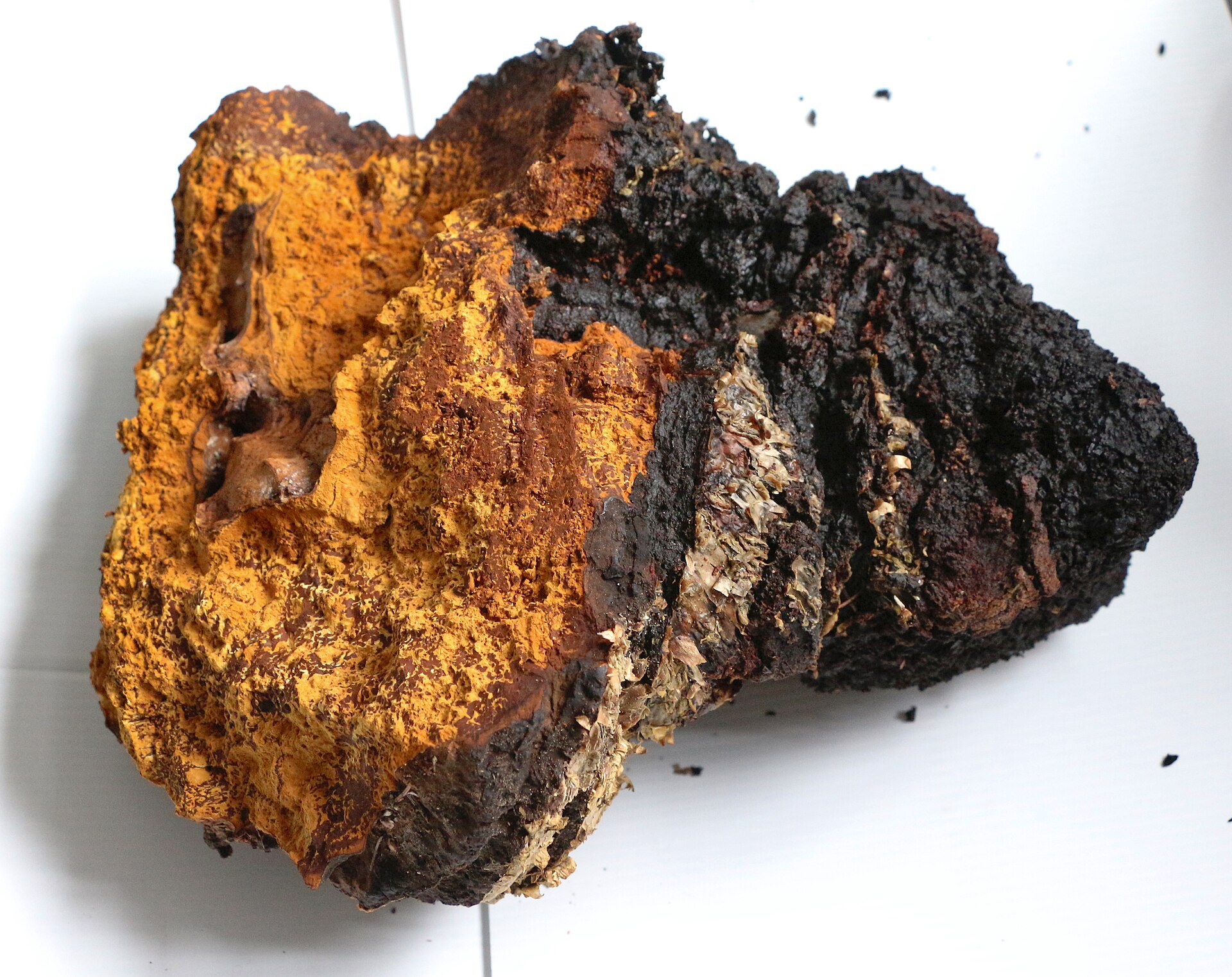
| Cap | 5–25 cm across, semicircular to kidney-shaped bracket. Upper surface smooth, white when young becoming gray-brown to tan with age. Skin is thin and can be peeled off. The margin is often rounded and slightly inrolled. | Not a typical mushroom cap. The visible structure is a sterile conk (sclerotium), 10-40 cm across, irregularly shaped, protruding from the trunk of a living birch tree. Exterior is black, deeply cracked, and hard, resembling burnt charcoal or volcanic rock. Interior is golden-brown to rusty orange, hard, and corky. |
| Gills | No gills. The underside has a dense layer of tiny white pores (3–4 per mm). The pore surface is white and flat, sometimes slightly concave. Pores do not bruise or change color when pressed. | No gills. The true fruiting body (rarely seen) is a flat, resupinate structure that forms under the bark of dead birch trees. The conk that people harvest is not the reproductive structure. |
| Stem | No stem (sessile). The bracket attaches directly to the birch trunk, sometimes with a narrow point of attachment at the back. | No stem. The conk grows directly from the trunk. |
| Spore print | White. | Not practically obtainable from the conk. The true fruiting body produces brown spores. |
| Odor | Faint, pleasant, slightly mushroomy. Not distinctive. | Mild, slightly woody, like birch bark. Not distinctive. |
| Habitat | Exclusively on birch trees (Betula species) — this is one of the most host-specific fungi in temperate forests. Found on both living and dead birch, acting as both a parasite (causing brown rot in weakened trees) and a saprobe (decomposing dead wood). Usually appears singly or in small groups along the trunk. | Parasitic on living birch trees (Betula species), especially Betula pendula and Betula pubescens. Occasionally reported on alder, beech, and other hardwoods, but the birch association is by far the most common. The conk grows slowly over 5-20 years on the trunk, usually where the tree has been wounded. Found in boreal and northern temperate forests. |
| Season | Fruit bodies can be found year-round since they persist on the tree for months. New brackets typically appear from late summer through autumn (August–November). Old specimens become tough and dark, eventually falling off. | The conk can be harvested year-round, though it is most commonly collected in autumn and winter when the leaves are off the trees and the conks are easier to spot. The conk grows continuously as long as the host tree is alive. |
Found one of these in the wild? Don't rely on memory — identify it from a photo with Orangutany and check it against both species before you touch it.