Common Ink Cap vs Shaggy Mane
Coprinopsis atramentaria compared with Coprinus comatus — how to tell them apart in the field.
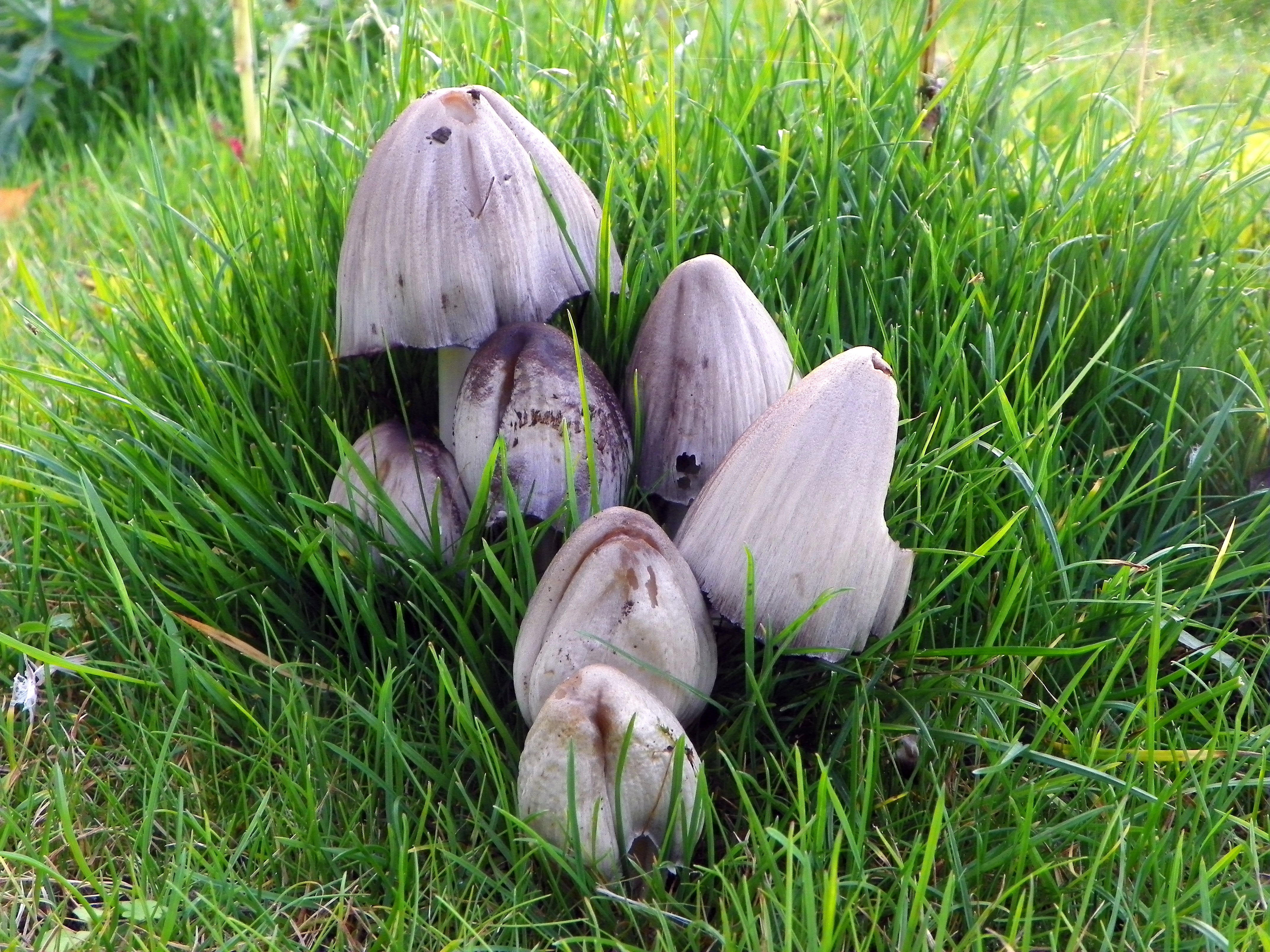
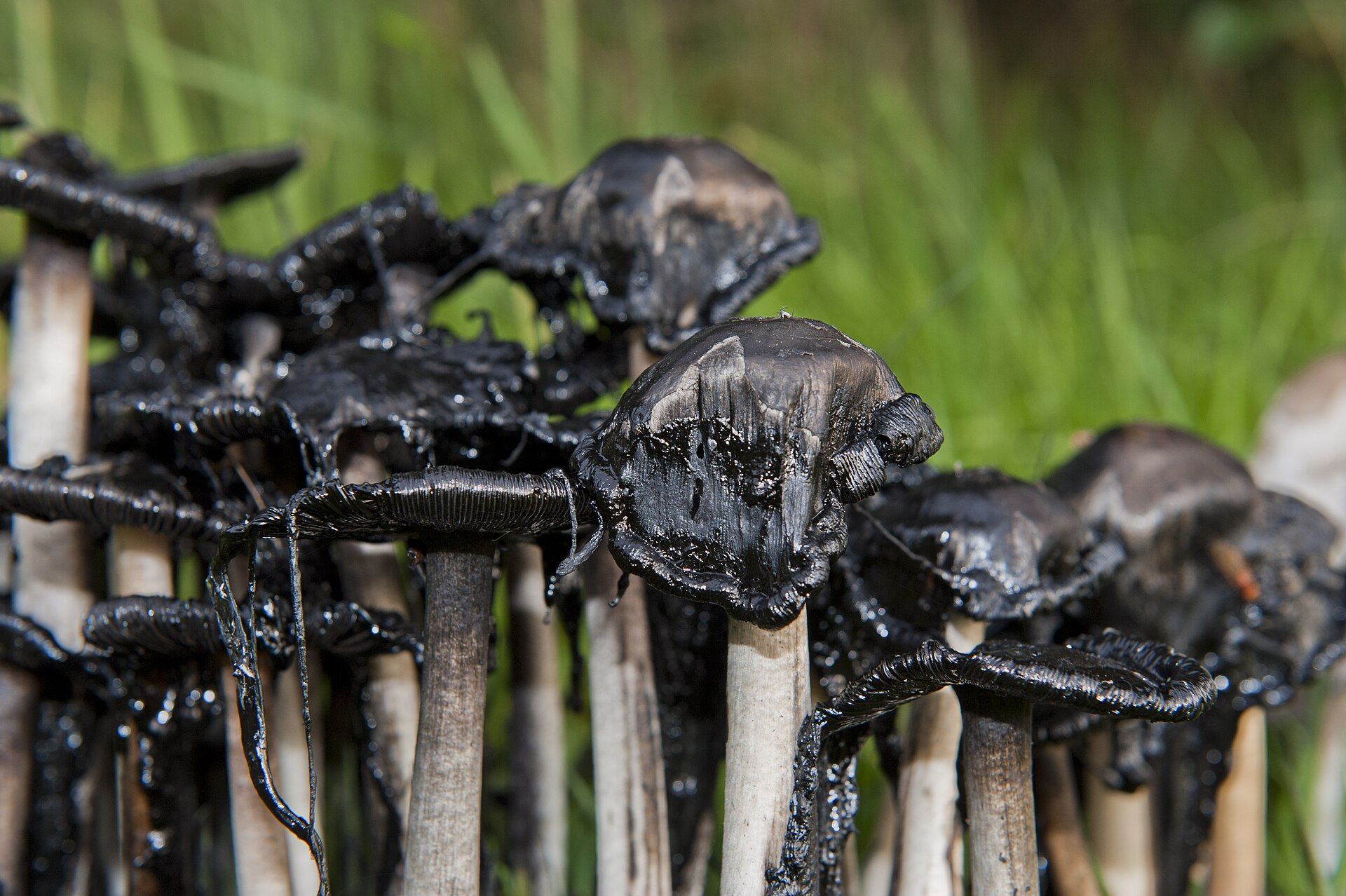
How to Tell Them Apart
Taller and more cylindrical with shaggy, upturned white scales covering the cap — looks like a lawyer's wig. Does NOT contain coprine, so it's safe with alcohol. One of the best-known edible mushrooms. If the cap is shaggy and white, it's not the Common Ink Cap.
Also deliquesces into ink, but the cap is smooth and gray-brown — no shaggy scales. Shorter and stubbier overall. The big danger: it causes violent nausea and heart palpitations if you drink alcohol within several days of eating it (contains coprine, which blocks alcohol metabolism like Antabuse).
Side-by-Side Identification
| Trait | Common Ink Cap | Shaggy Mane |
|---|---|---|
| Cap | 4-8 cm across, 3-8 cm tall. Starts as a smooth, egg-shaped grey-brown bell. Surface has fine radial grooves and sometimes tiny scales near the top. As it ages, the edges curl up and begin dissolving into black ink. Young caps are the only ones worth looking at — once the ink starts flowing, it's past its prime. | 4–15 cm tall, 3–5 cm wide. Cylindrical and egg-shaped when young — like a white bullet or closed umbrella. Surface covered in recurved, shaggy scales (hence the name). White when fresh, developing pinkish-brown tones as it matures. The bottom edge begins to turn black and curl upward as autodigestion starts. |
| Gills | Packed tightly together, initially white, turning pink, then black as spores mature. Eventually liquefy into ink from the cap edge inward. Free from the stem. | Crowded and free. White at first, turning pink, then black as the ink process begins. The gills literally melt from the bottom edge upward — if the edges are already black and dripping, you're too late. |
| Stem | 5-15 cm tall, white, hollow, smooth with a slight silky sheen. Has a faint ring zone near the base but no persistent ring. Fibrous and snaps cleanly. | 10–20 cm tall, 1–2 cm thick. White, smooth, hollow. Has a small, movable ring that often slides to the base or falls off entirely. Separates cleanly from the cap. |
| Spore print | Black — very dark, almost jet black. | Dark brown to black. |
| Odor | Mild and pleasant when young. Nothing remarkable. | Pleasant and mild when fresh. Smells faintly sweet or mushroomy — nothing off-putting. |
| Habitat | Loves disturbed ground — gardens, roadsides, paths, compost heaps, and anywhere with buried wood or tree roots. Often appears in dense clusters near stumps or along the edges of lawns. Saprotrophic, feeding on decaying wood underground. | Disturbed ground is the magic word. Lawns, roadsides, gravel paths, compost piles, construction sites, and the edges of parking lots. Shaggy Manes are saprobic — they eat dead organic matter in the soil. They especially love compacted or recently disturbed earth and often show up after rain in places you'd never expect a gourmet mushroom. |
| Season | Spring through late autumn. Most common in September and October in temperate regions. Can fruit after heavy rain almost any time of year in mild climates. | Late summer through late autumn. Peak season is September–November in temperate regions. Can appear earlier in cooler climates or after heavy summer rains. |
Found one of these in the wild? Don't rely on memory — identify it from a photo with Orangutany and check it against both species before you touch it.