Mica Cap vs Common Ink Cap
Coprinellus micaceus compared with Coprinopsis atramentaria — how to tell them apart in the field.
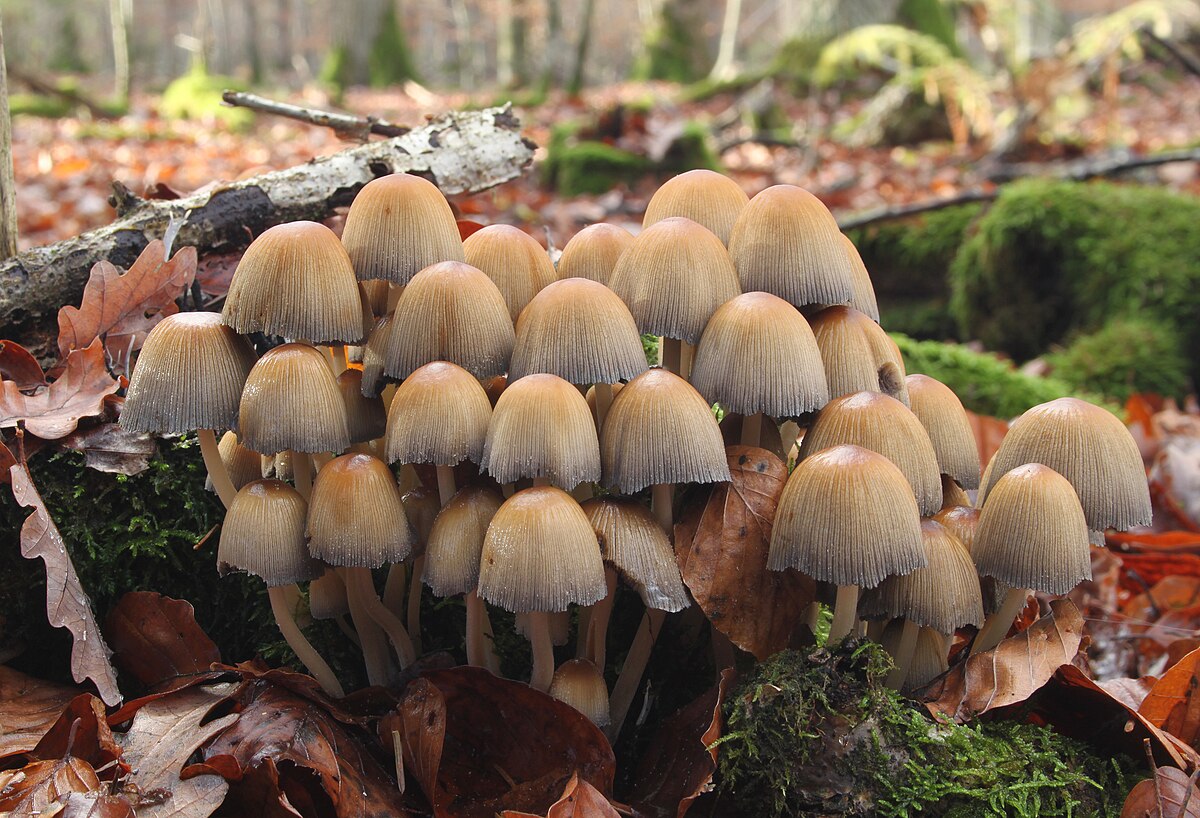
Mica Cap
Coprinellus micaceus
Edible with Caution
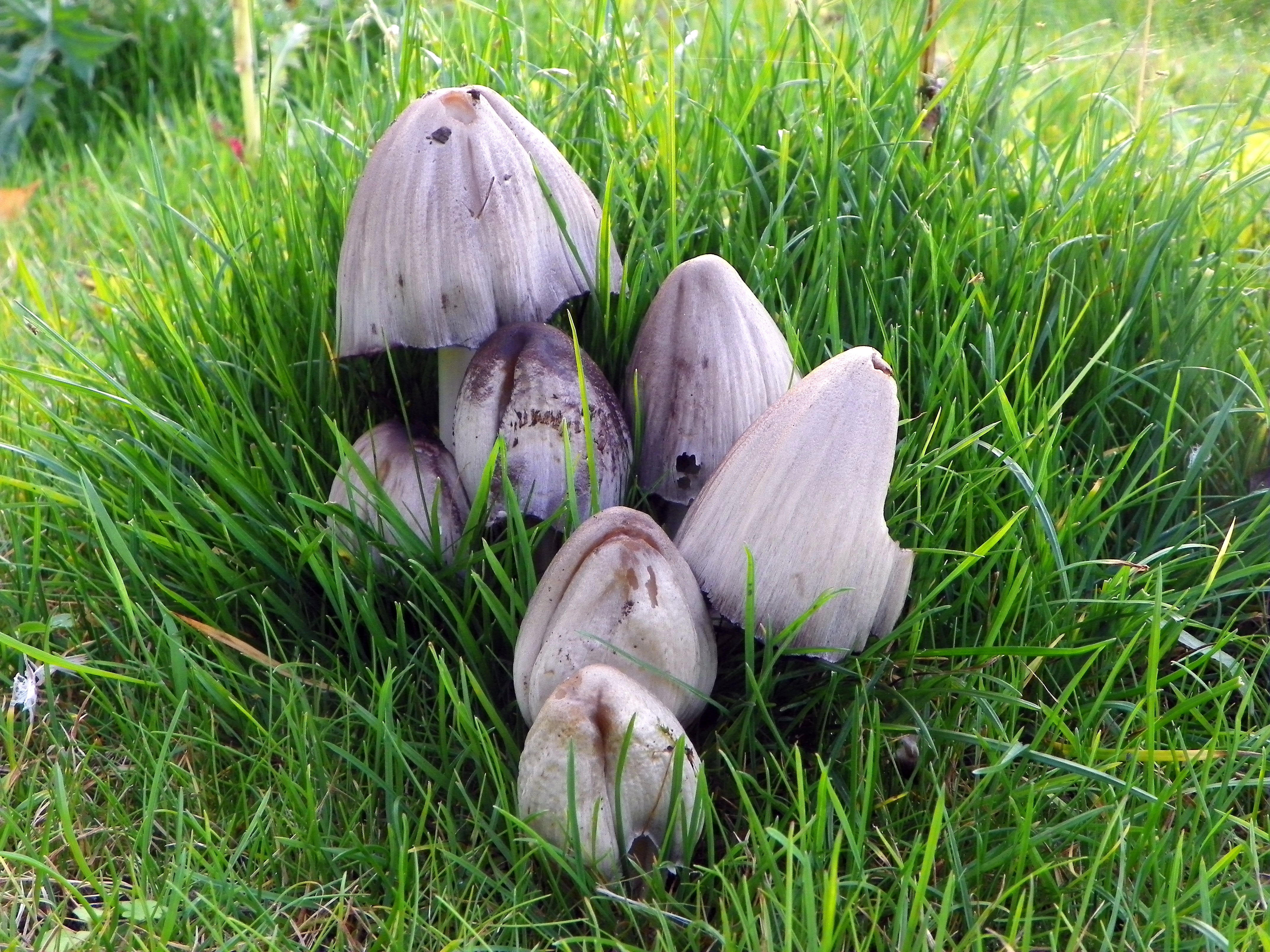
Common Ink Cap
Coprinopsis atramentaria
Edible with Caution
How to Tell Them Apart
Larger (cap 3–8 cm), smoother, grey to grey-brown without mica-like granules. Grows in similar habitats on buried wood. Contains coprine, which causes severe nausea and vomiting if alcohol is consumed within several days of eating. The grey color and lack of sparkling granules are the key differences.
Side-by-Side Identification
| Trait | Mica Cap | Common Ink Cap |
|---|---|---|
| Cap | 1–4 cm across. Egg-shaped to cylindrical when young, expanding to bell-shaped (campanulate) and finally flattening with age. Surface tawny-brown to date-brown, paler toward the margin, with a darker rusty-brown center. Young caps covered in fine, glistening, mica-like granules (veil remnants) that are easily washed off by rain. Margin becomes striate and eventually splits and curls upward as the cap deliquesces. Flesh thin and fragile. | 4-8 cm across, 3-8 cm tall. Starts as a smooth, egg-shaped grey-brown bell. Surface has fine radial grooves and sometimes tiny scales near the top. As it ages, the edges curl up and begin dissolving into black ink. Young caps are the only ones worth looking at — once the ink starts flowing, it's past its prime. |
| Gills | Crowded and narrowly attached (adnate) to nearly free. White when very young, quickly progressing through pale tan to brown, then dark brown, and finally black as they liquefy (deliquesce) from the margin inward. The black inky liquid is loaded with mature spores. | Packed tightly together, initially white, turning pink, then black as spores mature. Eventually liquefy into ink from the cap edge inward. Free from the stem. |
| Stem | 4–10 cm tall, 2–5 mm thick. White to pale cream, smooth or finely silky. Hollow. Fragile and easily broken. No ring, though very young specimens may show a faint fibrillose zone. Base may be slightly swollen where multiple stems are fused together in a cluster. | 5-15 cm tall, white, hollow, smooth with a slight silky sheen. Has a faint ring zone near the base but no persistent ring. Fibrous and snaps cleanly. |
| Spore print | Dark brown to black. | Black — very dark, almost jet black. |
| Odor | Mild, not distinctive. Faintly mushroomy. | Mild and pleasant when young. Nothing remarkable. |
| Habitat | Saprotrophic on dead or buried hardwood — stumps, roots, fallen logs, and old timber. Commonly found at the base of deciduous trees (especially elm, oak, beech, and ash), along roadsides, in parks, gardens, cemeteries, and disturbed urban areas. Almost always grows in dense clusters of 10 to 100+ fruiting bodies. Can also appear in lawns or flower beds where buried wood is present beneath the soil. | Loves disturbed ground — gardens, roadsides, paths, compost heaps, and anywhere with buried wood or tree roots. Often appears in dense clusters near stumps or along the edges of lawns. Saprotrophic, feeding on decaying wood underground. |
| Season | Spring through late autumn, typically April through November in temperate regions. Can fruit year-round in mild climates. Peak fruiting in autumn. Often produces multiple flushes from the same buried wood source throughout the season. | Spring through late autumn. Most common in September and October in temperate regions. Can fruit after heavy rain almost any time of year in mild climates. |
Found one of these in the wild? Don't rely on memory — identify it from a photo with Orangutany and check it against both species before you touch it.