Deadly Conocybe vs Funeral Bell
Conocybe filaris compared with Galerina marginata — how to tell them apart in the field.
This is a dangerous confusion.
At least one of these species is toxic. Never eat a wild mushroom based on a photo comparison alone — verify with local experts.
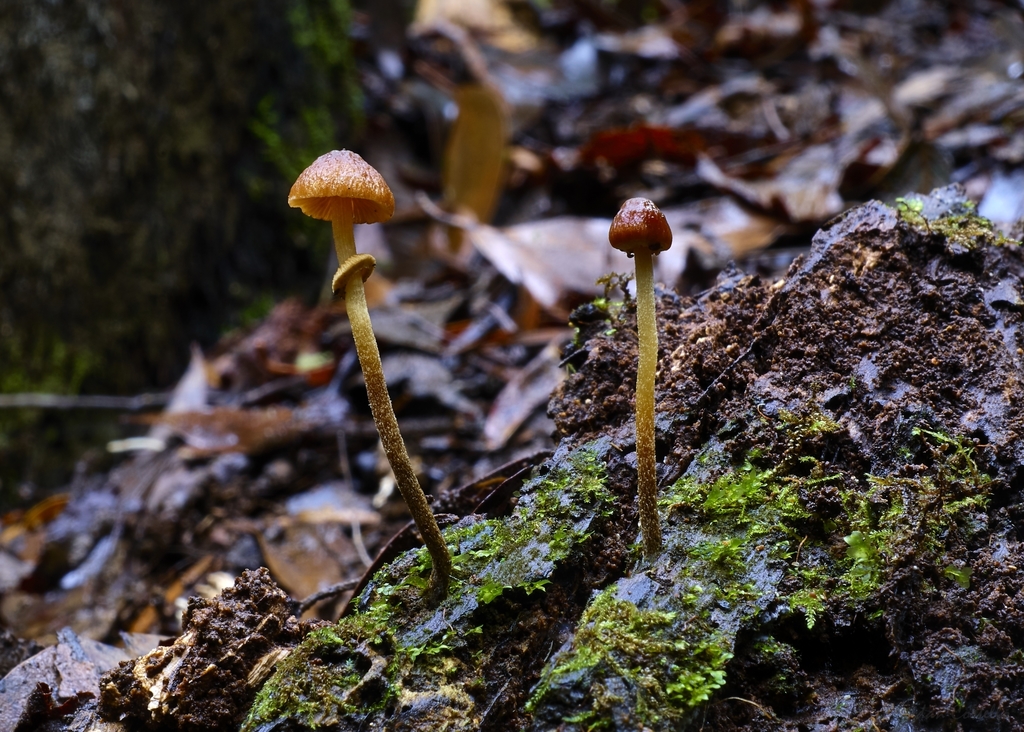
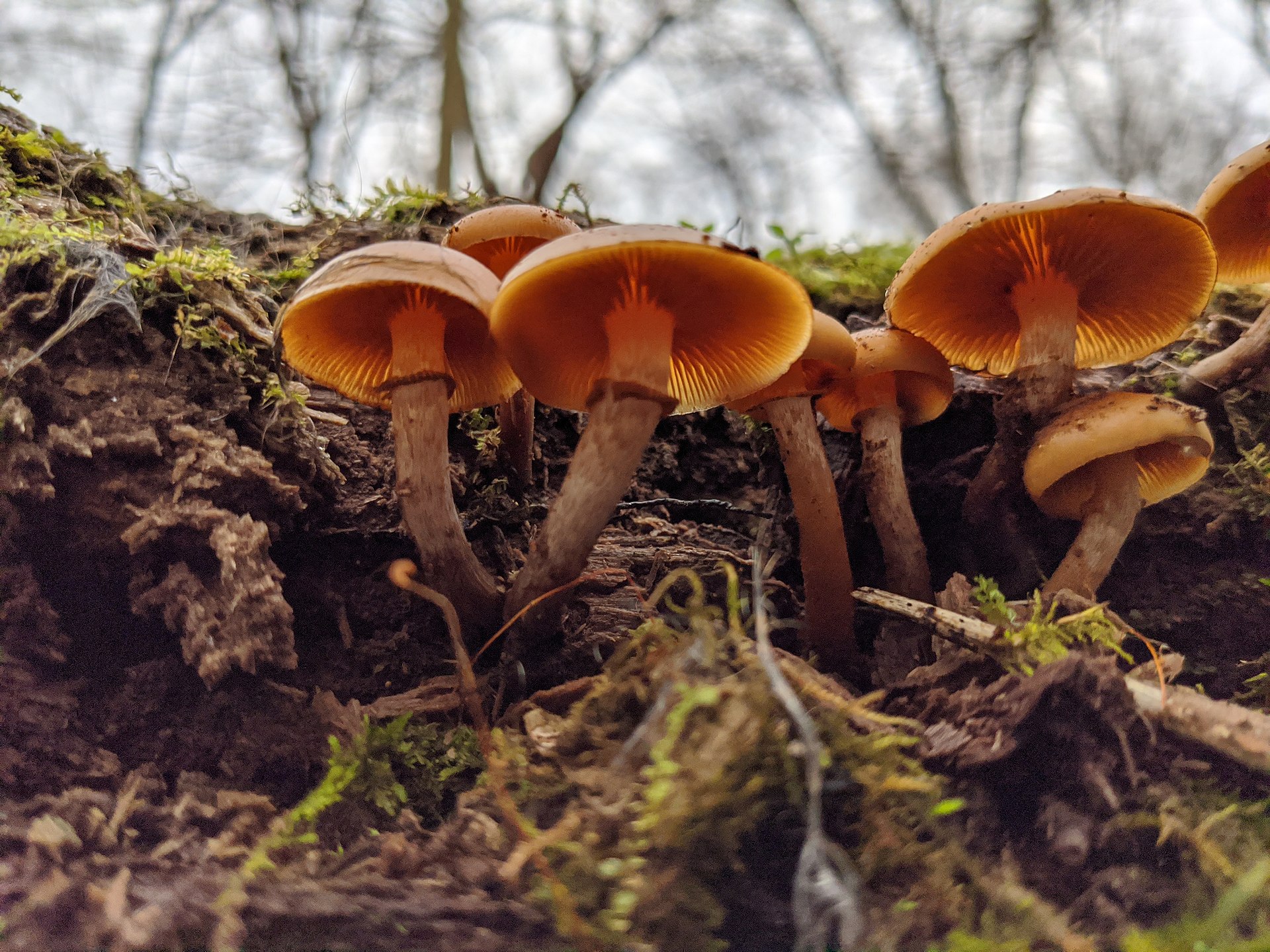
How to Tell Them Apart
Also deadly, also has amatoxins and a rusty brown spore print. Galerina typically grows on wood (logs, stumps, chips), while Conocybe filaris prefers soil and lawns. Both should be avoided entirely.
Side-by-Side Identification
| Trait | Deadly Conocybe | Funeral Bell |
|---|---|---|
| Cap | 1-2.5 cm across. Conical to bell-shaped, sometimes flattening slightly with age. Tawny brown to ochre-brown, smooth, slightly sticky when moist. Hygrophanous, drying to a paler buff from the center outward. Surface often has fine radial striations when moist. | 1.5-5 cm across. Convex when young, flattening with age. Honey-brown to tawny when moist, drying to a pale tan from the center outward (hygrophanous). Smooth, slightly sticky when wet. Margin often shows faint striations when moist. |
| Gills | Attached (adnate to adnexed), fairly crowded. Pale cinnamon-brown when young, darkening to rusty brown as spores mature. Thin and fragile. | Attached to slightly decurrent. Crowded, yellowish-brown becoming rusty brown as spores mature. Edges may appear slightly lighter. |
| Stem | 3-7 cm tall, 1-3 mm thick. Very slender and fragile, pale brownish, often with a thin, membranous ring (annulus) in the upper third. The ring is easily lost or collapsed against the stem. Base may be slightly enlarged. | 3-8 cm tall, 3-8 mm thick. Pale above the ring, darker brown below. Has a fragile, membranous ring (annulus) that often darkens with deposited spores. Base may have whitish mycelial threads. |
| Spore print | Rusty brown to cinnamon-brown. Always take a spore print on any small brown lawn mushroom before making any identification. | Rusty brown to orange-brown — a critical identification feature that separates it from Psilocybe species (which have purple-brown to black spore prints). |
| Odor | Mild, not distinctive. Some report a faintly earthy or mealy smell. | Mealy or flour-like when fresh. Some describe it as faintly earthy. |
| Habitat | Saprotrophic on decaying organic matter. Found in lawns, gardens, flower beds, wood chip mulch, compost, and disturbed grassy areas. Prefers moist, nutrient-rich soils. Common in suburban and urban settings. | Strictly saprotrophic — feeds on dead and decaying wood. Found on logs, stumps, buried roots, and wood chip mulch. Prefers conifer wood but also appears on hardwoods. Common in forests, parks, gardens, and landscaped areas with wood chip beds. |
| Season | Spring through autumn in temperate regions. Peak fruiting after warm rains in late spring and early fall. Can appear year-round in mild, wet climates. | Fruits from spring through late autumn, with peak fruiting in September-November in temperate regions. Can appear year-round in mild, wet climates like the Pacific Northwest. |
Found one of these in the wild? Don't rely on memory — identify it from a photo with Orangutany and check it against both species before you touch it.