Green-spored Parasol vs Short-stemmed Russula
Chlorophyllum molybdites compared with Russula brevipes — how to tell them apart in the field.
This is a dangerous confusion.
At least one of these species is toxic. Never eat a wild mushroom based on a photo comparison alone — verify with local experts.
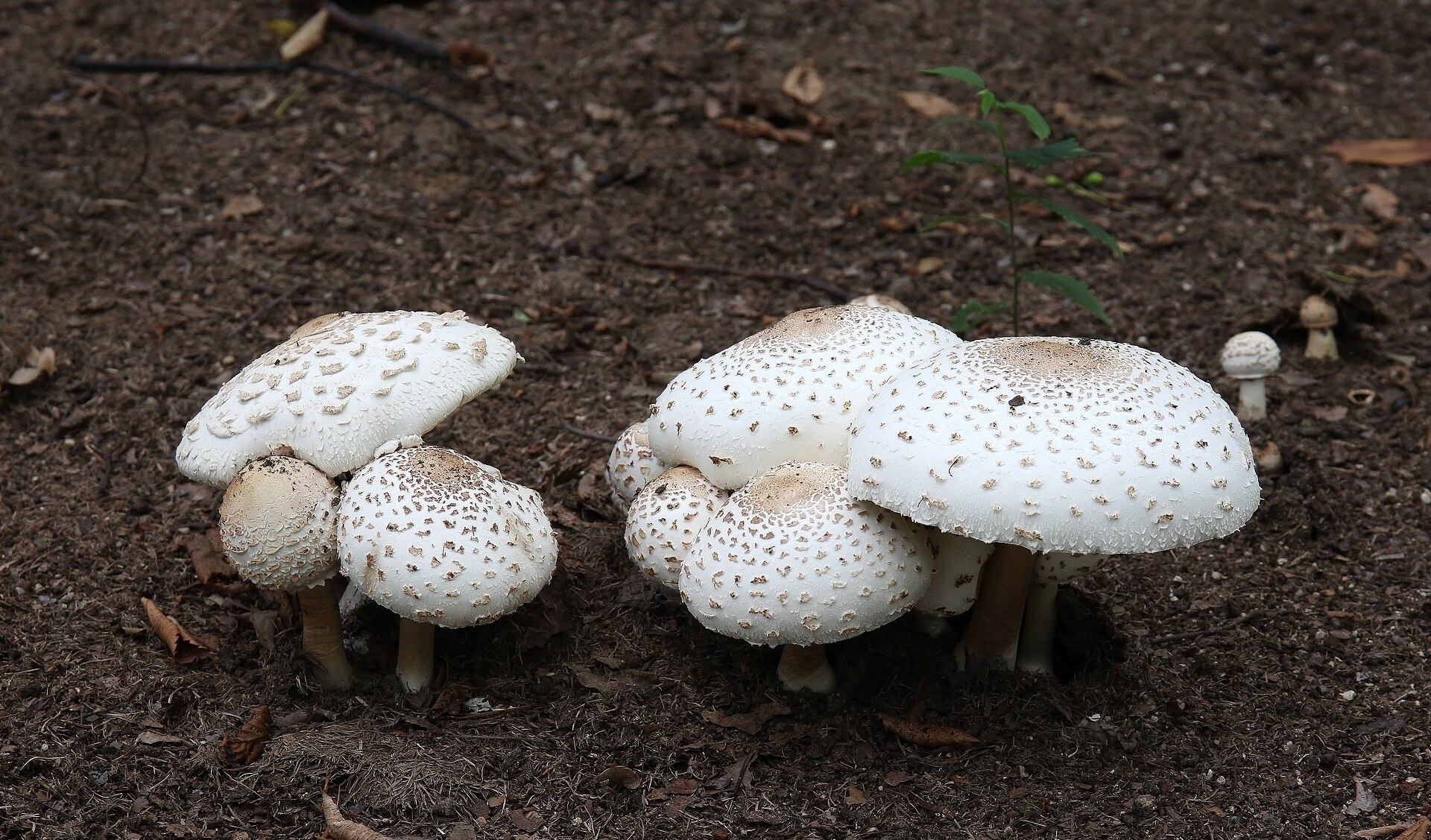
Green-spored Parasol / The Vomiter
Chlorophyllum molybdites
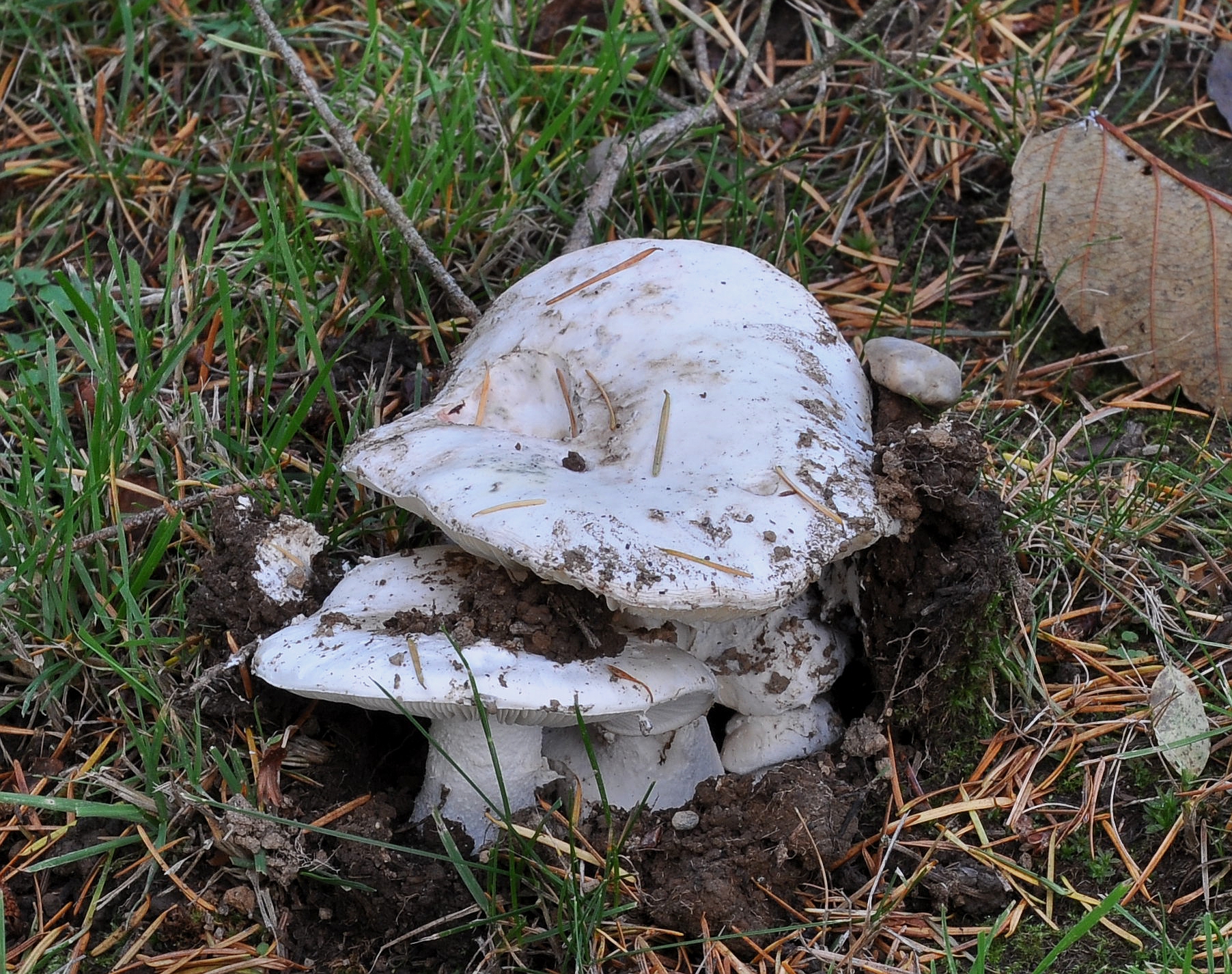
Short-stemmed Russula
Russula brevipes
How to Tell Them Apart
Both are large whitish mushrooms, but the similarities end there. Chlorophyllum molybdites has a scaly cap, a prominent ring on the stem, free gills that turn green with age, a green spore print, and grows in lawns and grassy areas — never in forests. It's also one of the most common causes of mushroom poisoning in North America.
Side-by-Side Identification
| Trait | Green-spored Parasol | Short-stemmed Russula |
|---|---|---|
| Cap | 5-30 cm across. Initially egg-shaped, expanding to convex, then flat or slightly upturned with age. White background covered with coarse brown to tan scales arranged concentrically. Center often retains a solid brown patch. Surface is dry. | 8–30 cm across, sometimes even larger. Convex when young, soon flattening and developing a central depression that deepens into a broad funnel shape with age. Surface dry, dull white to pale buff, often stained brown or yellowish from soil and debris. The margin is typically inrolled when young. |
| Gills | Free (not attached to stem). White when young, becoming greenish to grayish-green as spores mature. This green discoloration of the gills is visible even without a spore print and is the key field mark. | White to pale cream, closely spaced (crowded), slightly decurrent (running down the stem). Brittle — they snap cleanly when pressed, a hallmark of the Russula genus. No milk produced when broken (distinguishing it from Lactarius species). |
| Stem | 8-25 cm tall, 1-2.5 cm thick. White, smooth, often bruising brownish when handled. Has a thick, double-edged ring (annulus) that slides freely up and down the stem. Base is bulbous but lacks a volva. | 2–6 cm tall and 2–5 cm thick — notably short and stout relative to the cap size ('brevipes' = short foot). White, solid, firm, sometimes tapering slightly toward the base. Surface dry and smooth. |
| Spore print | Green to grayish-green. This is the single most important identification feature. No other common large lawn mushroom has green spores. Always take a spore print on white paper. | White to pale cream. |
| Odor | Pleasant, mushroomy when fresh. Not distinctive enough to use for identification. | Mild to slightly fishy when old. Not distinctive in fresh specimens. |
| Habitat | Saprotrophic. Fruits in lawns, parks, golf courses, athletic fields, pastures, and any well-watered grassy area. Prefers rich, fertilized soil and warm temperatures. Often fruits in fairy rings or large clusters after summer rains. | Mycorrhizal with a wide range of trees including Douglas fir, spruce, pine, hemlock, oak, and other hardwoods. Fruits on the ground in coniferous and mixed forests, often partially buried in leaf litter, duff, or moss — sometimes barely visible above the surface. Commonly found in well-drained forest soils. |
| Season | Late spring through early autumn, peaking in July and August. Requires warm soil temperatures above 18C (65F) and consistent moisture. In tropical regions, can fruit year-round. | Summer through late autumn, typically July through November depending on region. Peak fruiting in the Pacific Northwest is August–October. In eastern North America, September–November is typical. |
Found one of these in the wild? Don't rely on memory — identify it from a photo with Orangutany and check it against both species before you touch it.