Dryad's Saddle vs Birch Polypore
Cerioporus squamosus compared with Fomitopsis betulina — how to tell them apart in the field.
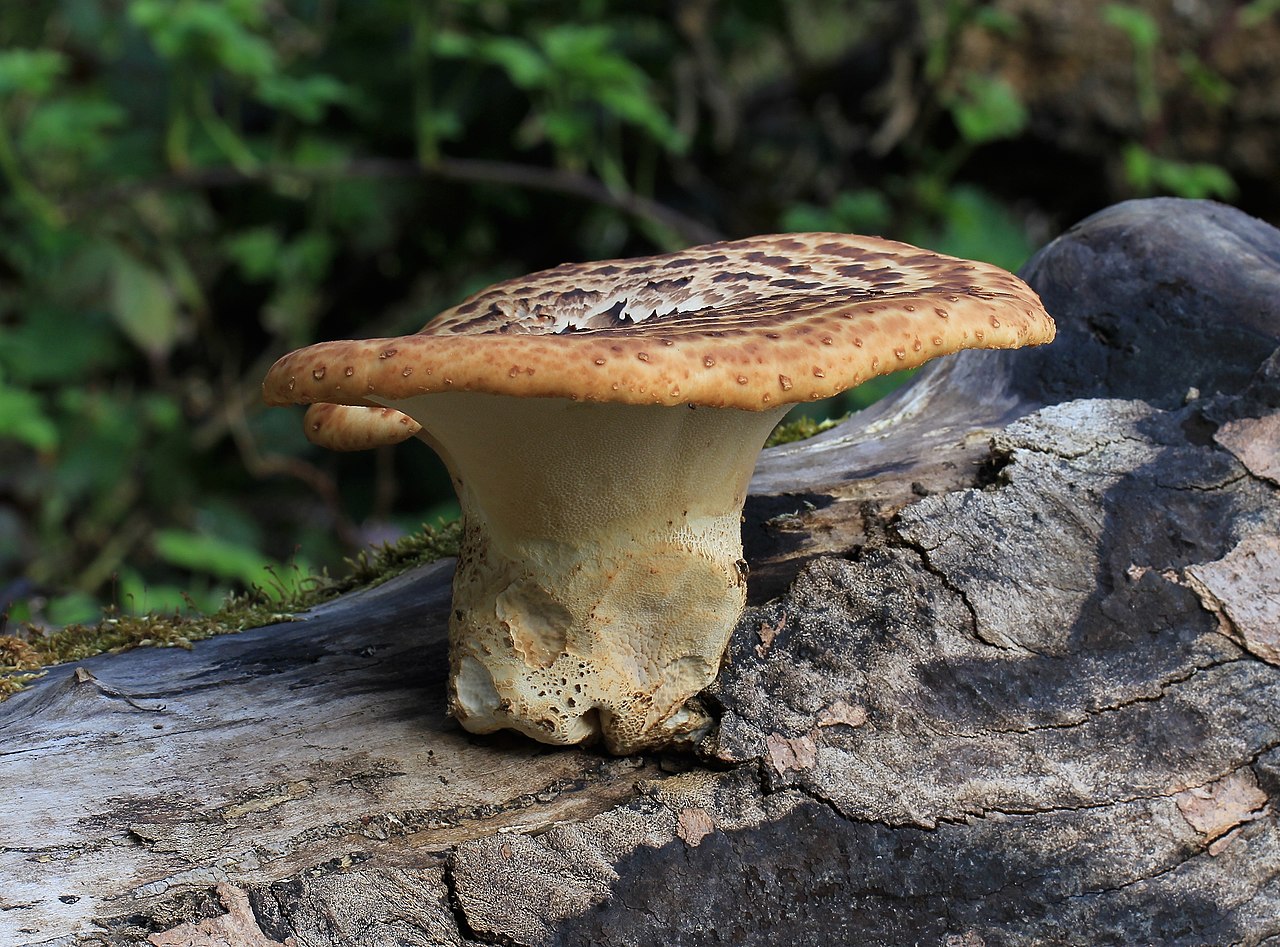
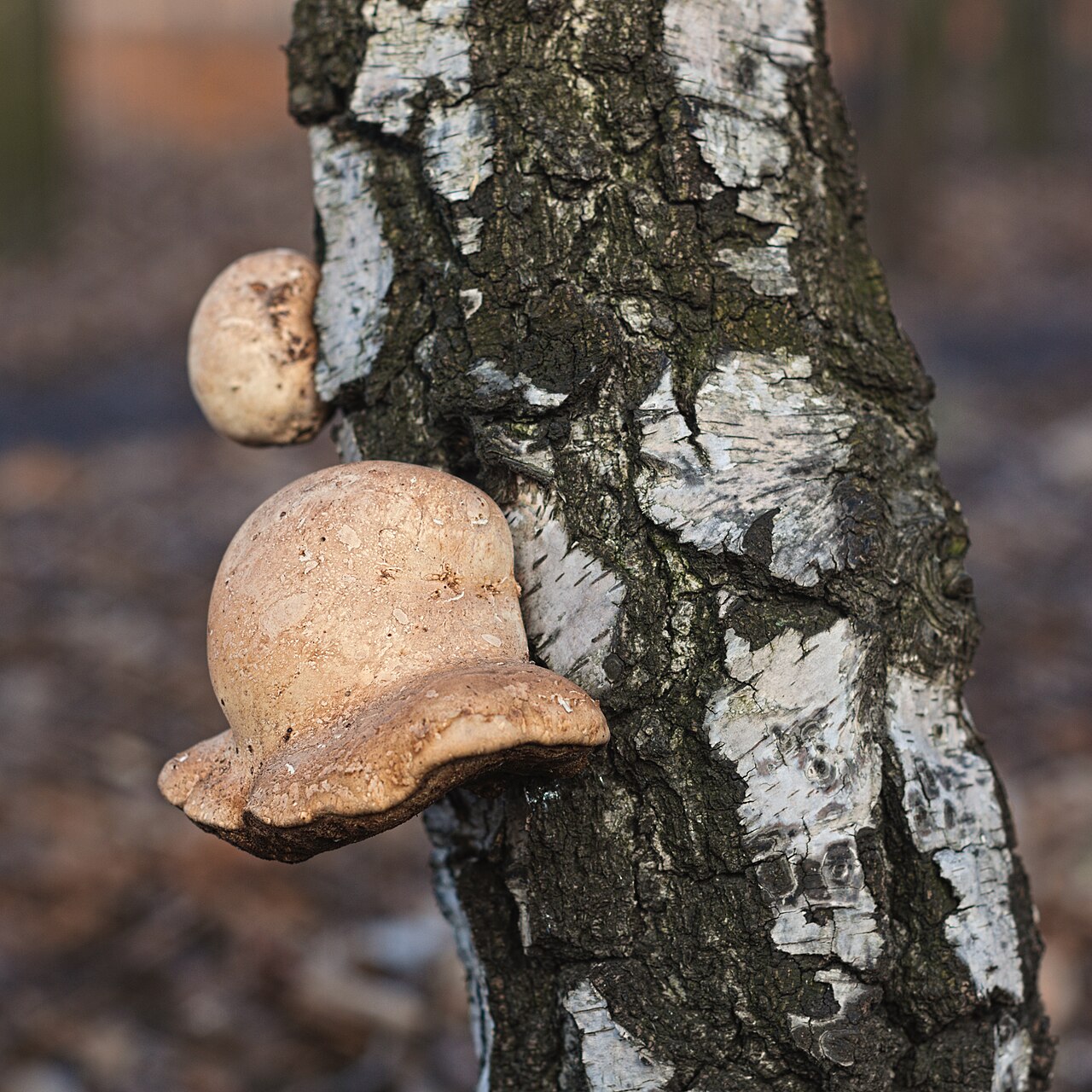
How to Tell Them Apart
Smooth, white to gray-brown brackets exclusively on birch trees. No scales, no stem, much smoother surface. Not edible — tough and bitter.
Has prominent dark brown scales on the upper surface in a concentric pattern — Birch Polypore is completely smooth. Grows on a wide variety of hardwoods (elm, maple, beech), not exclusively birch. Has a distinct watermelon rind smell when fresh. Much larger pores visible to the naked eye.
Side-by-Side Identification
| Trait | Dryad's Saddle | Birch Polypore |
|---|---|---|
| Cap | 10–60 cm across. Semicircular to kidney-shaped, often overlapping in shelving clusters. Cream to tan background covered with concentric dark brown scales arranged in a feather-like pattern. Surface is dry and slightly velvety when young. | 5–25 cm across, semicircular to kidney-shaped bracket. Upper surface smooth, white when young becoming gray-brown to tan with age. Skin is thin and can be peeled off. The margin is often rounded and slightly inrolled. |
| Gills | No gills — this is a polypore. The underside has angular, cream-colored pores that are quite large (1–3 mm wide) and run partway down the stem. | No gills. The underside has a dense layer of tiny white pores (3–4 per mm). The pore surface is white and flat, sometimes slightly concave. Pores do not bruise or change color when pressed. |
| Stem | Short and thick (3–10 cm), off-center or lateral. Cream above, darkening to black at the base. Often very tough even in young specimens. | No stem (sessile). The bracket attaches directly to the birch trunk, sometimes with a narrow point of attachment at the back. |
| Spore print | White. | White. |
| Odor | Distinctive watermelon-rind or cucumber smell when fresh. Fades with age. | Faint, pleasant, slightly mushroomy. Not distinctive. |
| Habitat | Grows on dead, dying, or wounded hardwoods — elm and maple are favorites, but also beech, oak, walnut, and box elder. Causes a white rot. Usually found on stumps, fallen logs, or wound sites on living trees. Often returns to the same tree year after year. | Exclusively on birch trees (Betula species) — this is one of the most host-specific fungi in temperate forests. Found on both living and dead birch, acting as both a parasite (causing brown rot in weakened trees) and a saprobe (decomposing dead wood). Usually appears singly or in small groups along the trunk. |
| Season | Early spring through early summer — March to June in most of North America and Europe. Occasionally a second flush in autumn. | Fruit bodies can be found year-round since they persist on the tree for months. New brackets typically appear from late summer through autumn (August–November). Old specimens become tough and dark, eventually falling off. |
Found one of these in the wild? Don't rely on memory — identify it from a photo with Orangutany and check it against both species before you touch it.