Yellowfoot Chanterelle vs Trumpet Chanterelle
Cantharellus tubaeformis compared with Craterellus tubaeformis — how to tell them apart in the field.
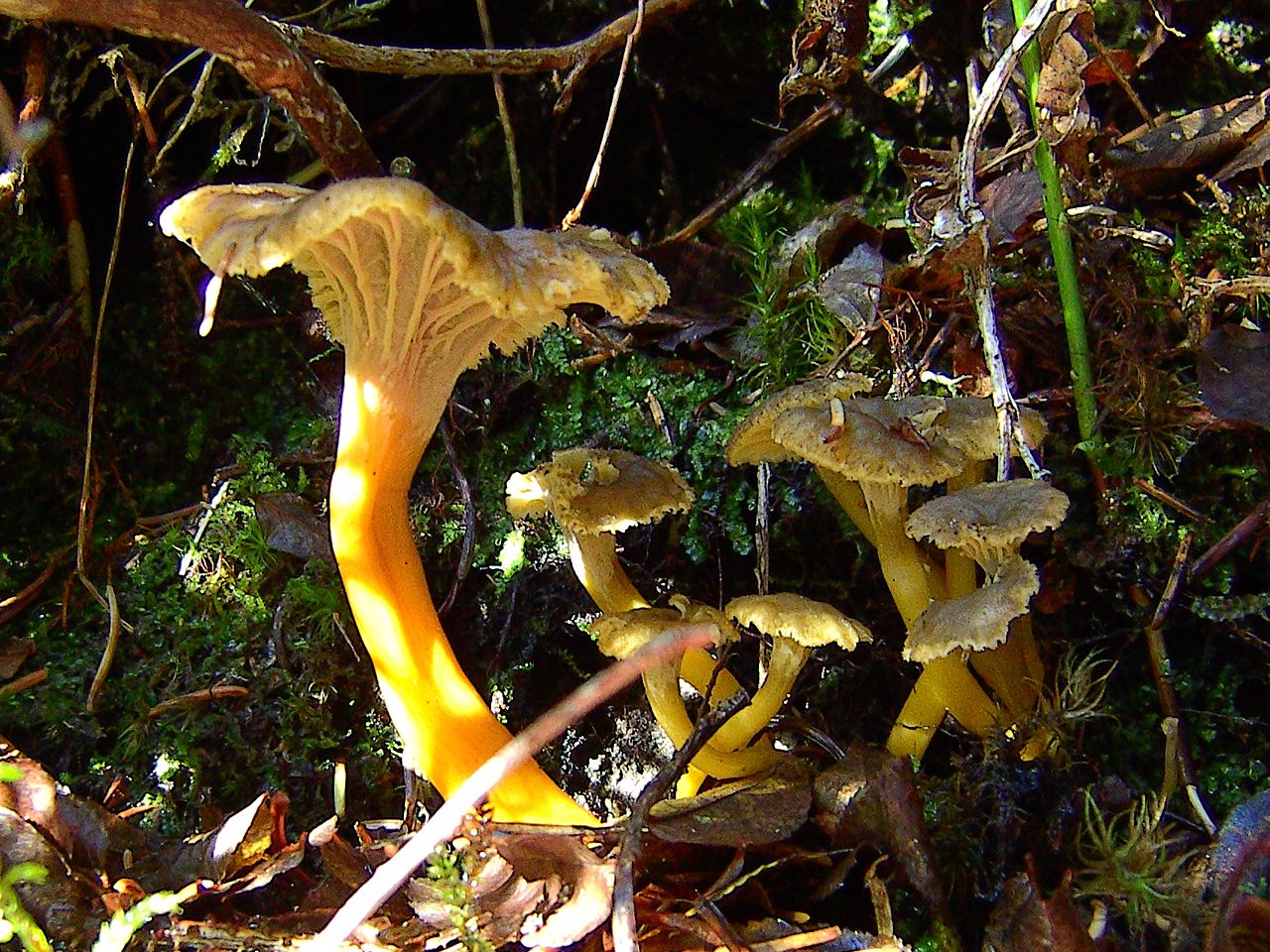
Yellowfoot Chanterelle
Cantharellus tubaeformis
Edible
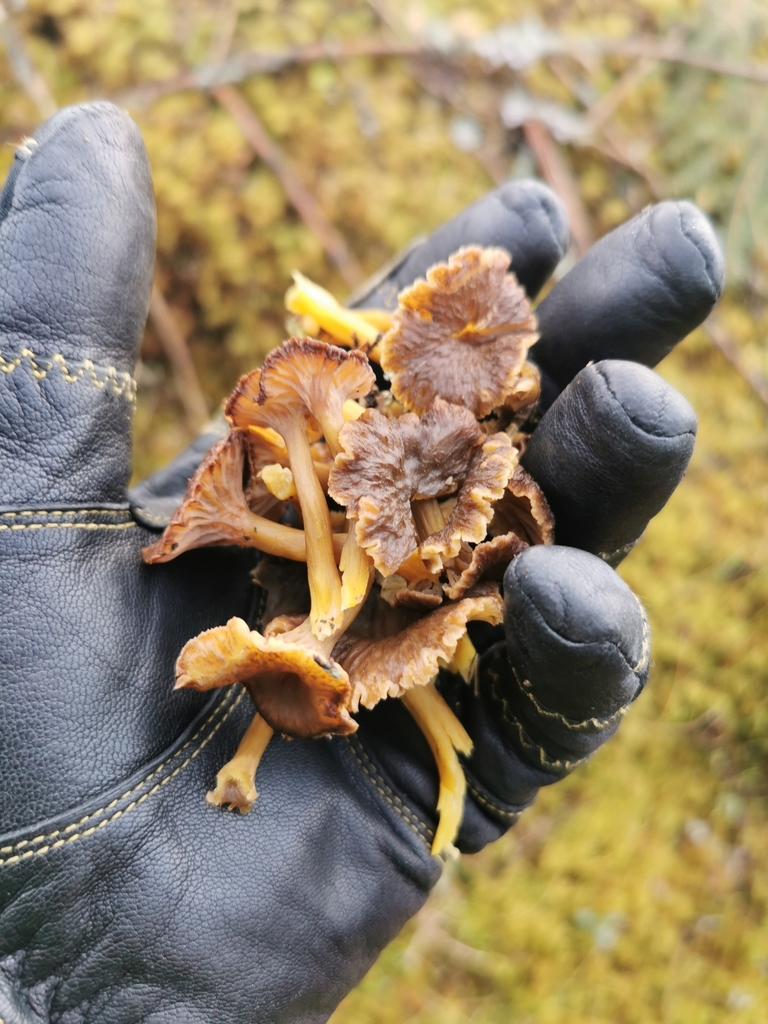
Trumpet Chanterelle
Craterellus tubaeformis
Edible
How to Tell Them Apart
Taxonomists have moved some populations into Craterellus. Practically identical in the field and equally edible. The distinction is mostly academic for foragers. Both have hollow stems and false gills.
Essentially the same species under the old classification. Some authors treat them as synonyms, others as closely related but distinct. For foraging purposes, both are equally edible and virtually identical in the field.
Side-by-Side Identification
| Trait | Yellowfoot Chanterelle | Trumpet Chanterelle |
|---|---|---|
| Cap | 2-6 cm across. Thin, wavy, and funnel-shaped with an irregular margin. Color ranges from yellowish brown to dark brown, sometimes grayish. The surface is slightly scaly or fibrillose. Often develops a central depression or hole that goes right through to the hollow stem. | 2-6 cm across. Deeply funnel-shaped with wavy, lobed margins. Brown to grayish brown, sometimes yellowish brown. Surface is slightly scaly or fibrillose. The center often develops a hole that connects to the hollow stem. |
| Gills | False gills, like all chanterelles. Shallow, forked, vein-like ridges on the underside, running partway down the stem. Yellowish to grayish, paler than the cap. Blunt and ridge-like rather than blade-like. | False gills consisting of shallow, forked, vein-like ridges on the underside. Gray to yellowish gray, running down onto the stem. Much less prominent than in golden chanterelles. |
| Stem | 3-8 cm tall, slender and often compressed or flattened. Bright yellow to yellowish orange, which is the feature that gives this species its common name. Hollow throughout, which distinguishes it from many other chanterelles. Smooth or slightly grooved. | 3-8 cm tall, slender and often compressed. Yellow to orange-yellow, distinctly brighter than the cap. Completely hollow throughout. Smooth or slightly grooved lengthwise. |
| Spore print | White to pale yellowish. | White to pale cream. |
| Odor | Mild, pleasant, slightly fruity but much less pronounced than golden chanterelles. Some describe a faint sweetness. | Mild, pleasant, slightly fruity. Less aromatic than golden chanterelles. |
| Habitat | Grows in coniferous and mixed forests, strongly associated with spruce, pine, and fir. Prefers mossy ground, rotting wood debris, and acidic soils. Often found along old logging roads, on mossy banks, and in areas with thick needle litter. Frequently grows in large troops or scattered groups. | Coniferous and mixed forests, especially under spruce, pine, and fir. Strongly associated with mossy ground and decaying wood debris. Often grows directly on or beside rotting logs, stumps, and buried wood. Prefers acidic, well-drained soils. Fruits in dense troops. |
| Season | Late August through December in most regions. Peak season is October and November. Can persist until January in mild, wet climates like the Pacific Northwest and coastal Scandinavia. | September through December in most of its range. Can persist into January in mild coastal climates. Peak fruiting in October and November. |
Found one of these in the wild? Don't rely on memory — identify it from a photo with Orangutany and check it against both species before you touch it.