Golden Chanterelle vs Cinnabar Chanterelle
Cantharellus cibarius compared with Cantharellus cinnabarinus — how to tell them apart in the field.
How to Tell Them Apart
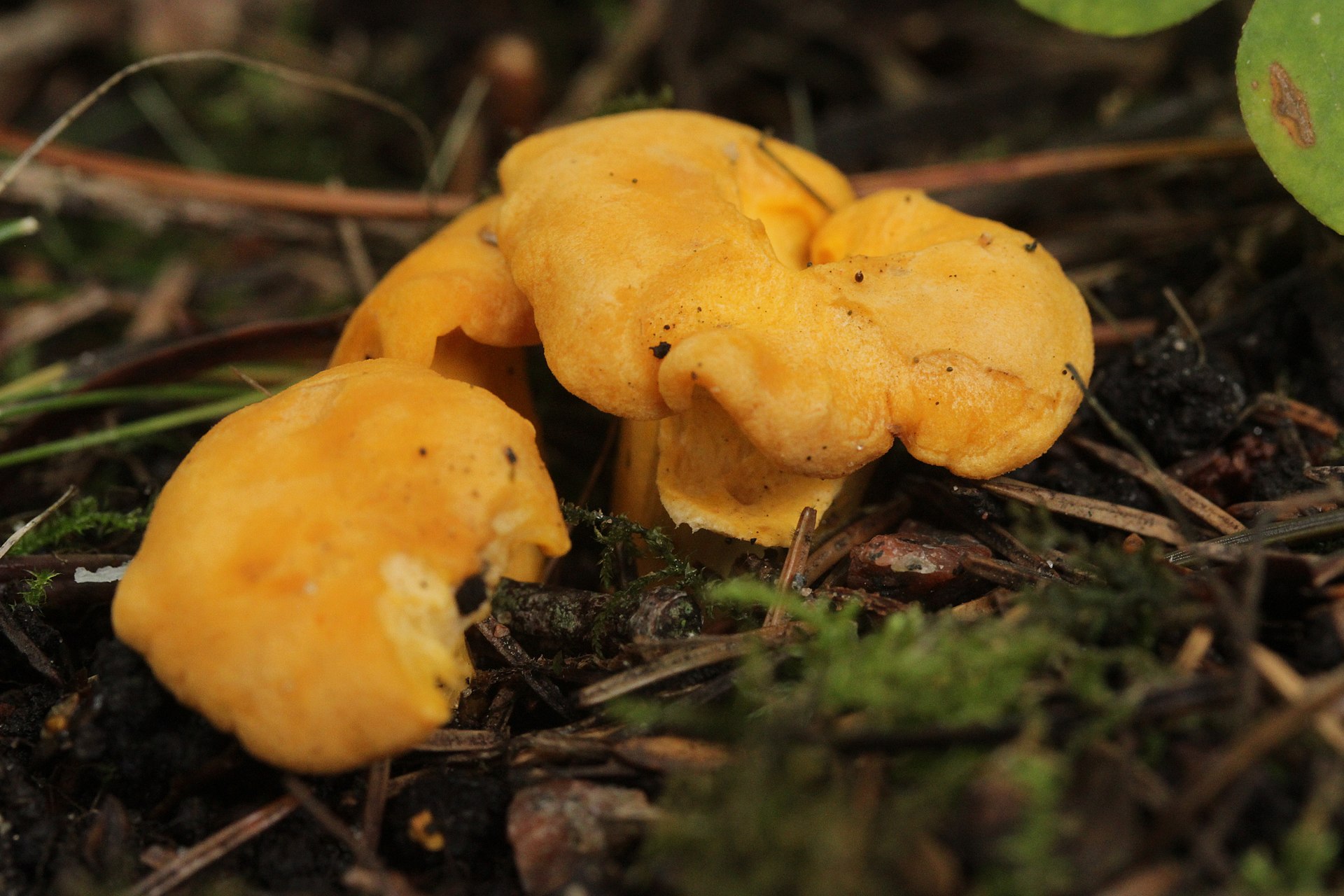
Much larger (up to 12 cm), golden yellow rather than red-pink. The color difference is obvious in person. Both are excellent edibles with false gills, so confusion between them is harmless.
Side-by-Side Identification
| Trait | Golden Chanterelle | Cinnabar Chanterelle |
|---|---|---|
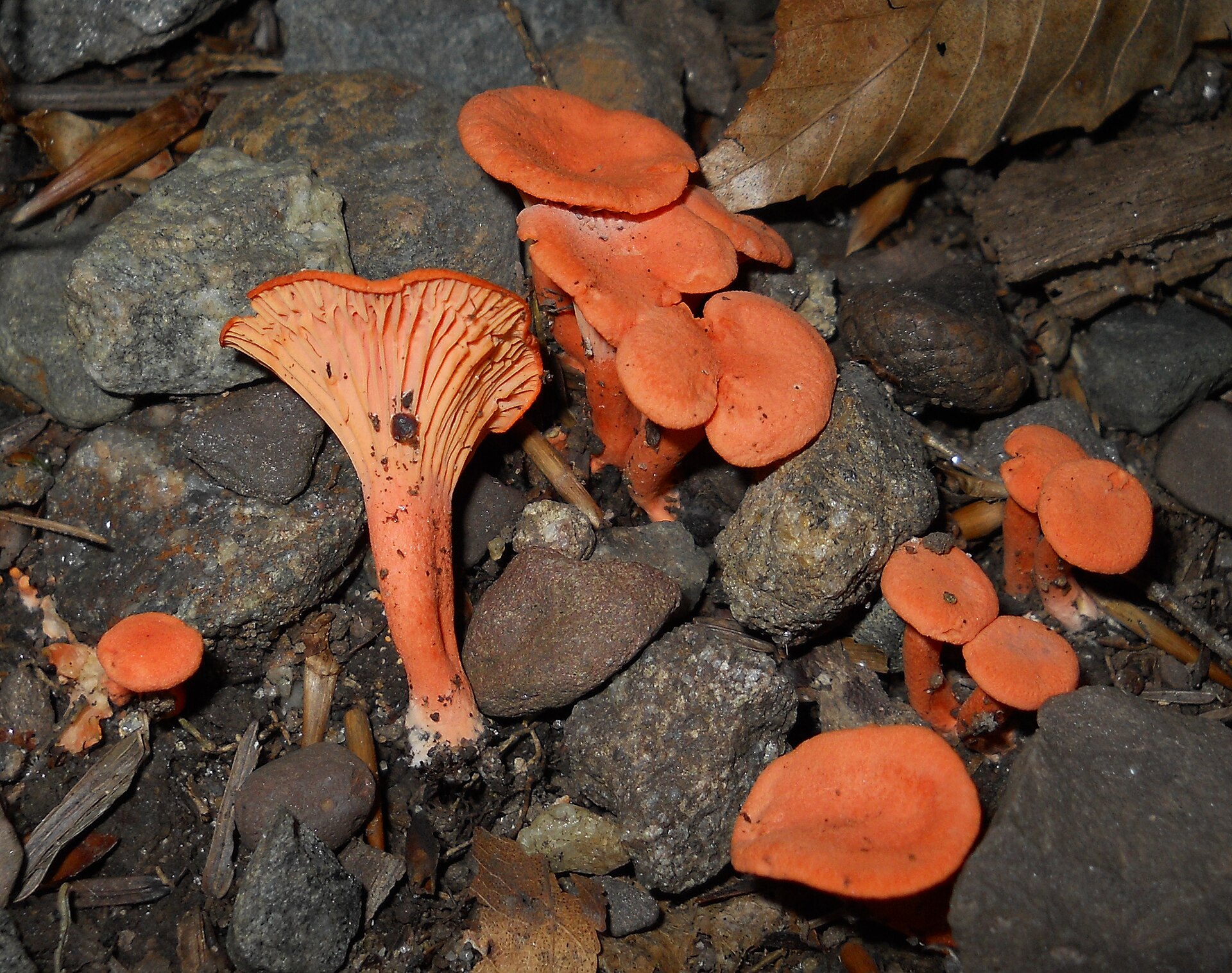
| Cap | 2–12 cm across. Starts convex, then flattens and develops a wavy, irregular funnel shape with age. Color ranges from pale egg-yolk yellow to deep golden orange. The surface is smooth and dry, sometimes slightly felty. The edges become wavy and lobed as the mushroom matures — no two caps look alike. | 1-4 cm across. Convex when young, becoming flat to slightly funnel-shaped with wavy, irregular margins. Color is the defining feature: vivid cinnabar red to flamingo pink, sometimes fading to pinkish orange with age. Smooth, dry surface. |
| Gills | Not true gills at all — this is the key. Chanterelles have forked, blunt ridges (called 'false gills') that run down the stem. They look like wrinkles or veins rather than thin paper-like blades. They're the same color as the cap or slightly paler. If you see thin, blade-like gills, you're looking at something else. | False gills, as with all chanterelles. Blunt, forked, vein-like ridges running partway down the stem. Same cinnabar red to pinkish color as the cap. Well-spaced and shallow. |
| Stem | 3–8 cm tall, solid (not hollow), tapers toward the base. Same color as the cap — golden yellow. Smooth and firm. The false gills run partway down it (decurrent). Snapping it should show solid white flesh inside. | 1-4 cm tall, slender, solid or slightly hollow in older specimens. Same vivid red-pink as the cap, sometimes slightly paler. Smooth, tapering slightly toward the base. |
| Spore print | — | Pinkish to pale salmon. |
| Odor | Distinctly fruity — most people say apricots or fresh apricots. This is one of the most reliable ID features. If it smells mushroomy or like nothing, reconsider your identification. | Mildly fruity, similar to golden chanterelles but less pronounced. Some detect a faint peppery quality. |
| Habitat | Grows on the ground in mycorrhizal partnership with hardwoods (especially oaks and beeches) and conifers (spruce, fir, pine). Loves mossy spots, old-growth forests, and areas with good drainage. Often found along trails, on slopes, and near stream banks. Never on wood — if it's growing on a log, it's not a chanterelle. | Grows on the ground in hardwood forests, forming mycorrhizal associations primarily with oaks, beeches, and hickories. Prefers well-drained slopes, mossy areas, and spots with thin leaf litter. Often found along trails and on the edges of ravines. Fruits in dense groups. |
| Season | June through November in most of the Northern Hemisphere, with peak season July–September. Earlier in southern regions, later at higher elevations. | June through September, with peak fruiting in July and August. Requires warm temperatures and regular rainfall. |
Found one of these in the wild? Don't rely on memory — identify it from a photo with Orangutany and check it against both species before you touch it.