Giant Puffball vs Dyeball
Calvatia gigantea compared with Pisolithus arhizus — how to tell them apart in the field.
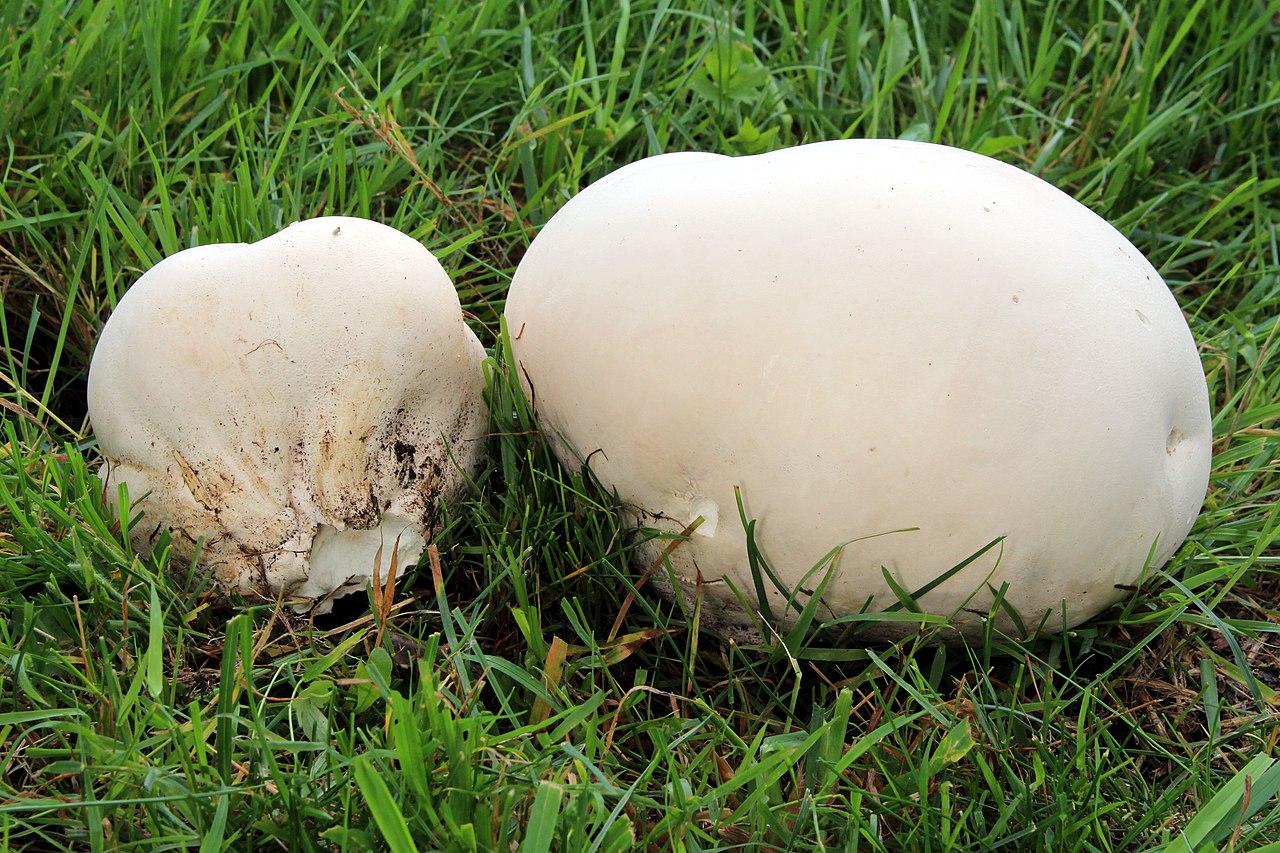
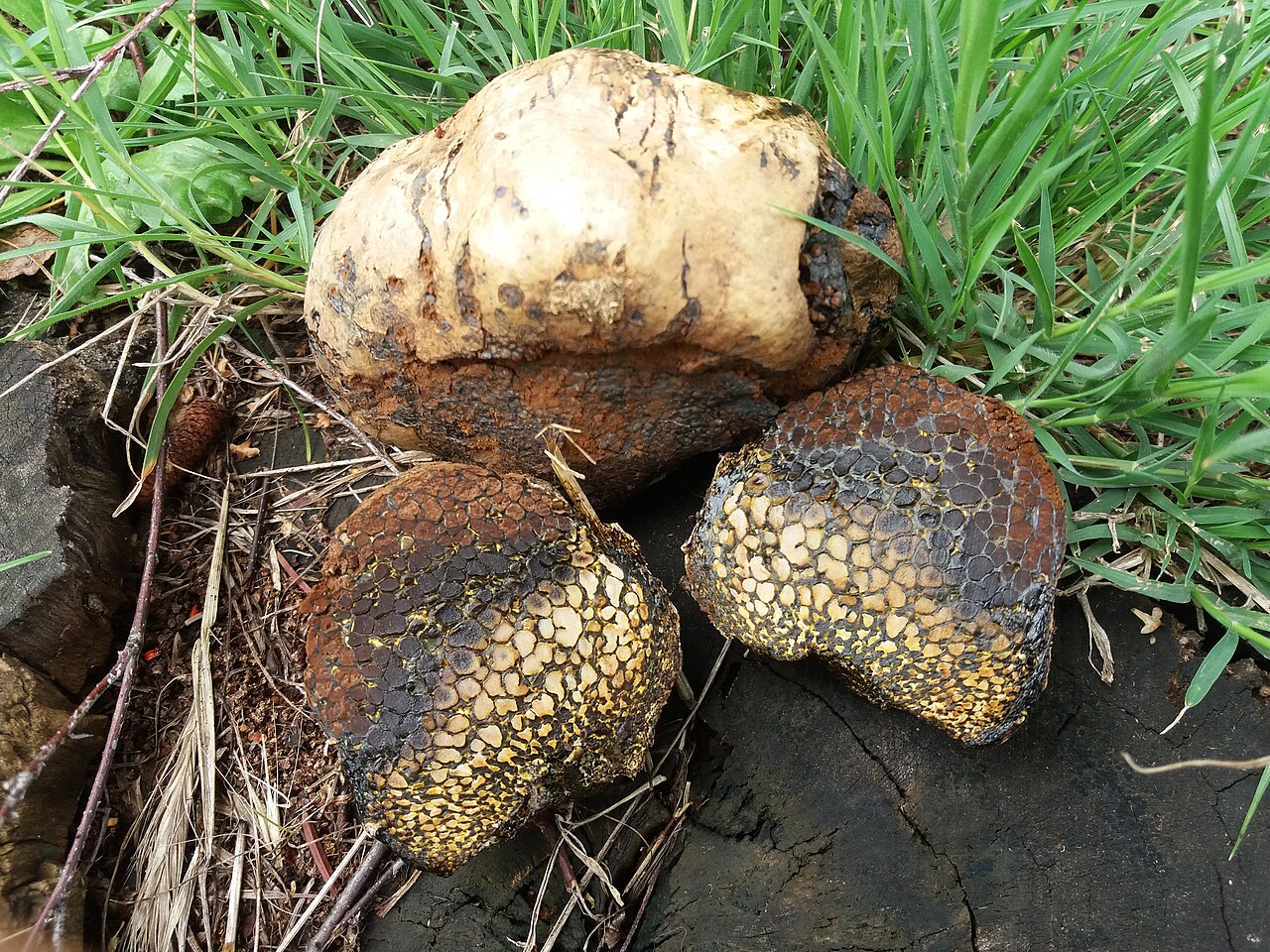
How to Tell Them Apart
Much larger (up to 50 cm or more), smooth white exterior when young, and a uniform white interior that resembles marshmallow. Giant Puffball grows in grasslands and meadows, not roadsides or disturbed ground. Edible when young and fully white inside.
Side-by-Side Identification
| Trait | Giant Puffball | Dyeball |
|---|---|---|
| Cap | Not really a cap — it's a round to slightly flattened sphere, 10–50 cm (sometimes larger). Smooth white skin when young that becomes leathery and tan-brown with age. No visible pores or gills on the outside. Eventually cracks open to release clouds of olive-brown spores. | No true cap. The fruiting body is a lumpy, irregular ball or club shape, 5-20 cm tall and 5-15 cm across. Surface is tough, leathery, and cracked, ranging from yellowish-brown to dark chocolate brown. Often partially buried in soil with only the upper portion visible. |
| Gills | — | No gills. Interior is composed of small round compartments (peridioles) packed with spores. Young specimens show a mosaic of pale and dark chambers when sliced open. Mature specimens dissolve from the top down into a powdery, olive-brown to black spore mass. |
| Stem | Essentially absent. Attaches to the ground via a small cord-like base. No ring, no volva, no stalk to speak of. | No distinct stem. The base tapers into root-like mycelial strands (rhizomorphs) that connect to tree roots underground. These bright yellow rhizomorphs are sometimes visible at the soil surface. |
| Spore print | Olive-brown. You won't need to take one — a mature specimen releases spore clouds visible to the naked eye. | Dark brown to olive-black. Spores are released passively as the outer wall weathers and cracks open from the top. |
| Odor | Mild and pleasant when young. Older specimens develop a musty, unpleasant smell as spores mature. | Unpleasant when mature. Often described as resembling rubber, chemicals, or a dye factory. Young specimens are milder. |
| Habitat | Meadows, pastures, parks, gardens, woodland edges, and disturbed ground. Loves rich, well-fertilized soil. Often found in the same location year after year. Not a tree-symbiont — it's a saprobe that feeds on decaying organic matter in the soil. | Found in sandy, gravelly, or disturbed soils near trees it partners with. Common along roadsides, parking lots, gravel paths, building sites, and forest edges. Thrives in poor, compacted, acidic soils that most fungi avoid. Almost always associated with pine, eucalyptus, oak, or birch roots. Often fruits where pavement meets soil, pushing up through cracks. |
| Season | Late summer through autumn. Peak season is August–October in the Northern Hemisphere. Can appear as early as June in warm years. | Summer through late autumn in temperate regions. In warmer climates (Mediterranean, subtropical), fruiting bodies can persist for weeks or months because the tough exterior resists decay. Peak season July through October in North America and Europe. |
Found one of these in the wild? Don't rely on memory — identify it from a photo with Orangutany and check it against both species before you touch it.