Summer Cep vs Satan's Bolete
Boletus reticulatus compared with Rubroboletus satanas — how to tell them apart in the field.
This is a dangerous confusion.
At least one of these species is toxic. Never eat a wild mushroom based on a photo comparison alone — verify with local experts.
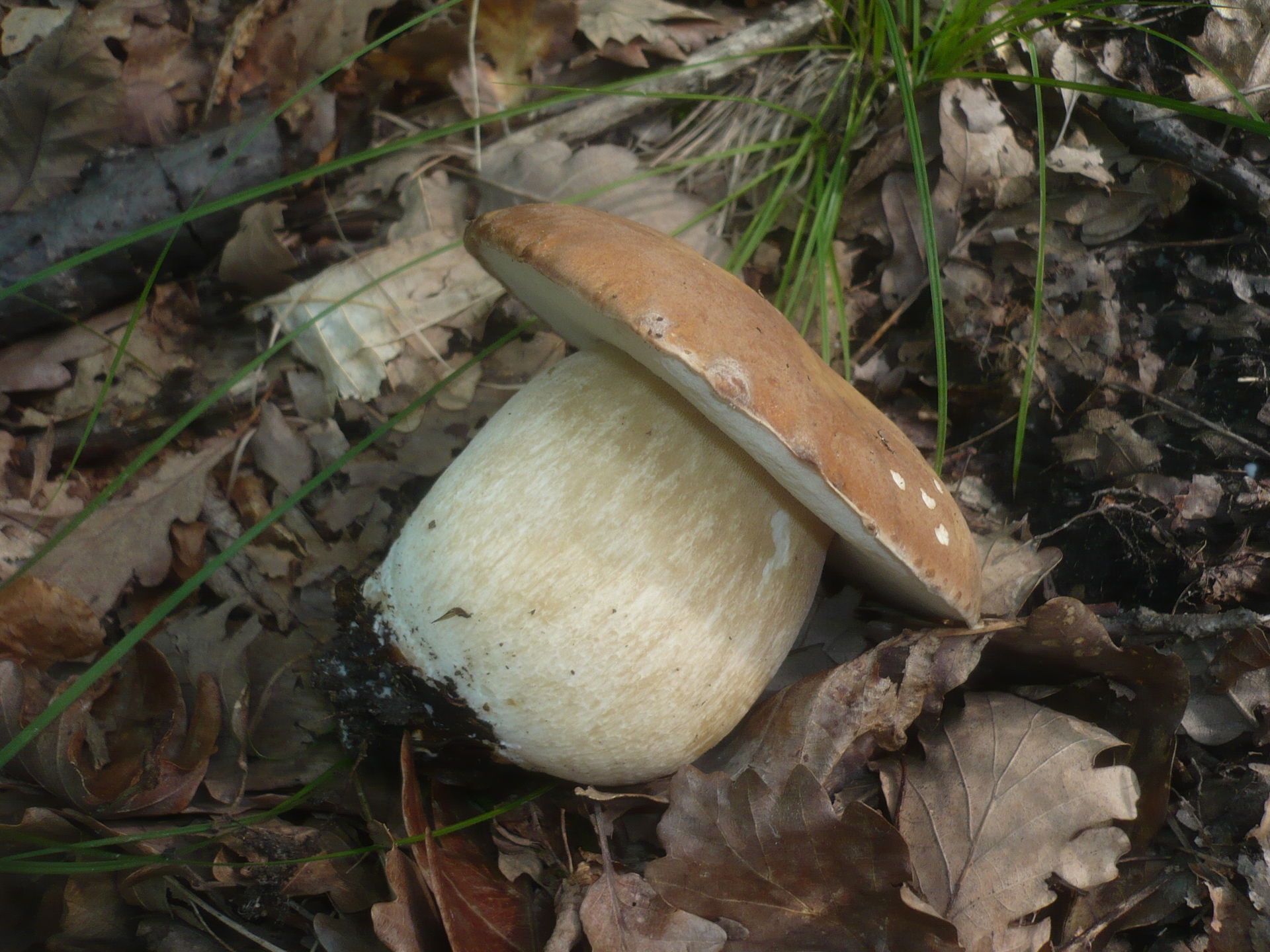
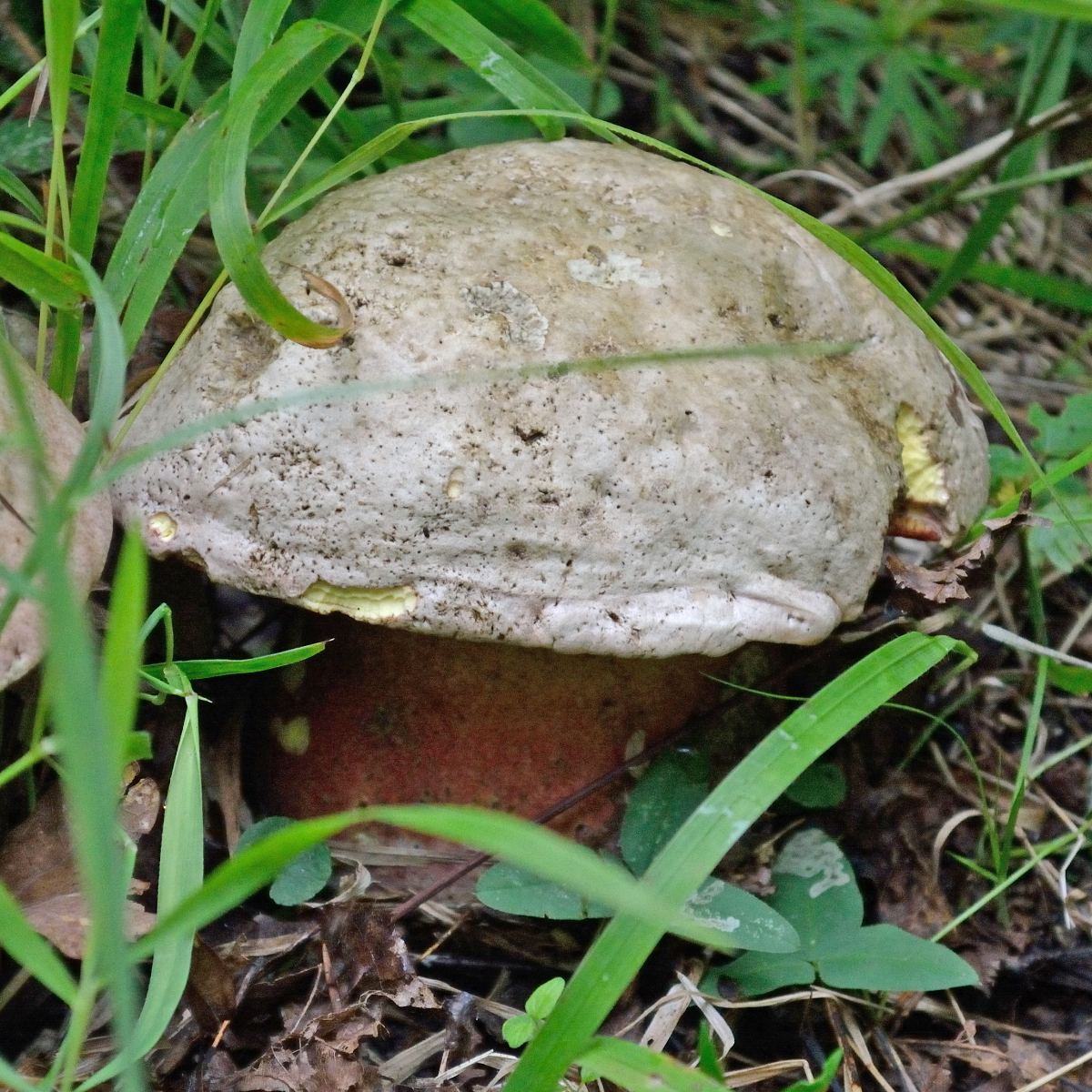
How to Tell Them Apart
Pale whitish cap but with vivid red pores and a red-orange reticulation on a swollen yellow and red stem. Flesh bruises blue when cut. Causes severe GI distress. The red pores and blue bruising are unmistakable warning signs.
Side-by-Side Identification
| Trait | Summer Cep | Satan's Bolete |
|---|---|---|
| Cap | 5-20 cm across. Convex, expanding to broadly convex with age. Color is pale brown to medium brown, sometimes with a grayish or olive tint. Surface is distinctly dry and velvety or suede-like (not sticky), often appearing matte or slightly cracked in dry weather. Flesh is white and does not change color when cut. | 10-25 cm across, sometimes even larger. Starts convex, flattens with age. Surface is smooth, dry, and pale grayish-white to dirty buff — surprisingly bland-looking for something so toxic. Can develop olive tones in older specimens. |
| Gills | No gills. Like all boletes, the underside has a sponge-like layer of tubes ending in small round pores. Pores are white when young, becoming yellowish to olive-yellow with age. Do not bruise blue. | No gills — this is a bolete with pores underneath. Pore surface starts yellow in young specimens, ages to orange-red or blood red. Pores are small and round. Bruises blue instantly when pressed. |
| Stem | 6-15 cm tall, 3-6 cm thick. Swollen, club-shaped, especially when young. Pale brown to whitish. Covered with a prominent, fine white reticulation (net-like raised pattern) that typically extends over most of the stem surface. Solid and firm throughout. | 5-15 cm tall, very thick and bulbous — often wider than it is tall. Covered in a fine red mesh-like network (reticulation) over a yellow-to-red background. The red coloring is most intense in the middle section. Stocky and barrel-shaped. |
| Spore print | Olive-brown. | Olive-brown. |
| Odor | Pleasant, nutty, with a rich mushroomy quality. Stronger when dried. | Unpleasant and faintly rotten in mature specimens — sometimes described as like old meat. Young ones can be nearly odorless. |
| Habitat | Mycorrhizal with hardwoods, especially oaks, beeches, and chestnuts. Prefers warm, well-drained soils in thermophilic (heat-loving) woodland. Common in Mediterranean oak forests, parkland, and along forest edges. Often found in the same locations year after year. | Strictly mycorrhizal with broadleaf trees, especially oak (Quercus) and beech (Fagus). Prefers calcareous (chalky/limestone) soils in warm, sunny woodland clearings. Doesn't do well in acidic or dense forests. |
| Season | May through September, peaking in June and July. Fruits earlier in the year than Boletus edulis, earning its common name. Warm rains in late spring trigger the first flushes. | Summer through early autumn. Peak fruiting is July-September, depending on rainfall and warmth. |
Found one of these in the wild? Don't rely on memory — identify it from a photo with Orangutany and check it against both species before you touch it.