Porcini vs Summer Cep
Boletus edulis compared with Boletus reticulatus — how to tell them apart in the field.
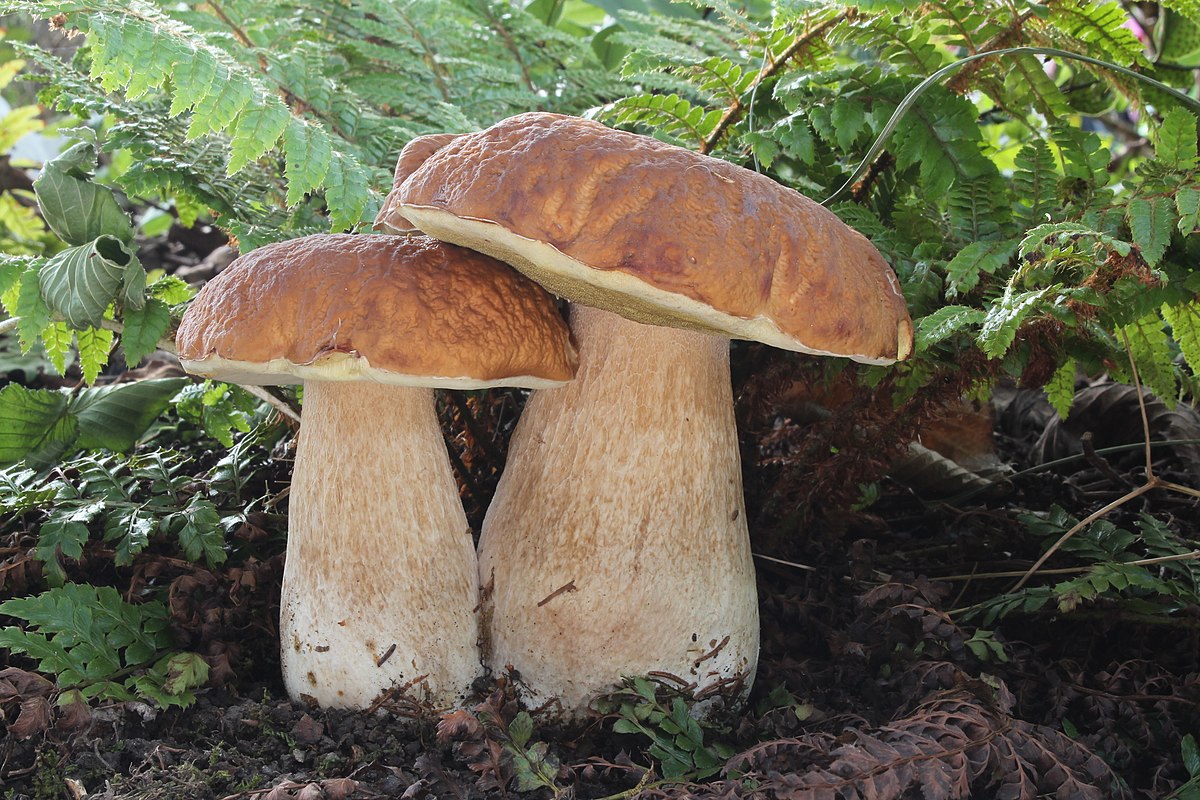
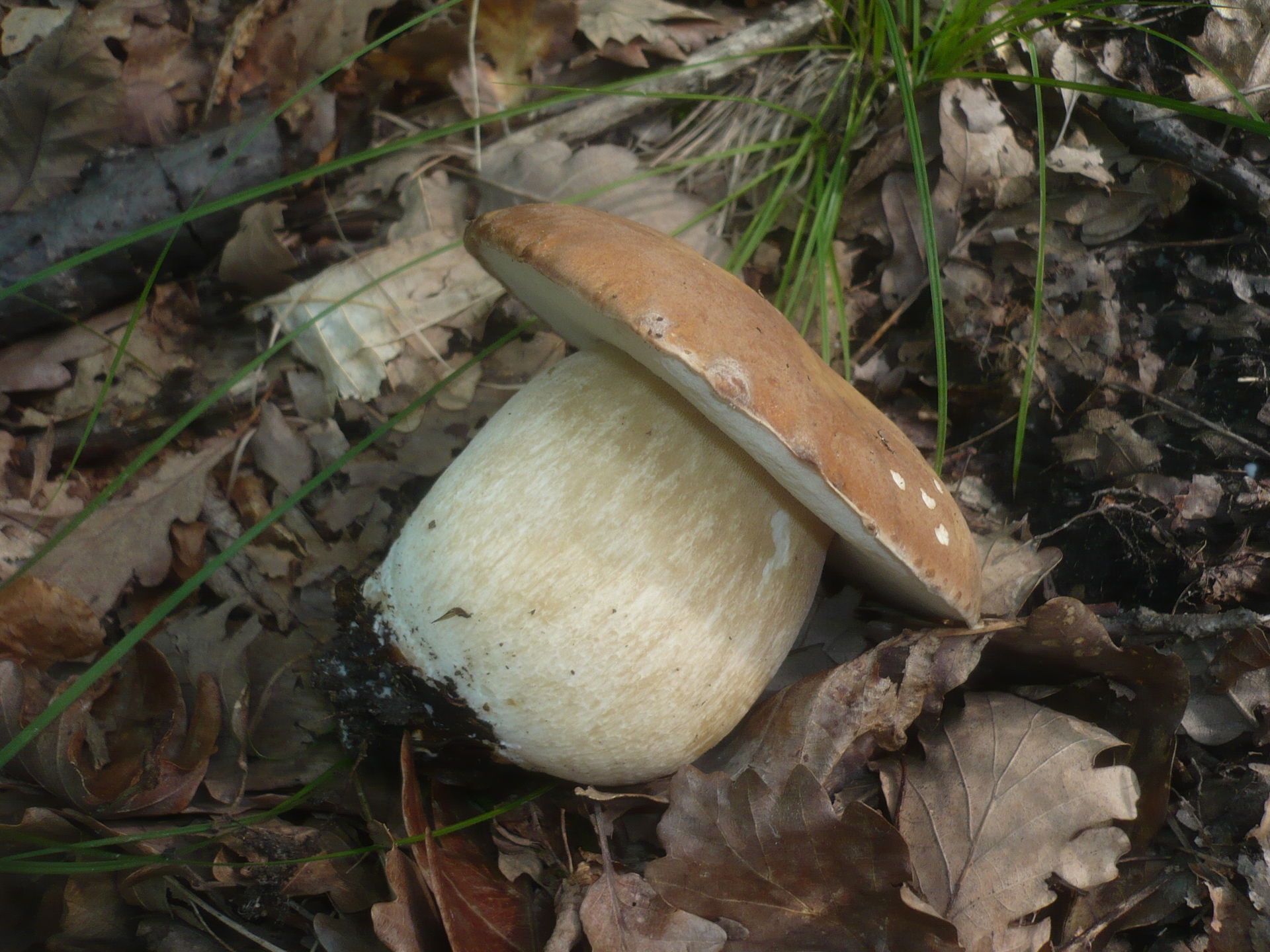
How to Tell Them Apart
Very similar and equally edible. B. edulis has a slightly sticky or greasy cap surface (not dry and velvety), tends to be darker brown, and typically fruits later in autumn. The reticulation on the stem is usually less extensive. Both are premier edibles, so confusion between them is harmless.
Side-by-Side Identification
| Trait | Porcini | Summer Cep |
|---|---|---|
| Cap | 7–30 cm across, sometimes larger. Convex when young, flattening with age. Color ranges from pale tan to dark brown, often with a slightly sticky surface when wet. The edge is sometimes lighter than the center. Young caps feel firm and almost bread-like — hence the English name 'penny bun.' | 5-20 cm across. Convex, expanding to broadly convex with age. Color is pale brown to medium brown, sometimes with a grayish or olive tint. Surface is distinctly dry and velvety or suede-like (not sticky), often appearing matte or slightly cracked in dry weather. Flesh is white and does not change color when cut. |
| Gills | No gills. Instead, the underside has a dense sponge-like layer of pores (tubes). White when very young, turning yellowish then olive-green as spores mature. The pore surface doesn't bruise blue when pressed — this is a key identification feature. | No gills. Like all boletes, the underside has a sponge-like layer of tubes ending in small round pores. Pores are white when young, becoming yellowish to olive-yellow with age. Do not bruise blue. |
| Stem | Thick and bulbous — 8–25 cm tall and up to 10 cm wide, often wider at the base. White to pale brown, covered with a fine raised network pattern (reticulation) especially near the top. This net pattern is one of the most reliable ways to confirm you've got a real porcini. | 6-15 cm tall, 3-6 cm thick. Swollen, club-shaped, especially when young. Pale brown to whitish. Covered with a prominent, fine white reticulation (net-like raised pattern) that typically extends over most of the stem surface. Solid and firm throughout. |
| Spore print | Olive-brown to dark brown. | Olive-brown. |
| Odor | Pleasant, nutty, slightly yeasty — often described as 'the smell of a good bakery.' | Pleasant, nutty, with a rich mushroomy quality. Stronger when dried. |
| Habitat | Forms mycorrhizal relationships with a wide range of trees: spruce, pine, birch, beech, oak, and chestnut. Found in coniferous and mixed forests, often along trails, clearings, and forest edges. Prefers well-drained, slightly acidic soils. Frequently appears in the same spots year after year — which is why experienced foragers memorize their patches. | Mycorrhizal with hardwoods, especially oaks, beeches, and chestnuts. Prefers warm, well-drained soils in thermophilic (heat-loving) woodland. Common in Mediterranean oak forests, parkland, and along forest edges. Often found in the same locations year after year. |
| Season | Late summer through autumn, typically August through November. In warmer Mediterranean climates, a second flush can appear in spring. Peak season is September–October across most of Europe and North America. | May through September, peaking in June and July. Fruits earlier in the year than Boletus edulis, earning its common name. Warm rains in late spring trigger the first flushes. |
Found one of these in the wild? Don't rely on memory — identify it from a photo with Orangutany and check it against both species before you touch it.