Wood Ear vs Witch's Butter
Auricularia auricula-judae compared with Tremella mesenterica — how to tell them apart in the field.
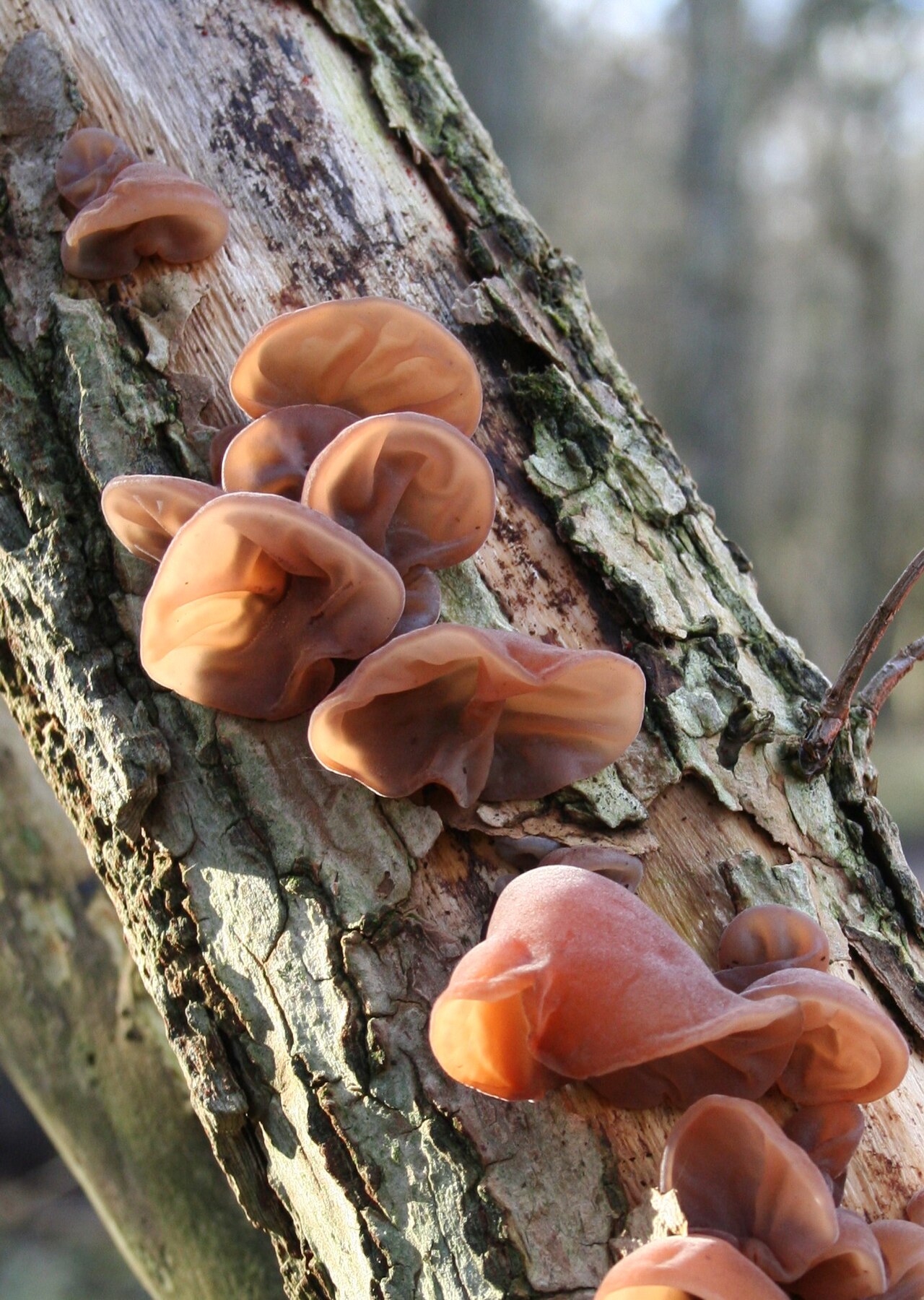
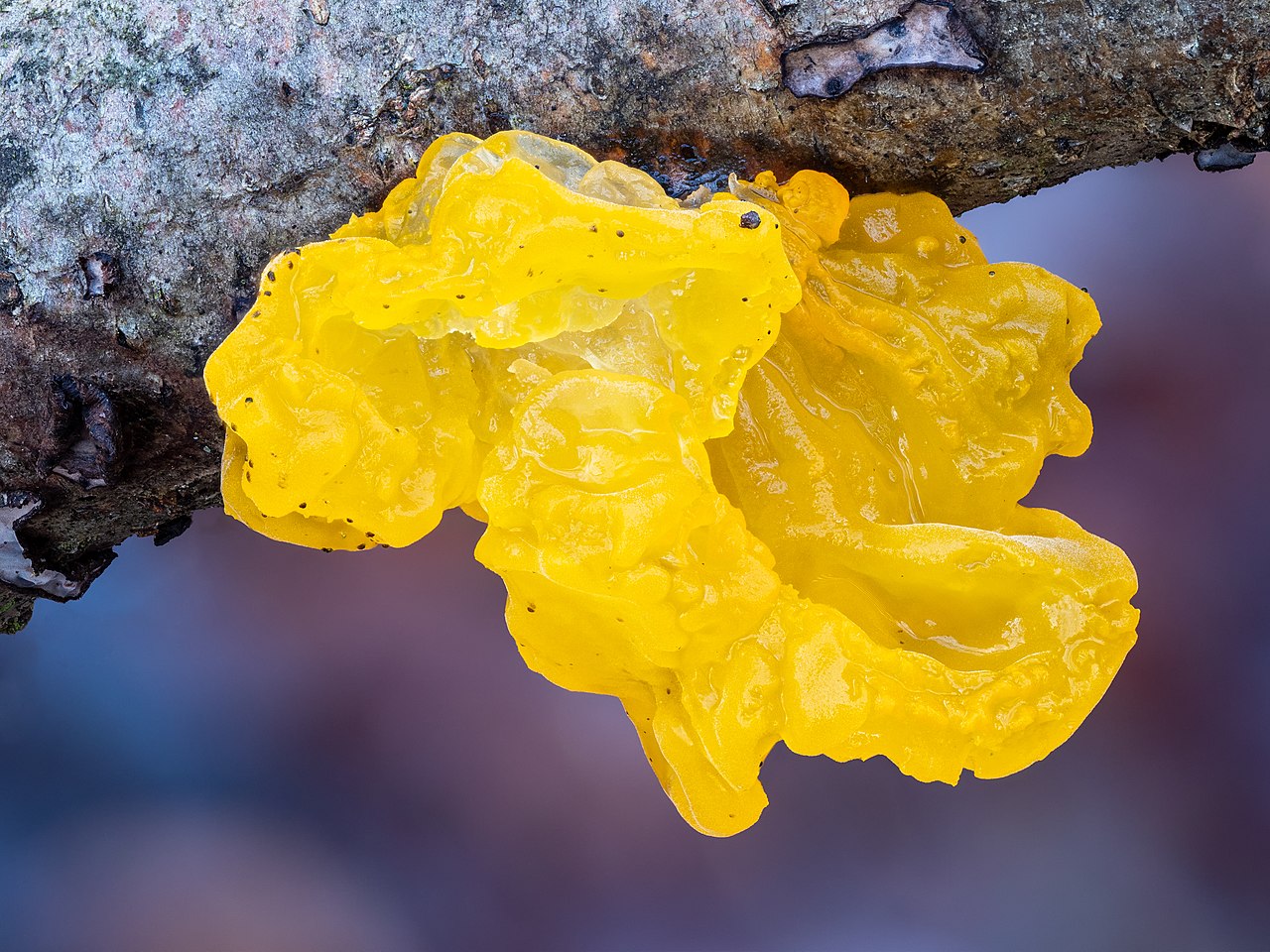
How to Tell Them Apart
A bright yellow to orange gelatinous fungus on dead hardwood. The color alone distinguishes it: Wood Ear is brown, Yellow Brain is bright yellow. T. mesenterica also has a more irregular, brain-like folded shape rather than a clean ear form. Edible but flavorless.
Side-by-Side Identification
| Trait | Wood Ear | Witch's Butter |
|---|---|---|
| Cap | No conventional cap. Fruiting body is ear-shaped, irregularly lobed or cup-shaped, 3-12 cm across. Thin (1-3 mm), rubbery to gelatinous in texture. Outer surface (facing away from the wood) is tan to dark reddish-brown, smooth to finely velvety with sparse hairs. Inner surface (facing the wood) is smoother, often with veins or folds, slightly paler. | No cap. Fruiting body is an irregular, brain-like or lobed gelatinous mass, 1–10 cm across. Bright yellow to golden-orange when fresh and hydrated. Surface is smooth, shiny, and slightly greasy-looking. Shrinks to a hard, dark orange crust when dry. |
| Gills | No gills. The fertile (spore-producing) surface is the smooth inner face of the ear-shaped fruiting body. Spores are produced on the exposed surface, a primitive arrangement compared to gilled mushrooms. | No gills. Spores are produced on the outer surface of the gelatinous mass. The entire fruiting body is essentially one continuous spore-bearing surface folded into convoluted lobes. |
| Stem | No stem or very short point of attachment to the wood substrate. The fruiting body attaches directly to the branch or log, sometimes with a narrow, stem-like base. | No stem. The fruiting body grows directly from the bark surface, spreading across the substrate. |
| Spore print | White. Spores are sausage-shaped (allantoid) and can be collected by placing the fresh fruiting body inner-surface-down on paper. | White to pale yellow. |
| Odor | None to very faintly earthy. Essentially odorless. | Not distinctive. Very faint, slightly sweet when fresh. |
| Habitat | Saprobic on dead and dying branches and logs of broadleaf trees. Has a strong association with elder (Sambucus nigra) in Europe, but also common on beech, sycamore, ash, and many other hardwoods. In Asia, found on a wide range of broadleaf species. Common in hedgerows, woodland edges, parks, and gardens. Often found on attached dead branches still on living trees. | Found on dead attached or recently fallen branches of deciduous hardwoods — especially oak, hazel, birch, and beech. Almost always associated with Peniophora crust fungi, which must be present in the wood for Tremella to fruit. Common in hedgerows, woodland edges, parks, and gardens. |
| Season | Year-round, but most abundant in autumn through spring. The gelatinous fruiting bodies can survive freezing and desiccation, rehydrating and continuing to produce spores when moisture returns. One of the few fungi that can be found reliably in every month of the year. | Primarily autumn through spring, most visible after rain in cooler months. Can appear year-round in wet climates. Dried fruiting bodies persist on branches between wet periods and revive with each rainfall. |
Found one of these in the wild? Don't rely on memory — identify it from a photo with Orangutany and check it against both species before you touch it.