Death Cap vs Green-spored Parasol
Amanita phalloides compared with Chlorophyllum molybdites — how to tell them apart in the field.
This is a dangerous confusion.
At least one of these species is toxic. Never eat a wild mushroom based on a photo comparison alone — verify with local experts.
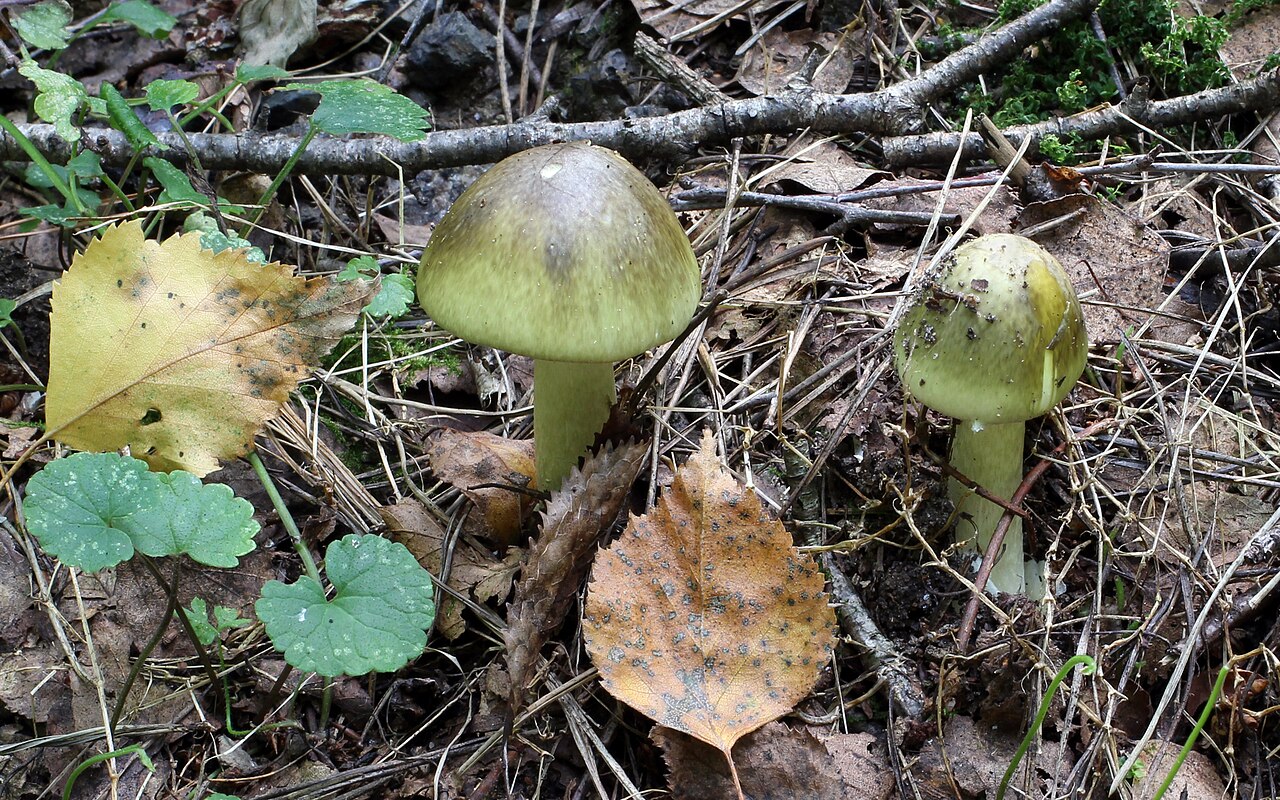
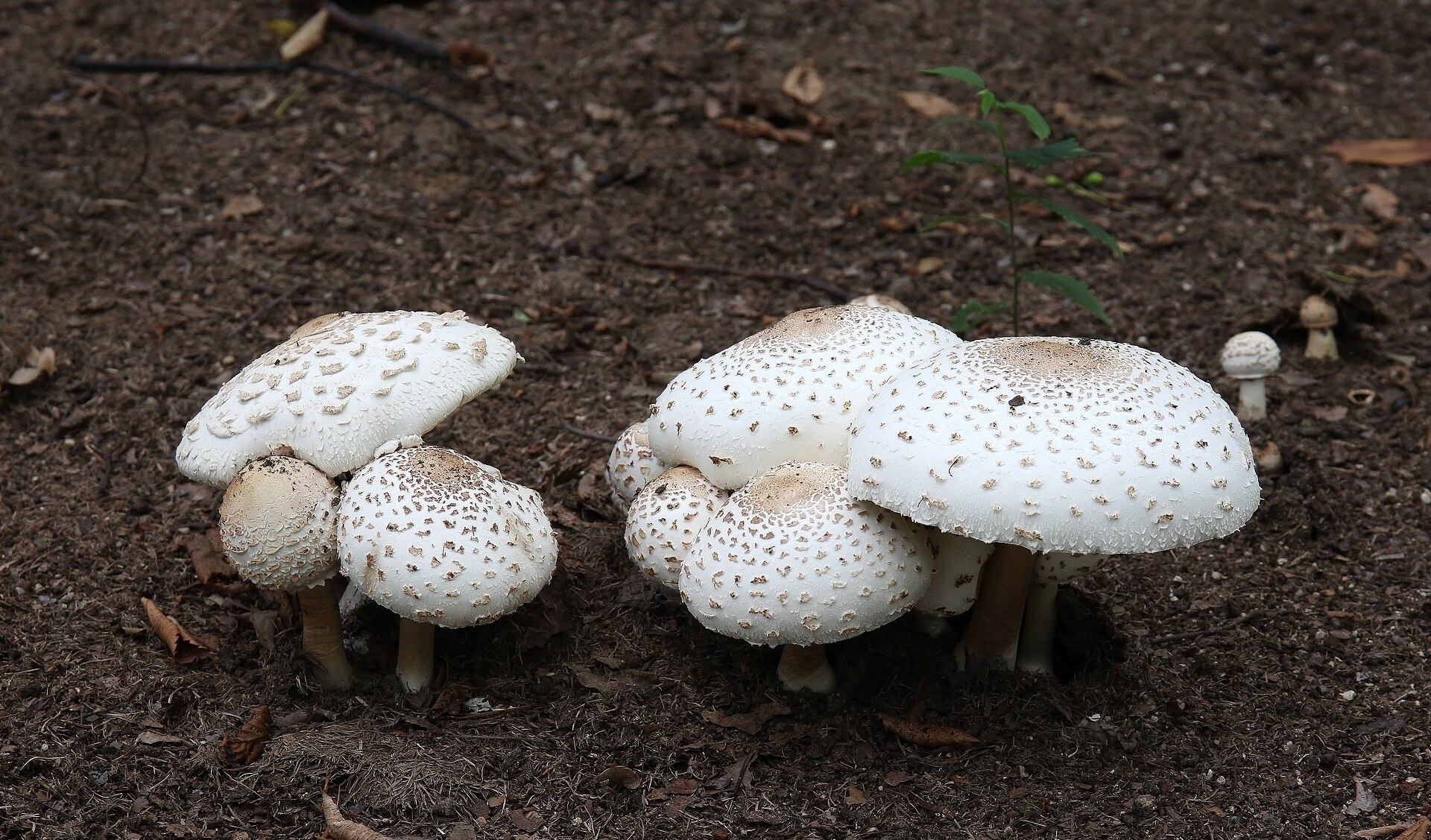
How to Tell Them Apart
The most commonly eaten poisonous mushroom in North America (causes severe GI distress but is rarely fatal). Much larger than the Death Cap, with a shaggy scaly cap and green spore print. Grows in lawns and open grass, not in woodland. No volva at the base.
Side-by-Side Identification
| Trait | Death Cap | Green-spored Parasol |
|---|---|---|
| Cap | 5-15 cm across. Starts egg-shaped, opens to convex then flat. Color ranges from pale greenish-yellow to olive green, sometimes almost white. Surface is smooth and slightly sticky when wet. No warts or patches (unlike Fly Agaric). The green tinge is the key tell, but pale specimens can fool you. | 5-30 cm across. Initially egg-shaped, expanding to convex, then flat or slightly upturned with age. White background covered with coarse brown to tan scales arranged concentrically. Center often retains a solid brown patch. Surface is dry. |
| Gills | White, closely spaced, and free (not attached to the stem). They stay white even as the mushroom ages — no color change. | Free (not attached to stem). White when young, becoming greenish to grayish-green as spores mature. This green discoloration of the gills is visible even without a spore print and is the key field mark. |
| Stem | 8-15 cm tall, white to pale green, with a prominent drooping skirt-like ring near the top. The base sits inside a cup-shaped volva (sac) that's often buried underground. Always dig up the base to check for the volva — it's the single most important identification feature. | 8-25 cm tall, 1-2.5 cm thick. White, smooth, often bruising brownish when handled. Has a thick, double-edged ring (annulus) that slides freely up and down the stem. Base is bulbous but lacks a volva. |
| Spore print | White. | Green to grayish-green. This is the single most important identification feature. No other common large lawn mushroom has green spores. Always take a spore print on white paper. |
| Odor | Faintly sweet and pleasant when young. Becomes sickly sweet and unpleasant as it ages — sometimes described as honey-like turning to rotting. | Pleasant, mushroomy when fresh. Not distinctive enough to use for identification. |
| Habitat | Forms mycorrhizal relationships with hardwood trees, especially oaks. Also found near beeches, chestnuts, and occasionally conifers. Prefers well-drained soils in woodlands, parks, and suburban yards with established trees. | Saprotrophic. Fruits in lawns, parks, golf courses, athletic fields, pastures, and any well-watered grassy area. Prefers rich, fertilized soil and warm temperatures. Often fruits in fairy rings or large clusters after summer rains. |
| Season | Late summer through late autumn. Peak fruiting is September through November in the Northern Hemisphere; March through May in Australia. | Late spring through early autumn, peaking in July and August. Requires warm soil temperatures above 18C (65F) and consistent moisture. In tropical regions, can fruit year-round. |
Found one of these in the wild? Don't rely on memory — identify it from a photo with Orangutany and check it against both species before you touch it.