American Caesar's Mushroom vs Death Cap
Amanita jacksonii compared with Amanita phalloides — how to tell them apart in the field.
This is a dangerous confusion.
At least one of these species is potentially deadly. Never eat a wild mushroom based on a photo comparison alone — verify with local experts.
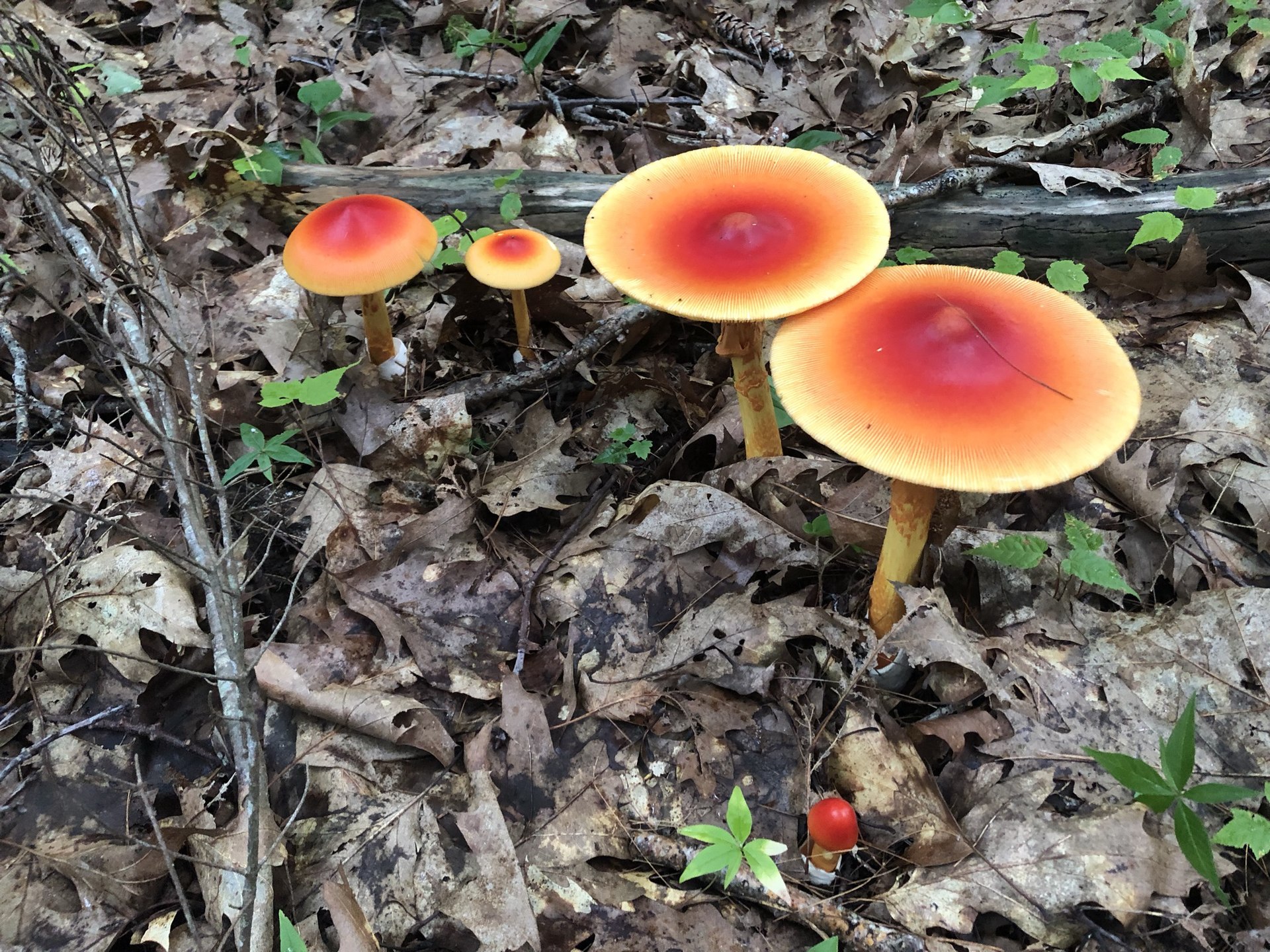
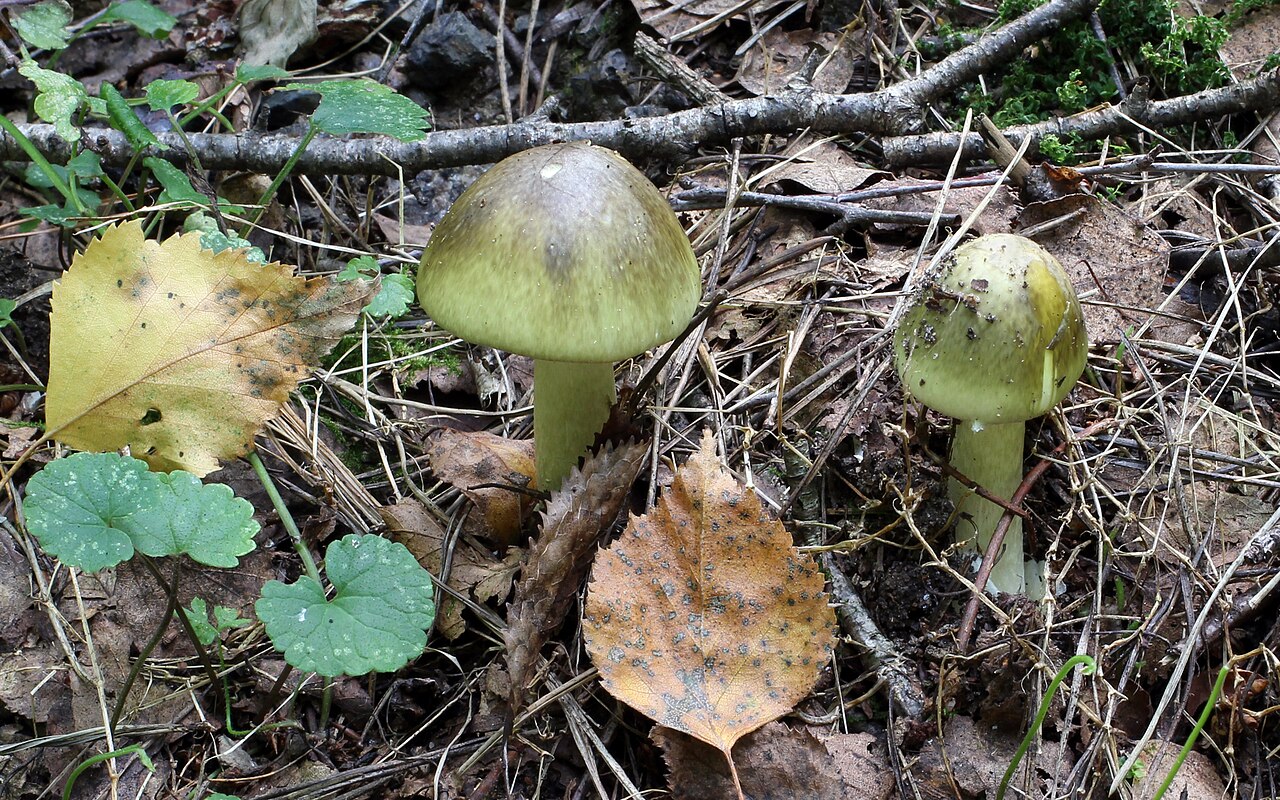
How to Tell Them Apart
Greenish to yellowish cap (not red). White gills, white stem, white ring. Contains deadly amatoxins. The color differences are significant, but the key safety rule is: if the gills are white, do not eat it as a presumed Caesar's mushroom.
Side-by-Side Identification
| Trait | American Caesar's Mushroom | Death Cap |
|---|---|---|
| Cap | 5-15 cm across. Initially egg-shaped and enclosed in a white volva, then expanding to convex and finally flat. Color is vivid scarlet red to orange-red, sometimes fading to orange with age. Surface is smooth, slightly sticky when wet. Usually lacks the white wart-like patches seen on many other Amanitas (the universal veil tends to remain as a basal sac rather than breaking into cap patches). | 5-15 cm across. Starts egg-shaped, opens to convex then flat. Color ranges from pale greenish-yellow to olive green, sometimes almost white. Surface is smooth and slightly sticky when wet. No warts or patches (unlike Fly Agaric). The green tinge is the key tell, but pale specimens can fool you. |
| Gills | Free (not attached to the stem). Yellow to orange-yellow. Crowded and broad. This yellow gill color is a critical identification feature that separates it from white-gilled deadly Amanitas. | White, closely spaced, and free (not attached to the stem). They stay white even as the mushroom ages — no color change. |
| Stem | 8-18 cm tall, 1-2.5 cm thick. Yellow to orange-yellow, often with faint zigzag banding or patterning. Base is enclosed in a large, thick, persistent white volva (sac). No ring (annulus) on the stem, which is another important distinction from many deadly Amanitas. | 8-15 cm tall, white to pale green, with a prominent drooping skirt-like ring near the top. The base sits inside a cup-shaped volva (sac) that's often buried underground. Always dig up the base to check for the volva — it's the single most important identification feature. |
| Spore print | White to pale cream. | White. |
| Odor | Mild, pleasant, slightly nutty. Not distinctive. | Faintly sweet and pleasant when young. Becomes sickly sweet and unpleasant as it ages — sometimes described as honey-like turning to rotting. |
| Habitat | Mixed hardwood and oak-dominated forests. Mycorrhizal, forming partnerships primarily with oaks and other hardwoods. Prefers well-drained, acidic soils on slopes and ridges. Often found along trails and in open woodland with good light penetration. | Forms mycorrhizal relationships with hardwood trees, especially oaks. Also found near beeches, chestnuts, and occasionally conifers. Prefers well-drained soils in woodlands, parks, and suburban yards with established trees. |
| Season | June through October, with peak fruiting in July and August. Requires warm temperatures and summer rains. | Late summer through late autumn. Peak fruiting is September through November in the Northern Hemisphere; March through May in Australia. |
Found one of these in the wild? Don't rely on memory — identify it from a photo with Orangutany and check it against both species before you touch it.