Jewelled Amanita vs Panther Cap
Amanita gemmata compared with Amanita pantherina — how to tell them apart in the field.
This is a dangerous confusion.
At least one of these species is toxic. Never eat a wild mushroom based on a photo comparison alone — verify with local experts.
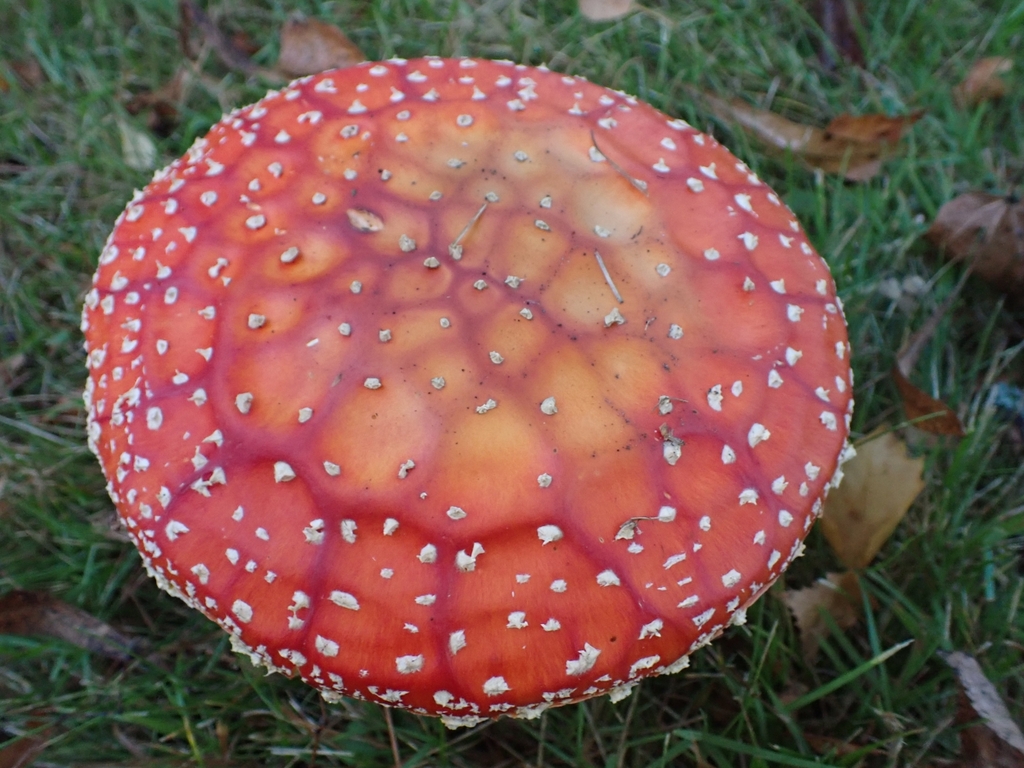
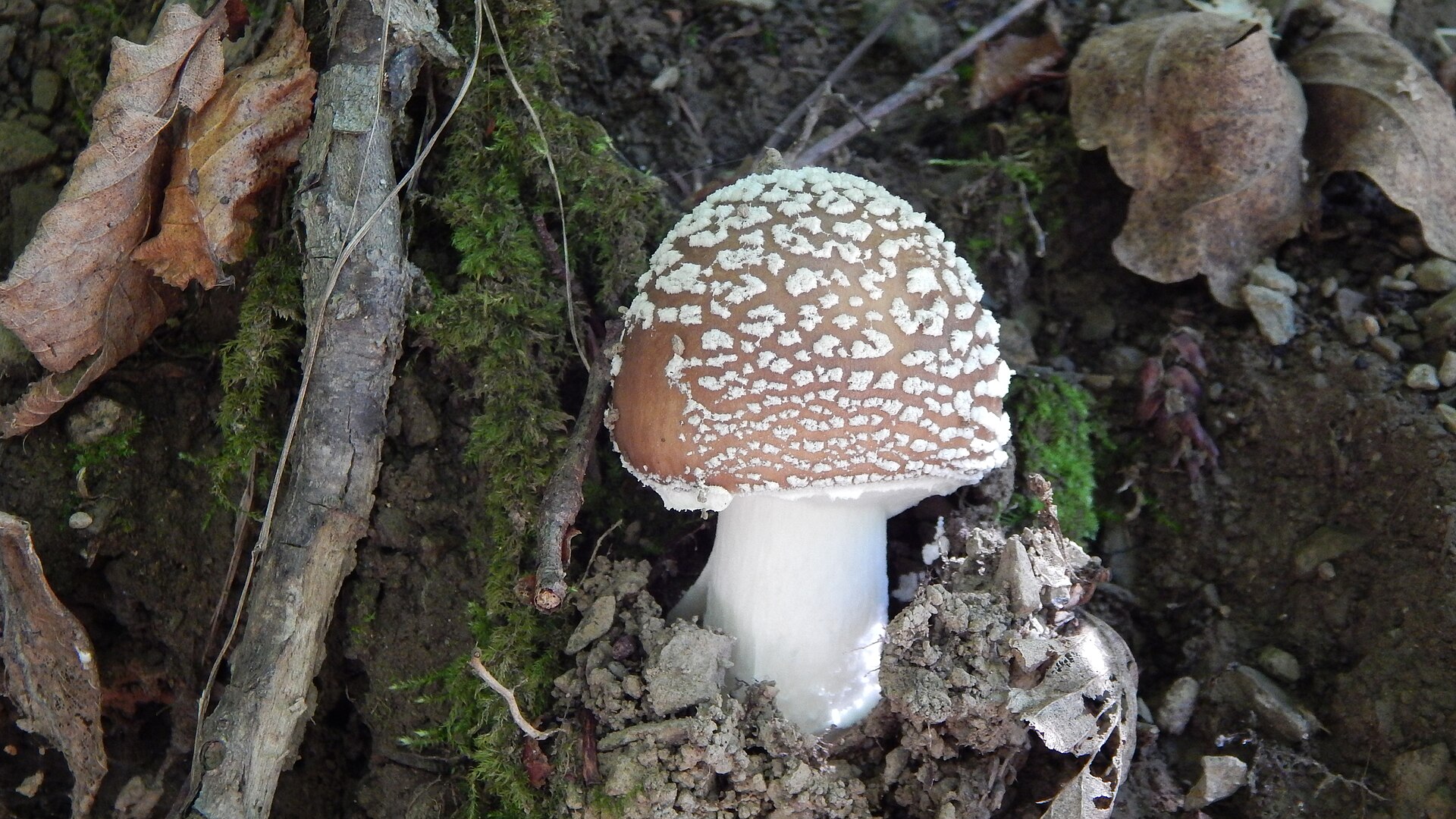
How to Tell Them Apart
Brown to tan cap rather than yellow. Warts tend to be more regularly arranged. Has a distinctly rimmed, collar-like volva. Contains the same class of toxins but usually in higher concentrations.
Side-by-Side Identification
| Trait | Jewelled Amanita | Panther Cap |
|---|---|---|
| Cap | 4-10 cm across. Hemispherical at first, expanding to convex or flat. Bright butter-yellow to golden-yellow, sometimes pale cream-yellow. Surface smooth, often with scattered white to cream veil patches (warts). Margin distinctly striate (lined) when mature. | 5-12 cm across. Convex becoming flat with age. Color ranges from dark brown to tan or ochre-brown. Surface covered with small, pure white warts arranged in concentric circles. Margin often striate (lined) near the edge. |
| Gills | White, free from the stem, closely spaced. Remain white throughout. | White, free from the stem, closely spaced. Do not change color with age. |
| Stem | 5-12 cm tall, white, slightly fibrous. Ring is thin and fragile, often disappearing quickly. Base has a small, collar-like or sack-like volva that may be reduced to a rim on the bulb. | 6-12 cm tall, white, with a fragile ring that often falls off or clings to the lower stem. Base has a distinctive bulb with a rimmed collar (gutter-like volva) rather than a sack-like volva. |
| Spore print | White. | White. |
| Odor | Mild, not distinctive. Some describe a faint earthy or mushroomy scent. | Mild and unremarkable. Not distinctive. |
| Habitat | Mycorrhizal with both conifers and broadleaf trees. Common in pine, spruce, oak, and beech forests. Found in sandy or well-drained soils, forest edges, and clearings. | Mycorrhizal with both conifers and broadleaf trees, especially spruce, pine, beech, and oak. Found in mixed woodlands, forest edges, parks, and gardens with mature trees. Prefers well-drained, slightly acidic soils. |
| Season | May through October. One of the earlier Amanitas to fruit, often appearing in late spring or early summer. | July through November in the Northern Hemisphere. Peak fruiting in September and October. |
Found one of these in the wild? Don't rely on memory — identify it from a photo with Orangutany and check it against both species before you touch it.