Mycoremediation: How Fungi Are Cleaning Up Pollution
By Priya Sharma · Orangutany · March 2026
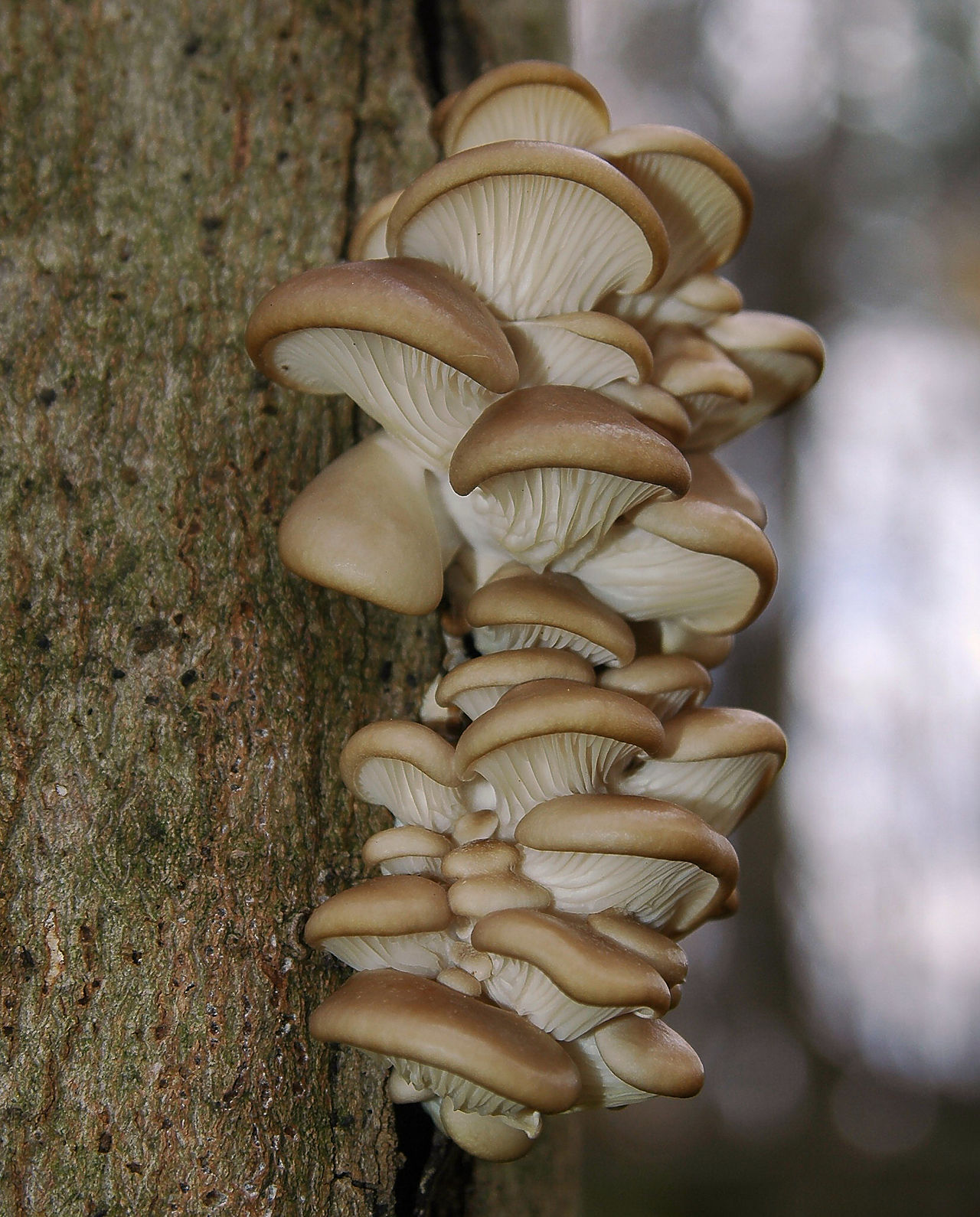
In 1998, mycologist Paul Stamets piled oyster mushroom mycelium onto a heap of diesel-contaminated soil at a Washington State Department of Transportation maintenance yard. Within eight weeks, the petroleum hydrocarbons had been reduced by 95%. The soil, once toxic and black, was covered in clusters of Pleurotus ostreatus fruiting bodies. Insects arrived. Birds followed the insects. A small ecosystem had rebuilt itself on what was, weeks earlier, a dead zone.
That experiment became one of the founding demonstrations of mycoremediation: the use of fungi to degrade or sequester environmental pollutants. In the decades since, researchers have shown that fungi can break down petroleum products, pesticides, synthetic dyes, pharmaceutical residues, plastics, and even radioactive isotopes. It is one of the most promising and least-funded areas of environmental science.
Why Fungi Are Uniquely Suited to Break Down Pollutants
Fungi are the planet's original decomposers. Long before bacteria evolved the ability to break down lignin, the tough structural polymer in wood, white-rot fungi had already been doing it for hundreds of millions of years. The enzyme systems they evolved for this purpose turn out to be remarkably effective against synthetic pollutants, because many industrial chemicals share structural similarities with natural organic compounds.
The key enzymes are laccases, manganese peroxidases, and lignin peroxidases. These are extracellular enzymes, meaning fungi secrete them into their surrounding environment rather than ingesting food first. This is critical: a bacterium must physically contact a pollutant molecule to metabolize it, but a fungus can send its enzymes out ahead through its mycelial network, breaking down contaminants at a distance.
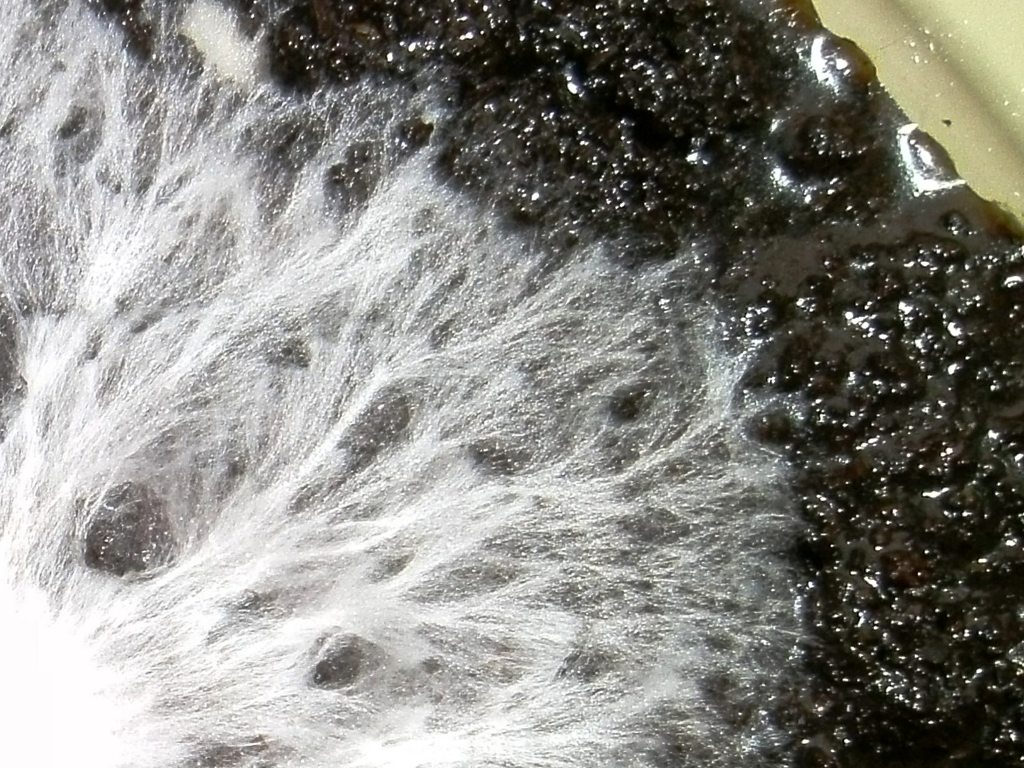
The mycelial network itself is another advantage. A single cubic inch of soil can contain eight miles of mycelial threads. This gives fungi an enormous surface area for contact with pollutants, and allows them to colonize contaminated sites far more effectively than bacterial cultures applied to the surface.
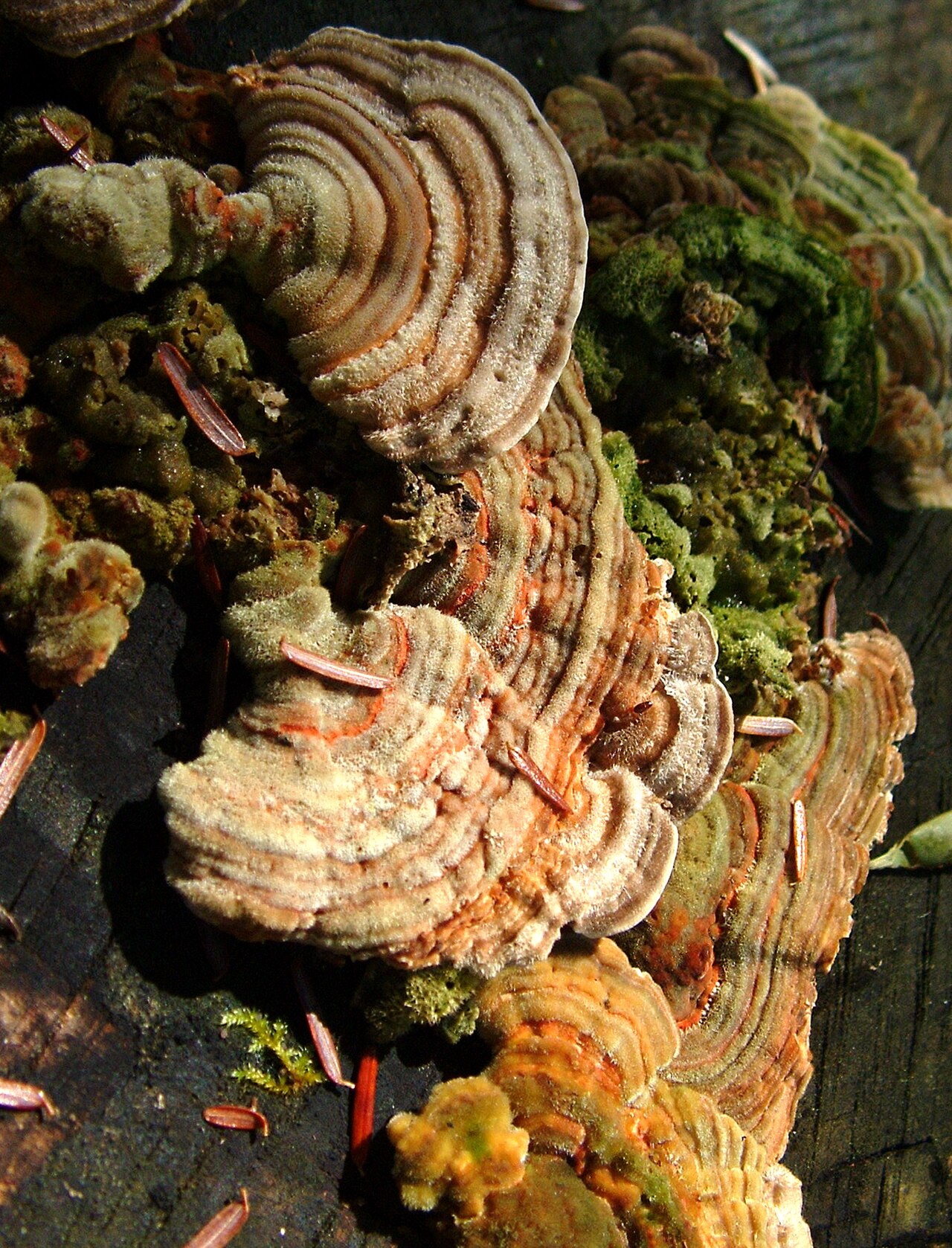
White-rot fungi, the group that includes oyster mushrooms, turkey tail (Trametes versicolor), and reishi (Ganoderma lucidum), are the most studied for bioremediation. But the potential extends across the fungal kingdom.
Petroleum and Diesel: The Stamets Experiments
Paul Stamets' 1998 diesel experiment in Bellingham, Washington, remains one of the most cited demonstrations in the field. The setup was simple: four test piles of diesel-soaked soil were treated with different methods. One pile received oyster mushroom mycelium grown on straw. The others received bacterial inoculants, chemical treatments, or were left as controls.
After eight weeks, the mycelium-treated pile had reduced total petroleum hydrocarbons (TPH) from approximately 20,000 parts per million to under 200 ppm. The other piles showed modest improvement at best. The oyster mushrooms had broken the long-chain hydrocarbons into simpler, non-toxic compounds: carbon dioxide and water, primarily.
Since then, studies have replicated these results across a range of petroleum products. A 2011 study in the International Biodeterioration & Biodegradation journal showed Pleurotus ostreatus degrading polycyclic aromatic hydrocarbons (PAHs), the carcinogenic components of crude oil, by up to 80% in 90 days. A 2019 study at the University of Sydney demonstrated that oyster mushroom mycelium could reduce the toxicity of aged crude oil residues in Australian soils.
The mechanism is straightforward: the same laccase and peroxidase enzymes that break down lignin in dead wood can cleave the aromatic rings found in petroleum compounds. To the fungus, a diesel molecule looks chemically similar enough to a piece of rotting wood that it treats it as food.
Plastics: The Pestalotiopsis Discovery
In 2011, a group of Yale students on a rainforest expedition in Ecuador discovered an endophytic fungus, Pestalotiopsis microspora, that could break down polyurethane, a common plastic used in everything from foam insulation to shoe soles. The fungus could do this anaerobically, meaning it did not require oxygen, which opened the possibility of using it in landfills where oxygen is scarce.
The discovery was published in Applied and Environmental Microbiology and generated immediate interest. Polyurethane is one of the most persistent plastics in the environment, and no efficient degradation method existed before this finding.
Since then, researchers have identified dozens of fungal species capable of degrading various plastics. A 2020 study from the Kunming Institute of Botany in China found that Aspergillus tubingensis could break down polyester polyurethane in a matter of weeks. Studies at Kew Royal Botanic Gardens have identified fungi that degrade polyethylene, the plastic used in bags and bottles.
Microplastics, the tiny fragments that have infiltrated every ecosystem on Earth, are a newer target. A 2023 study in Science of the Total Environment demonstrated that white-rot fungi could partially degrade microplastic particles in soil, though the process was slow. The research is early-stage, but the enzyme systems are there. The challenge is scaling them up.
Pesticides and Industrial Chemicals
Some of the most promising mycoremediation research targets agricultural chemicals. Organophosphate and organochlorine pesticides, including DDT and its derivatives, persist in soils for decades. White-rot fungi have been shown to degrade many of these compounds.
Turkey tail (Trametes versicolor) has demonstrated particular efficacy against synthetic dyes, the kind discharged by textile factories into waterways across South and Southeast Asia. A 2016 study in Bioresource Technology showed that Trametes versicolor laccase could decolorize and detoxify azo dyes, the most common class of industrial dye, within 24 hours.
Pharmaceutical residues are another frontier. Antibiotics, hormones, and anti-inflammatory drugs pass through wastewater treatment plants largely intact and end up in rivers and groundwater. Studies have shown that white-rot fungi can degrade diclofenac, carbamazepine, and even synthetic estrogens, compounds that conventional water treatment struggles with.
The herbicide atrazine, one of the most commonly detected groundwater contaminants in the United States, has been successfully degraded by several fungal species in laboratory conditions. Field-scale deployment remains limited, but the biochemistry works.
Heavy Metals: Biosorption, Not Breakdown
Fungi cannot break down heavy metals. Lead, mercury, cadmium, and arsenic are elements; they cannot be decomposed into simpler substances. But fungi can sequester them through a process called biosorption: metal ions bind to the cell walls of fungal mycelium, effectively removing them from the surrounding soil or water.
This is not a theoretical capability. Mushrooms are well known to accumulate heavy metals from contaminated soils, which is why foraging near highways, industrial sites, or former mines is strongly discouraged. The same property that makes contaminated mushrooms dangerous to eat makes fungi useful for environmental cleanup.
Researchers at the Czech University of Life Sciences have shown that Pleurotus ostreatus mycelium can remove up to 85% of cadmium and 70% of lead from aqueous solutions. The mycelium acts as a biological sponge. Once saturated, the fungal biomass can be harvested and the metals recovered or safely disposed of, concentrating the contamination into a small, manageable volume rather than leaving it spread across acres of soil.
Chernobyl's Radiotrophic Fungi
In 1991, five years after the Chernobyl nuclear disaster, a remote camera sent into the destroyed Reactor 4 captured something extraordinary: black fungal growth on the walls of the reactor building, in one of the most radioactive environments on Earth.
Subsequent research identified these as melanin-rich fungi, including species of Cladosporium and Cryptococcus neoformans. In 2007, researchers at the Albert Einstein College of Medicine published a landmark paper in PLOS ONE demonstrating that these fungi were not merely surviving radiation but appeared to be using it as an energy source. The melanin in their cell walls was converting gamma radiation into chemical energy through a process analogous to photosynthesis, dubbed "radiosynthesis."
The fungi grew faster when exposed to radiation levels 500 times higher than normal background. They oriented their growth toward the radiation source, the way a plant grows toward light.
This discovery has implications beyond Chernobyl. NASA has studied these radiotrophic fungi as potential radiation shields for spacecraft and habitats on Mars. A 2020 experiment aboard the International Space Station tested a thin layer of Cladosporium sphaerospermum as a radiation shield and found it reduced radiation exposure by approximately 2%, even as a 1.7mm-thick layer. The researchers calculated that a 21-centimeter layer could provide adequate shielding for a Mars habitat.
For environmental remediation, radiotrophic fungi offer a biological approach to managing radioactive contamination in soil. While they do not neutralize radiation, they can bioaccumulate radioactive cesium and strontium, concentrating it for easier removal, much as other fungi sequester heavy metals.
Mycofiltration: Cleaning Water with Mycelium
Mycofiltration uses mats of living mycelium as biological filters for water. The concept is simple: water passes through a bed of wood chips or straw colonized by fungal mycelium. The mycelium traps sediment, absorbs heavy metals, breaks down chemical contaminants, and even filters out bacteria, including E. coli and coliform bacteria.
Stamets demonstrated this in collaboration with the Washington State Department of Ecology. Mycelial mats placed in stormwater runoff channels reduced coliform bacteria counts by over 10,000 times. The mycofiltration beds also removed heavy metals and petroleum residues from the runoff.
Several municipalities in the Pacific Northwest have since experimented with mycofiltration for stormwater management. Portland, Oregon, installed test mycofilters along highway drainage routes. The results were promising, though maintenance (replacing the substrate as the mycelium exhausts its food source) remains a practical challenge.
In developing countries, mycofiltration offers a low-cost alternative to chemical water treatment. Oyster mushrooms grow on agricultural waste (straw, coffee grounds, sugarcane bagasse), so the substrate is free in many tropical regions. After filtration, the mushrooms that fruit on the filter beds are safe to eat, as long as the contaminants being filtered are biological (bacteria, parasites) rather than chemical.
Recent Projects and Applications
Mycoremediation has moved from laboratory curiosity to active field deployment, though still at modest scale. Some notable projects:
- Oil spill cleanup in Ecuador: After oil extraction contaminated large areas of the Ecuadorian Amazon, local organizations partnered with mycologists to deploy oyster mushroom mycelium on oil-soaked soil. Early results showed significant TPH reduction, though the project faced challenges with tropical humidity and competing mold species.
- Cigarette butt remediation: Cigarette filters contain cellulose acetate, a form of plastic that leaches cadmium, lead, and nicotine into soil and waterways. Researchers at RMIT University in Melbourne demonstrated that Pleurotus ostreatus mycelium could colonize and partially break down cigarette filters, reducing their toxicity. A pilot project in London used mycelium-inoculated bins to process collected cigarette waste.
- Textile dye wastewater in India: The Ganges river basin receives enormous volumes of untreated dye effluent from textile factories. Researchers at IIT Delhi have tested fungal bioreactors using Trametes versicolor to decolorize and detoxify this wastewater before discharge, with decolorization rates exceeding 90% for several dye types.
- Amazon Mycorenewal Project: An ongoing initiative using fungal inoculants to restore soil contaminated by illegal gold mining operations, where mercury is used to separate gold from ore. The fungi biosorb mercury from the soil, reducing its bioavailability to plants and animals.
Limitations and Challenges
Mycoremediation is not a silver bullet. Several significant challenges limit its current deployment:
- Scale: Most successful demonstrations have been at small scale, individual contaminated sites rather than industrial-scale cleanup. Scaling mycelial inoculation to cover acres of contaminated land is logistically difficult.
- Time: Fungal remediation takes weeks to months. Chemical treatment or excavation, while more destructive, can be faster. For urgent contamination events like active oil spills, fungi are too slow to be the first response.
- Specificity: Not all fungi degrade all pollutants. A species effective against diesel may do nothing against a specific pesticide. Matching the right fungus to the right contaminant requires expertise and often site-specific testing.
- Competition: Introduced fungi must compete with native soil microorganisms. In many cases, the native microbial community outcompetes the remediation fungus, reducing its effectiveness. This is especially problematic in tropical soils with high microbial diversity.
- Regulatory frameworks: Environmental regulators are accustomed to chemical and mechanical remediation methods. Biological remediation lacks standardized protocols, making it harder to get approvals and funding for mycoremediation projects.
- Incomplete degradation: Some pollutants are only partially broken down, potentially creating intermediate compounds that are themselves toxic. Careful monitoring is required to ensure the end products are genuinely safe.
The Future of Fungal Bioremediation
Despite these challenges, the trajectory of mycoremediation research is accelerating. Genome sequencing has identified the specific genes responsible for pollutant degradation in dozens of fungal species, opening the door to targeted strain selection and potentially genetic engineering of more efficient remediation organisms.
Combination approaches are showing particular promise: pairing fungi with bacteria in "mycobacterial consortia" that tackle different stages of pollutant breakdown. The fungi break large, complex molecules into smaller fragments, and bacteria finish the job by mineralizing the fragments into harmless compounds.
The economics are also favorable. Mycoremediation uses agricultural waste as substrate, requires no heavy machinery, generates no secondary chemical waste, and in many cases produces edible mushrooms as a byproduct (from uncontaminated substrates used to grow the inoculant). For developing nations with contaminated land but limited budgets for conventional remediation, fungi offer a realistic path forward.
Paul Stamets has argued for decades that fungi represent the Earth's natural immune system, organisms that have spent hundreds of millions of years evolving to break down complex organic matter and recycle it into new life. Mycoremediation is, in a sense, simply putting that immune system to work on the messes we've made.
The science is real. The enzyme systems work. The bottleneck is not biology but funding, regulation, and political will. As contaminated sites proliferate and conventional cleanup costs soar into the billions, the humble mushroom may turn out to be one of the most cost-effective decontamination tools available.
Fungi cleaned up after the dinosaurs. They colonized Chernobyl. They can handle an oil spill.