Mushrooms That Can Kill You: Real Cases, Real Species
By Elena Marchetti · Orangutany
In July 2023, Erin Patterson served beef wellington to her former in-laws at a lunch in Leongatha, Australia. It was a pleasant afternoon. The food was good. Three of the four guests died within days.
The mushrooms in the dish were Death Caps.
This is not a list of mushrooms that might make you sick. This is a list of mushrooms which have actually killed people, in documented cases, with names and dates and autopsies. Some of the victims were experienced foragers. Some were chefs. Some were children.
Here's the thing: none of them thought it would happen to them.
Death Cap (Amanita phalloides)
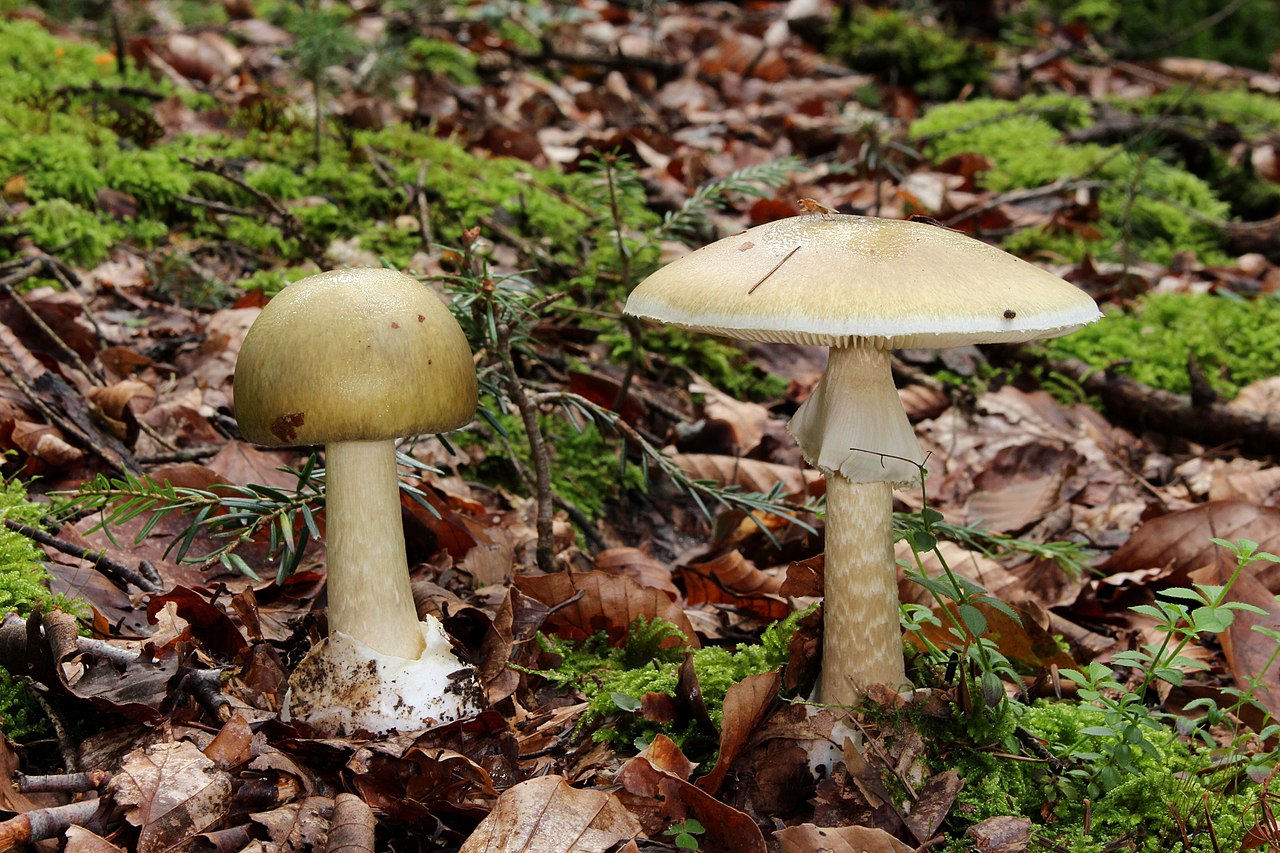
The Death Cap is responsible for roughly 90% of all mushroom fatalities worldwide. Let that sink in. Nine out of ten people who die from eating a wild mushroom die from this one species.
The Patterson case became international news. Erin served beef wellington at a family lunch. Her former mother-in-law, Gail Patterson, 70, and Gail's sister Heather Wilkinson, 66, both died. Heather's husband, Pastor Ian Wilkinson, spent months in the hospital before dying as well. The only survivor was Don Patterson, Erin's former father-in-law, who was critically ill for weeks.
In my family, growing up between Emilia-Romagna and New Jersey, mushroom foraging was something you learned from your nonno. You didn't pick anything you couldn't identify with your eyes closed. But here's the problem: the Death Cap looks almost exactly like several edible species from Asia.
That's what happened in Canberra in 2014. A Chinese-born chef, experienced with mushrooms, picked what he believed were paddy straw mushrooms, a common edible species back home. They were Death Caps. He and three guests were hospitalized. Two died.
The three-phase poisoning timeline: First, violent stomach cramps and vomiting, 6–12 hours after eating. Then, a bizarre false recovery: you feel fine, maybe even good, for a day or two. Your doctor might send you home. But phase three is already underway: your liver is failing. By the time you feel better, your liver is already dying. Most victims who reach phase three need a transplant or die within a week.
Destroying Angel (Amanita virosa / bisporigera)
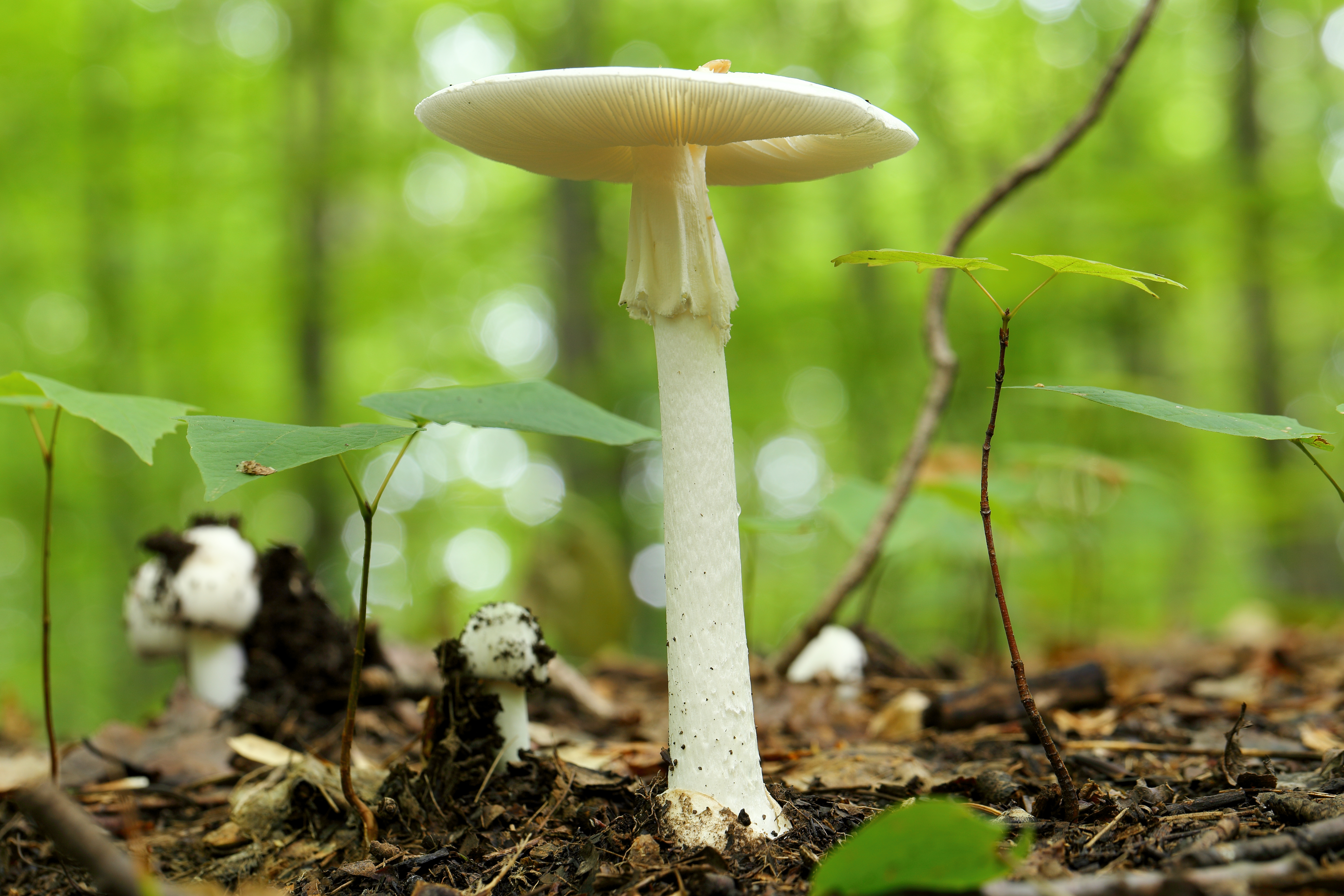
Imagine a mushroom so white and clean it looks like it belongs on a dinner plate. Elegant stem, smooth cap, no weird colors or markings. When it's young, it even smells like roses.
It will kill you just as dead as the Death Cap.
The Destroying Angel contains the same amatoxins (alpha-amanitin) that make the Death Cap lethal. Same three-phase timeline. Same liver destruction. Same slim odds once symptoms set in.
In 2017, in British Columbia, a three-year-old child ate a Destroying Angel from the family's backyard. Not in the woods. Not on a hike. In the yard. The child survived after emergency treatment, but the case is a reminder: these mushrooms don't stay in the forest. They grow in gardens, parks, under oak trees in suburban neighborhoods.
In Europe, we call the white variety Amanita virosa. In North America, it's typically Amanita bisporigera. Both will end you.
Funeral Bell (Galerina marginata)
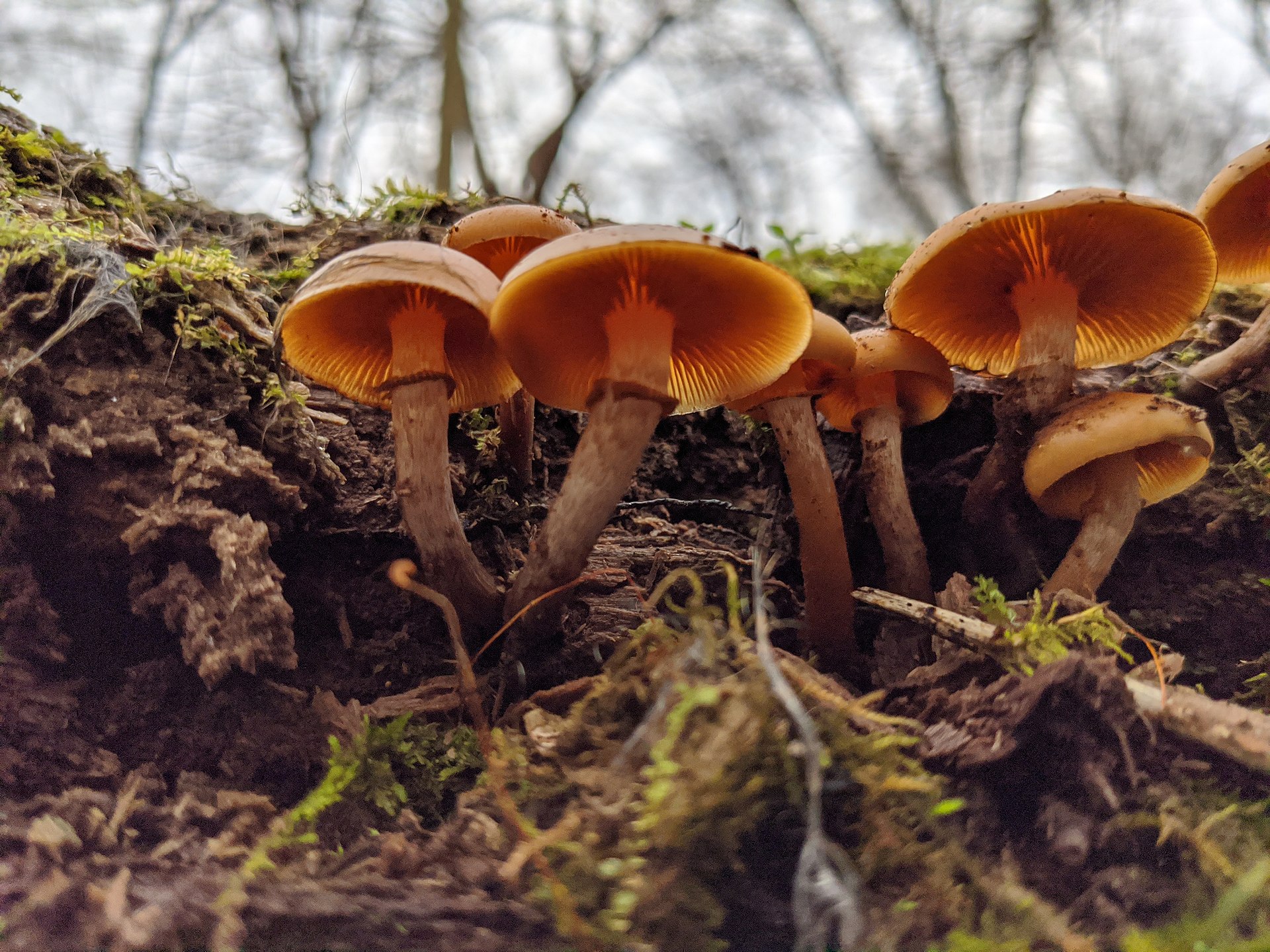
Foragers call it "the little brown killer." And that's exactly the problem: it's a small, nondescript, brown mushroom that grows on decaying wood. It looks like a hundred other harmless species. It looks, in particular, like certain magic mushrooms.
In 2010, a couple in Oregon went foraging for psilocybin mushrooms. They found what they thought were Psilocybe growing on a log. They were Funeral Bells. Both were hospitalized with acute liver failure.
Galerina marginata contains the exact same amatoxins as the Death Cap. Same poison, different package. The lethal dose is tiny: as few as 10 small caps can kill an adult.
Here's the thing about Funeral Bells: they're everywhere. They grow on every continent except Antarctica. They fruit in fall, sometimes in spring. And unlike the Death Cap, which at least has a distinctive look once you know it, the Funeral Bell is aggressively generic. It's a little brown mushroom in a world full of little brown mushrooms.
The 14-Year-Old in Santa Cruz
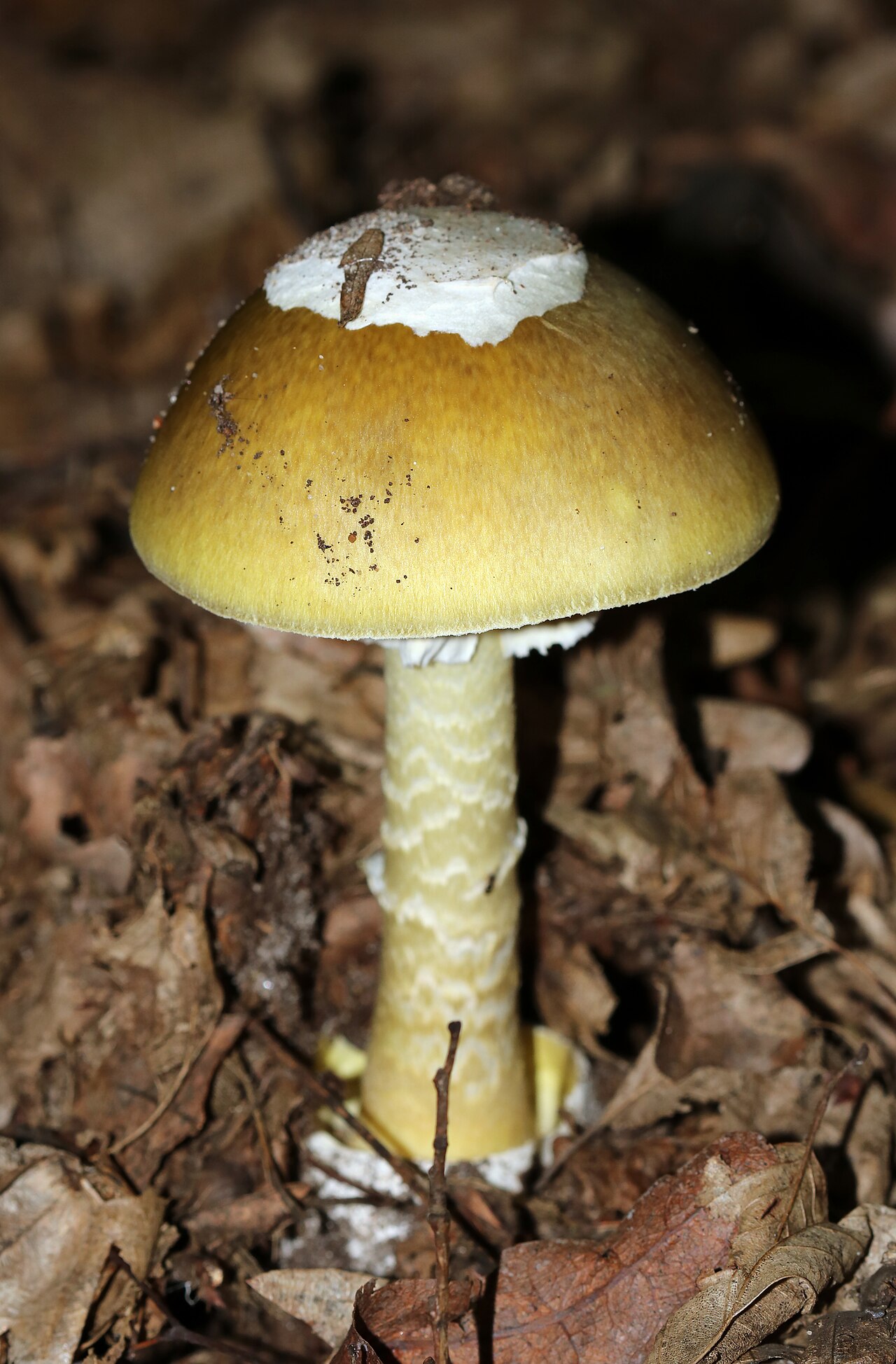
In 2016, a 14-year-old in Santa Cruz, California picked mushrooms from a public park. Just a kid, out with friends, and there were mushrooms growing under the oak trees. Big, healthy-looking ones.
They were Death Caps. Again.
The teenager needed an emergency liver transplant. She survived, but barely. Santa Cruz County later issued warnings about Death Cap proliferation in local parks; the species has been spreading along the California coast for decades, hitching rides on the root systems of imported European oak trees.
That's the insidious part. Death Caps are not native to North America. They're European immigrants, just like half my family. But unlike my family, they've been silently colonizing the West Coast since the early 1900s, and they're still spreading.
False Morel (Gyromitra esculenta)
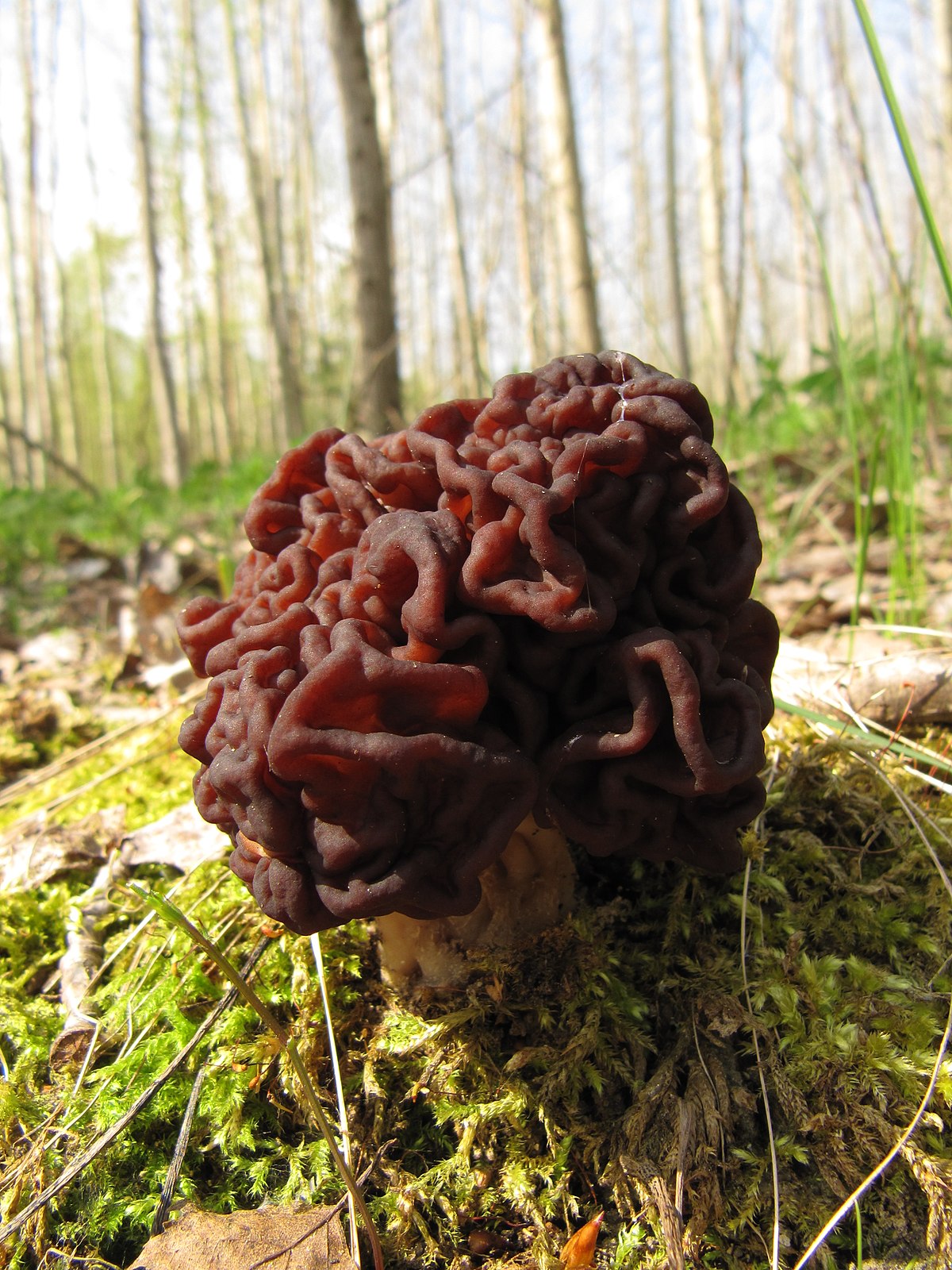
In Finland, they eat this one on purpose.
I'm serious. The False Morel is considered a seasonal delicacy in Scandinavia, where it's sold in markets after being parboiled multiple times to remove the toxin. Finns have been eating it for generations. The key word is "parboiled multiple times."
The toxin is gyromitrin, which your body converts into monomethylhydrazine. That's a component of rocket fuel. You are, quite literally, eating something that your liver turns into a propellant for spacecraft.
In 2023, a family of four in Montana was hospitalized after eating False Morels they'd foraged and cooked without the elaborate Scandinavian preparation process. They thought they'd found true morels, an honest mistake, since the two species can look similar to an untrained eye, though experienced foragers will tell you the brain-like wrinkles of a False Morel look nothing like the honeycomb pits of a true morel.
The paradox of Gyromitra esculenta is right there in the Latin name: esculenta means "edible." It was named before anyone understood the chemistry. In Scandinavia, with proper preparation, it arguably is edible. Everywhere else, it's a gamble with your liver.
The Slow Killers: Autumn Skullcap & Webcaps
Most deadly mushroom poisonings show symptoms within hours. Not the webcaps.
Cortinarius rubellus, the Deadly Webcap, contains a toxin called orellanine. It can take up to two weeks (fourteen days) before you feel anything wrong. By then, your kidneys are already destroyed. You didn't even remember eating mushrooms two weeks ago. The connection between cause and effect is almost impossible to make without a toxicology workup.
The Autumn Skullcap (Galerina marginata's close relatives in the Galerina genus) and various Cortinarius species round out the roster of killers that most people have never heard of. They don't make headlines the way the Death Cap does. They're not dramatic. They're just quietly lethal.
In the UK, there have been multiple cases of Polish and Eastern European immigrants poisoned by webcaps they mistook for familiar edible species from home. Same story, different mushroom: you know mushrooms from your home country, you see something that looks right, and you trust your experience. Your experience is wrong.
What All These Deaths Have in Common
The victims were not stupid.
A chef who'd been cooking with mushrooms for decades. A family that foraged every autumn. Immigrants who grew up picking mushrooms in forests that looked exactly like the ones in their new country. A teenager who didn't know any better, but whose parents didn't know any better either, because who expects deadly mushrooms in a public park?
The common thread is overconfidence. Not ignorance, overconfidence. Every one of these people had some reason to believe they knew what they were doing. The chef knew Asian mushrooms. The foragers knew their local species. The immigrants knew mushrooms from back home.
But mushrooms don't care what you know. A Death Cap in California looks different from a Death Cap in Italy which looks different from a Death Cap in Australia. The same species can vary wildly in color, size, and shape depending on age, weather, and substrate. And the deadly ones are specifically, almost cruelly, similar to edible species.
If you forage, get a spore print. Learn the smell. Check every single feature. And if there's any doubt, any at all, leave it in the ground.
Or take a photo and get a second opinion before you cook anything. Technology won't replace expertise, but it's a start.
The forest doesn't care how confident you are. It doesn't care how many years you've been foraging, or what your nonno taught you, or what app you used. The mushrooms are what they are. The only question is whether you're humble enough to admit you might be wrong.