Medicinal Mushrooms Benefits: What the Research Actually Shows
By Mei Lin Chen for Orangutany
Last January I spent three days at SupplySide West in Las Vegas, wandering the convention floor with a press badge and a growing sense of fatigue. Every third booth was selling a mushroom product.Lion's mane gummies for “brain power.” Reishitinctures for “immune optimization.” Chaga coffee that would, according to its label, “support cellular health.” A cordyceps energy shot promised to “unlock peak athletic performance.” One company had a banner that literally read “Nature's Pharmacy.”
None of these claims had citations. None of the booth reps could name a specific study when I asked. One guy handed me a pamphlet referencing “thousands of years of traditional use,” which is a real thing but is not the same as clinical evidence.
Here is the frustrating part: there is real science behind some medicinal mushrooms. A comprehensive review of medicinal mushroom evidence documents genuine, peer-reviewed, sometimes double-blind-placebo-controlled science. But it gets buried under an avalanche of marketing copy that treats a petri dish result and a human clinical trial as if they're the same thing. They are not.
I am here to separate signal from noise. Species by species, study by study. What does the research actually show, and where are the gaps that the supplement industry would rather you not think about?
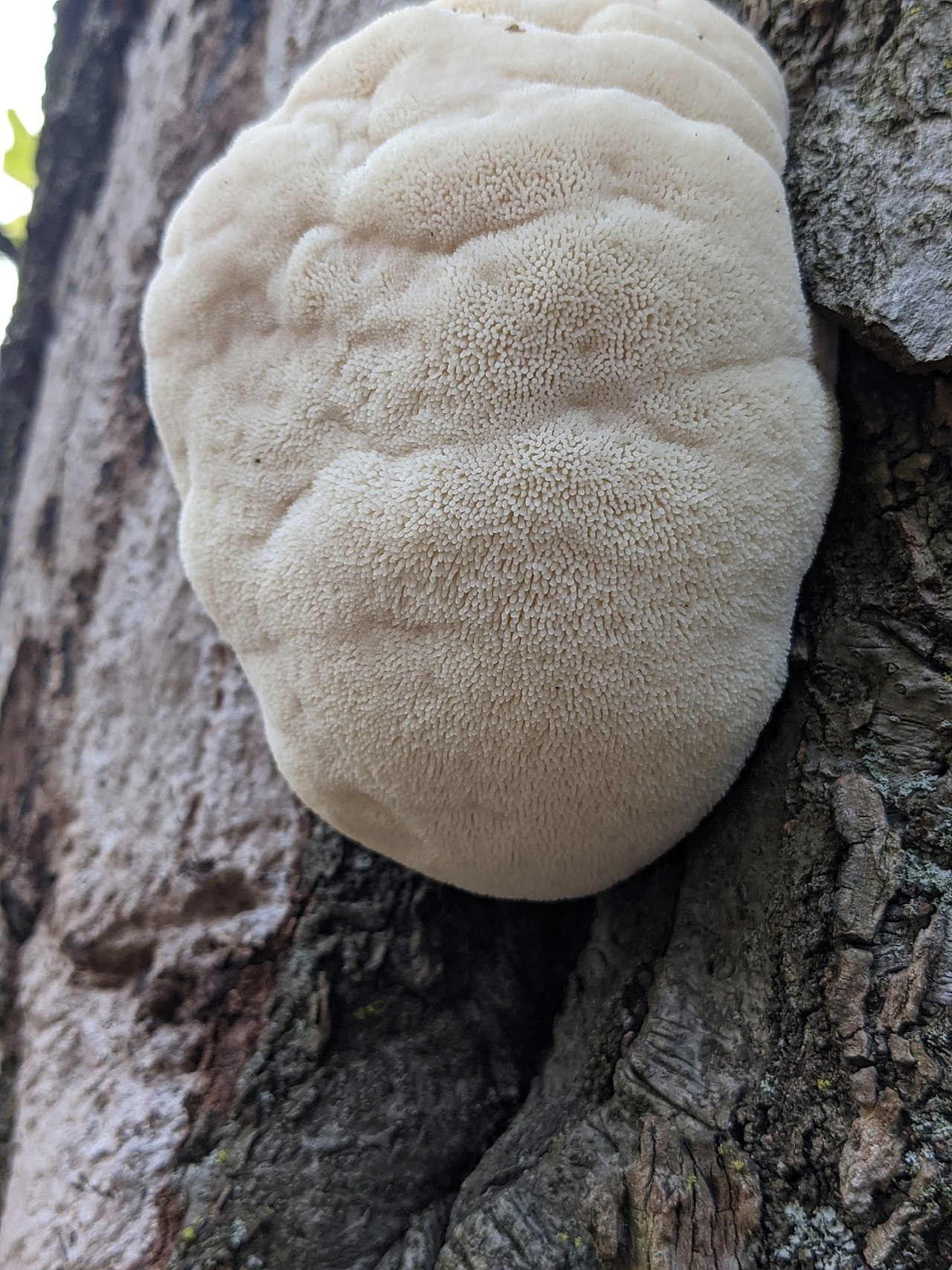
Lion's Mane (Hericium erinaceus): The Strongest Case
If any medicinal mushroom deserves serious attention, it's lion's mane. The mechanism of interest is its apparent ability to stimulate Nerve Growth Factor (NGF), a protein critical for the growth, maintenance, and survival of neurons. Compounds called hericenones (found in the fruiting body) and erinacines (found in the mycelium) have both been shown to promote NGF synthesis in vitro Kawagishi et al., 2008.
The landmark human trial is from Mori et al., 2009. It was a double-blind, placebo-controlled study involving 30 Japanese adults aged 50 to 80 with mild cognitive impairment. The treatment group took lion's mane tablets three times daily for 16 weeks. They showed statistically significant improvements on a cognitive function scale compared to the placebo group. But there is a critical detail that supplement marketers tend to leave out: four weeks after supplementation stopped, the cognitive benefits disappeared. The improvements did not persist.
More recently, a 2023 study out of the University of Queensland found that lion's mane extract promoted neurite outgrowth and enhanced Brain-Derived Neurotrophic Factor (BDNF) signaling in hippocampal neurons Martínez-Mármol et al., 2023. This is genuinely exciting. BDNF is sometimes called “fertilizer for the brain” and is implicated in learning and memory. But it is still an in vitro finding, and the gap between a cultured neuron in a lab and your actual hippocampus is considerable.
The honest assessment: lion's mane has the most promising preclinical data of any medicinal mushroom for cognitive health. The human evidence is real but limited to small trials with short follow-up periods. We need larger, longer studies. The biology is plausible. The hype is ahead of the evidence, but not by as much as with other species.
Turkey Tail (Trametes versicolor): The One With Actual Pharmaceutical Approval
Turkey tail contains a compound called PSK (polysaccharopeptide, also known as krestin), which has been approved as an adjunct cancer therapy in Japan since the 1980s. Read that again. This is not some fringe supplement claim. PSK is a prescription pharmaceutical used alongside chemotherapy in Japanese oncology. It has been the subject of dozens of clinical trials in gastric, colorectal, and lung cancers.
The key word is “adjunct.” PSK is used alongside conventional treatment, not instead of it. The evidence suggests it may improve survival rates when combined with chemotherapy, likely through immune system modulation. A meta-analysis of randomized controlled trials found that PSK combined with chemotherapy improved 5-year survival in gastric cancer patients compared to chemotherapy alone Oba et al., 2007.
In the US, a Phase I clinical trial funded by Paul Stamets (through Fungi Perfecti) tested turkey tail extract in breast cancer patients who had completed radiation therapy. The study found evidence of immune activation, specifically increased natural killer cell activity, at higher doses Torkelson et al., 2012. It was a small, early-phase safety trial, not a proof of efficacy. But it demonstrated that oral turkey tail extract could produce measurable immunological changes.
Here is what you need to understand: the PSK approved in Japan is a standardized pharmaceutical-grade extract. The turkey tail supplement you buy on Amazon is not that. The extraction process, the standardization, the dosing, the quality control are all different. Equating the two is like equating a willow bark tea with a precisely dosed aspirin tablet. They share an origin, but they are not the same product.
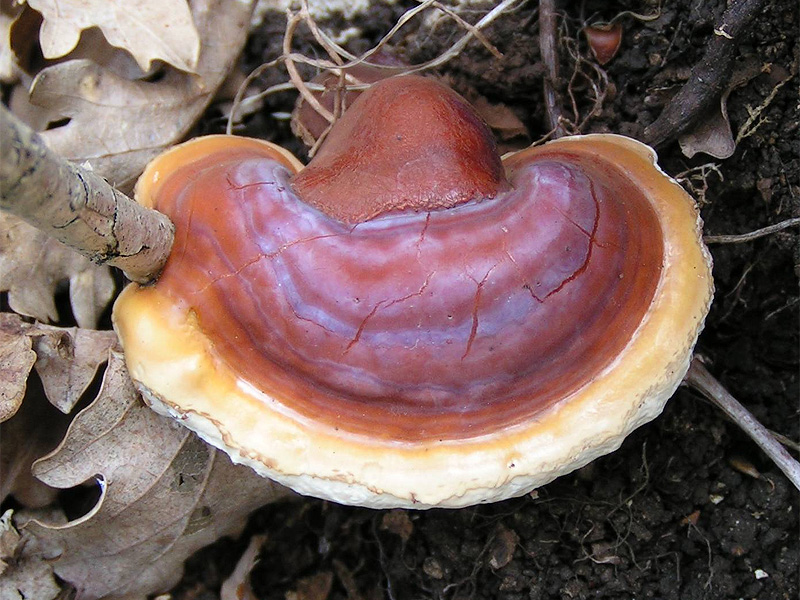
Reishi (Ganoderma lucidum): The “Mushroom of Immortality” Problem
Reishi has been used in traditional Chinese medicine for over 2,000 years. It carries the nickname “mushroom of immortality,” which is the kind of branding that makes a science writer wince. Extraordinary claims require extraordinary evidence, and the evidence for reishi is, to put it carefully, not extraordinary.
Reishi contains triterpene compounds (ganoderic acids) and polysaccharides (beta-glucans) that are demonstrably biologically active, with well-documented immunomodulatory properties. In cell culture and animal models, these compounds show anti-inflammatory, immunomodulatory, and even anti-tumor properties. The chemistry is real.
But the jump from cell culture to human health is enormous, and reishi has not made that jump convincingly. A 2016 Cochrane review, the gold standard for evidence synthesis, examined all available clinical trials of reishi for cancer treatment. The conclusion was blunt: there was insufficient evidence to justify using reishi as a first-line cancer treatment. Some trials suggested it might improve quality of life or stimulate immune responses when used alongside conventional therapy, but the studies were small and methodologically weak Jin et al., 2016.
There is some evidence for modest immune modulation in healthy adults and potential benefits for sleep quality. A small 2012 study found that reishi extract improved fatigue and wellbeing in breast cancer survivors Zhao et al., 2012. But we are talking about preliminary findings in small cohorts, not the kind of evidence that should make you spend $40 a month on a supplement.
The gap between what reishi's marketing promises and what the research supports is probably the largest of any medicinal mushroom.
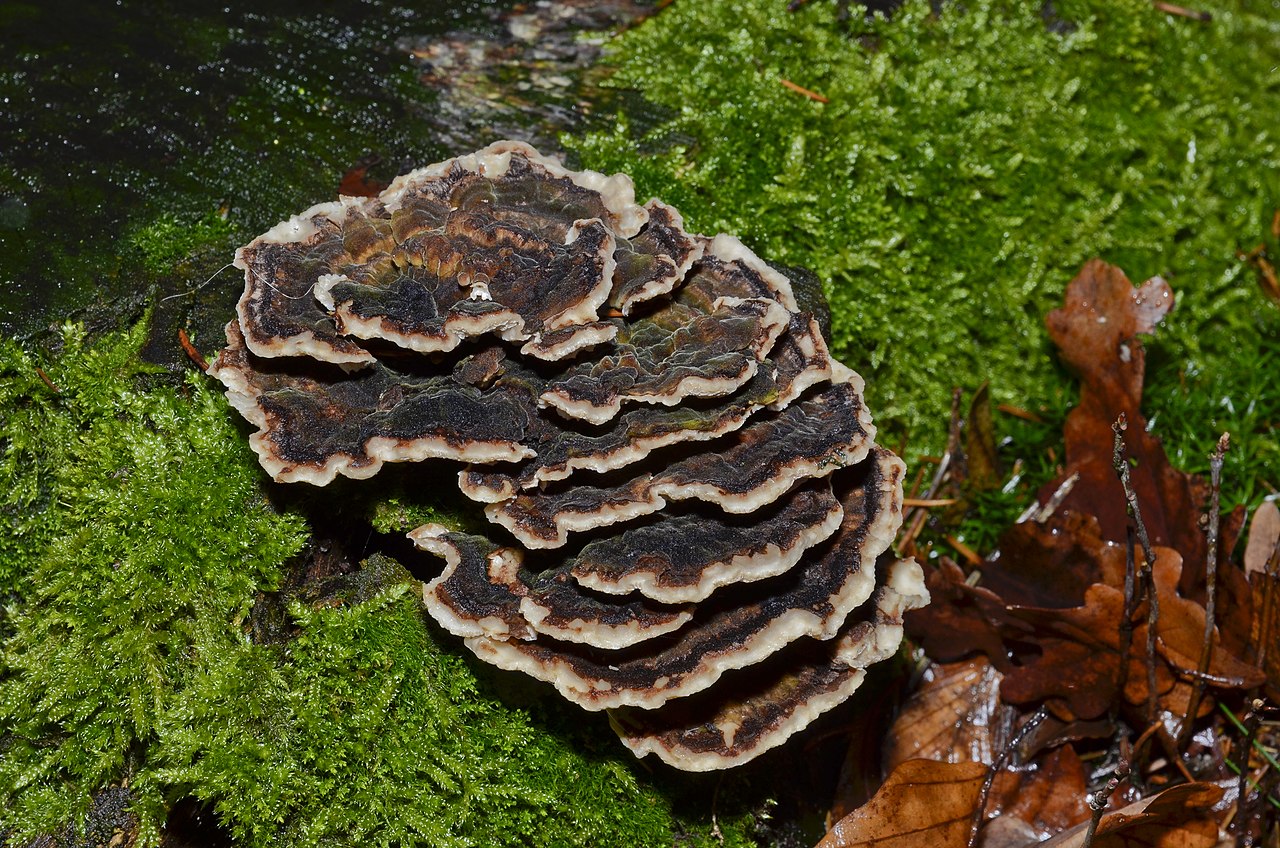
Chaga (Inonotus obliquus): Antioxidants Without Evidence
Chaga scores extremely high on ORAC (Oxygen Radical Absorbance Capacity) tests, which measure antioxidant capacity in a test tube. Supplement companies love citing these numbers. What they rarely mention is that the ORAC assay was abandoned by the USDA in 2012 because there was no evidence that high ORAC values in food correlated with actual health benefits in humans.
The clinical trial situation for chaga is straightforward: there are almost none. A search of PubMed and ClinicalTrials.gov reveals a handful of in vitro studies showing anti-inflammatory and anti-tumor activity of chaga extracts, and a few animal studies suggesting potential benefits for blood sugar regulation. Human trials? Essentially zero completed randomized controlled trials as of early 2026.
Every exciting chaga result you see cited on a product label is from a petri dish or a mouse. That is not nothing, but it is also not evidence that drinking chaga tea will do anything measurable for your health.
There is also a sustainability problem that deserves attention. Chaga is not a mushroom you can farm efficiently. It grows as a parasitic conk on birch trees over 10 to 20 years. Nearly all commercial chaga is wild-harvested, primarily from Siberia and northern Canada. Demand has surged in the last decade, and overharvesting is becoming a real concern. Some foragers are stripping birch forests of chaga faster than it can regenerate. If you care about the ecological argument for mushrooms, chaga supplements are a hard sell.
Cordyceps: The Athletic Performance Question
Cordyceps entered Western consciousness in 1993, when a group of Chinese female distance runners shattered multiple world records at the Chinese National Games. Their coach, Ma Junren, attributed their performance to a training regimen that included a tonic made from wild Ophiocordyceps sinensis, the caterpillar fungus that parasitizes moth larvae on the Tibetan Plateau. The story was irresistible: an ancient fungal remedy powering superhuman athletic performance.
The reality turned out differently. Several of those athletes later tested positive for or admitted to using EPO and other banned substances. The cordyceps attribution was, at best, incomplete. At worst, it was cover.
Modern research on cordyceps and exercise performance is more measured. A 2016 systematic review found that Cordyceps militaris supplementation showed modest improvements in VO2 max in older and sedentary adults, but had no significant effect in trained athletes Hirsch et al., 2017. The proposed mechanism involves adenosine and cordycepin, which may improve oxygen utilization at the cellular level. Plausible biology, underwhelming results in people who are already fit.
One important distinction that gets lost in marketing: the cordyceps you buy as a supplement is almost certainly Cordyceps militaris, cultivated on grain substrate. It is not Ophiocordyceps sinensis, the wild caterpillar fungus, which sells for $20,000 per kilogram in Chinese markets and is ecologically threatened. These are different species with different chemical profiles. Treating them as interchangeable, which most supplement labels implicitly do, is misleading.
The Supplement Problem
Even if you accept that certain mushroom species have genuine bioactive properties, there is a second problem: the supplement you buy may not contain what you think it does.
Extraction method matters enormously. Beta-glucans, the polysaccharides most consistently linked to immune modulation, require hot water extraction to become bioavailable. Triterpenes in reishi are alcohol-soluble. A “dual extraction” (hot water plus alcohol) captures both. Many cheaper products use neither, offering raw powdered mushroom material with poor bioavailability.
Then there is the fruiting body versus mycelium debate. Most research on medicinal mushrooms uses extracts from the fruiting body (the actual mushroom). But growing fruiting bodies is slow and expensive. A faster, cheaper method is to grow mycelium on sterilized grain and then grind the entire substrate, mycelium and grain together, into powder. The problem is that much of what ends up in the capsule is grain starch, not fungal biomass.
Independent testing by Nammex (a mushroom ingredient supplier, so take it with appropriate salt, though their methodology has been peer-reviewed) found that some mycelium-on-grain products contained less than 5% beta-glucans while being more than 60% starch. Fruiting body extracts from the same species tested at 30 to 50% beta-glucans Nammex / Realities of Mushroom Nutraceuticals, 2017. That is not a small difference. It is the difference between a functional product and an expensive flour pill.
The FDA does not require supplement companies to prove efficacy before selling their products. They do not have to standardize beta-glucan content. They do not have to disclose extraction methods. The consumer is largely on their own, which is exactly how the industry likes it.
What I Actually Take
I get asked this constantly, so here it is. I take one supplement: a lion's mane extract made from fruiting bodies, dual extracted (hot water and alcohol), from a company that publishes third-party beta-glucan testing on every batch. I take it daily. I have been doing this for about two years. I notice... maybe something? Slightly better focus on writing days. It could absolutely be placebo. I am okay with that. The safety profile is good, the cost is reasonable, and the preclinical evidence is strong enough that I consider it a worthwhile bet.
Beyond that, I cook with fresh shiitake mushrooms several times a week. That is it. I do not take reishi, chaga, or cordyceps supplements. The evidence does not justify the cost for me personally. If the research changes, I will change my mind. That is how this is supposed to work.
The Case for Just Eating Mushrooms
Here is the irony that the supplement industry would prefer you not think about: the strongest evidence for mushrooms and human health comes not from any exotic extract, but from regular dietary consumption of common culinary species.
A 2021 meta-analysis published in Advances in Nutrition examined 17 observational studies involving more than 19,500 cancer cases. The finding: higher mushroom consumption was associated with a significantly lower risk of cancer, with the strongest association for breast cancer. Eating just 18 grams of mushrooms per day (roughly one small button mushroom or a couple of shiitake) was associated with a 45% lower cancer risk compared to eating no mushrooms Ba et al., 2021.
These were not exotic species. The studies included shiitake,oyster, maitake, white button, and cremini mushrooms. The kind you buy at the grocery store for a few dollars a pound.
Mushrooms are one of the few non-animal dietary sources of vitamin D (when exposed to UV light). They contain selenium, potassium, B vitamins, and those same beta-glucans that supplement companies charge a premium for. Shiitake in particular contains lentinan, a beta-glucan that, like PSK from turkey tail, has been used as an adjunct cancer therapy in Japan.
The boring conclusion is also the most evidence-based one: eat more mushrooms. Real ones, from the store or the farmers market. Cook them into soups, stir-fries, pasta, whatever you like. You will get most of the immune-supporting benefits that the supplement industry charges ten times more to deliver in capsule form. And you will actually enjoy your dinner.
The medicinal mushrooms space is not all hype. Lion's mane has genuine promise. Turkey tail has actual pharmaceutical validation in Japan. The biology is real and worth studying. But the distance between a promising in vitro finding and a proven human health intervention is vast, and most of these species have not crossed it yet. Be skeptical of anyone who tells you otherwise, especially if they are also selling you something.
Curious what that mushroom is? Orangutany identifies mushrooms from photos in seconds.