How to Identify a Poisonous Mushroom (Hint: Most “Rules” Are Wrong)
By Varun Vaid · Orangutany
Every year, people die from mushrooms they were “sure” were safe. According to NIH data on mushroom toxicity, around 100 deaths globally, and that's just the confirmed ones. The actual number is almost certainly higher.
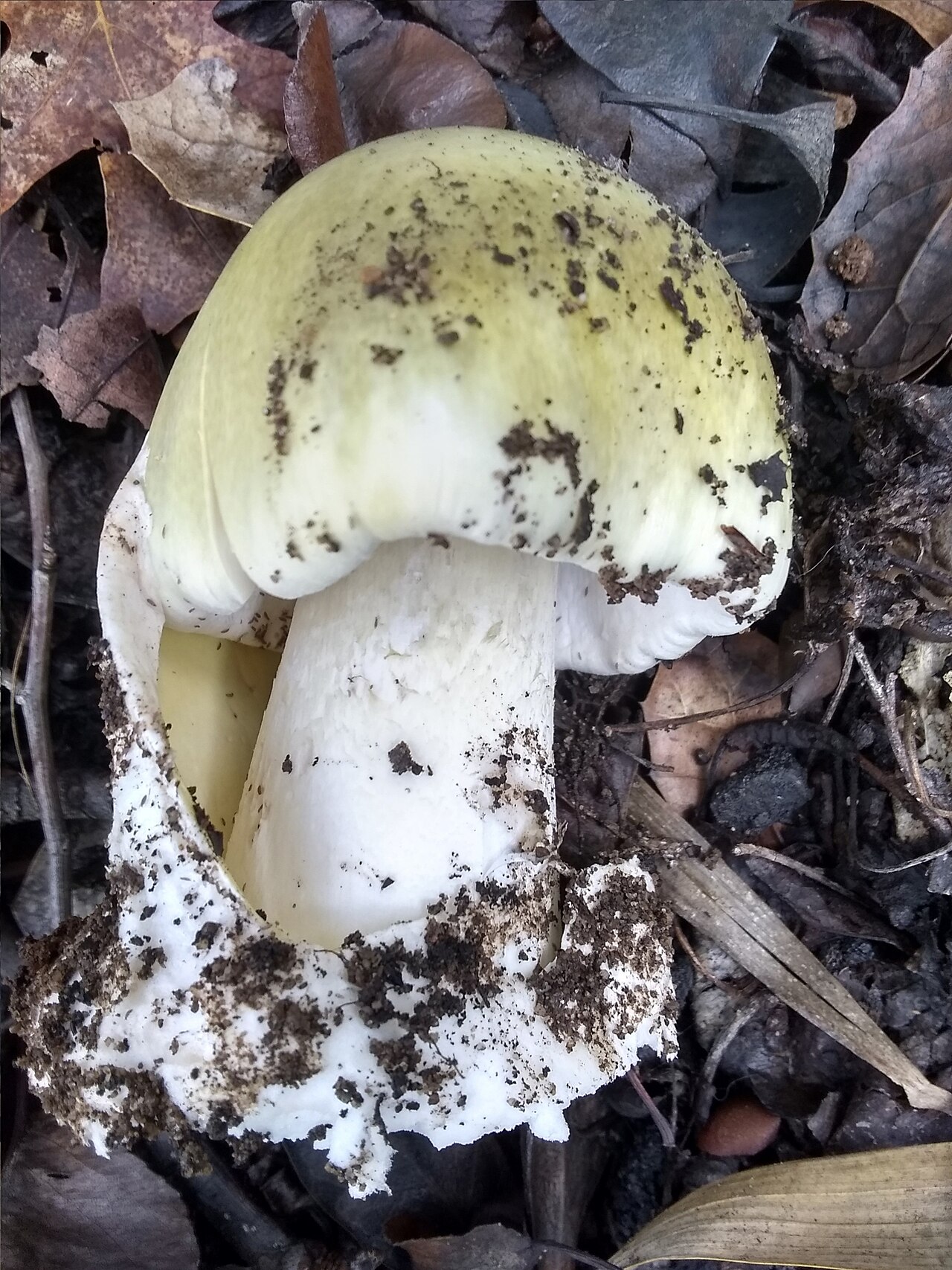
Most victims aren't reckless teenagers. They're experienced foragers who got overconfident, or immigrants who confused a local species with something edible from back home. The Death Cap alone accounts for over 90% of mushroom fatalities worldwide. And it looks completely ordinary: no warning colors, no foul smell, nothing.
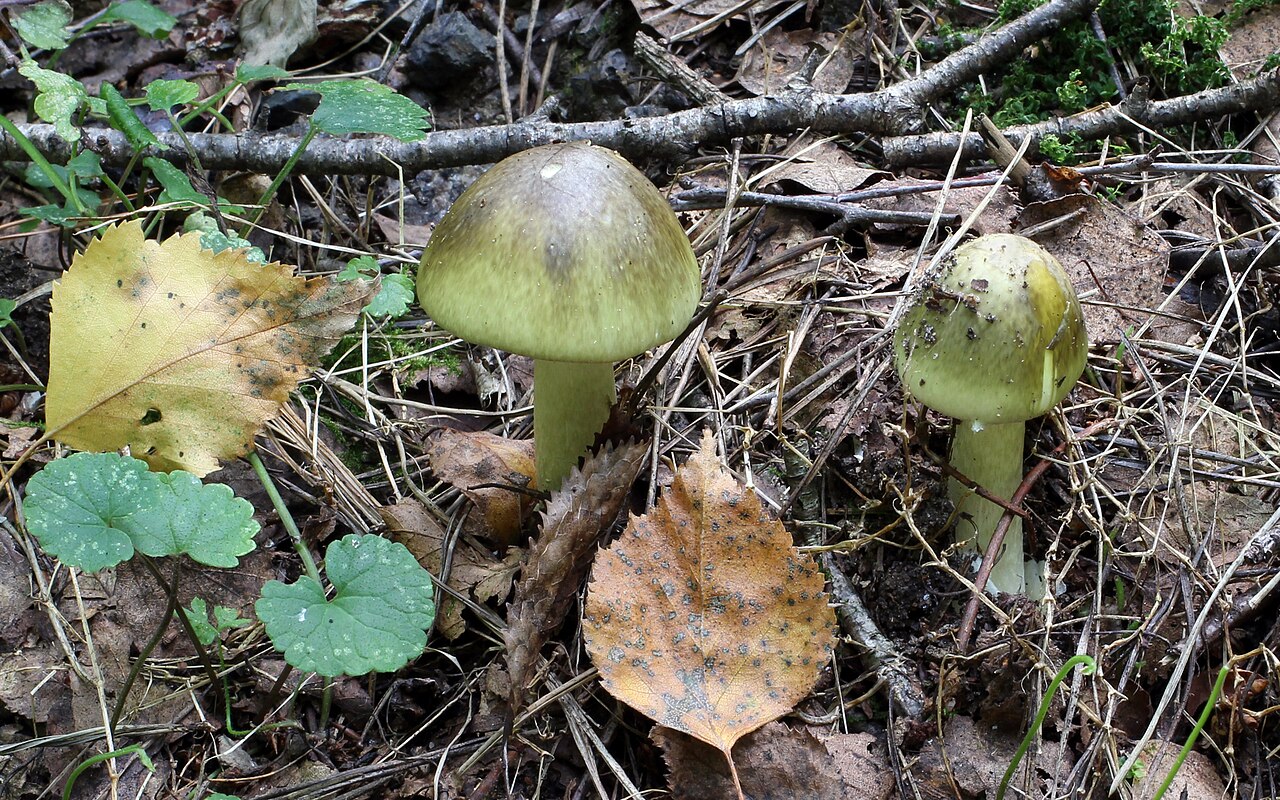
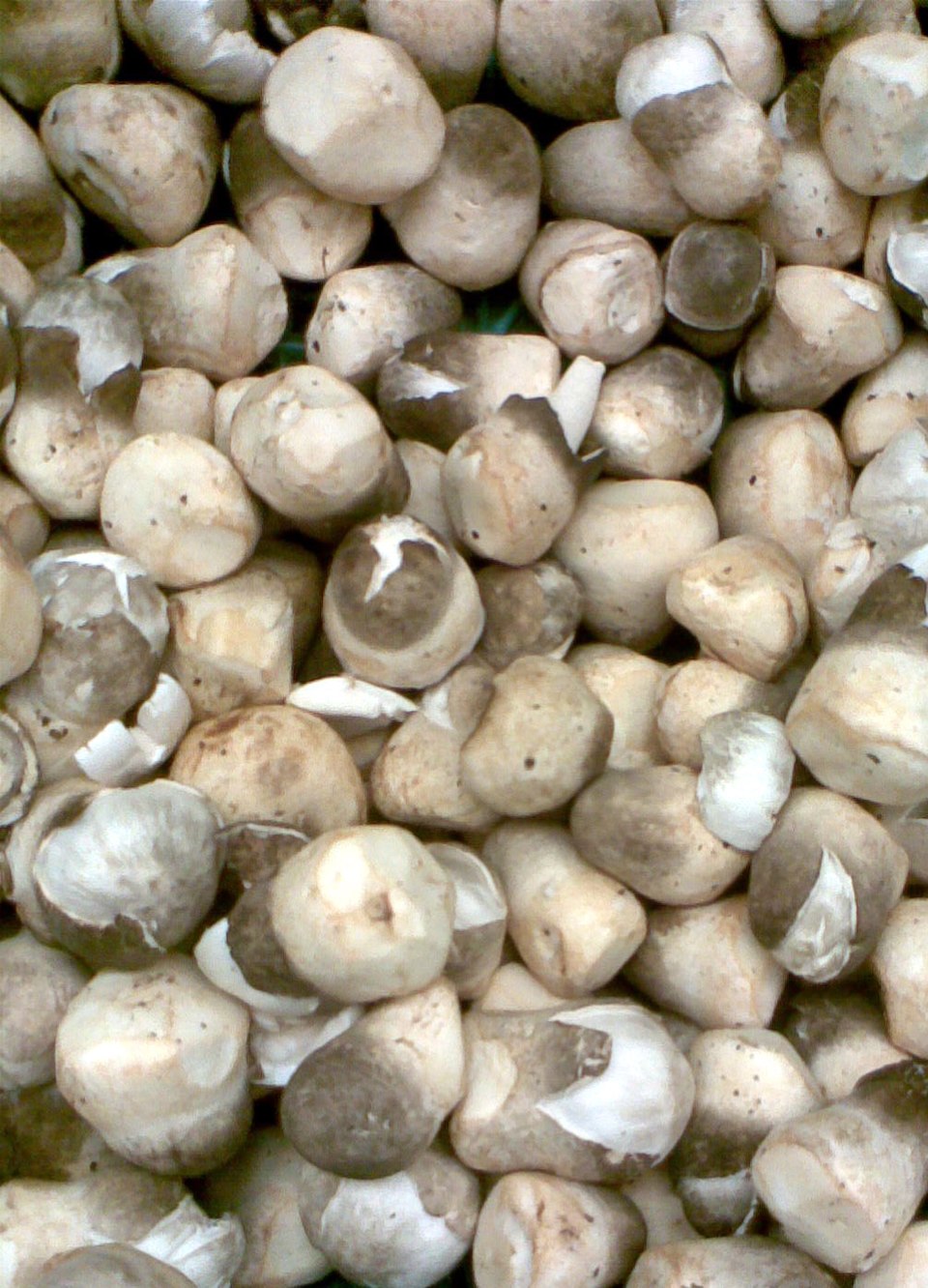
The Death Cap (left) and Paddy Straw Mushroom (right) look dangerously similar. This confusion kills people every year.
The Rules That Will Get You Killed
These get passed around in foraging groups, survival books, and family kitchens. Every single one of them is wrong.
“If you can peel the cap, it's safe”
The Death Cap peels easily. So does basically every Amanita. This rule has literally zero basis in mycology.
“If bugs eat it, it's safe for humans”
Slugs eat Amanita phalloides regularly. They have completely different biology. What doesn't kill a slug will absolutely destroy your liver.
“Cook it and the poison goes away”
Amatoxins, the compounds in Death Caps and Funeral Bells , survive boiling, frying, baking, and drying. Heat does nothing to them. You cannot cook your way out of this one.
“The silver spoon test”
The idea that a silver spoon turns black when stirred with a poisonous mushroom. There is no chemical basis for this whatsoever. Total nonsense, yet people still repeat it.
“Bright colors = dangerous”
Chanterelles are bright orange and absolutely delicious. The Destroying Angel is pure white and will kill you. Color tells you almost nothing about toxicity.
What Actually Works
Learn 5 species perfectly before learning 50 badly
Pick 5 common species in your area, including at least 2 dangerous ones, and learn every detail. Cap texture, gill attachment, spore color, habitat, season. Most fatal poisonings happen because someone had a shallow knowledge of many species instead of deep knowledge of a few.
Always check the spore print
Cut the cap off, place it gill-side-down on paper (half white, half dark), cover it, and wait a few hours. Spore color is one of the most reliable identification features and its something you can't determine just by looking at the mushroom in the field.
Look at the WHOLE mushroom: dig up the base
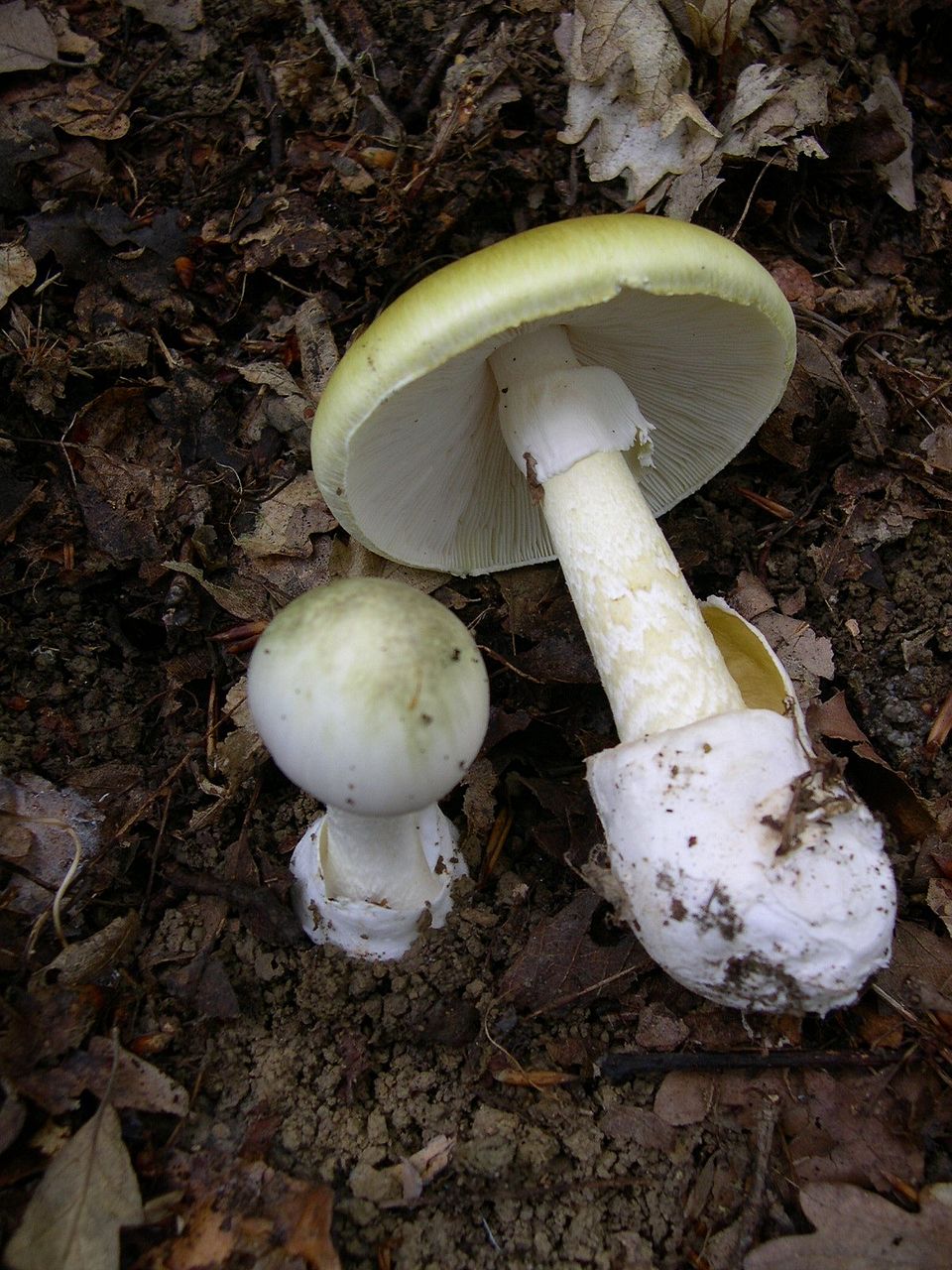
Many deadly Amanitas have a volva (a cup-like sack) at the base of the stem that sits underground. If you pick the mushroom by snapping the stem, you miss it entirely. Always dig up the full mushroom with the base intact.
When in doubt, don't. Period.
No meal is worth the risk. If you're not 100% certain, leave it. There is no mushroom on earth tasty enough to justify a liver transplant.
Get a local field guide, not a global one
A mushroom guide for all of North America is almost useless compared to one written for your specific region. Species distribution, common look-alikes, and fruiting seasons all vary dramatically even within a single state.
Know These Deadly Species by Sight
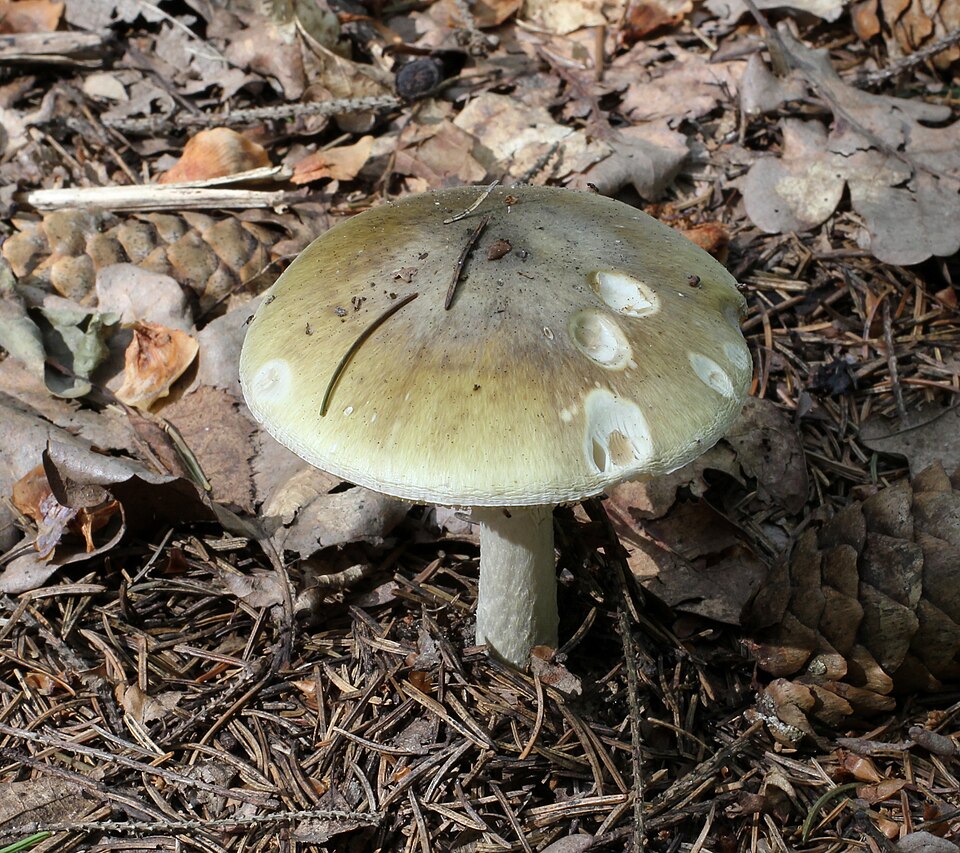
These are the mushrooms responsible for most fatal poisonings. Study these images carefully — none of them look “dangerous.”
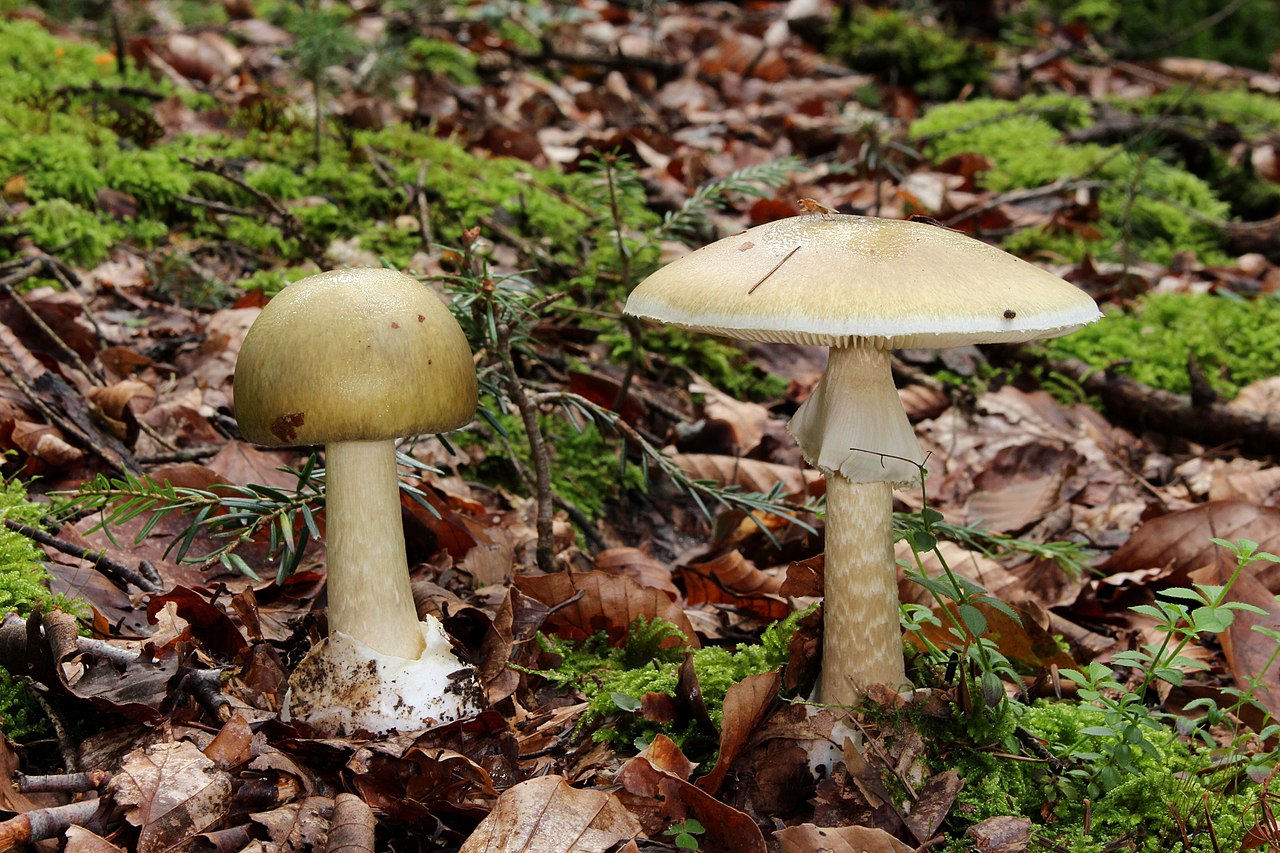
90% of all deaths
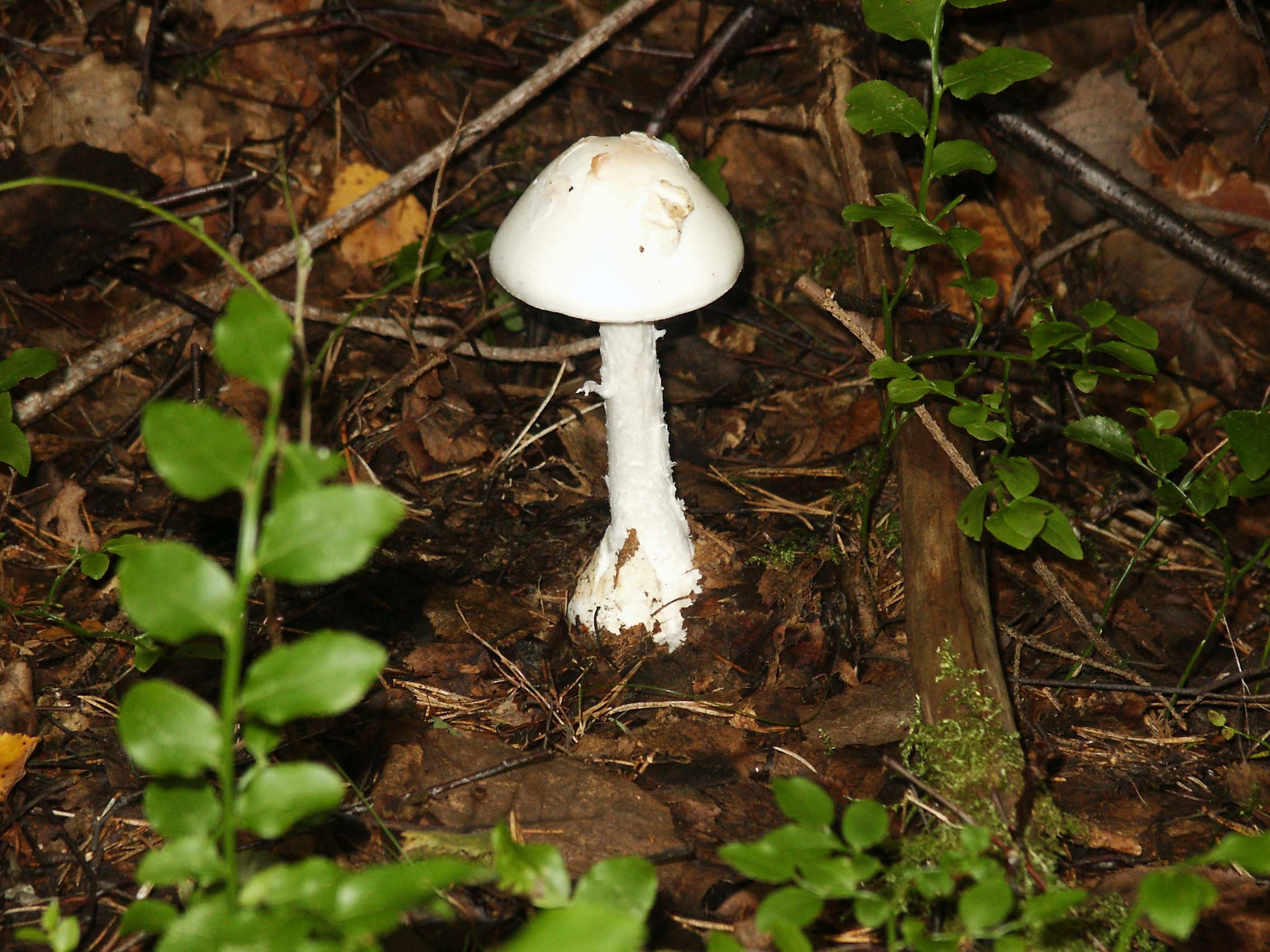
Identical toxin to Death Cap
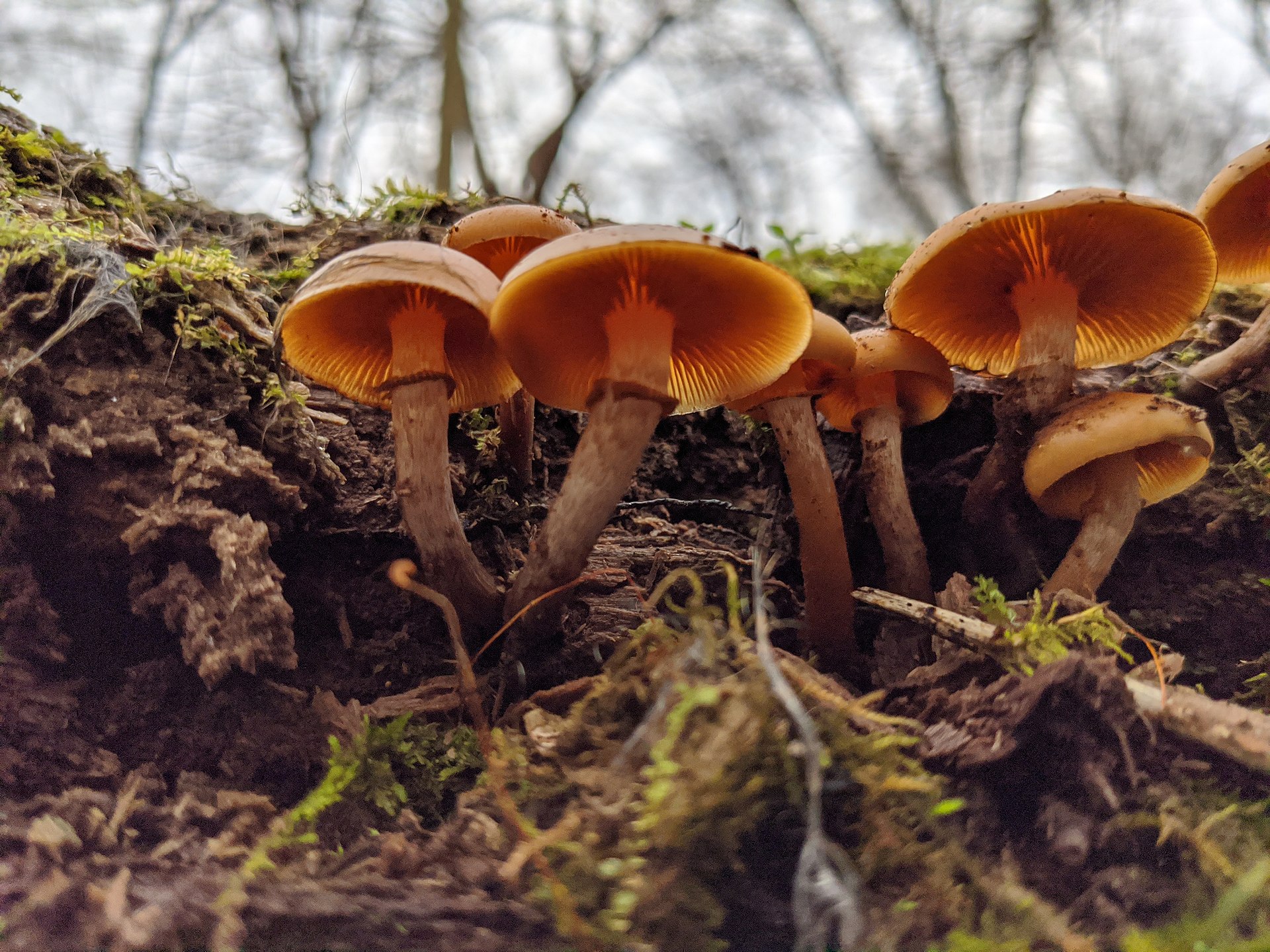
Looks like any brown mushroom
The 5 Deadliest Mistakes Beginners Make
Relying solely on an app for edibility decisions
Mushroom identification apps can be wrong about dangerous species. Apps are useful as a starting point for narrowing down possibilities, but never as a final answer for whether something is safe to eat. Always cross-reference with field guides, spore prints, and ideally an experienced human mycologist.
Picking without checking the base
The volva at the base of the stem is the single most important feature for identifying deadly Amanitas. Snap the stem above ground and you've just thrown away the one thing that could have saved your life.
Confusing Death Cap with Paddy Straw Mushroom
This kills people in California almost every year. The Death Cap looks remarkably similar to the paddy straw mushroom (Volvariella volvacea), a common edible species in Southeast Asia. Immigrants who grew up eating paddy straw mushrooms pick Death Caps from under oak trees and cook them for their families. These are real, documented cases.
“It looks like what I buy at the store”
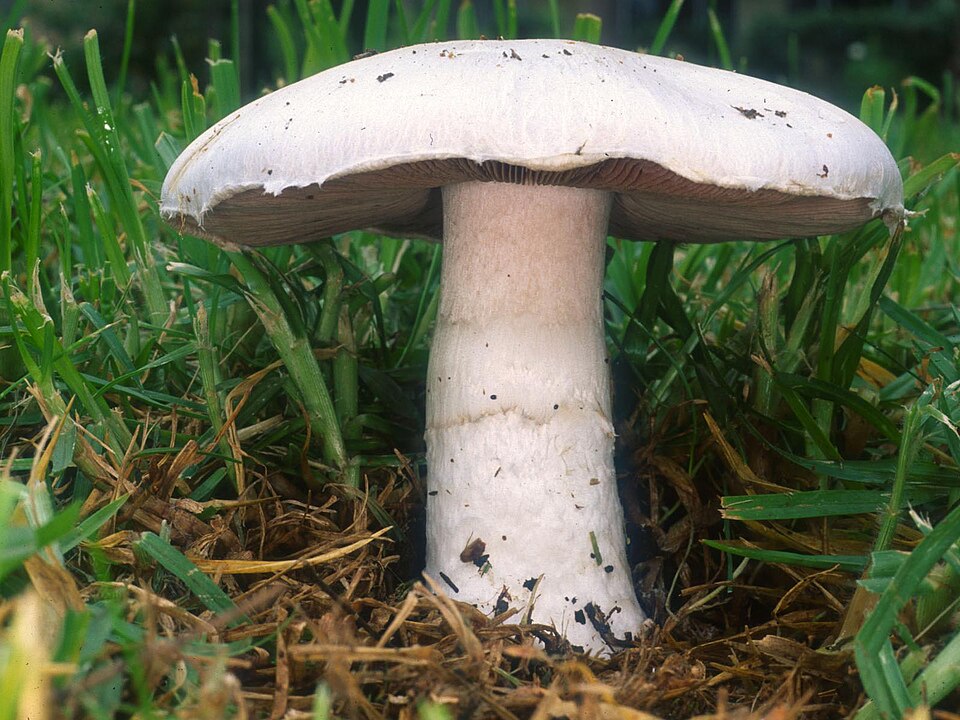
Button mushrooms, portobello, cremini: they're all Agaricus bisporus, and yes, there are wild Agaricus species. But there are also deadly look-alikes in the same habitats. “Looks like a store mushroom” is not an identification method.
Not seeking help fast enough
Amatoxin poisoning is cruel. You get sick within 6-12 hours, vomiting, diarrhea. Then on day 2, you feel better. Much better. People think they're fine and skip the hospital. Then on day 3, your liver starts failing. By then it may be too late. That false recovery window kills people.
What to Do If You Think You Ate a Poisonous Mushroom
Call poison control immediately: 1-800-222-1222 (US). Don't wait to see if symptoms develop. By the time you feel sick, the damage is already underway.
Save a sample or take a photo. If you still have the mushroom, keep it. If not, photograph anything left: the cooking scraps, the spot where you picked it. This helps toxicologists enormously.
Don't wait for symptoms. Amatoxin poisoning can take 6-12 hours to show up. By then your liver and kidneys are already taking hits.
Go to the ER and say “possible amatoxin exposure.” Doctors need to hear that specific word. Generic “food poisoning” gets triaged differently than amatoxin exposure. Be direct; it could save your life.
Want to learn the specific species mentioned in this article? Start with the Death Cap, Destroying Angel, and Funeral Bell , or browse all species.