Mushrooms You Can Eat Right Off the Trail (If You Know What You're Doing)
By Tomas Herrera · March 6, 2026
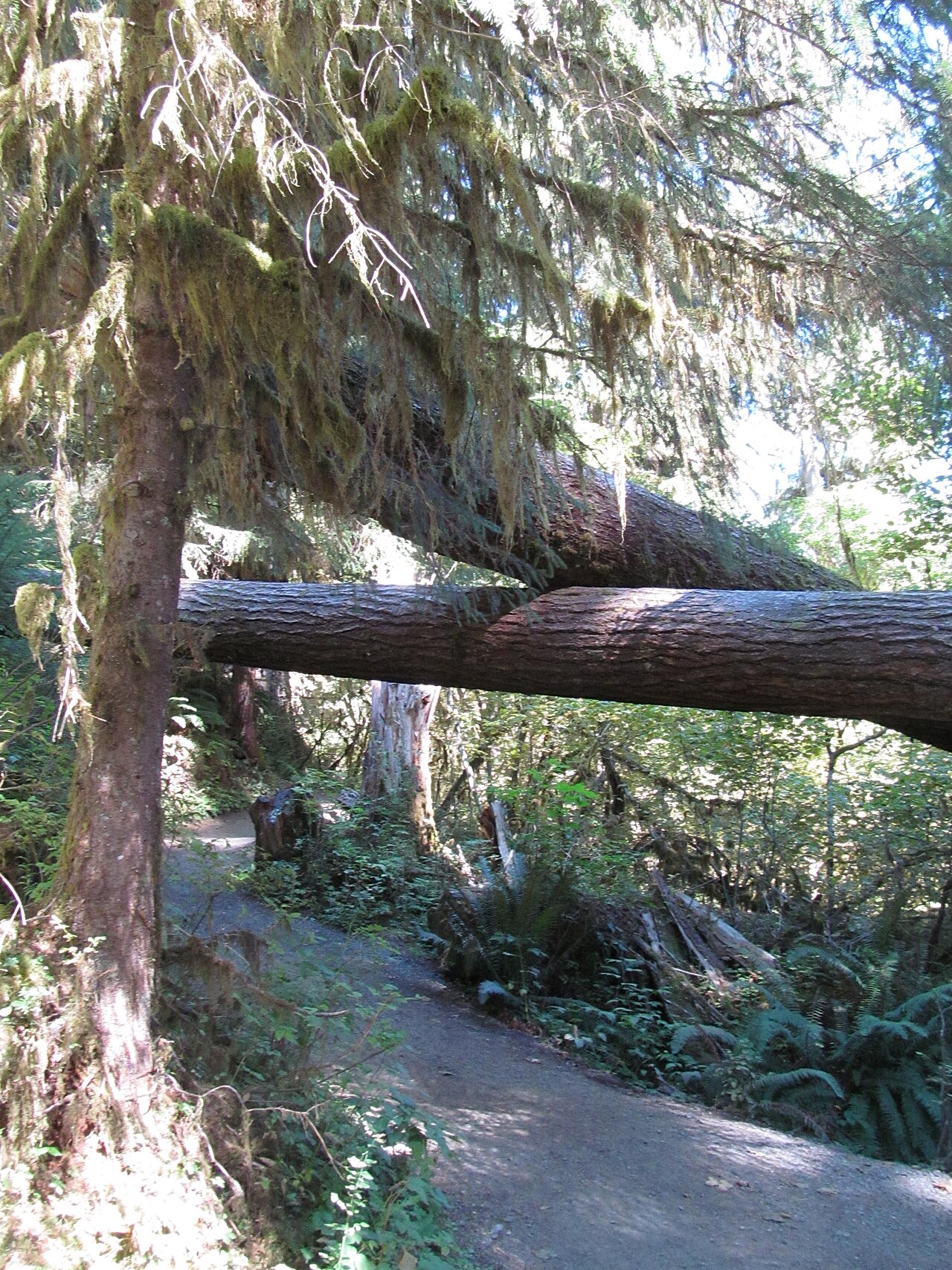
It’s mile three on the Hoh River Trail in Olympic National Park, and the rain finally stopped about an hour ago. The moss is dripping. The air smells like wet cedar and something else, something earthy and sharp, like the forest is exhaling. That’s when you see them: golden chanterelles, dozens of them, pushing through the moss along a nurse log.
You drop your pack. You crouch down. And for a second you forget about the twelve miles still ahead of you, because right here, right now, the forest just handed you dinner.
I’ve been foraging wild mushrooms on trails across the Pacific Northwest, the Rockies, the Appalachians, and a few mountain ranges in Europe for close to fifteen years. What follows are the mushrooms I trust enough to eat on the trail,the ones I’ve cooked over camp stoves and open fires, the ones I’d feed to friends without a second thought. Every single one of them has a story attached to it.
Chanterelles
Cantharellus cibarius
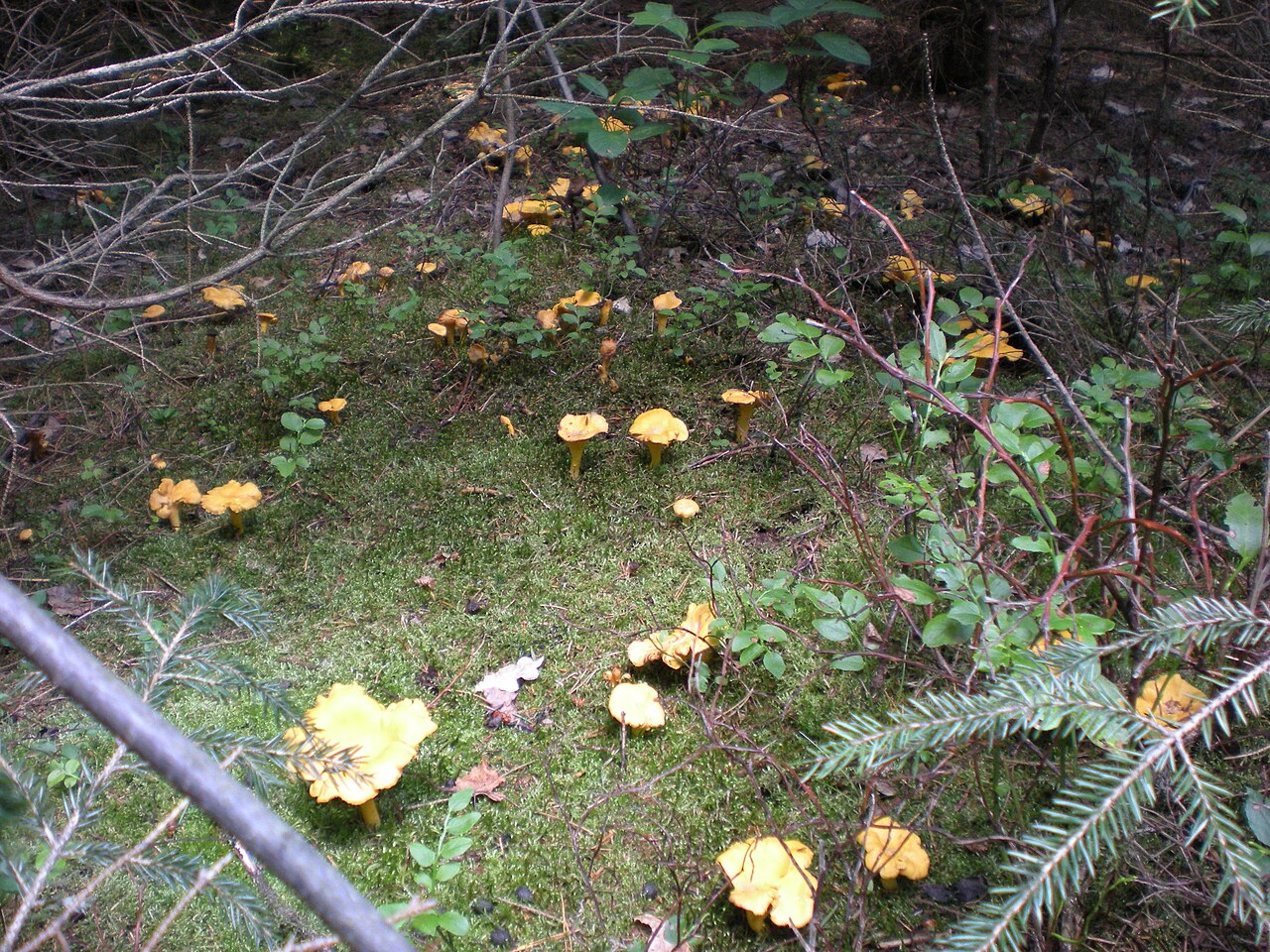
You almost stepped on the first one. That’s how it always goes with chanterelles,you walk right past a dozen before your eyes adjust. They blend into the duff until suddenly they don’t, and then you see them everywhere, like your brain flipped a switch.
These are the mushrooms of Pacific Northwest old growth. Douglas fir, Sitka spruce, western hemlock,chanterelles form mycorrhizal relationships with all of them. You’ll find them from September through November in Washington and Oregon, often along game trails and in the mossy gaps between nurse logs. Bend down and smell one. If it smells faintly of apricots, you’re in the right place.
The key identification feature is the false gills (see MushroomExpert.com for detailed descriptions): they’re not true blade-like gills but shallow, forking ridges that run down the stem. That’s what separates a real chanterelle from a jack-o’-lantern mushroom, which has true gills and will ruin your night.
When you harvest, cut them at the base with a knife. Don’t pull. Leave the mycelium intact so the patch keeps producing year after year. I’ve been going back to the same spots on the Hoh for over a decade.
The campfire saute is simple because it should be: butter, garlic, a pinch of salt. Maybe some thyme if you packed it. Cook them until the edges go golden and crispy. If I could only eat one wild mushroom for the rest of my life, this is it.
Porcini / King Bolete
Boletus edulis
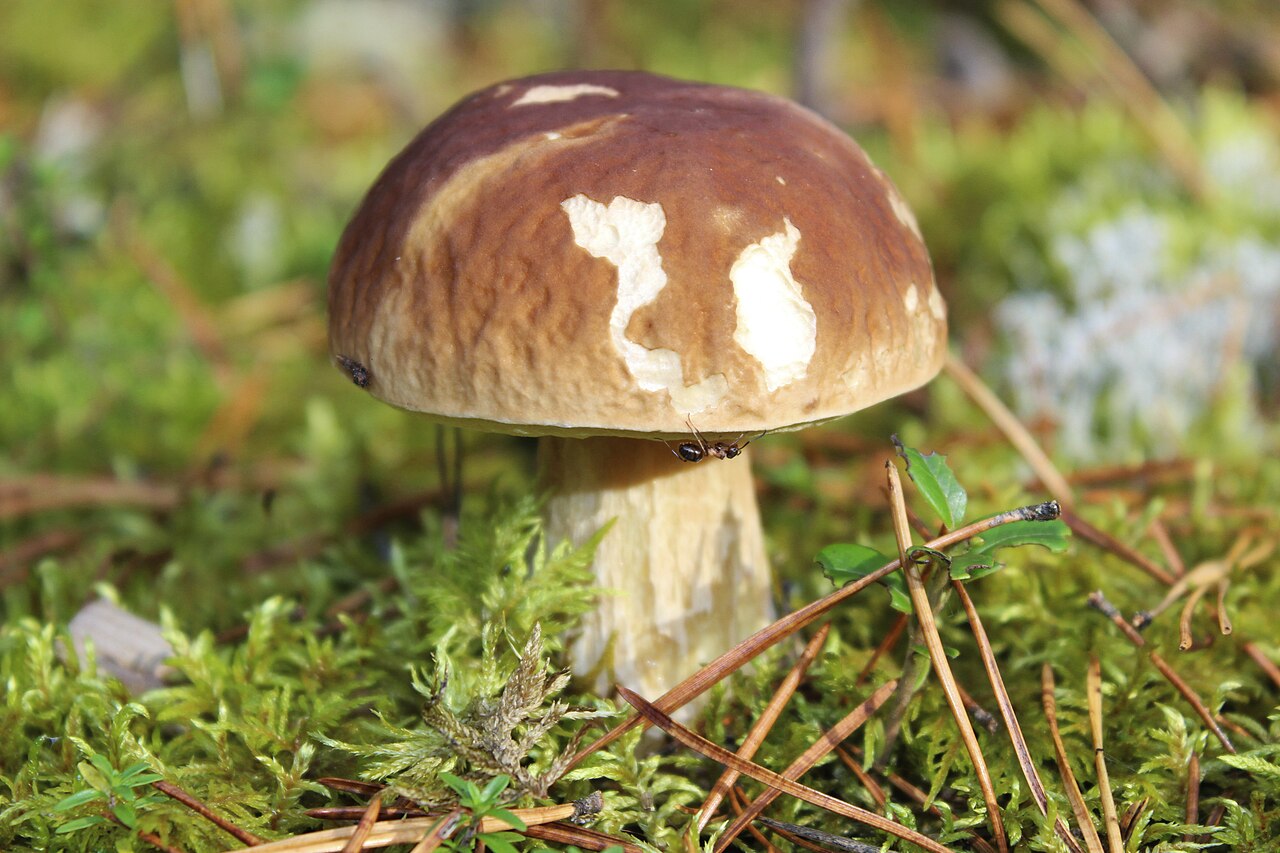
The Italian hikers found them before we did. We were above treeline in the Dolomites, somewhere between Rifugio Lagazuoi and Cortina, and this couple in their sixties was crouching in a meadow with a wicker basket already half full. They didn’t speak much English. They didn’t need to. The smiles said everything.
Porcini are the royalty of wild mushrooms. You’ll find them in alpine meadows and conifer forests across Europe, and if you know where to look, in the Colorado Rockies and the Cascades too. They’re mycorrhizal with spruce, pine, and fir. The cap is brown and slightly tacky when wet. Flip it over and instead of gills, you’ll see a spongy pore surface ,that’s the bolete family signature.
Here’s the thing about porcini though: check for worms. Slice the stem lengthwise before you get too excited. If it’s riddled with tiny tunnels, the larvae got there first. Small holes near the base? You can usually trim around those. But if the whole thing looks like Swiss cheese, leave it for the forest.
My trail move is to slice them thin and dry them on a flat rock in the sun, or string them on paracord and hang them from your pack. Dried porcini weigh nothing and they turn a basic trail risotto into something you’d pay forty dollars for in a restaurant.
Chicken of the Woods
Laetiporus sulphureus
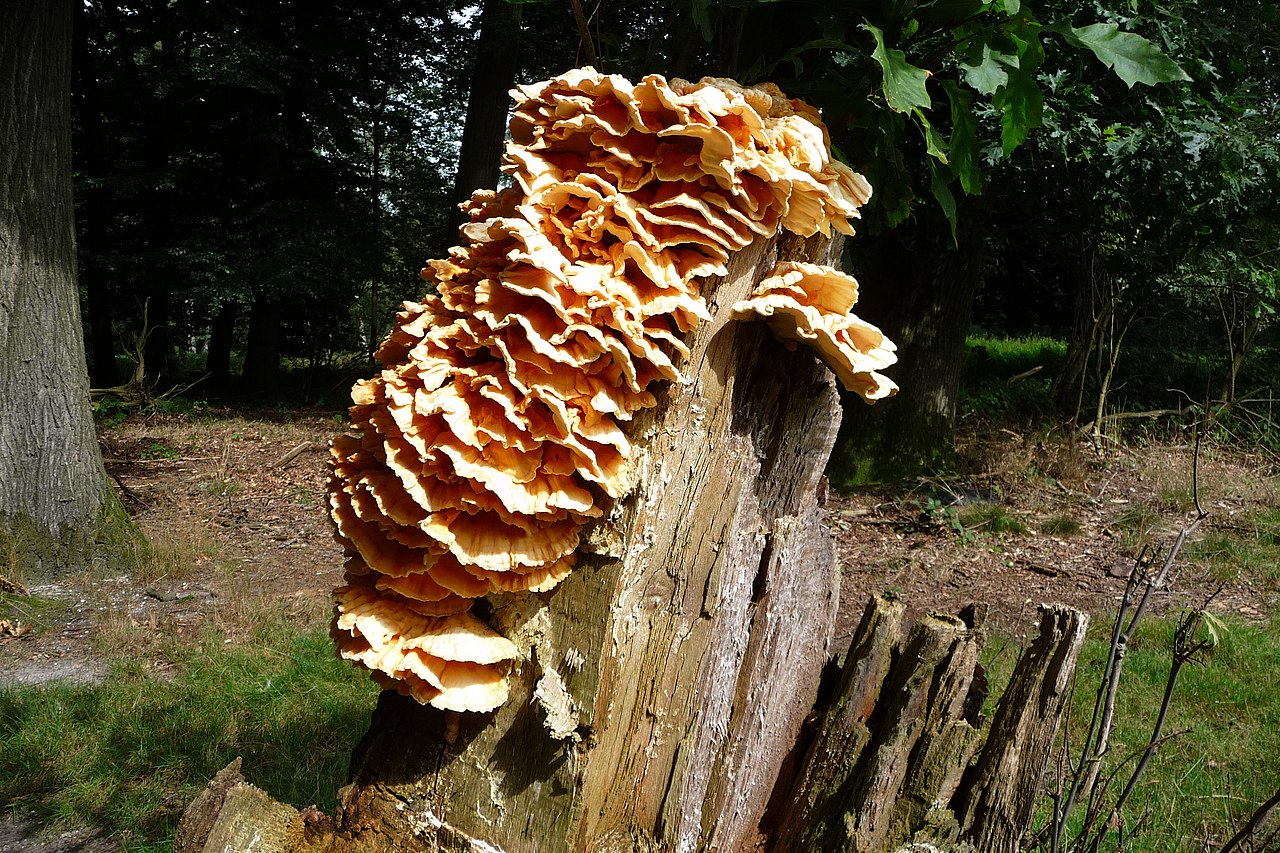
You don’t find chicken of the woods. It finds you. You’re hiking along some section of the Appalachian Trail in Virginia, thinking about nothing in particular, and suddenly there’s this explosion of neon orange and yellow on a dead oak twenty feet off trail. It looks almost fake, like someone glued a sculpture to the tree.
This is one of the easiest wild mushrooms to identify. Nothing else in the forest looks like this,bright sulfur-orange shelving brackets, sometimes as big as a dinner plate, growing in overlapping clusters on dead or dying hardwoods. The underside is bright yellow with tiny pores.
And it honestly tastes and cooks like actual chicken. I’m not exaggerating. Tear it into strips, saute it with oil and seasoning, and you could fool a vegetarian’s carnivore friends at a cookout. The texture is meaty and fibrous in a way that no other mushroom quite matches.
The rule: young specimens only. You want the edges to be tender and moist, almost juicy when you press them. If the edges are dry, crumbly, or chalky white, it’s past prime. Older chicken of the woods gets tough and can upset your stomach. Also avoid any growing on conifers or eucalyptus,some people react badly to those.
Morels
Morchella esculenta
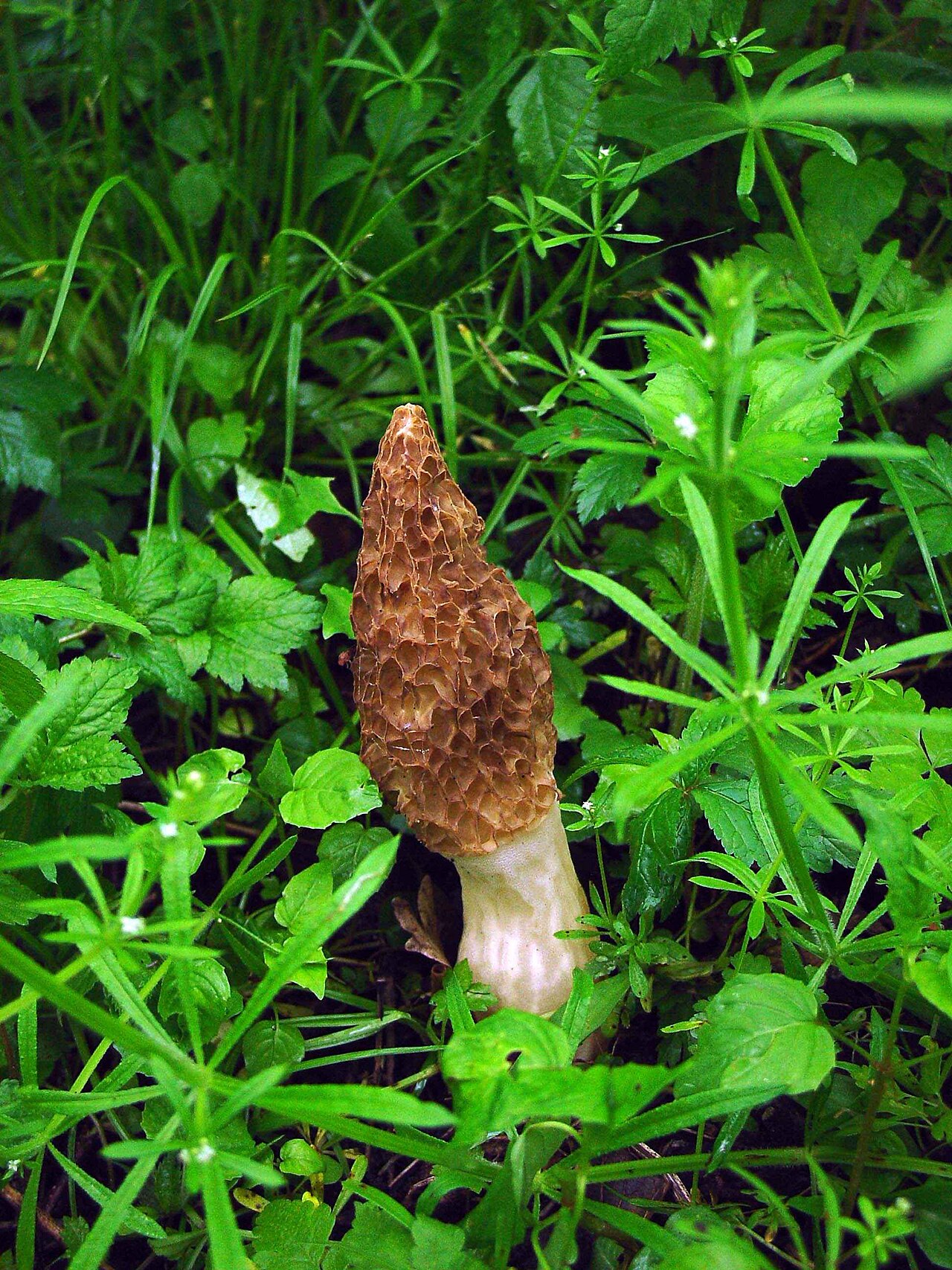
Fire season ended three months ago, and now the hillside is covered. This is a burn site east of the Cascades, charred ponderosa pine trunks standing like matchsticks, and between them, hundreds and hundreds of morels pushing through the ash and gravel. It looks like the forest is healing itself, which in a way it is.
Burn morels are one of the great treasures of the mushroom world. The season after a wildfire, these things erupt in unbelievable quantities. People drive hours, hike miles, and guard their burn sites like family secrets. I’ve seen people get genuinely angry when they find another forager in “their” burn. People guard their morel spots like family secrets.
Identification is straightforward: that honeycomb-ridged cap is unmistakable. But here’s the test that matters: slice one in half lengthwise. A true morel is completely hollow from the tip of the cap to the base of the stem. One continuous hollow chamber. A false morel (Gyromitra) has a cottony or chambered interior. That distinction could save your life, because false morels contain gyromitrin, which is a serious toxin.
Spring is morel season. March through May depending on elevation and latitude. They like disturbed ground,burn sites, old orchards, river bottoms, even landscaping bark around suburban tulip poplars. But the burn morels in the eastern Cascades are the ones that haunt my dreams.
Oyster Mushrooms
Pleurotus ostreatus
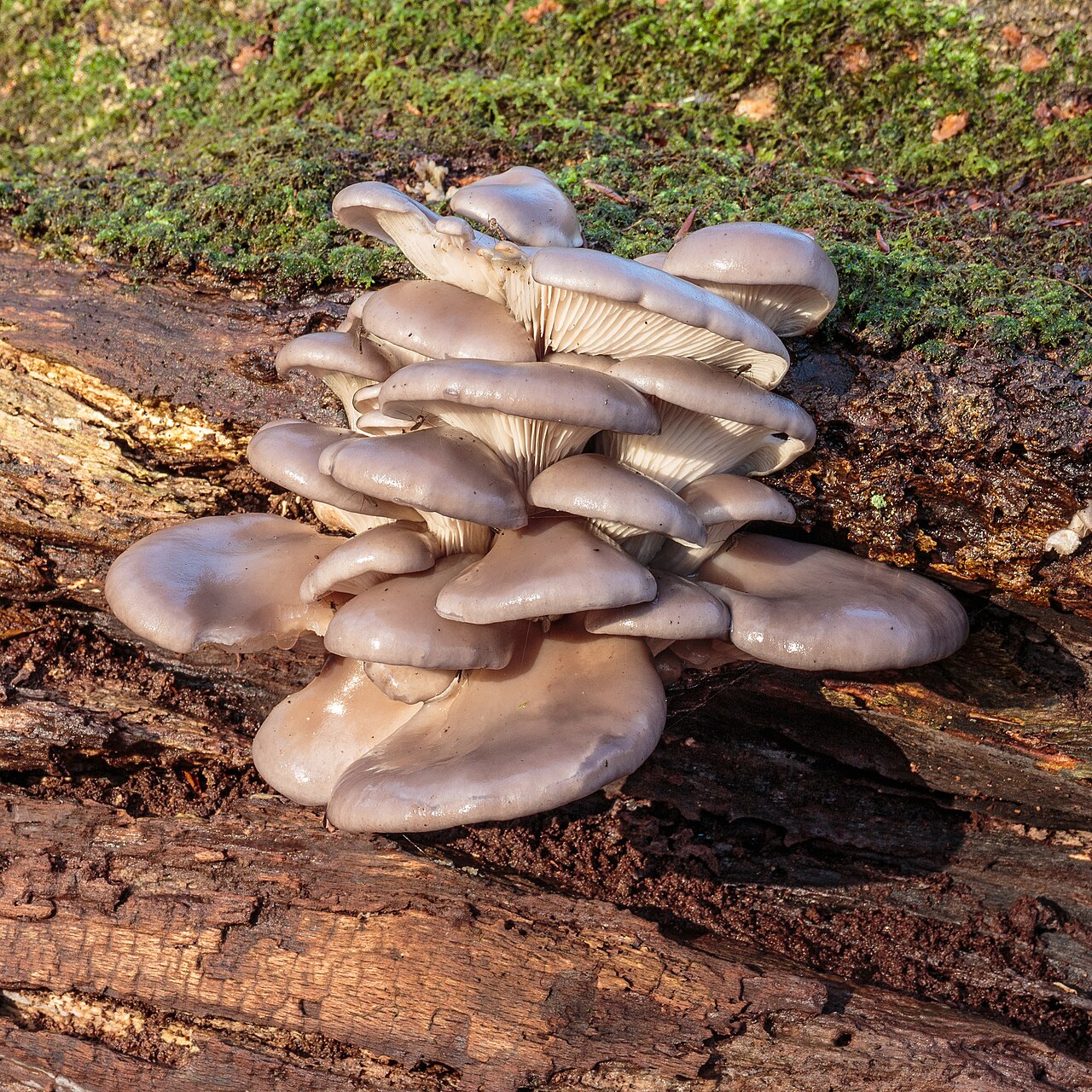
February in the Pacific Northwest. Everything is gray and dead except these. You’re on some soggy trail outside of Olympia, the kind of hike you do in February just to prove you still go outside, and there on a fallen alder is a cascade of pale, fan-shaped mushrooms that look almost luminous against the dark bark.
Oyster mushrooms are the winter forager’s best friend. When nothing else fruits,when the chanterelles are done and the morels are months away,oysters are out there on dead and dying hardwoods, fruiting through rain and near-freezing temperatures. They’re saprophytic, meaning they decompose dead wood rather than forming relationships with living trees.
Identification: fan or shelf-shaped caps, white to gray to brown, with white gills running down a short offset stem (or no stem at all). They grow in overlapping clusters. The smell is mild and pleasant, slightly anise-like. The one look-alike to watch for is the angel wing (Pleurocybella porrigens), which is thinner, pure white, and grows on conifer wood. Stick to hardwoods and you’re safe.
Oysters are mild and versatile,they take on whatever flavor you cook them with. Tear them into strips and they crisp up beautifully. Not the most exciting mushroom on this list, but when it’s February and you’re cold and wet and you find a massive flush of them, they feel like a gift.
Black Trumpets
Craterellus cornucopioides
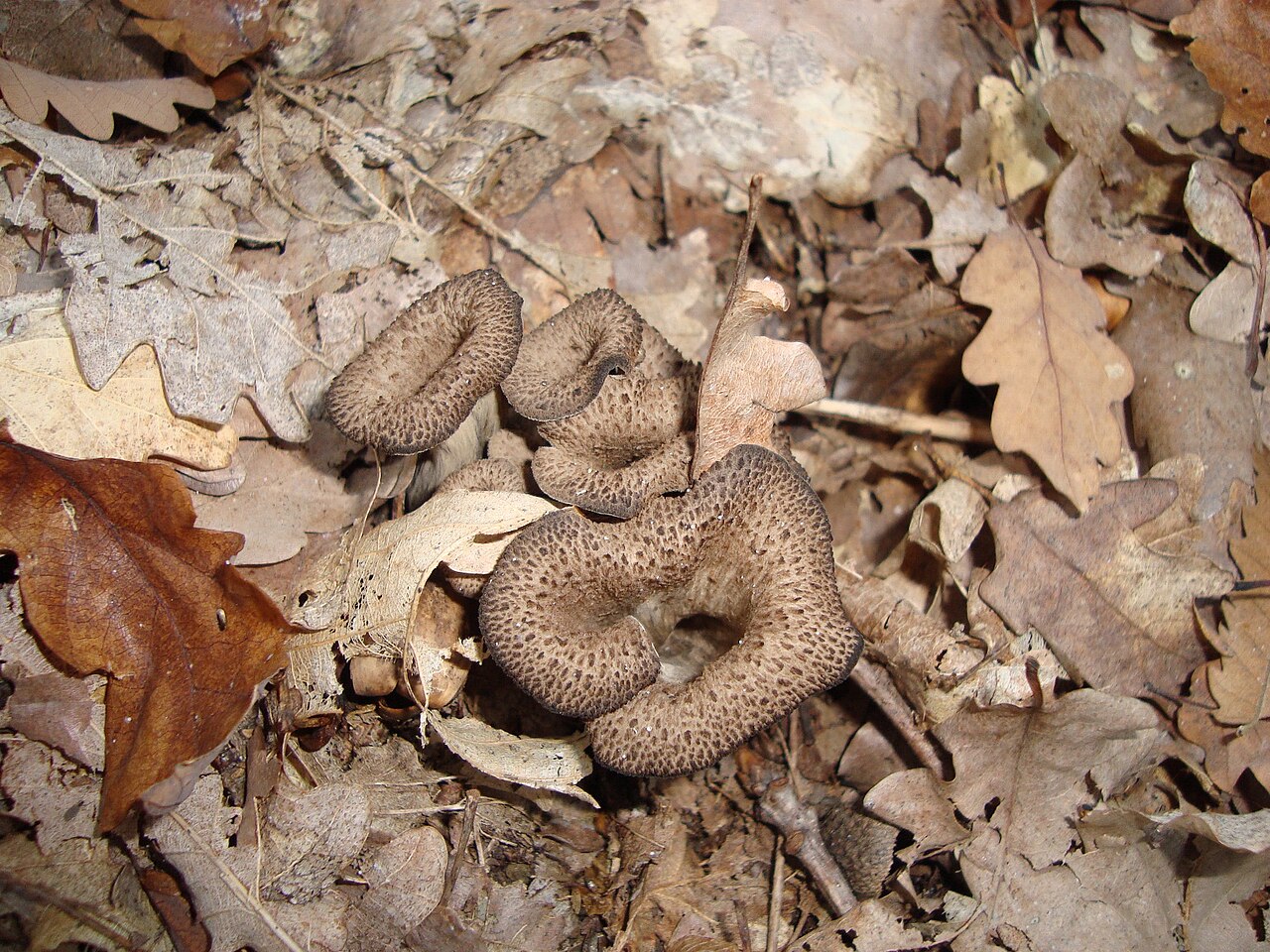
You have to get down on your knees to see them. Seriously. Black trumpets are laying right there in the leaf litter, dark little funnels the exact same color as the decomposing oak leaves around them, and you will walk past them fifty times before you find your first one. Then you find a hundred.
They grow in oak and beech forests, often along the edges of trails and in mossy depressions where moisture collects. The Pacific Northwest has them. So does the eastern US. So does most of Europe. They’re called “the poor man’s truffle” in France (trompette de la mort, which translates to “trumpet of death”,a terrible name for such a delicious mushroom).
The flavor is rich, smoky, almost fruity. Dried black trumpets are incredible,they concentrate into something intensely savory, and you can crumble them into pasta, risotto, cream sauces, anything. They’re thin-fleshed so they dry fast, even just in your pack on a warm day.
Here’s the beautiful thing: black trumpets have almost no dangerous look-alikes. The dark color, the funnel shape, the smooth underside with no true gills,nothing toxic shares that combination. This is one of the safest wild mushrooms to forage if you’re just starting out.
Hedgehog Mushroom
Hydnum repandum
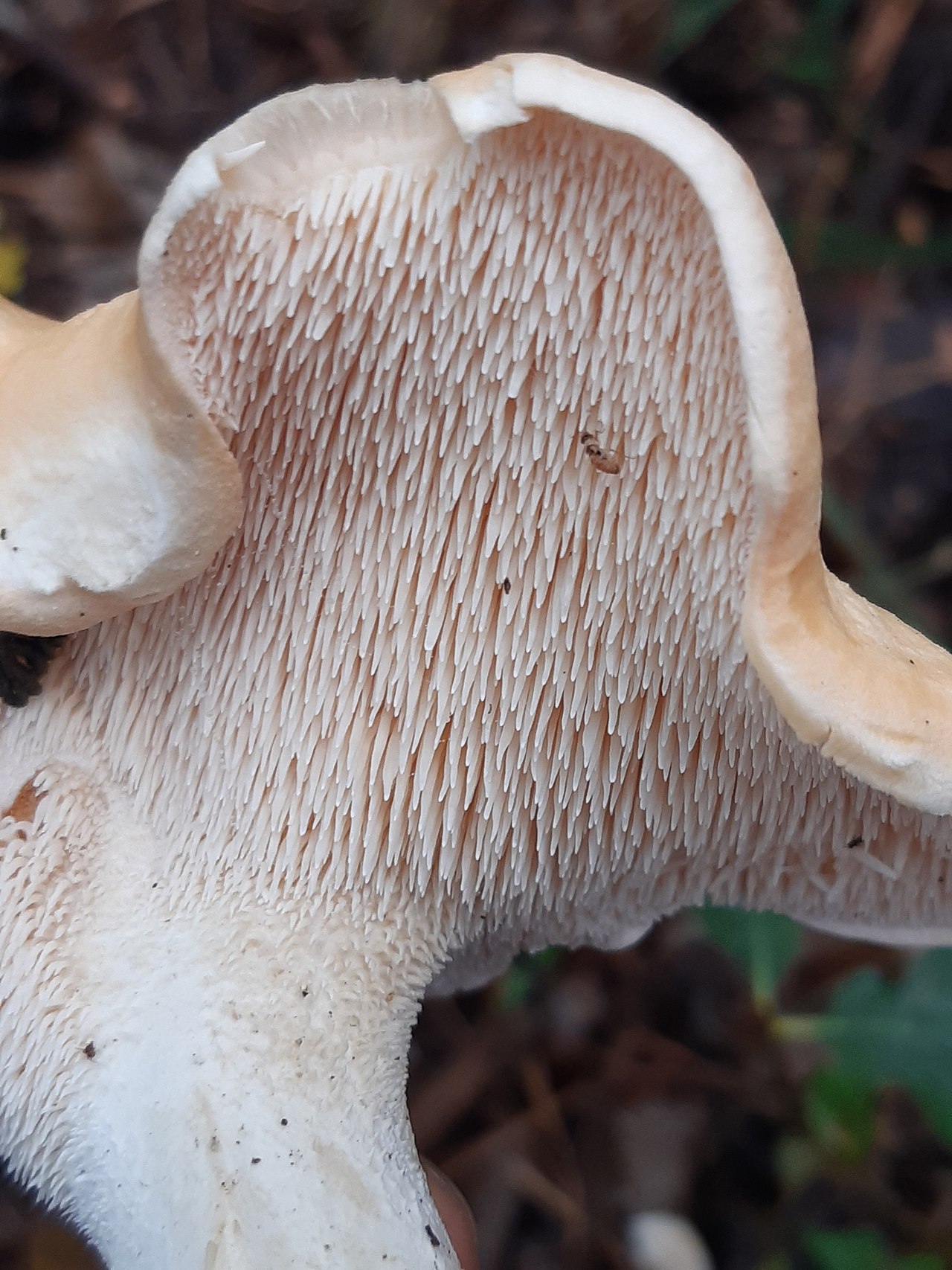
Flip it over and instead of gills, there are tiny teeth. Little spines hanging down from the underside of the cap, like a soft brush. That’s the hedgehog mushroom, and it’s one of the most beginner-friendly wild edibles out there because nothing dangerous looks like this.
You’ll find hedgehogs in the same forests as chanterelles ,Pacific Northwest conifers, European mixed forests, anywhere with a thick duff layer and decent rainfall. They’re mycorrhizal, so they’re always near living trees. The cap is cream to pale orange, wavy and irregular, and the stem is thick and off-center. They look a little like a chanterelle from above, but that toothed underside is completely unique.
The flavor is nutty and mild, slightly sweet. Not as punchy as a chanterelle, not as rich as a porcini, but deeply satisfying in its own quiet way. They saute well and hold their texture. I like them in scrambled eggs on a camp stove morning, when you’re not trying to be fancy and just want something good.
If you’re nervous about foraging,and you should be a little nervous, that’s healthy,start with hedgehogs. The teeth make them unmistakable. No guesswork, no anxiety. Just a good, safe, delicious mushroom.
Lion’s Mane
Hericium erinaceus
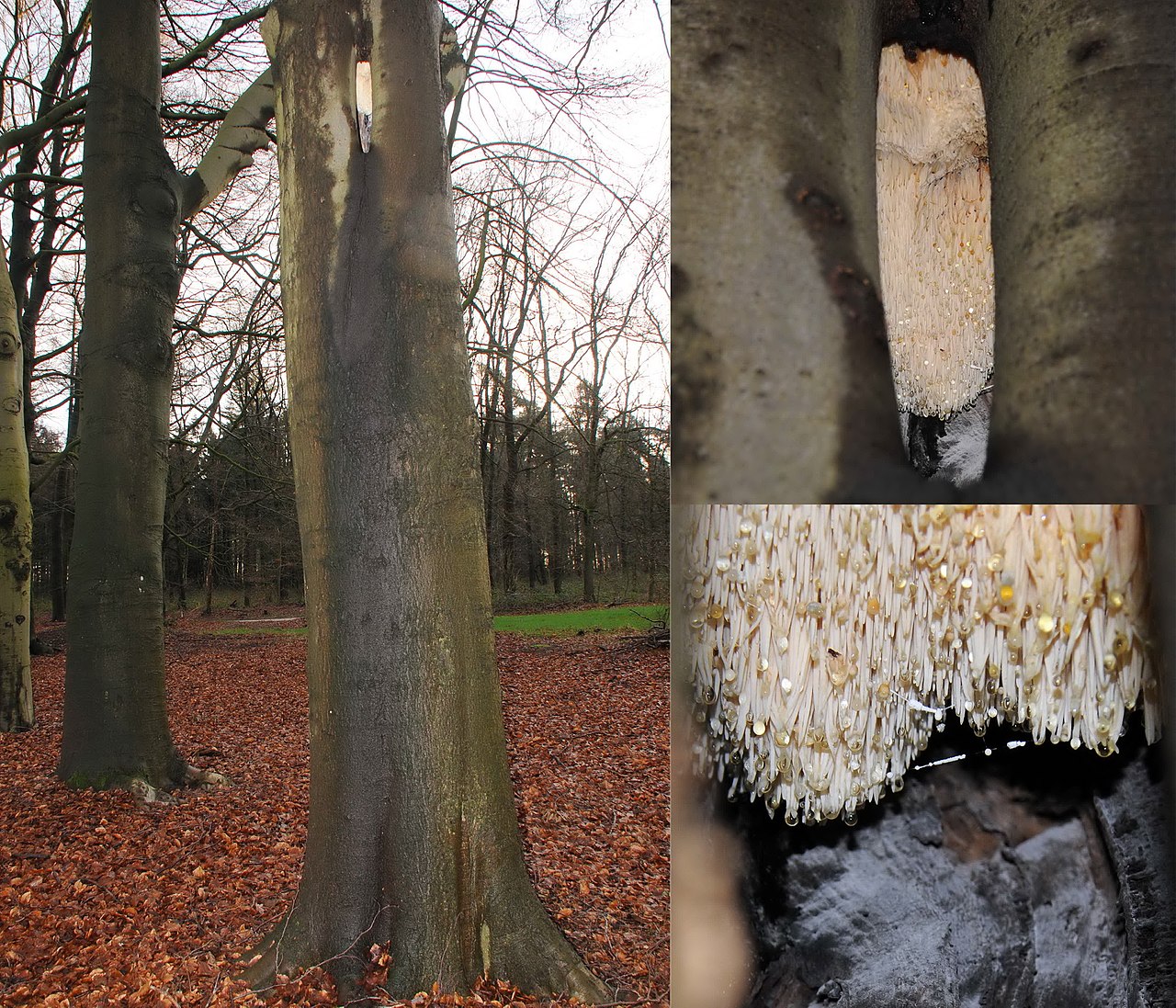
It looks like someone left a white wig on a log. Or a frozen waterfall. Or a very confused Pomeranian. Lion’s mane is one of those mushrooms that stops you in your tracks because it just doesn’t look real,this cascading mass of long, white, dangling spines growing from a wound on a dead beech or oak.
You’ll find them on dead and dying hardwoods throughout the eastern US, the Pacific Northwest, and across Europe and Asia. They’re saprophytic and sometimes weakly parasitic. Look for them in late summer through fall, usually higher up on the trunk where a branch broke off or where the bark was damaged.
The texture when cooked is remarkable,it shreds like crab meat and has a similar sweetness and density. Slice it into thick steaks, sear in butter until the edges brown, and I promise you’ll forget you’re eating a fungus. It soaks up flavors like a sponge but also has its own subtle seafood-like character that’s genuinely unique.
Lion’s mane is also one of the few culinary mushrooms with legitimate medicinal research behind it. Studies have shown it stimulates nerve growth factor (NGF) production, which has implications for neurological health. I’m not making health claims here,I’m a hiker, not a doctor ,but it’s fascinating that something this delicious might also be good for your brain.
Hen of the Woods (Maitake)
Grifola frondosa
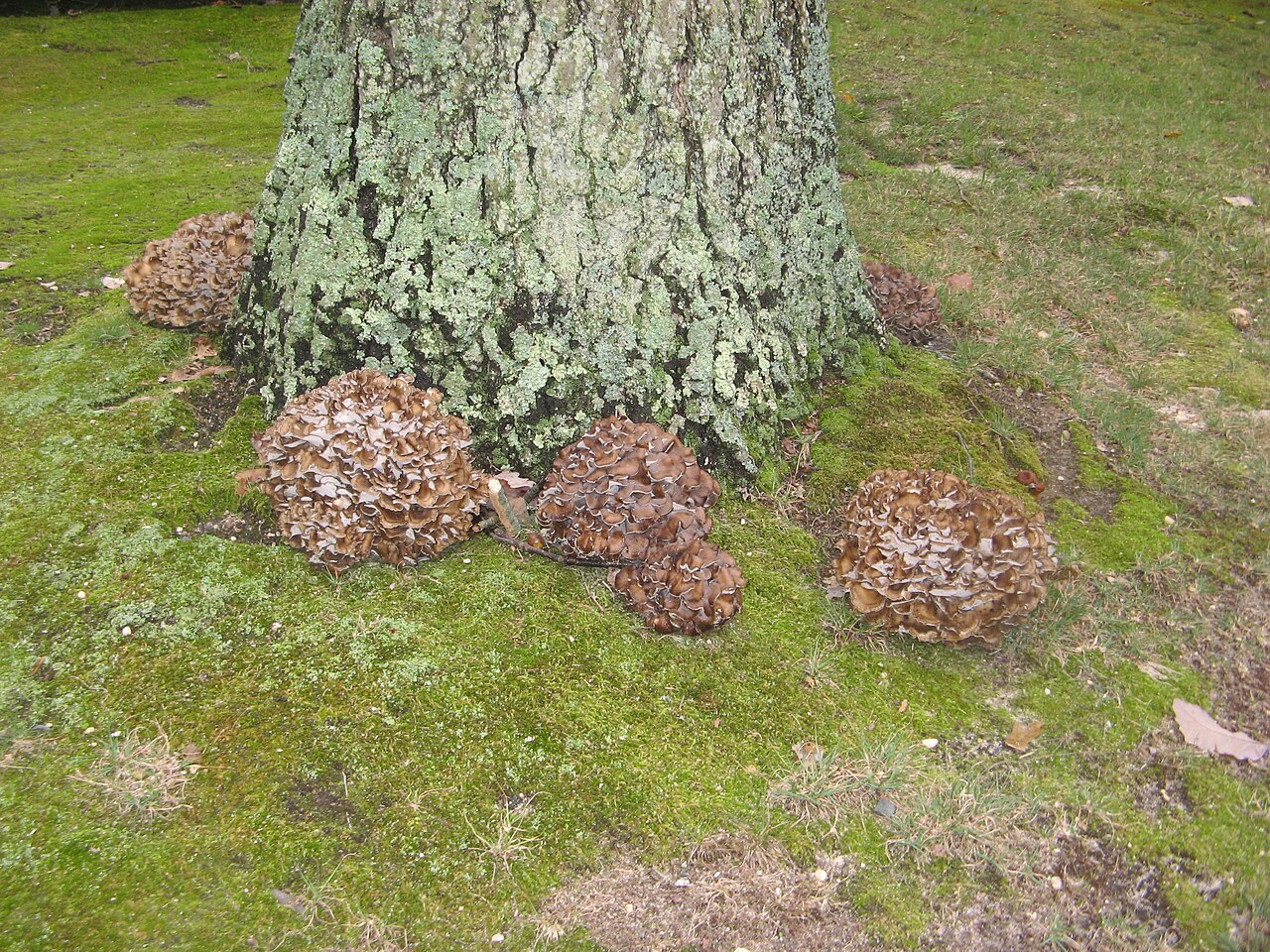
The base of the oak looks like it’s wearing a dress. A massive, ruffled, gray-brown dress made of overlapping fronds that cascades from the root flare out onto the ground. This is hen of the woods, also called maitake, and finding a big one is one of the most exciting things that can happen to you in the fall woods.
These fruit at the base of oaks,almost always oaks ,primarily in the eastern US. September through November. They’re parasitic on the tree’s roots, so they come back to the same spot year after year until the tree finally gives out. A productive oak can produce maitake annually for decades.
And they can be massive. I’ve found specimens pushing twenty pounds. You need a bag, sometimes two. The excitement of finding a big hen is hard to describe,it’s this rush of disbelief and giddiness, like you just won some kind of forest lottery that nobody else even knows is being played.
Tear the fronds apart along their natural seams, brush off any dirt, and saute them hot and fast. The edges crisp up while the centers stay tender and meaty. The flavor is deep and earthy with a slight pepperiness. They also dehydrate beautifully if you find more than you can eat, which with a twenty-pound specimen is very likely.
The Rules of Trail Eating
Before you go filling your pack with everything that looks edible, here are the rules I live by. They’re simple and they’re non-negotiable.
- Cook everything. Even safe species can upset your stomach if you eat them raw. Some, like morels, are outright toxic uncooked. There’s no good reason to eat a wild mushroom raw. Heat breaks down the chitin in cell walls and makes them digestible.
- Carry a mesh bag so spores drop as you hike. You’re literally seeding the forest behind you as you walk. Give back to the forest.
- Take only what you’ll eat. Filling a garbage bag with chanterelles because you can is not foraging, it’s hoarding. Take what you need for the next meal or two.
- Leave the small ones. Let them mature, drop spores, and complete their cycle. The big ones are better eating anyway.
- When in doubt, don’t. No mushroom is worth a hospital visit. If your identification is even slightly uncertain, leave it in the ground and go home alive. For information on mushroom poisoning symptoms and treatment, see the NIH resource.
The forest remembers how you treat it.
The best meal I’ve ever had was chanterelles fried in butter on a camp stove, eaten with my hands, sitting on a wet log in the Olympic rainforest. No restaurant has come close. Not because the cooking was better,it was butter and garlic in a titanium pot,but because everything around it was real. The rain, the moss, the smell of woodsmoke mixing with the smell of mushrooms hitting hot fat, the sound of the Hoh River somewhere below the ridge.
That’s what trail foraging gives you that no farmers market or grocery store ever will. It’s not just food. It’s a conversation with the place you’re in, a reminder that the forest has been feeding people for thousands of years and it hasn’t stopped offering.
You just have to know what you’re looking at. And you have to be willing to get down on your knees in the mud to find it.