Cauliflower Mushroom vs Snow Fungus
Sparassis crispa compared with Tremella fuciformis — how to tell them apart in the field.
How to Tell Them Apart
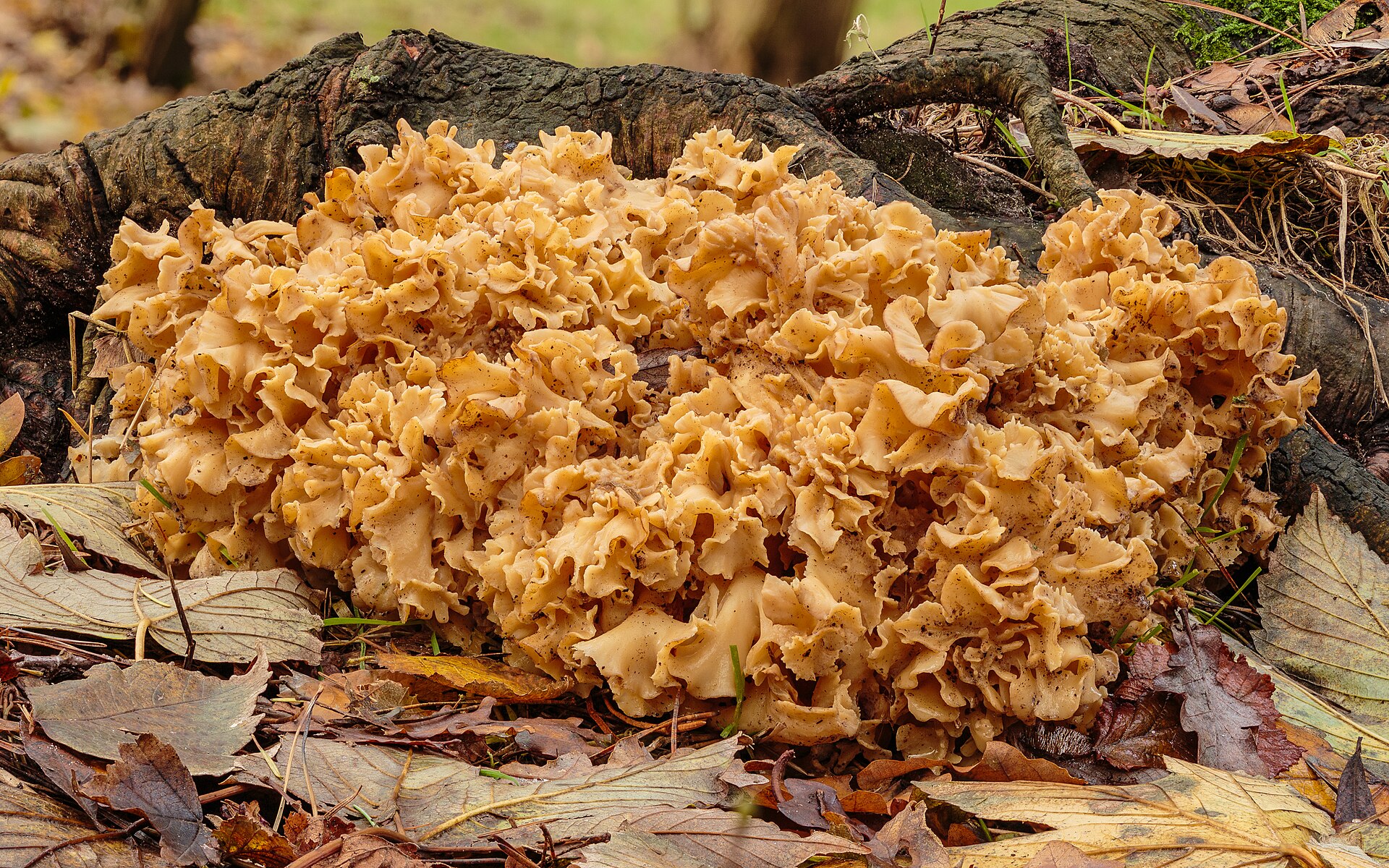
Much larger (often 20–40 cm across), opaque cream to pale tan, and found at the base of living or dead conifer trees — never on small branches. The lobes are flat and wavy like egg noodles rather than translucent and frilly. Sparassis is a choice edible with a nutty flavor, completely different in texture from the gelatinous snow fungus.
Side-by-Side Identification
| Trait | Cauliflower Mushroom | Snow Fungus |
|---|---|---|
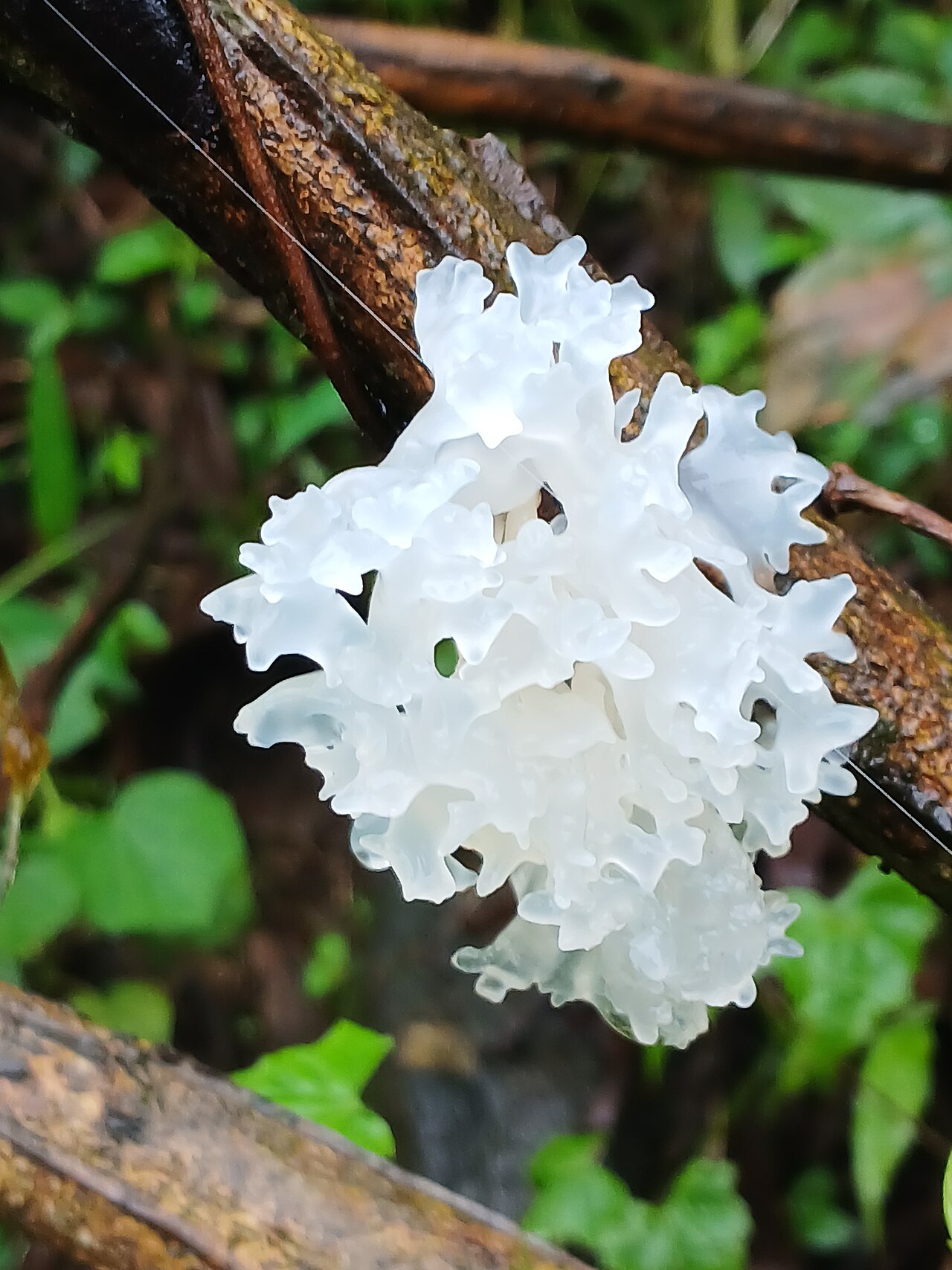
| Cap | No conventional cap. Fruiting body is a large, globose rosette of flattened, wavy, ribbon-like lobes or branches, 15-50 cm across (sometimes larger). Cream to pale yellowish when young, darkening to ochre-tan with age. Individual lobes are 1-3 cm wide, thin, and flexible, with wavy or crisped edges. The overall shape resembles a cauliflower, a brain, or a mass of egg noodles. | No cap. Fruiting body is a frilly, ruffled, coral-like mass of translucent white to pale yellowish lobes, 4–8 cm across. Each lobe is thin, gelatinous, and slightly translucent. Fresh specimens have a delicate, almost ethereal appearance. Dries to a hard, yellowish-white mass. |
| Gills | No gills. Spores are produced on the flat surfaces of the lobes. The fertile surface is smooth. | No gills. Spores are produced on the outer surface of the gelatinous lobes. The entire convoluted, ruffled surface serves as the spore-bearing area. |
| Stem | A thick, rooting base (stipe) attaches the rosette to the tree roots or the base of the trunk. The base is white, fleshy, and often buried in soil or hidden beneath the outer lobes. Can be 5-10 cm thick. | No distinct stem. The lobes radiate from a central attachment point on the wood surface. Sometimes a small, tough core is visible at the base. |
| Spore print | White to pale cream. | White. |
| Odor | Pleasant, mildly nutty, sometimes described as faintly like almonds or fresh pasta. | Very mild, slightly sweet and clean. Almost odorless when fresh. |
| Habitat | Parasitic and saprobic at the base of living and recently dead conifers, especially pines (Pinus sylvestris, P. nigra, P. ponderosa). Also occasionally found at the base of spruce, fir, and larch. Causes brown cubical butt rot of the heartwood. Found in coniferous and mixed forests. | Mycoparasitic on Annulohypoxylon (formerly Hypoxylon) fungi growing on dead hardwood branches and logs in tropical and subtropical forests. Wild specimens found on broad-leaved trees including mango, oak, and various tropical hardwoods. Commercially cultivated on sterilized sawdust substrate co-inoculated with the host fungus. |
| Season | Late summer through late autumn, typically August through November. Peak fruiting in September and October. A productive tree may produce a fruiting body annually for many consecutive years. | In the wild, fruits during warm, wet periods — typically the rainy season in tropical and subtropical regions. Commercially cultivated year-round in controlled environments. Dried product available at all times in Asian grocery stores worldwide. |
Found one of these in the wild? Don't rely on memory — identify it from a photo with Orangutany and check it against both species before you touch it.